
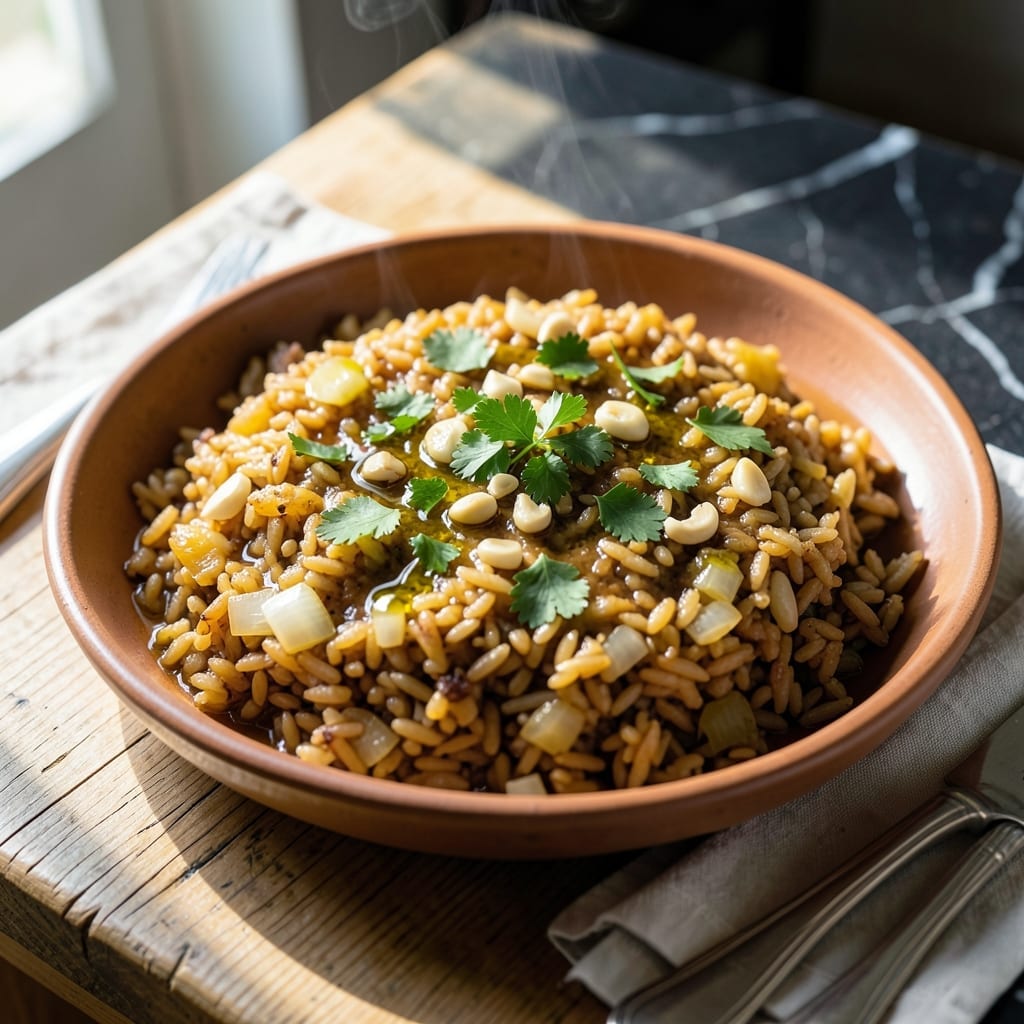
This lemon-kissed orzo brings Mediterranean flair to your table with minimal effort. I developed this recipe after testing multiple variations in my small Boston kitchen, focusing on authentic Greek flavors.
The secret lies in toasting the orzo before cooking, which enhances its nutty flavor. Fresh herbs and a touch of lemon zest create that bright, aromatic character typical of Greek cuisine.
What you get is a fluffy, fragrant side dish that pairs perfectly with grilled meats or fish. The orzo absorbs the broth completely, resulting in a perfectly balanced texture every time.
Ready in under 30 minutes, this dish proves that simple ingredients can create extraordinary results. The technique is straightforward, but the flavor is anything but basic.
Ingredients for Greek Style Rice Pilaf
Bright Mediterranean flavors start with orzo, herbs, and a touch of lemon zest.
| Ingredient | Amount | Notes |
|---|---|---|
| Orzo Pasta 🍝 | 1 ½ cups | Uncooked, for toasting |
| Extra-Virgin Olive Oil 🫒 | 3 tbsp | Divided for toasting and finishing |
| Yellow Onion 🧅 | 1 whole | Finely diced, medium size |
| Garlic Cloves 🧄 | 3 cloves | Minced for aroma |
| Vegetable Broth 🥣 | 3 cups | Low-sodium preferred |
| Fresh Parsley 🌿 | ½ cup | Chopped, for garnish |
| Fresh Dill 🌿 | ¼ cup | Chopped, for freshness |
| Lemon Zest 🍋 | 1 tbsp | From 1 large lemon |
| Lemon Juice 🍋 | 3 tbsp | Freshly squeezed |
| Dried Oregano 🍃 | 1 tsp | Mediterranean variety preferred |
| Sea Salt 🧂 | 1 tsp | Adjust to taste |
| Black Pepper 🌶️ | ½ tsp | Freshly ground |
| Feta Cheese 🧀 | ½ cup | Crumbled, optional garnish |
| Butter 🧈 | 1 tbsp | Optional for richness |
The orzo is the foundation here. Look for a good-quality brand like De Cecco or Barilla—cheap orzo can turn mushy. Whole Foods or Trader Joe’s usually have solid options. The herbs are non-negotiable for that Greek vibe; fresh dill and parsley are easy to find at most markets (even the sad-looking bunches work in a pinch). The lemon? Zest it first before juicing—you’ll need both for that bright kick.
No fresh herbs? Dried dill and parsley at one-third the amount will do, but fresh is worth the effort. Out of orzo? Any small pasta like ditalini works, but adjust cooking time—it won’t have that signature rice-like texture. For a richer dish, swap the olive oil for butter at the end (or use both). Vegetable broth can be swapped for chicken broth if you’re not strict vegetarian.
Leftovers keep 4-5 days in the fridge, but the herbs soften over time. Best eaten fresh. Reheat with a splash of broth or water to loosen it up. Doesn’t freeze well—the orzo gets gummy when thawed.
Why You’ll Love This Recipe
- One Pot Wonder: I love that everything cooks together in a single pan—just sauté the onion and garlic in olive oil, add the orzo and broth, and let it simmer.
- Garlicky Comfort: The golden garlic and onion infuse the orzo with rich, savory depth that’s warm and satisfying.
- Meal Prep Star: It reheats beautifully, so I make a big batch for lunches all week. Honestly, it tastes even better the next day.
- Budget Friendly: Orzo and pantry staples like vegetable broth keep costs low, yet it feels special enough for company.
Step-by-Step Instructions for Greek Style Rice Pilaf
This method builds layers of flavor that will transport you straight to the Mediterranean.
Step 1: Toast the Orzo Pasta
Heat 2 tablespoons of the extra-virgin olive oil in a large skillet over medium heat. Add the 1.5 cups orzo pasta and stir frequently for 4-5 minutes until the pasta turns a light golden brown and smells nutty and toasted.
This toasting step creates a rich, deep flavor base that’s essential for authentic pilaf. Watch it carefully—you want golden, not dark brown. I keep the orzo moving constantly to prevent burning. The pasta should look slightly translucent at the edges when it’s ready.
Step 2: Sauté the Aromatics
Add the finely diced yellow onion to the skillet with the toasted orzo. Cook for 3-4 minutes until the onion becomes translucent and just begins to soften. Then add the minced 3 cloves garlic cloves and cook for 30 seconds until fragrant.
Here’s where the magic starts happening. The onion should turn from opaque to glassy, but not brown. The garlic will release its aroma quickly—don’t let it burn or it’ll turn bitter. I like to add a pinch of the sea salt at this stage to help draw out the moisture from the onion.
Step 3: Add Liquids and Seasonings
Pour in the 3 cups vegetable broth, then add the 1 tbsp lemon zest, 1 tsp dried oregano, remaining 1 tablespoon extra-virgin olive oil, 1 tsp sea salt, and 0.5 tsp black pepper. Stir well to combine and bring to a gentle boil.
Once boiling, reduce heat to low, cover the skillet, and let it simmer for 10-12 minutes until most of the liquid is absorbed and the orzo is tender. Don’t stir during this time—it can break the pasta and make the dish mushy. Just let it do its thing.
Step 4: Finish with Bright Flavors
Remove the skillet from heat. Stir in the 3 tbsp lemon juice, 0.5 cup fresh parsley, and 0.25 cup fresh dill. If using, add the 1 tbsp butter for extra richness. Let it sit covered for 5 minutes to allow the flavors to meld.
The lemon juice will brighten all the flavors, while the fresh herbs add that unmistakable Greek character. The parsley and dill should be distributed evenly throughout the dish. Taste and adjust the sea salt if needed before serving.
Step 5: Serve with Optional Garnish
Transfer the pilaf to a serving dish. If desired, sprinkle the 0.5 cup feta cheese over the top for a salty, creamy contrast. The feta should be crumbled into small pieces so it distributes evenly with each serving.
Serve warm, with the understanding that the flavors will deepen as it sits. The orzo should be tender but still hold its shape, with a beautiful golden hue from the toasting and a fresh, herby aroma that fills the room.
Pro Tips For Making Greek Style Rice Pilaf
- Toast the Orzo: Cook the orzo in the olive oil until golden brown—about 3-4 minutes—before adding liquids. I learned this the hard way after my first few batches turned out mushy instead of nutty and distinct.
- Sauté Onions Low: Sweat the yellow onions gently over medium-low heat for 8-10 minutes until translucent. Rushing this step with high heat leaves them raw-tasting and harsh in the finished pilaf.
- Use Warm Broth: Heat the vegetable broth before adding it to the orzo. Cold broth slows down cooking and can make the pasta absorb unevenly, leaving some grains underdone.
- Rest Before Serving: Let the pilaf sit covered for 5-10 minutes off the heat after cooking. This lets the orzo finish absorbing the liquid and the flavors meld—I skip this when I’m in a hurry, but the texture suffers every time.
Pro Cooking Tips for greek style rice pilaf
Perfect Toasting Technique
I always toast orzo in 2 tbsp olive oil over medium heat for 4-5 minutes until golden. This nutty base flavor is non-negotiable for authentic pilaf. Keep it moving constantly—burnt orzo ruins the dish.
Broth Temperature Control
Use room-temperature vegetable broth to prevent temperature shock when added to hot orzo. Cold broth can cause uneven cooking and gummy texture. I learned this the hard way in my tiny Boston kitchen. 💡
Hands-Off Simmering
After adding liquids, resist stirring during the 10-12 minute simmer. Stirring breaks the orzo and releases excess starch. Cover tightly and let the heat do its work on low.
Herb Freshness Timing
Add fresh parsley and dill off-heat to preserve their bright color and aroma. Heat dulls their vibrant Mediterranean character. I chop them just before adding.
Lemon Zest First
Always zest your lemon before juicing—it’s easier and you’ll get more flavor. The 1 tbsp zest adds essential oils that bloom in the hot broth. This small step makes a noticeable difference.
Resting Matters
Let the pilaf rest covered for 5 minutes after cooking. This allows the orzo to absorb remaining liquid and the flavors to meld. Skipping this step results in a watery, uneven dish. ✨
Nutrition Facts
Frequently Asked Questions
Can I use regular rice instead of orzo?
You can, but the texture will differ. Use long-grain rice and toast it first for a similar nutty flavor. Adjust the broth to 2 cups and cook for 15-18 minutes. Orzo’s quick cooking time is part of what makes this dish special.
Why toast the orzo before cooking?
Toasting enhances the nutty flavor and prevents mushiness. It creates a barrier that helps the orzo hold its shape during cooking. Skip this step, and your pilaf may turn out bland and sticky.
How do I prevent the pilaf from being too dry?
Don’t lift the lid during cooking. Let it rest covered for 5 minutes after turning off the heat. If it’s still dry, stir in 2-3 tablespoons of warm broth or water before serving.
Can I make this ahead of time?
Yes, but reheat it gently. Store in the fridge for up to 4 days. Reheat in a skillet with a splash of broth on low heat, stirring occasionally to restore moisture.

- Ground Beef Rice and Beans Recipe: Slow-Simmered Savory Harmony - October 17, 2026
- Guyanese Fried Rice Recipe: Caribbean Spice With Wok-Charred Aromatics - October 17, 2026
- Hakka Thunder Tea Rice Recipe: Wok-Charred Herbal Infusion - October 17, 2026