
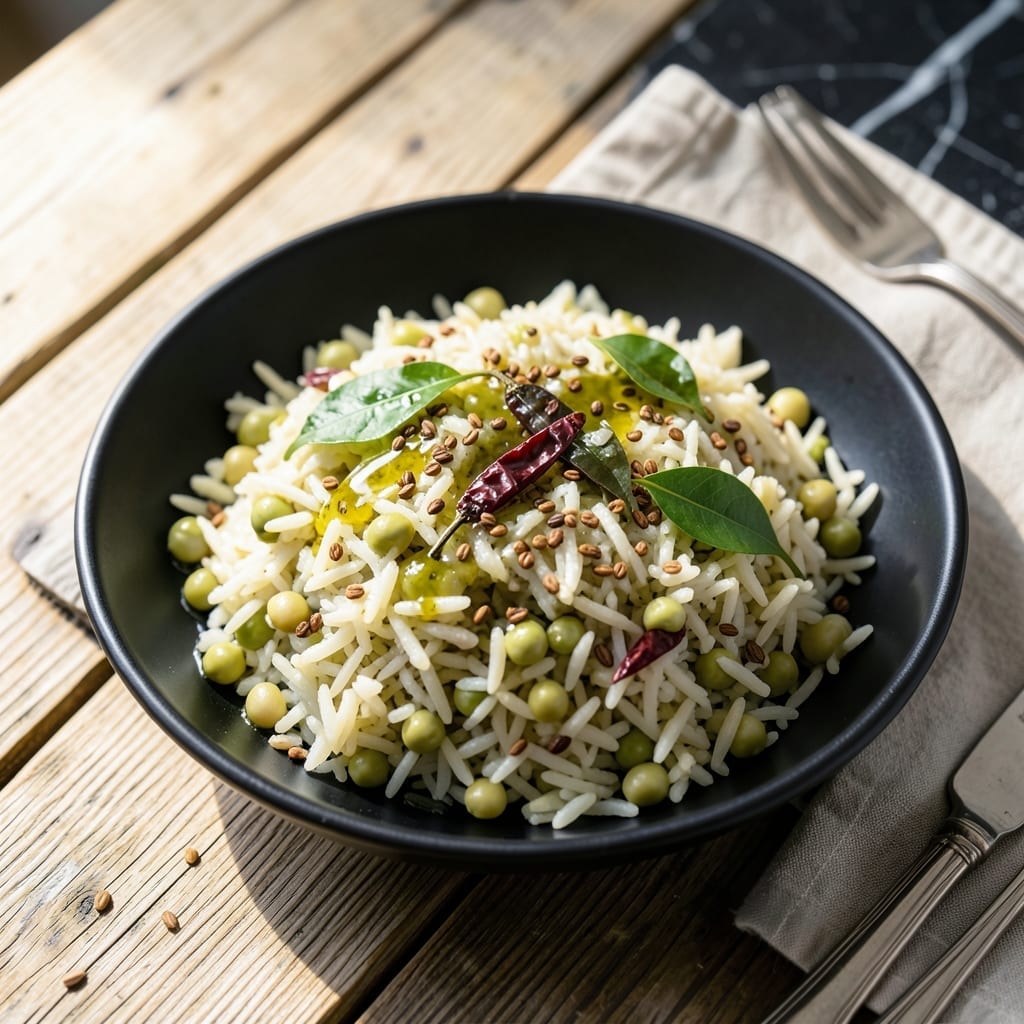
This dish transforms simple lentils into a fragrant, protein-packed meal that’s both nourishing and deeply satisfying. I’ve tested it repeatedly to ensure the spices bloom just right, creating layers of warmth in every bite.
The method is straightforward: soak the moong, toast the spices, and let everything simmer together. The result is tender lentils infused with aromatic flavors, each grain distinct yet cohesive.
What makes this special is its versatility—serve it warm or at room temperature, as a main or side. The spices are balanced to complement, not overpower, the natural nuttiness of the moong.
Perfect for a wholesome lunch or a light dinner, this creation delivers on both taste and nourishment without compromise.
Ingredients for Green Moong Rice
Nutty lentils and fragrant spices create this deeply satisfying protein-packed meal with ease.
| Ingredient | Amount | Notes |
|---|---|---|
| Green Moong Dal 🌱 | 1 ½ cups | Split, washed, soaked 30 minutes |
| Basmati Rice 🍚 | 1 cup | Rinsed until water runs clear |
| Cumin Seeds 🌿 | 1 ½ tsp | Whole, for tempering |
| Mustard Seeds 🌱 | 1 tsp | Yellow or black variety |
| Dried Red Chili 🌶️ | 2 whole | Broken into pieces |
| Curry Leaves 🍃 | 8 pieces | Fresh preferred, dried acceptable |
| Turmeric Powder 🟡 | ½ tsp | For vibrant color |
| Asafoetida 🧂 | ¼ tsp | Hing, optional but recommended |
| Fresh Ginger 🌿 | 1 tbsp | Finely grated or minced |
| Green Chili 🌶️ | 2 whole | Slit lengthwise, seeds removed |
| Vegetable Oil 🫒 | 2 tbsp | Neutral flavor, for tempering |
| Salt 🧂 | 1 ½ tsp | Adjust to taste |
| Fresh Cilantro 🌿 | ¼ cup | Chopped, for garnish |
| Water 💧 | 4 cups | For cooking lentils and rice |
The moong dal is non-negotiable here—Indian grocery stores carry the best quality, often labeled as split green gram. Look for bright green color and uniform size, which indicates freshness. Basmati rice should be aged (check for Tilda or Daawat brands), as newer crops can turn mushy. For the tempering spices, whole seeds release more aroma than pre-ground versions. Asafoetida, while optional, adds authentic depth and is widely available at Patel Brothers.
No curry leaves? Dried curry leaf powder at half the amount works in a pinch, or omit entirely—the dish will still be flavorful. Green chili can be replaced with serrano peppers for similar heat, or jalapeño for milder spice. If avoiding oil, dry-toast the cumin and mustard seeds first, then add water. The ginger is flexible—ground ginger at one-fourth the amount if fresh isn’t on hand.
Leftover moong rice keeps beautifully in the fridge for 3-4 days and actually improves as flavors meld. Store in an airtight container. For longer storage, freeze for up to 3 months—reheat gently with a splash of water to restore texture. Always garnish with fresh cilantro just before serving for the best flavor.
Why You’ll Love This Recipe
- One Pot Wonder: I love that I can cook the moong dal and basmati rice together in a single pot—no extra pans, no fuss.
- Spiced Comfort: The cumin, mustard seeds, and dried red chili bloom in hot oil, filling my kitchen with that warm, earthy aroma I crave.
- Meal Prep Hero: This keeps beautifully for days, so I pack leftovers for lunch without worrying about soggy texture.
- Budget Stretcher: Honestly, green moong dal is so affordable that I can make this for a crowd without breaking the bank.
Step-by-Step Instructions for Green Moong Rice
Master this South Indian classic with precise technique and perfectly balanced flavors.
Step 1: Temper the Whole Spices
Heat the 2 tablespoons vegetable oil in a heavy-bottomed pot over medium heat. When the oil shimmers, add the 1.5 teaspoons cumin seeds and 1 teaspoon mustard seeds. Allow them to sizzle for 20-30 seconds until the mustard seeds begin to pop.
Immediately add the 2 whole dried red chili (broken into pieces), 8 pieces curry leaves, and 0.25 teaspoon asafoetida. Stir constantly for 15 seconds—this prevents the asafoetida from burning while releasing its pungent aroma. The curry leaves should crisp slightly and the air should fill with their nutty perfume.
Step 2: Build the Aromatic Base
Add the 1 tablespoon fresh ginger (finely grated) and 2 whole green chili (slit lengthwise) to the tempered spices. Sauté for 1 minute, stirring continuously, until the ginger turns fragrant and the green chili brightens in color.
Now add the drained 1.5 cups green moong dal (pre-soaked for 30 minutes) and 1 cup basmati rice (rinsed until water runs clear). Stir gently to coat every grain with the spiced oil. Add 0.5 teaspoon turmeric powder and mix until the lentils and rice take on a uniform golden hue.
Step 3: Cook with Precise Liquid Ratio
Pour in the 4 cups water and 1.5 teaspoons salt. Stir once to distribute the ingredients evenly, then bring to a rolling boil over high heat. As soon as it boils, reduce to low heat, cover the pot tightly with a lid, and let it cook undisturbed.
After 15 minutes, check the mixture. The water should be mostly absorbed and the lentils should be tender but still hold shape. If the top looks dry but the grains aren’t fully cooked, add 2-3 tablespoons hot water and continue cooking for 2-3 minutes until done.
Step 4: Rest and Finish
Once the rice and dal are cooked through and the mixture has a porridge-like consistency, remove from heat. Let it rest covered for 10 minutes—this allows the grains to steam and absorb any remaining moisture, while the flavors meld together.
Gently fluff the green moong rice with a fork, taking care not to break the lentils. The texture should be soft yet distinct, with each bite offering the nutty flavor of moong dal and the fragrance of tempered spices. Garnish with 0.25 cup fresh cilantro (chopped) just before serving.
Pro Tips For Making Green Moong Rice
- Soak the Moong: I learned this the hard way—soak the green moong dal for at least 30 minutes before cooking to cut the cooking time in half and prevent it from turning mushy.
- Toast the Spices: Heat the cumin and mustard seeds in hot oil until they sizzle and pop, about 20-30 seconds—this wakes up their flavor and makes a real difference in the final dish.
- Skip the Rinsing: Resist the urge to rinse the dal after soaking; that starchy water actually helps thicken the dish and gives it a creamier texture.
- Use a 1:2 Ratio: My grandmother swore by this, and she was right: stick to a 1:2 ratio of moong dal to basmati rice for perfect texture every time—any more dal and it gets gluey.
Troubleshooting Perfect Results
Burnt Tempering Spices
If your cumin or mustard seeds turn dark brown or black, they’ve burned. Immediately discard the oil and start over—burnt spices taste bitter. I keep my heat at medium and pull the pan off if the seeds pop too aggressively.
Mushy Lentils
Over-soaked or overcooked moong dal turns to mush. Stick to 30-minute soaking and check at 15 minutes of cooking. If they’re soft but water remains, drain excess liquid and let the residue steam the lentils to perfection.
Sticky Rice
If the rice clumps together, you likely stirred too much or used too much water. Next time, rinse the basmati rice until water runs clear and resist stirring after adding water. Let it cook undisturbed on low heat. 💡
Bland Flavor
If the dish tastes flat, your tempering might not have bloomed properly. Toast the cumin and mustard seeds until fragrant before adding other spices. A pinch of extra asafoetida or salt at the end can also save the day.
Uneven Cooking
If some lentils are hard while others are soft, your heat wasn’t even. Use a heavy-bottomed pot and maintain consistent low heat after boiling. Stir once gently halfway through cooking to redistribute the lentils.
Dry Texture
If the mixture is dry but lentils aren’t cooked, add 2-3 tablespoons hot water and cover for 2-3 minutes. This gives the lentils time to absorb moisture without turning mushy. Always let it rest 10 minutes before serving. 🌟
Nutrition Facts
Frequently Asked Questions
Can I use yellow moong dal instead?
Yes, but the texture will differ. Yellow moong dal cooks faster and turns softer. Reduce soaking to 20 minutes and check at 12 minutes of cooking.
Why do we soak the moong dal first?
Soaking reduces cooking time and ensures even tenderness. It also removes some starch, preventing a gummy texture. 30 minutes is ideal for balanced results.
Can I make this without asafoetida?
Skip it entirely or substitute with a pinch of garlic powder. The dish will still be flavorful, though asafoetida adds authentic depth.
How do I adjust the spice level?
For milder heat, remove seeds from green chilies or reduce to one. For more kick, add an extra dried red chili or a pinch of cayenne.

- Ground Beef Rice and Beans Recipe: Slow-Simmered Savory Harmony - October 17, 2026
- Guyanese Fried Rice Recipe: Caribbean Spice With Wok-Charred Aromatics - October 17, 2026
- Hakka Thunder Tea Rice Recipe: Wok-Charred Herbal Infusion - October 17, 2026