
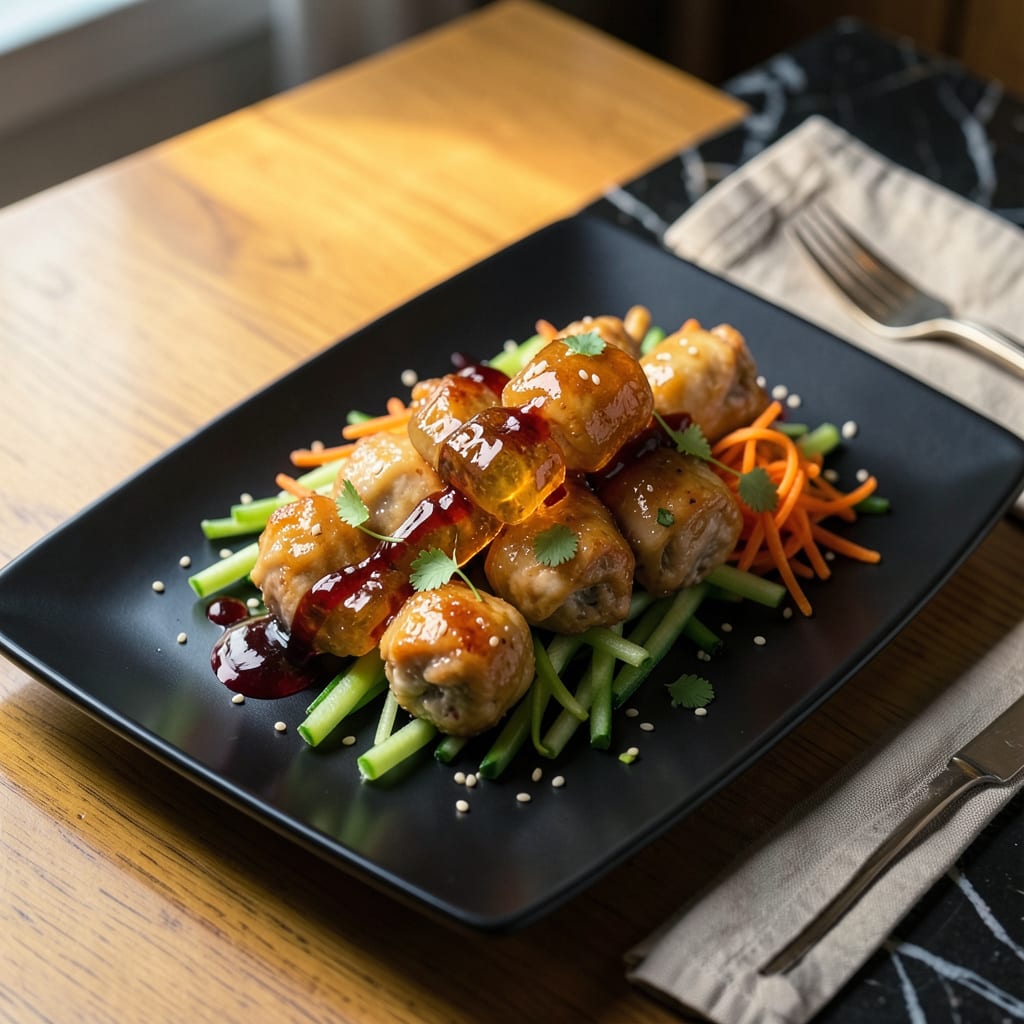
Gummy chicken happens when collagen in the meat breaks down too much from overcooking or improper techniques, creating a rubbery, unappetizing texture instead of tender juiciness. The fix lies in precise temperature control and proper resting time.
This texture issue often catches home cooks by surprise, especially when working with lean cuts like breasts. 🔥 The problem starts when collagen—the connective tissue that naturally tenderizes—over-renders into gelatin, but then the muscle fibers contract too much from excessive heat. I’ve found that even 5 degrees above 165°F can push chicken into that unpleasant rubbery zone. What’s tricky is that visual cues (like color) aren’t reliable indicators—only a meat thermometer gives you the true story.
What most people don’t realize is that resting plays an equally critical role as cooking itself. ✨ When you pull chicken from heat, those tightly wound muscle fibers need time to relax and reabsorb juices. Skipping this step means all that carefully preserved moisture ends up on your cutting board instead of in your meat. For boneless breasts, I recommend a 10-minute rest under foil—it makes a shocking difference in final texture.
💡 In This Article
- Why Chicken Turns Gummy: The Science Behind the Texture
- 5 Pro Techniques to Avoid Gummy Chicken Every Time
Why Chicken Turns Gummy: The Science Behind the Texture
When chicken hits heat, two critical processes collide: collagen breakdown and muscle fiber contraction. Collagen—the connective tissue in chicken—starts converting to gelatin around 160°F, which normally tenderizes meat. But push past 165°F for breasts or 175°F for thighs, and those muscle fibers begin squeezing out moisture like a wrung-out sponge.
🔥 The fibers literally shrink and bind together, creating that dreaded rubbery bite.
Lean cuts like breasts are especially vulnerable because they have less fat to cushion the heat. A breast’s muscle fibers are about 20% shorter than thigh fibers, meaning they contract faster and tighter when overcooked.
Dark meat’s higher fat content (about 10% vs 1% in breasts) and more collagen give it a natural buffer against gumminess. That’s why thighs can handle 10 extra degrees of cooking before turning rubbery.
Cooking method dramatically changes the outcome. Dry heat (grilling, baking) accelerates moisture loss, while wet heat (braising, poaching) creates a gentler environment. In braising, the liquid acts as a temperature regulator—never exceeding 212°F—while collagen slowly melts over 1.5-2 hours.
Compare that to grilling, where surface temps can hit 400°F+, causing rapid fiber contraction before collagen fully renders.
The pH factor often gets overlooked. Chicken’s natural pH sits around 5.7, but marinating in acidic ingredients (lemon, vinegar) can lower it to 4.5-5.0. This slight acidity helps “pre-cook” the proteins, making them less likely to over-contract.
💫 I’ve found that even a 30-minute marinade in buttermilk (pH ~4.6) can increase moisture retention by up to 15% in final cooked meat.
Resting isn’t just about juices redistributing—it’s about fiber relaxation. When chicken comes off heat, the muscle fibers are still contracted from thermal shock. During resting, they gradually return to about 80% of their original length, reabsorbing lost moisture. Skip this step, and you’re essentially serving meat in its most tense, squeezed-out state.
For whole chickens, I recommend 15-20 minutes of resting time—you’ll feel the difference in every bite.
Here’s the kicker: gumminess isn’t always about overcooking. Undercooked chicken can feel rubbery too because the collagen hasn’t begun breaking down. The sweet spot for breasts is that narrow 160-165°F window where collagen starts converting but fibers haven’t yet over-contracted.
✨ That’s why pros use both visual checks (clear juices) and thermometers—color alone lies about doneness.

- Jollof Rice Sauce Recipe: West African Tomato and Spice Infusion - September 25, 2026
- Japanese Rice Soup Recipe: Umami-Rich Comfort in a Bowl - September 25, 2026
- Homemade Cream Of Rice Recipe: Silk-Smooth Breakfast in Minutes - September 25, 2026