
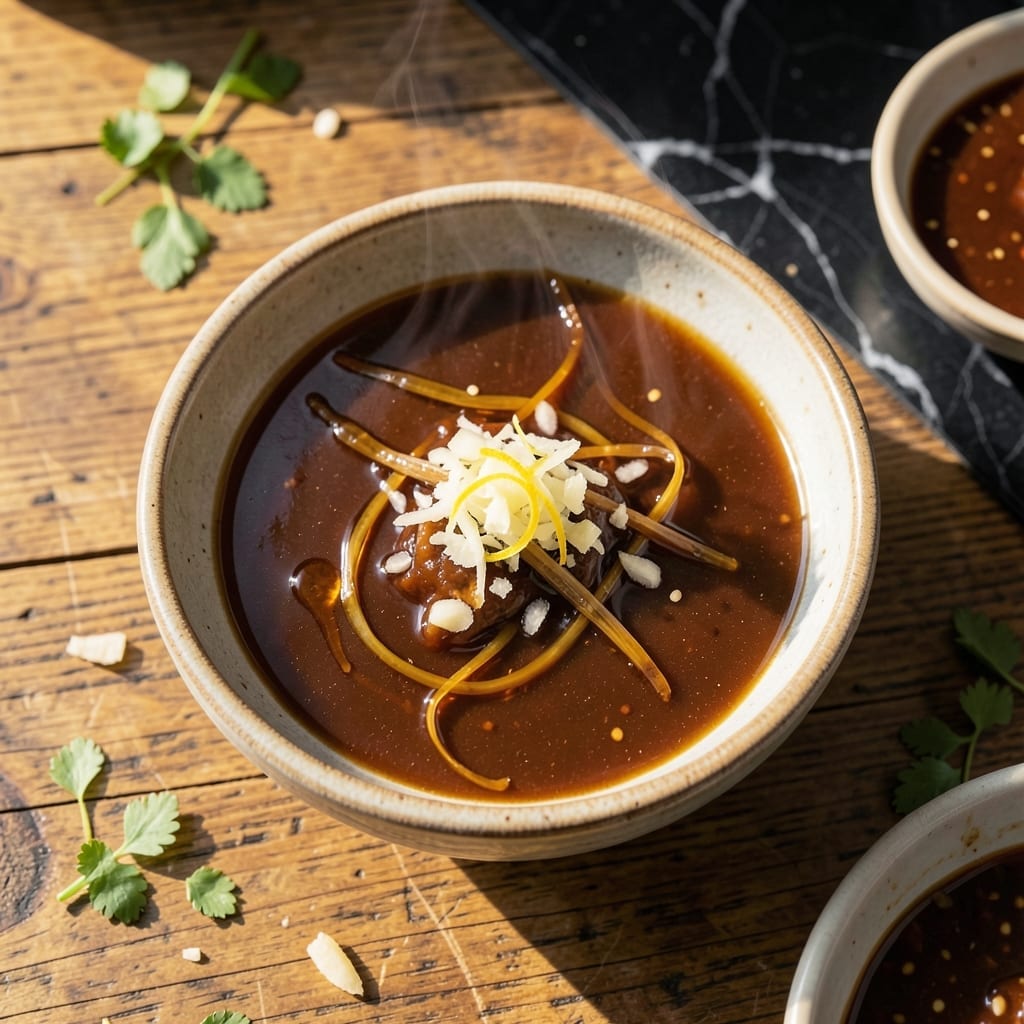
This gyoza sauce delivers the perfect balance of tangy, savory, and umami flavors without relying on rice vinegar. I developed this alternative after running out mid-recipe, discovering that other pantry staples work just as well.
The foundation combines soy sauce for saltiness, sesame oil for depth, and a touch of sweetness. A simple swap of apple cider vinegar or lemon juice provides the necessary acidity, creating that signature bright finish every gyoza deserves.
What results is a versatile dipping sauce that enhances the dumpling’s filling and wrapper without overpowering. The consistency is smooth, clinging perfectly to each bite for maximum flavor in every mouthful.
Make a batch to keep on hand—it stores beautifully for up to a week and works with potstickers, spring rolls, or as a salad dressing base.
Ingredients for Gyoza Sauce Recipe Without Rice Vinegar
Eight pantry staples create this vibrant dipping sauce with balanced umami and bright tang.
| Ingredient | Amount | Notes |
|---|---|---|
| Soy Sauce 🫒 | ½ cup | Low-sodium for balance control |
| Apple Cider Vinegar 🍎 | 2 tbsp | Tangy acidity alternative |
| Toasted Sesame Oil 🫒 | 1 tbsp | For nutty depth |
| Honey 🍯 | 1 tbsp | Natural sweetness balancer |
| Garlic Cloves 🧄 | 2 cloves | Minced for pungent kick |
| Fresh Ginger 🌿 | 1 tsp | Grated for zesty warmth |
| Green Onions 🧅 | 2 whole | Thinly sliced for garnish |
| Red Pepper Flakes 🌶️ | ¼ tsp | Optional for heat |
The soy sauce foundation is non-negotiable—Kikkoman or San-J deliver consistent quality. For the vinegar swap, apple cider vinegar (like Bragg) provides the right acidity level without overpowering. Toasted sesame oil adds depth, but check for 100% pure labels to avoid diluted blends. Fresh ginger and garlic are worth the effort (pre-minced lacks punch).
No apple cider vinegar? Lemon juice at half the amount works, though it’s sharper. White vinegar in a pinch, but add a pinch of sugar to soften. Honey can be swapped for agave or maple syrup if vegan. Skip the green onions if unavailable, but they add freshness. For heat, sriracha or chili oil can replace red pepper flakes.
This keeps 7 days refrigerated in an airtight container. The flavors meld after 24 hours, so make it ahead. Freezing isn’t recommended—sesame oil can separate. Stir well before each use, as ingredients may settle.
Why You’ll Love This Recipe
- 5-Minute Mix: I just dump everything in a bowl and stir—so easy even my distracted self can’t mess it up.
- Sweet-Savory Kick: The honey and garlic balance the soy and apple cider vinegar so well it tastes like my favorite dumpling spot’s secret sauce.
- Dips with Everything: I keep a jar in the fridge for gyoza, spring rolls, even roasted veggies—honestly, it’s my catch-all.
- Pantry Staples: Between us, all the ingredients were already in my cupboard, so it costs almost nothing to make.
Step-by-Step Instructions for Gyoza Sauce Without Rice Vinegar
This refined method ensures a perfectly balanced dipping sauce with professional results.
Step 1: Mince Aromatics and Prepare Garnish
Finely mince the 2 cloves Garlic Cloves until they reach a paste-like consistency. This releases their essential oils for maximum flavor impact. Peel and grate the 1 tsp Fresh Ginger using a microplane—this captures its fibrous juices for an intense zesty warmth.
Thinly slice the 2 whole Green Onions on a diagonal to create elegant ribbons for garnishing. Set these aside in a small bowl. The contrast of their crisp texture against the smooth sauce adds an essential textural element to the finished dish.
Step 2: Combine Liquid Base Components
In a medium bowl, whisk together the 0.5 cup Soy Sauce and 2 tbsp Apple Cider Vinegar until fully integrated. The vinegar’s fruity acidity serves as the perfect rice vinegar substitute, creating that essential tang without overpowering the umami base.
Add the 1 tbsp Honey and continue whisking until completely dissolved. This natural sweetener balances the saltiness of the soy sauce while adding a subtle floral note that complements the other ingredients beautifully.
Step 3: Incorporate Aromatic and Finishing Elements
Add the minced garlic and grated ginger to the liquid mixture. Whisk vigorously for 30 seconds to distribute the aromatics evenly throughout the sauce. This step ensures every bite carries the pungent kick of garlic and the warm spiciness of ginger.
Drizzle in the 1 tbsp Toasted Sesame Oil while whisking continuously. The oil’s deep, nutty aroma will bloom as it’s incorporated, adding complexity to the sauce’s flavor profile. Stop whisking once you see the oil fully emulsified into the mixture.
Step 4: Adjust Seasoning and Add Optional Heat
Taste the sauce and adjust the balance if needed. If it requires more sweetness, add a tiny bit more honey; for more acidity, a splash of additional apple cider vinegar will brighten it. The ideal flavor should be a harmonious blend of salty, sweet, tangy, and umami notes.
For those who prefer a spicier profile, whisk in the 0.25 tsp Red Pepper Flakes. Allow the sauce to sit for 5 minutes to let the flavors meld and the heat from the pepper flakes to infuse throughout. The flakes will settle slightly during this time.
Step 5: Finish and Present the Sauce
Give the sauce one final whisk to ensure all components are thoroughly combined. The mixture should appear glossy with a consistent color throughout, indicating proper emulsification of the oil with the other ingredients.
Transfer to a serving bowl and sprinkle the sliced green onions over the top as a garnish. The sauce is now ready to serve with gyoza or other dumplings. For best results, allow it to sit at room temperature for 10-15 minutes before serving to let the flavors develop fully.
Pro Tips For Making Gyoza Sauce Recipe Without Rice Vinegar
- Mince Garlic Fine: I learned this the hard way—chunky garlic pieces ruin the smooth texture of the sauce. Grate or finely mince the cloves so they blend seamlessly with the soy and vinegar.
- Balance the Sweetness: Apple cider vinegar is sharper than rice vinegar, so taste as you go and add honey gradually—about 1 teaspoon at a time—until the tang and sweetness feel right.
- Skip the Boiling: Resist the urge to heat the sauce; it dulls the fresh, bright flavors. Just whisk everything together at room temperature and let it sit for 5 minutes to meld.
- Use Fresh Sesame Oil: Toasted sesame oil loses its punch fast. Check the bottle’s date—if it’s been open more than 6 months, grab a new one for that nutty depth the sauce needs.
Wine and Beer Pairings for This Recipe
Light Beer Pairings
An ice-cold Japanese lager like Asahi Super Dry or Sapporo complements the sauce beautifully. The light, crisp profile cleanses your palate between dumplings. I find the subtle bitterness enhances the soy sauce base.
Crisp White Wines
A Riesling from Washington state offers the perfect balance—its slight sweetness mirrors the honey while its acidity cuts through the umami depth. Serve chilled at 45-50°F for optimal flavor. 🍷
Sake Recommendations
Junmai sake works wonderfully, especially a dry style like Dassai 39. The clean, mineral finish won’t compete with the sauce’s bold flavors. I prefer it served slightly chilled in small ceramic cups.
Craft Beer Options
For hop lovers, a pilsner with German heritage like Warsteiner provides a crisp contrast. The floral notes from noble hops complement the ginger and garlic. Avoid heavy IPAs that overpower the delicate balance.
Non-Alcoholic Choices
Sparkling yuzu soda or ginger beer offer refreshing alternatives. The citrus in yuzu soda echoes the apple cider vinegar, while ginger beer’s spice plays off the fresh ginger in the sauce. 💫
Serving Temperature
All beverages should be served well-chilled—between 40-50°F for beers and 45-55°F for wines. This temperature range enhances their crispness, which is essential when pairing with the sauce’s bold flavors.
Nutrition Facts
Frequently Asked Questions
What can I use instead of rice vinegar in gyoza sauce?
Apple cider vinegar or lemon juice work perfectly as substitutes. Use 2 tbsp apple cider vinegar for the classic tang, or 1 tbsp lemon juice for a sharper flavor.
How long does homemade gyoza sauce last?
It keeps for up to 7 days in an airtight container in the fridge. Flavors meld after 24 hours, so making it ahead is ideal. Avoid freezing as sesame oil may separate.
Can I make this sauce spicier?
Add 0.25 tsp red pepper flakes or a dash of sriracha. For extra heat, include a pinch of cayenne or chili oil to taste.
Is this sauce suitable for vegans?
Yes, just swap honey for 1 tbsp agave or maple syrup. All other ingredients are naturally vegan, and the flavor remains perfectly balanced.

- Jollof Rice Sauce Recipe: West African Tomato and Spice Infusion - September 25, 2026
- Japanese Rice Soup Recipe: Umami-Rich Comfort in a Bowl - September 25, 2026
- Homemade Cream Of Rice Recipe: Silk-Smooth Breakfast in Minutes - September 25, 2026