
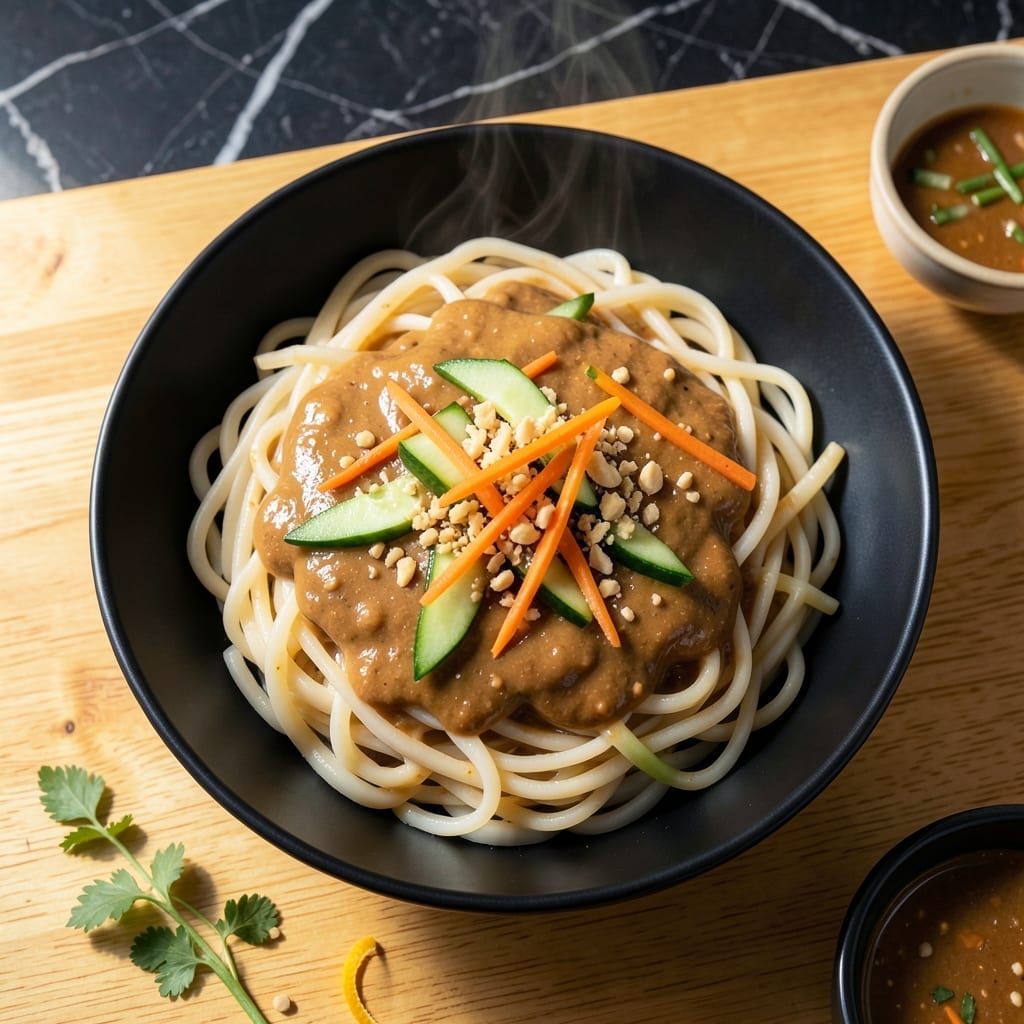
This Thai-inspired noodle bowl brings bold, creamy peanut sauce together with tender rice noodles for a satisfying vegan meal. The balance of sweet, savory, and tangy flavors makes it a standout dish.
With simple ingredients and straightforward steps, you can recreate this restaurant-quality creation at home. The sauce clings perfectly to the noodles, ensuring every bite is packed with flavor.
Ingredients for Peanut Sauce Rice Noodles
Fresh vegetables and bold flavors come together for a vibrant, satisfying bowl.
| Ingredient | Amount | Notes |
|---|---|---|
| Rice Noodles 🍜 | 8 oz | Flat, medium-width preferred |
| Creamy Peanut Butter 🥜 | ½ cup | Unsweetened, natural style |
| Soy Sauce 🫙 | ¼ cup | Low-sodium or tamari for gluten-free |
| Lime Juice 🍋 | 2 tbsp | Freshly squeezed preferred |
| Maple Syrup 🍁 | 2 tbsp | Grade A or B for sweetness |
| Fresh Ginger 🌿 | 1 tbsp | Peeled and finely grated |
| Garlic Cloves 🧄 | 3 cloves | Minced for maximum flavor |
| Sesame Oil 🫒 | 1 tbsp | Toasted for depth of flavor |
| Red Bell Pepper 🌶️ | 1 whole | Thinly sliced for crunch |
| Carrots 🥕 | 2 whole | Julienned or spiralized |
| Green Onions 🧅 | 3 whole | Thinly sliced for garnish |
| Fresh Cilantro 🌿 | ¼ cup | Chopped, stems removed |
| Crushed Peanuts 🥜 | ¼ cup | For topping and texture |
| Sriracha 🌶️ | 1 tbsp | Adjust to taste for heat |
| Water 💧 | ¼ cup | To thin sauce as needed |
The peanut butter is non-negotiable here—natural, unsweetened with just peanuts and maybe salt. Trader Joe’s or Whole Foods carry great options. For rice noodles, look for flat, medium-width (about 1/4-inch) at an Asian market or the international aisle. The ginger and garlic should be fresh; jarred versions lack the bright, sharp punch needed for this dish.
No peanut butter? Almond or cashew butter work as backups, though the flavor shifts slightly. Soy sauce can be swapped for coconut aminos if gluten-free is required. Maple syrup can be replaced with agave nectar at a 1:1 ratio. If you’re missing fresh ginger, ground ginger at one-quarter the amount is an acceptable substitute.
The sauce keeps in the fridge for 5 days—store it separately from the noodles to prevent sogginess. Leftovers reheat well, but add a splash of water to loosen the sauce. Freezing isn’t recommended, as the sauce can separate and become grainy.
Why You’ll Love This Recipe
- No Cook Noodles: I just soak the rice noodles in hot water while I whisk the sauce—no boiling, no fuss.
- Sweet-Savory Balance: The maple syrup and soy sauce create this ridiculous depth with the peanut butter I can’t get enough of.
- Lunchbox Hero: Honestly, it’s my go-to for meal prep—tastes just as good cold the next day.
- Budget Stretcher: A jar of peanut butter and a handful of noodles feed four of us for less than takeout.
Step-by-Step Instructions for Peanut Sauce Rice Noodles
Master the technique for a restaurant-quality noodle bowl with balanced flavors and perfect texture.
Step 1: Prepare the Rice Noodles
Soak the 8 oz Rice Noodles in hot water for 8-10 minutes until pliable but still slightly firm. I prefer flat, medium-width noodles for this dish as they hold the sauce beautifully and provide the right texture contrast.
Drain the noodles and rinse under cold water to stop the cooking process. This prevents them from becoming mushy when combined with the hot sauce later. Toss with a small amount of Sesame Oil to prevent sticking while you prepare the remaining components.
Step 2: Create the Peanut Sauce Base
In a medium bowl, whisk together the 0.5 cup Creamy Peanut Butter, 0.25 cup Soy Sauce, 2 tbsp Lime Juice, 2 tbsp Maple Syrup, 1 tbsp Fresh Ginger, and 3 cloves Garlic Cloves until completely smooth.
The natural oils in the peanut butter will initially resist incorporation. Persist with vigorous whisking until the mixture emulsifies into a thick, glossy paste. This is crucial for achieving the proper sauce consistency. If the mixture seems too thick, add the 0.25 cup Water 1 tablespoon at a time until it reaches a pourable but still substantial consistency.
Step 3: Incorporate Heat and Finish the Sauce
Add the 1 tbsp Sriracha to the peanut mixture and whisk thoroughly. The heat level should be noticeable but balanced with the sweet and savory elements. Taste and adjust with additional Sriracha if desired, though the 1 tbsp typically provides the perfect amount of warmth.
Drizzle in the remaining 1 tbsp Sesame Oil while whisking to create a silky finish. The toasted sesame oil adds depth and aroma that elevates the sauce from good to exceptional. Let the sauce sit for 5 minutes to allow the flavors to meld completely before combining with the noodles.
Step 4: Combine and Garnish
In a large bowl, combine the prepared rice noodles with the peanut sauce. Toss gently but thoroughly to ensure every strand is evenly coated. The noodles should glisten with sauce but not be swimming in it.
Add the 1 whole Red Bell Pepper (thinly sliced) and 2 whole Carrots (julienned) to the bowl and toss again. The vegetables should be fresh and crisp, providing a textural contrast to the soft noodles. Finish with 3 whole Green Onions (thinly sliced) and 0.25 cup Fresh Cilantro (chopped) for brightness and color.
Transfer to serving bowls and top generously with 0.25 cup Crushed Peanuts for crunch. Serve immediately while the sauce is still at its peak consistency and the noodles retain their ideal texture.
Pro Tips For Making Peanut Sauce Rice Noodles
- Soak Noodles Separately: Cover rice noodles with hot water for 8-10 minutes until pliable but still slightly firm—I learned this the hard way after ending up with mushy strands that absorbed all the peanut sauce.
- Thin the Peanut Butter: Mix the creamy peanut butter with 2-3 tablespoons of warm water before adding other ingredients, or you’ll be stirring a thick, stubborn paste for what feels like eternity.
- Skip Cold Lime Juice: Use lime juice at room temperature to prevent the peanut butter from seizing up—sounds weird, but it works.
- Taste Before Saucing: Adjust the soy sauce and maple syrup balance in the peanut mixture first; after burning three batches, I finally figured out that fixing the sauce after tossing with noodles is nearly impossible.
Best Sauces and Condiments for This Recipe
Thai Chili Sauce
For extra heat and complexity, drizzle 1-2 tbsp Thai chili sauce over the noodles before serving. I love Sriraja Panich brand for its balanced sweetness and spice. It adds a glossy sheen and layers of umami that complement the peanut sauce perfectly. 🌶️
Lime Wedges
Always serve with fresh lime wedges on the side. The bright acidity cuts through the richness of the peanut sauce, brightening each bite. Squeeze about 1 tsp juice per serving just before eating for maximum impact.
Pickled Vegetables
Quick-pickled carrots or cucumbers add a tangy crunch that contrasts beautifully. Thinly slice 1 carrot and ½ cucumber, then soak in ¼ cup rice vinegar with 1 tsp sugar for 30 minutes. The acidity balances the dish wonderfully.
Coconut Milk Drizzle
For a creamy finish, whisk 2 tbsp coconut milk with ½ tsp lime zest and drizzle lightly over the top. This adds a subtle tropical note that enhances the Thai inspiration without overpowering the peanut flavor. 🥥
Crushed Red Pepper
Keep a small bowl of crushed red pepper flakes on the table for customizable heat. I recommend Aleppo pepper for its fruity, moderate heat profile. A pinch per serving lets everyone adjust to their preferred spice level.
Hoison Sauce Swirl
A thin swirl of 1 tsp hoisin sauce per bowl adds depth with its sweet-savory profile. Stir it into the peanut sauce lightly for a more complex flavor. Koon Chun brand is my go-to for authentic taste.
Nutrition Facts
Frequently Asked Questions
Can I use a different type of noodle?
Yes! While rice noodles are traditional, you can swap in udon or soba noodles for a different texture. Just adjust the cooking time according to package instructions.
How do I make the sauce less thick?
Add warm water 1 tablespoon at a time until it reaches your desired consistency. The sauce will thicken slightly as it cools, so aim for a pourable but creamy texture.
How long will leftovers keep?
Store leftovers in an airtight container in the fridge for up to 5 days. Reheat gently on the stove with a splash of water to restore the sauce’s creaminess.
What can I use instead of peanut butter?
For nut-free versions, try sunflower seed butter or tahini. For a different flavor, almond or cashew butter work well but may alter the taste slightly.

- Jollof Rice Sauce Recipe: West African Tomato and Spice Infusion - September 25, 2026
- Japanese Rice Soup Recipe: Umami-Rich Comfort in a Bowl - September 25, 2026
- Homemade Cream Of Rice Recipe: Silk-Smooth Breakfast in Minutes - September 25, 2026