
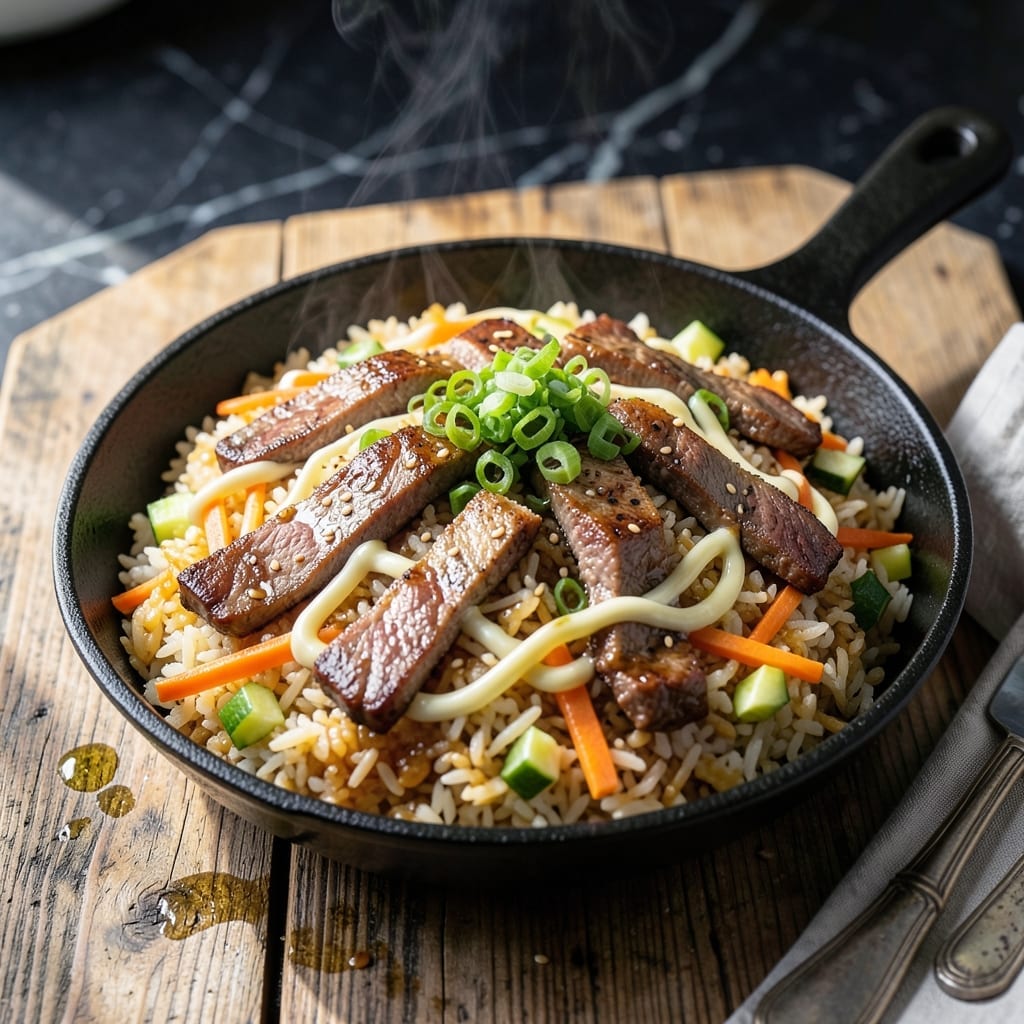
This wok-seared fried rice delivers restaurant-quality flavor with charred vegetables and bold umami notes. The technique ensures each grain stays separate while absorbing rich seasonings.
High heat and quick cooking create that signature Gyu Kaku texture—tender protein, crisp-tender veggies, and a savory finish that’s impossible to resist.
Ingredients for Gyu Kaku Fried Rice
Restaurant-quality ingredients come together for bold, authentic wok-seared flavor with perfect texture every time.
| Ingredient | Amount | Notes |
|---|---|---|
| Jasmine Rice 🍚 | 3 cups | Day-old, cooked and cooled |
| Ribeye Steak 🥩 | 1 lb | Thinly sliced against grain |
| Large Eggs 🥚 | 3 whole | Beaten for scrambling |
| Carrots 🥕 | 2 whole | Julienned for even cooking |
| Zucchini 🥒 | 1 whole | Diced into small cubes |
| Green Onions 🧅 | 4 whole | Thinly sliced, whites and greens separated |
| Garlic Cloves 🧄 | 4 cloves | Minced finely |
| Fresh Ginger 🌿 | 1 tbsp | Grated or minced |
| Soy Sauce 🫒 | 3 tbsp | Low-sodium preferred |
| Oyster Sauce 🍶 | 2 tbsp | For authentic umami depth |
| Sesame Oil 🫒 | 1 tbsp | Toasted for nuttiness |
| Neutral Oil 🛢️ | 3 tbsp | High smoke point for wok frying |
| White Pepper 🧂 | ½ tsp | Freshly ground preferred |
| Salt 🧂 | 1 tsp | Diamond Crystal kosher |
| Shaoxing Wine 🍷 | 2 tbsp | Or dry sherry as substitute |
The ribeye is non-negotiable for Gyu Kaku authenticity—USDA Choice or Prime from a trusted butcher ensures the right fat marbling. Whole Foods or Costco carry excellent pre-sliced options if you’re short on time. Jasmine rice must be day-old and fully cooled (fresh rice turns to mush). For the oyster sauce, Lee Kum Kee is the gold standard—look for it in the Asian aisle.
No ribeye? Flank steak or sirloin work in a pinch but lack the fat content. Vegetarian? Swap in extra-firm tofu, pressed and cubed. Can’t find oyster sauce? Vegan oyster sauce or hoisin adds similar depth. Shaoxing wine is ideal but dry sherry at a 1:1 ratio works. The ginger and garlic should be fresh—no powdered substitutes for this dish.
Cooked rice keeps in the fridge for 2-3 days before using. The finished dish is best eaten immediately but reheats well with a splash of water in a hot pan for 2-3 minutes. Store leftovers in an airtight container for up to 4 days.
Why You’ll Love This Recipe
- One Pan Meal: I toss everything in a single wok—jasmine rice, ribeye strips, and veggies—then serve straight from the pan. No mountain of dishes afterward.
- Umami Bomb: The ribeye’s rich flavor soaked into the rice with that soy-garlic kick? I’ve caught myself sneaking bites before it even hits the plate.
- Weeknight Hero: Between us, this is my Tuesday night lifesaver—20 minutes, one pot, and my kids actually eat the zucchini.
- Leftovers Win: Honestly, it tastes even better the next day. I pack it for lunch and get jealous stares from coworkers.
Step-by-Step Instructions for Wok-Seared Umami Fried Rice
Master the wok technique to achieve smoky depth and restaurant-quality texture at home.
Step 1: Prepare the Protein and Aromatics
Thinly slice the ribeye steak against the grain into ¼-inch strips to ensure tenderness. This cross-grain cutting shortens muscle fibers for a melt-in-your-mouth texture. Meanwhile, mince the garlic cloves and grate the fresh ginger together—this creates a uniform paste that distributes evenly during cooking.
Combine the sliced ribeye with 1 tbsp soy sauce, 1 tbsp shaoxing wine, and 0.5 tsp white pepper in a bowl. I always let this marinate for 10 minutes while prepping other ingredients. The wine tenderizes the beef while the soy sauce builds the umami foundation.
Step 2: Wok-Fry the Vegetables to Charred Perfection
Heat 2 tbsp neutral oil in a wok over high heat until it shimmers. Add the julienned carrots and diced zucchini, spreading them in a single layer. Let them sear undisturbed for 2-3 minutes—you want those beautiful char marks that signal the Maillard reaction is working its magic.
Once the vegetables develop deep golden edges, add the white parts of the green onions and stir-fry for another 1 minute. The key is maintaining that high heat throughout; if the wok isn’t hot enough, you’ll end up with steamed rather than seared vegetables. Transfer the vegetables to a plate and set aside.
Step 3: Cook the Ribeye and Scramble the Eggs
In the same wok, add the remaining 1 tbsp neutral oil and swirl to coat. Add the marinated ribeye in a single layer, working in batches if necessary to avoid overcrowding. Sear for 1-2 minutes until the beef is browned but still slightly pink inside—it will finish cooking when combined with the rice.
Push the beef to one side and pour the beaten large eggs into the empty space. Scramble quickly with a spatula until just set but still slightly runny. This creates those coveted egg ribbons that coat each grain of rice. Combine the beef and eggs, then transfer to the plate with the vegetables.
Step 4: Combine Everything with Sauce and Finish
Add the remaining 2 tbsp soy sauce, 2 tbsp oyster sauce, and 1 tbsp sesame oil to the wok. Return the wok to high heat and add the day-old jasmine rice, breaking up any clumps with your spatula. The rice should sizzle immediately upon contact—this is how you achieve that signature wok hei flavor.
Add the cooked vegetables, beef, and eggs back to the wok. Stir-fry for 2-3 minutes until everything is heated through and the rice takes on a glossy sheen from the sauces. Toss in the green onion greens and the remaining 1 tbsp shaoxing wine, then season with 1 tsp salt to taste. Serve immediately while the edges are still crackling.
Pro Tips For Making Gyu Kaku Fried Rice
- Chill the Rice: Use day-old jasmine rice straight from the fridge—it fries up fluffier and won’t turn mushy. I learned this the hard way after making a sad, sticky batch with fresh rice.
- Sear the Ribeye Hot: Crank the heat to high and sear the ribeye in batches, about 2 minutes per side. After burning three batches, I finally figured out that crowded pan just steams the meat.
- Prep Veggies Small: Dice the carrots and zucchini into tiny, even pieces—about ¼-inch cubes—so they cook through fast without making the rice soggy.
- Scramble Eggs Separately: Cook the eggs in a corner of the wok first, then push them aside before adding the rice. Sounds weird, but it works: you get soft, distinct egg bits instead of a rubbery mess.
Perfect Pairings for This Dish
Complementary Sides
Serve with cucumber salad—toss 1 sliced English cucumber with 1 tbsp rice vinegar, ½ tsp sugar, and a pinch of salt. The cool crunch balances the rich, smoky flavors perfectly.
Beer Pairings
A crisp Japanese lager like Asahi Super Dry or Sapporo cuts through the umami richness with its clean finish. For craft beer fans, a light pilsner with citrus notes works beautifully. I always reach for something effervescent. 🍺
Wine Options
Try a light-bodied red like Pinot Noir—its bright acidity complements the dish without overpowering. For white wine lovers, Riesling with a touch of sweetness balances the savory notes. Serve slightly chilled. 🍷
Extra Garnishes
Top with toasted sesame seeds for nutty crunch or pickled ginger for a tangy contrast. A drizzle of sriracha adds heat for those who want it. I love adding crushed red pepper for a subtle kick.
Dessert Pairing
End with matcha ice cream or mochi for a refreshing finish. The bitterness of matcha cleanses your palate after the rich, savory meal. Keep portions small to avoid overwhelming the senses. 💛
Nutrition Facts
Frequently Asked Questions
Can I use fresh rice instead of day-old?
No, fresh rice contains too much moisture and will turn mushy. Day-old rice has dried slightly, allowing it to absorb flavors and maintain separate grains when stir-fried at high heat.
Why slice the ribeye against the grain?
Cutting against the grain shortens the muscle fibers, making the beef more tender. This technique ensures each bite is easy to chew and absorbs the marinade better during the 10-minute rest.
What if I don’t have a wok?
A large, deep skillet works as a substitute. Use high heat and cook in batches to avoid overcrowding. The key is maintaining that intense heat to achieve the signature charred texture.
Can I make this vegetarian?
Replace the ribeye with pressed extra-firm tofu or add more vegetables like bell peppers. Use vegan oyster sauce to maintain the umami depth.

- Ground Beef Rice and Beans Recipe: Slow-Simmered Savory Harmony - October 17, 2026
- Guyanese Fried Rice Recipe: Caribbean Spice With Wok-Charred Aromatics - October 17, 2026
- Hakka Thunder Tea Rice Recipe: Wok-Charred Herbal Infusion - October 17, 2026