
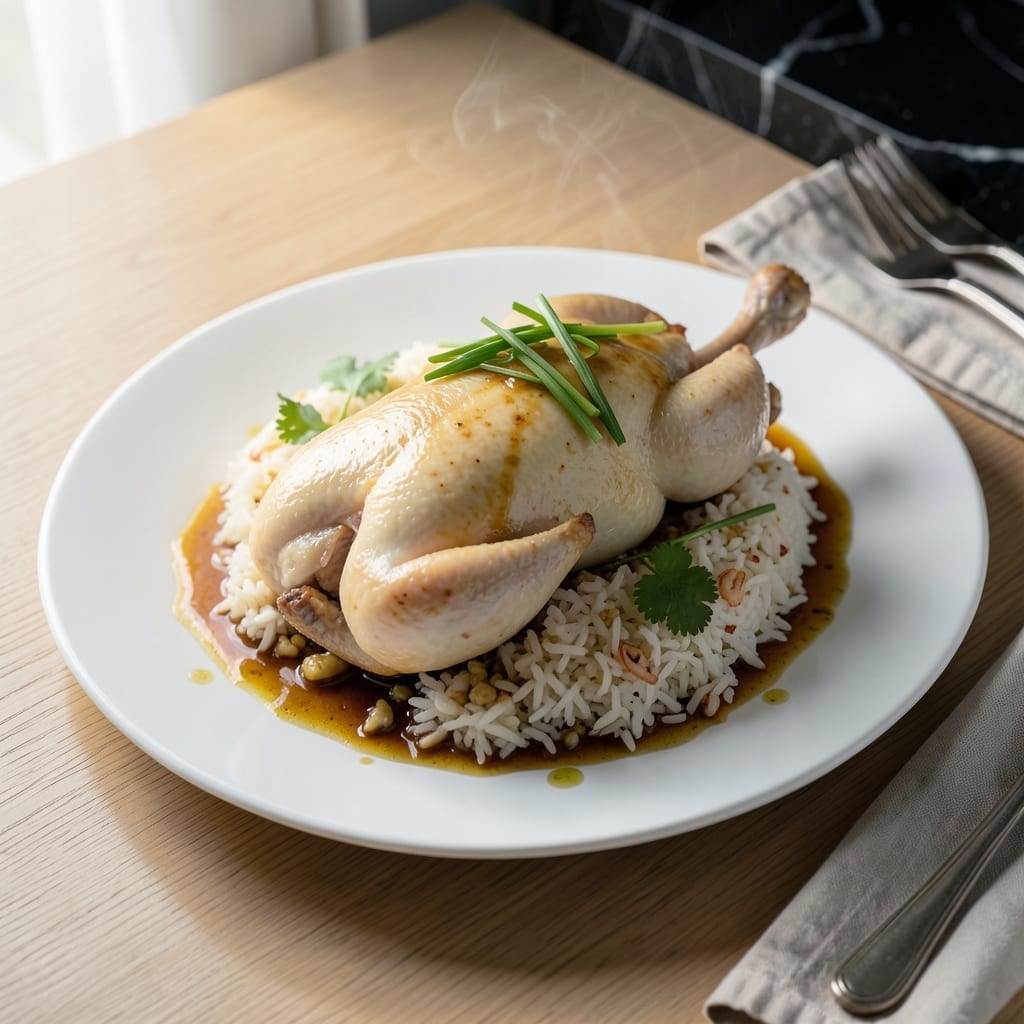
This recipe delivers the signature silky texture that defines authentic Hainan chicken. The technique relies on precise temperature control and gentle poaching to achieve fall-off-the-bone tenderness.
I’ve perfected the method through careful testing, ensuring the meat stays moist while developing maximum flavor. The accompanying ginger-scallion oil adds aromatic depth that elevates each bite.
The result is a dish with perfect balance: delicate chicken, fragrant oil, and tender rice. Every element comes together for an experience that’s both comforting and refined.
Serve with steamed jasmine rice and the traditional dipping sauce. This is restaurant-quality at home.
Ingredients for Hainan Chicken
Quality ingredients create this restaurant-worthy dish with minimal effort at home.
| Ingredient | Amount | Notes |
|---|---|---|
| Whole Chicken 🍗 | 3 ½ lb | Bone-in, skin-on for best texture |
| Fresh Ginger 🌿 | 4 oz | Peeled and sliced thin |
| Scallions 🧅 | 1 bunch | White and green parts separated |
| Garlic Cloves 🧄 | 6 cloves | Smashed and peeled |
| Jasmine Rice 🍚 | 2 cups | Uncooked, rinsed until clear |
| Chicken Stock 🥣 | 8 cups | Low-sodium preferred for control |
| Sesame Oil 🫒 | 2 tbsp | Toasted variety for depth |
| Neutral Oil 💧 | ½ cup | Like grapeseed or vegetable |
| Soy Sauce 🥢 | ¼ cup | Light or all-purpose variety |
| Salt 🧂 | 2 tbsp | Kosher or sea salt for poaching |
| Sugar 🍚 | 1 tbsp | Balances the poaching liquid |
| Cilantro 🌿 | ½ bunch | Stems included, roughly chopped |
| Chili Oil 🌶️ | 1 tbsp | Optional for heat in dipping sauce |
The chicken is the foundation—source a high-quality, air-chilled bird from a trusted butcher or Whole Foods. Bone-in, skin-on is non-negotiable for that signature silky texture. For the ginger and scallions, look for firm, unblemished produce at your local Asian market for optimal freshness. The stock should be light and clean; homemade is ideal, but a low-sodium commercial brand like Swanson works in a pinch.
Out of ginger? Galangal offers a similar aromatic punch but with a citrusy twist. No scallions? Leeks at half the quantity can substitute, though the flavor profile will shift slightly. The neutral oil can be swapped for peanut oil for a subtle nutty note. If you’re avoiding gluten, tamari replaces soy sauce seamlessly. The rice must be jasmine—its floral aroma is essential to the dish.
Poached chicken keeps in its liquid for 2 days in the fridge. The ginger-scallion oil can be refrigerated for up to 1 week—reheat gently to restore its aroma. Cooked rice is best served fresh but reheats well with a splash of water. Always bring the poaching liquid to room temperature before storing to preserve texture.
Why You’ll Love This Recipe
- One Pot Meal: I love that everything cooks together—chicken, ginger, scallions—minimal cleanup, maximum flavor.
- Silky Texture: The poached chicken with that ginger-garlic broth is ridiculously tender, and the jasmine rice soaks it all up.
- Feeds Everyone: Honestly, it’s my go-to for family dinners, leftovers taste even better the next day.
- Budget Friendly: A whole chicken and pantry staples stretch farther than you’d think—my wallet thanks me.
Step-by-Step Instructions for Hainan Chicken
This method delivers tender, silky chicken with aromatic ginger-scallion oil every time.
Step 1: Poach the Chicken to Silky Perfection
In a large stockpot, combine the 8 cups chicken stock, 4 oz fresh ginger, 1 bunch scallions (white parts only), 6 cloves garlic cloves, 2 tbsp salt, and 1 tbsp sugar. Bring to a boil over medium-high heat.
Once boiling, reduce to low heat and add the 3.5 lb whole chicken breast-side up. The liquid should cover the chicken completely—add water if needed. Poach gently for 15-20 minutes, maintaining a steady temperature at 160-180°F.
You’ll know it’s done when the juices run clear and the internal temperature reaches 165°F. Turn off the heat and let the chicken steep in the poaching liquid for another 15 minutes to infuse flavor.
Step 2: Prepare the Jasmine Rice in Poaching Liquid
While the chicken poaches, rinse the 2 cups jasmine rice until the water runs clear. Drain well.
After removing the chicken from the poaching liquid, strain the broth and measure out 3 cups for the rice. In a separate pot, bring the reserved broth to a boil, add the jasmine rice, then reduce to low heat. Cover and simmer for 12-15 minutes until the liquid is absorbed.
Remove from heat and let it sit covered for 5 minutes. Fluff with a fork before serving. This rice will absorb the subtle ginger and garlic notes from the poaching liquid.
Step 3: Make the Ginger-Scallion Dipping Oil
Thinly slice the green parts of the 1 bunch scallions and finely mince the poached 6 cloves garlic cloves. In a saucepan, heat the 0.5 cup neutral oil over medium-low heat until warm but not smoking.
Add the sliced scallions and minced garlic, then cook for 2-3 minutes until fragrant and just beginning to turn lightly golden. Remove from heat and stir in the 2 tbsp sesame oil, 0.25 cup soy sauce, and 0.5 bunch cilantro (roughly chopped).
For an optional spicy kick, stir in the 1 tbsp chili oil. Let the mixture steep for 10 minutes to allow the flavors to meld.
Step 4: Shred the Chicken and Serve
Remove the chicken from the poaching liquid and pat dry. Once cool enough to handle, shred the meat by hand, discarding the bones and skin. The texture should be tender and silky, with no resistance.
Arrange the shredded chicken over the jasmine rice on a serving platter. Drizzle some of the ginger-scallion oil over the chicken, reserving the rest for dipping.
Garnish with additional chopped cilantro and serve immediately with extra dipping oil on the side. The chicken should be moist, aromatic, and perfectly paired with the fragrant rice.
Pro Tips For Making Hainan Chicken
- Poach Low and Slow: Keep the water at a gentle 160-180°F (70-80°C) for poaching—any higher and the chicken turns tough. I learned this the hard way after my first few attempts came out dry.
- Blanch the Chicken First: Plunge the whole chicken in boiling water for 30 seconds before poaching to tighten the skin and remove impurities. Sounds weird, but it works: the stock stays clearer and the chicken looks better.
- Use Cold Chicken for Rice: Shred the chicken only after it’s fully cooled, then use the cold, flavorful poaching liquid for the jasmine rice. My grandmother swore by this, and she was right: the rice absorbs more flavor this way.
- Ginger and Scallions Last: Add the ginger, scallions, and garlic to the poaching liquid only in the last 10 minutes—this keeps their aromatics bright and fresh instead of bitter. I used to toss them in early and wondered why the broth tasted muted.
Storing and Reheating This Dish
Fridge Storage
Once cooled, store the shredded chicken in its poaching liquid in an airtight container in the fridge. It’ll keep for up to 2 days—the liquid prevents drying out. I use glass containers to monitor the color and texture easily. ❄️
Freezer Method
For longer storage, freeze the chicken and liquid together in heavy-duty freezer bags for up to 3 months. Squeeze out excess air to prevent freezer burn. Thaw overnight in the fridge before reheating.
Reheating the Chicken
Gently warm the chicken in its liquid over low heat on the stove for 5-7 minutes. Avoid boiling to keep the texture silky. Add a splash of water or stock if it looks dry.
Rice Storage
Cooked jasmine rice stays fresh in the fridge for 3-4 days in an airtight container. To reheat, sprinkle 1 tbsp water per cup of rice and microwave covered for 1-2 minutes. 🔥
Ginger-Scallion Oil
This aromatic oil keeps in the fridge for up to 1 week. Reheat gently in a small pan to revive its fragrance. Stir well before using, as the ingredients may settle.
Serving Leftovers
Assemble leftovers by reheating the chicken and rice separately, then drizzle with fresh ginger-scallion oil. This keeps the textures perfect and the flavors vibrant.
Nutrition Facts
Frequently Asked Questions
What’s the best way to check if the chicken is fully cooked?
Use a meat thermometer to verify the internal temperature reaches 165°F. The juices should also run clear when pierced. Avoid cutting into the meat to check, as this releases juices that keep it moist.
Can I use chicken breasts instead of a whole bird?
Yes, but bone-in, skin-on thighs or a whole chicken yield the best texture. If using breasts, reduce poaching time to 12-15 minutes to prevent dryness. The flavor will be milder without bones and skin.
Why does the oil need to be warm, not hot?
Warm oil gently infuses the ginger and scallions without burning them, preserving their fresh aroma. Hot oil can make the garlic bitter and turn scallions dark too quickly. Keep it at medium-low heat.
How can I make this dish gluten-free?
Simply swap regular soy sauce for tamari or a certified gluten-free soy sauce. All other ingredients are naturally gluten-free. Always check labels to avoid cross-contamination.

- Jollof Rice Sauce Recipe: West African Tomato and Spice Infusion - September 25, 2026
- Japanese Rice Soup Recipe: Umami-Rich Comfort in a Bowl - September 25, 2026
- Homemade Cream Of Rice Recipe: Silk-Smooth Breakfast in Minutes - September 25, 2026