
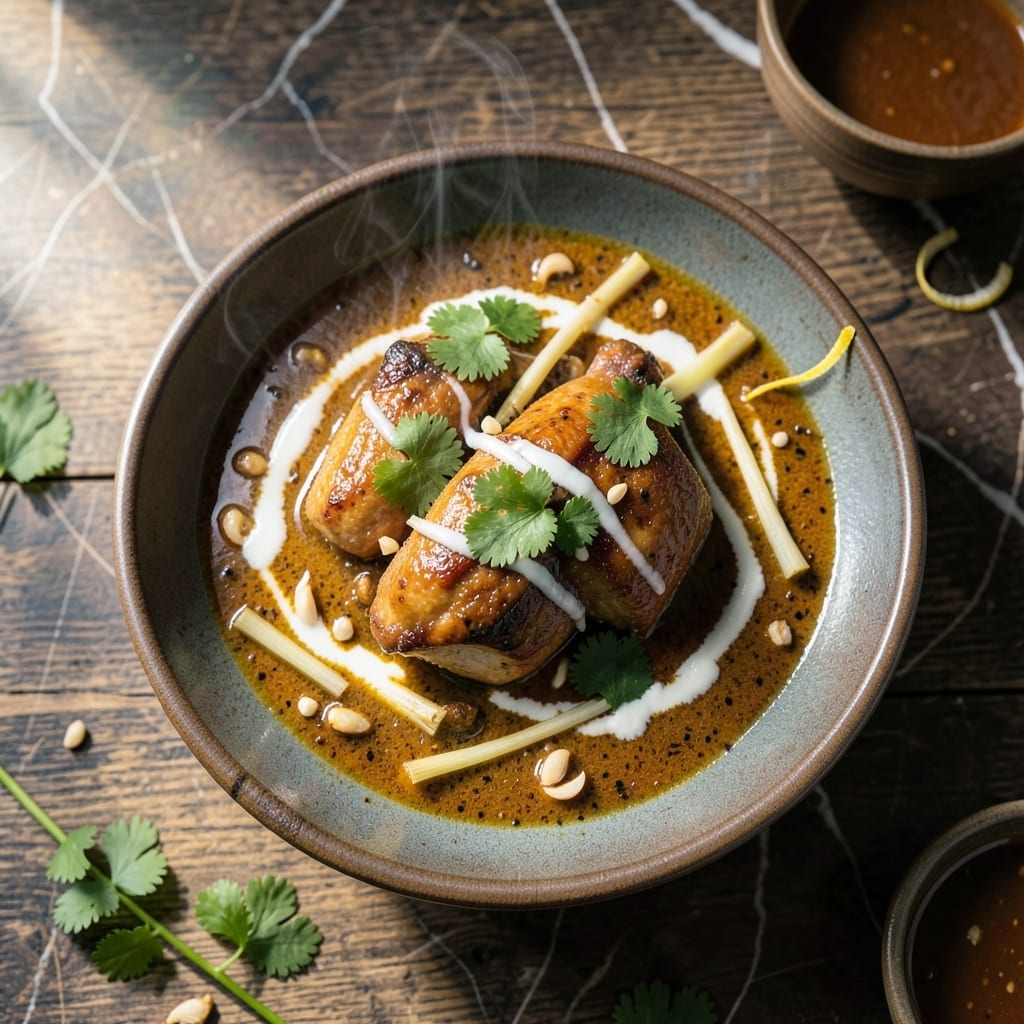
This Hainanese curry brings together tender chicken and a fragrant coconut-turmeric sauce that defines comfort food. The dish balances warm spices with creamy richness, creating a stew that’s both hearty and deeply aromatic.
I developed this recipe to capture the authentic flavors of Singaporean home cooking without complicated techniques. The chicken stays juicy while absorbing the golden, spiced broth, and the sauce thickens beautifully with a slow simmer.
The result is a curry that’s fragrant and satisfying, with layers of turmeric, lemongrass, and coconut milk. Each bite delivers a perfect harmony of textures and flavors.
Serve it with steamed rice or crusty bread to soak up every drop of the sauce. This is a dish worth savoring.
Ingredients for Hainanese Chicken Curry
Fragrant spices and tender chicken combine for a stew that defines comfort in every bite.
| Ingredient | Amount | Notes |
|---|---|---|
| Chicken Thighs 🍗 | 1 ½ lb | Boneless, skinless, cut into bite-sized pieces |
| Coconut Milk 🥥 | 2 cups | Full-fat for creaminess |
| Turmeric Powder 🌿 | 2 tsp | Ground, for vibrant color and warmth |
| Lemongrass Stalks 🌱 | 2 whole | Bruised and cut into 3-inch pieces |
| Galangal Root 🌿 | 1 whole | Sliced thinly, or substitute ginger |
| Garlic Cloves 🧄 | 6 cloves | Minced for depth of flavor |
| Shallots 🧅 | 2 whole | Thinly sliced for aromatic base |
| Red Curry Paste 🌶️ | 2 tbsp | Thai-style for authentic heat |
| Fish Sauce 🐟 | 1 tbsp | For umami depth, optional for vegetarian |
| Chicken Broth 🥣 | 1 cup | Low-sodium preferred for balance |
| Potatoes 🥔 | 2 whole | Yukon Gold, peeled and cubed |
| Carrots 🥕 | 2 whole | Peeled and cut into chunks |
| Kaffir Lime Leaves 🍃 | 4 whole | Fresh for citrusy aroma |
| Palm Sugar 🍚 | 1 tbsp | Or substitute brown sugar |
| Vegetable Oil 🫒 | 2 tbsp | For sautéing aromatics |
| Salt 🧂 | 1 tsp | To taste for seasoning |
Authentic Hainanese curry starts with the right aromatics. Asian grocery stores are your best bet for fresh lemongrass, galangal, and kaffir lime leaves—whole ones, not dried. I always grab mine from H Mart or a local Vietnamese market. The coconut milk should be full-fat for that rich, creamy texture that defines the dish. Chicken thighs stay juicier than breasts during the slow simmer, so don’t swap them out.
No galangal? Ginger works at a 1:1 ratio, though the flavor profile shifts slightly. Fresh kaffir lime leaves can be replaced with lime zest and bay leaves, but the citrusy aroma won’t be quite the same. For a quicker version, red curry paste from Maesri or Thai Kitchen is widely available. If you’re avoiding fish sauce, soy sauce or tamari adds the needed umami without the seafood.
The curry actually tastes better the next day after the flavors meld. Store in an airtight container in the fridge for up to 4 days, or freeze for 3 months. Reheat gently on the stove—microwaving can separate the coconut milk. Always serve with steamed jasmine rice to soak up that golden sauce.
Why You’ll Love This Recipe
- One Pot Wonder: I toss everything in—chicken thighs, coconut milk, lemongrass—and let the oven do the work. Honestly, cleanup is just one pot and a spoon.
- Flavor Bomb: The turmeric and galangal create this warm, aromatic depth that’s ridicously good with the creamy coconut.
- Feeds the Week: I make a big batch on Sunday and it tastes even better reheated for lunch the next day.
- Budget Friendly: Chicken thighs are cheap, and a can of coconut milk stretches this to feed four without breaking the bank.
Step-by-Step Instructions for Hainanese Chicken Curry
Master the technique and balance of flavors that define this aromatic coconut-based stew.
Step 1: Bloom the Aromatics and Curry Base
Heat the 2 tbsp Vegetable Oil in a large pot over medium heat until shimmering. Add the 2 whole Shallots, 6 cloves Garlic Cloves, 2 whole Lemongrass Stalks, and 1 whole Galangal Root. Sauté for 3-4 minutes until the shallots soften and turn translucent.
Stir in the 2 tbsp Red Curry Paste and 2 tsp Turmeric Powder, pressing the paste into the oil to release its flavors. Cook for 2 minutes until the mixture becomes fragrant and the oil turns a vibrant red-orange. This step builds the foundation of your curry’s depth.
Step 2: Build the Stew with Liquids and Vegetables
Pour in the 2 cups Coconut Milk, 1 cup Chicken Broth, 1 tbsp Fish Sauce, and 1 tbsp Palm Sugar. Stir well to combine, then bring to a gentle simmer over medium-high heat. The coconut milk should just begin to bubble at the edges.
Add the 2 whole Potatoes and 2 whole Carrots, ensuring they are submerged in the liquid. Reduce heat to medium-low and let the stew simmer for 10 minutes until the vegetables begin to soften. This allows the flavors to meld before adding the chicken.
Step 3: Cook the Chicken to Perfection
Add the 1.5 lb Chicken Thighs to the pot, stirring to coat them in the curry sauce. Increase the heat to medium and simmer for 15-20 minutes, stirring occasionally, until the chicken is cooked through and the potatoes are tender when pierced with a knife.
The chicken should reach an internal temperature of 165°F and the sauce should thicken slightly, coating the back of a spoon. Avoid boiling, as this can cause the coconut milk to separate and the chicken to toughen.
Step 4: Finish with Kaffir Lime Leaves and Season
Add the 4 whole Kaffir Lime Leaves to the pot, pressing them into the sauce to release their citrusy aroma. Simmer for an additional 2 minutes to infuse the final layer of flavor. Taste and adjust the seasoning with the 1 tsp Salt as needed.
Remove the lemongrass stalks, galangal slices, and kaffir lime leaves before serving. The curry should have a rich, golden hue with a balance of creamy, spicy, and aromatic notes. Serve hot over steamed rice to soak up the flavorful sauce.
Pro Tips For Making Hainanese Chicken Curry
- Bruise the Lemongrass: I learned this the hard way—smash the lemongrass stalks with the side of your knife before adding them to release more aroma. It actually changes the outcome, giving the curry that bright, citrusy depth.
- Brown the Chicken: Skip the urge to dump everything in at once. Sear the chicken thighs first until golden—about 3-4 minutes per side—to lock in flavor before adding liquids.
- Use Full-Fat Coconut Milk: Sounds weird, but it works: light coconut milk just won’t give you that rich, velvety sauce. The fat carries the turmeric and galangal flavors way better.
- Simmer Low and Slow: After burning two batches, I finally figured out—keep the heat at a gentle simmer, not a boil, once the coconut milk goes in. High heat can make the curry separate, and nobody wants that.
Common Mistakes When Making Perfect Results
Skipping the Aromatics Bloom
Rushing the initial sauté of shallots, garlic, lemongrass, and galangal is the fastest way to a bland curry. These need 3-4 minutes on medium heat to soften and release their oils. I learned this the hard way when my first attempt tasted flat. 💡
Boiling the Coconut Milk
Once you add the 2 cups coconut milk, keep the heat at a gentle simmer. Boiling causes the fats to separate, giving your curry a greasy texture. If you see vigorous bubbles, immediately reduce to medium-low heat. The sauce should just shimmer at the edges.
Overcooking the Chicken
Adding chicken thighs too early or cooking them too long turns them rubbery. Wait until the potatoes have 10 minutes of simmering first. Then cook the chicken for just 15-20 minutes—it’ll reach 165°F and stay tender.
Using Low-Fat Coconut Milk
The dish relies on the richness of full-fat coconut milk for its creamy texture. Light versions lack the body and depth, making your curry watery. I always stock Chaokoh or Thai Kitchen brands for consistent results.
Skipping the Fish Sauce
That 1 tbsp fish sauce adds essential umami depth. Without it, the flavors taste one-dimensional. If you’re vegetarian, use soy sauce or tamari as a substitute, but don’t omit the salty, savory element entirely.
Not Resting Before Serving
Let the curry sit off heat for 5-10 minutes after cooking. This allows the flavors to meld and the sauce to thicken slightly. I notice the turmeric and lemongrass notes become more pronounced after resting. 🌟
Nutrition Facts
Frequently Asked Questions
Can I use chicken breast instead of thighs?
You can, but thighs stay juicier during the 15-20 minutes simmer. Breast meat tends to dry out. If using breast, reduce cooking time to 12-15 minutes and check temperature early.
What if I can’t find galangal?
Substitute with an equal amount of fresh ginger. The flavor will be slightly different but still delicious. For best results, use 1 tbsp minced ginger per stalk of galangal.
How do I store leftovers?
Keep in an airtight container in the fridge for up to 4 days. The flavors deepen overnight. Reheat gently on the stove to prevent coconut milk separation.
Can I make this ahead of time?
The curry tastes even better the next day. Prepare up to 2 days in advance and store in the fridge. Reheat slowly and add a splash of water if needed.

- Jollof Rice Sauce Recipe: West African Tomato and Spice Infusion - September 25, 2026
- Japanese Rice Soup Recipe: Umami-Rich Comfort in a Bowl - September 25, 2026
- Homemade Cream Of Rice Recipe: Silk-Smooth Breakfast in Minutes - September 25, 2026