
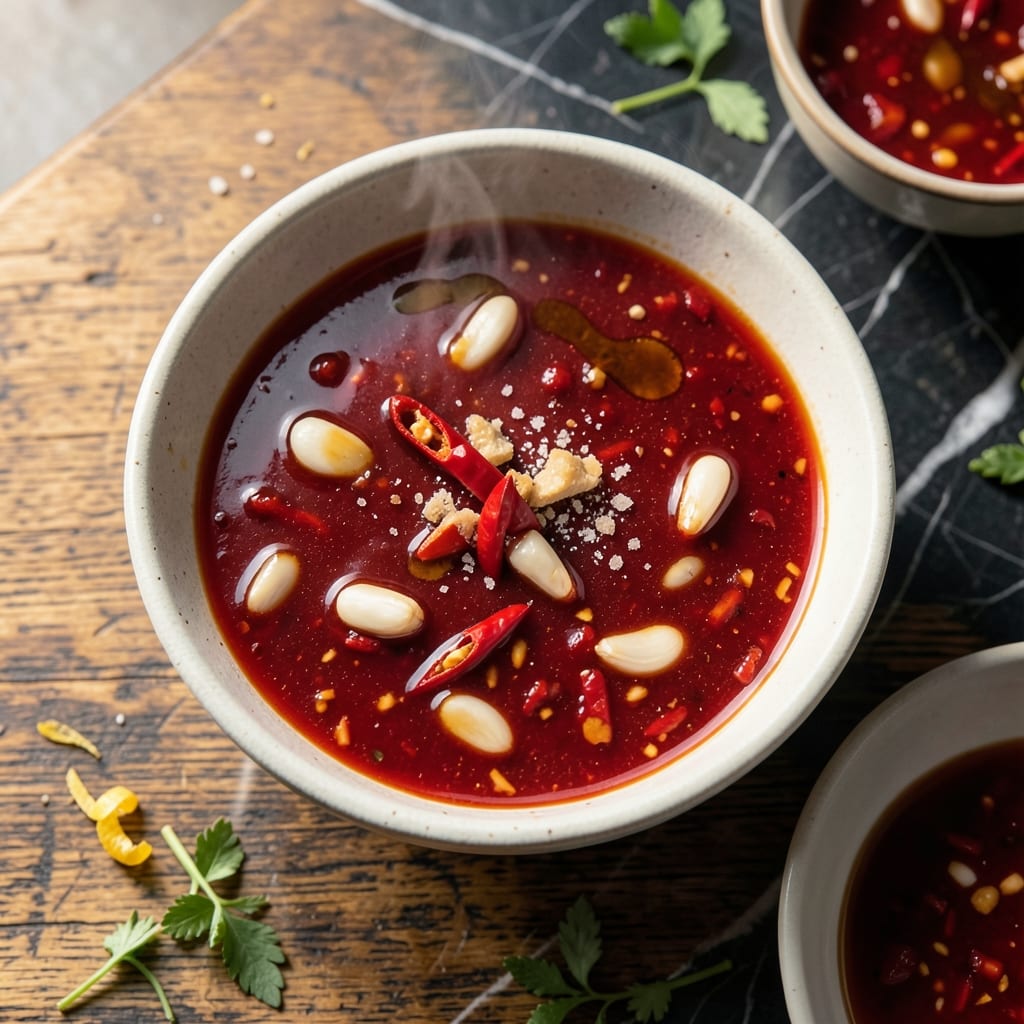
This chili sauce elevates Hainanese chicken rice with its bold, spicy kick that perfectly balances the dish’s subtle flavors. The combination of fresh chili, garlic, and ginger creates a complex base that’s both aromatic and fiery.
What makes this sauce special is its versatility—use it as a dipping sauce, marinade, or stir-fry base. A touch of vinegar adds brightness, while a hint of sugar rounds out the heat. The texture is smooth yet chunky enough to cling to every bite.
You’ll end up with a vibrant red sauce that’s perfect for adding depth to your favorite dishes. It keeps well in the fridge, so you can make a big batch and enjoy it all week.
Simple ingredients, big impact. This is the condiment your kitchen has been missing.
Ingredients for Hainanese Chicken Rice Chili Sauce
Nine simple ingredients transform into this bold, fiery condiment with complex layers of flavor.
| Ingredient | Amount | Notes |
|---|---|---|
| Red Chili Peppers 🌶️ | 8 whole | Fresh, stems removed, seeded |
| Garlic Cloves 🧄 | 6 cloves | Peeled, roughly chopped |
| Fresh Ginger 🌿 | 2 tbsp | Peeled, grated or minced |
| Rice Vinegar 🍶 | 2 tbsp | Or substitute apple cider vinegar |
| Granulated Sugar 🧂 | 1 tbsp | Adjust to taste preference |
| Fish Sauce 🐟 | 1 tbsp | Optional, adds umami depth |
| Salt 🧂 | ½ tsp | Kosher or sea salt |
| Vegetable Oil 🫒 | 2 tbsp | Neutral flavor for frying |
| Lime Juice 🍈 | 1 tbsp | Freshly squeezed preferred |
The chilies are non-negotiable—look for Thai bird’s eye or serrano peppers at your local Asian market (or well-stocked Whole Foods). Freshness matters here, so avoid anything wilted or shriveled. Ginger should be firm with smooth skin. For the fish sauce, Red Boat or Three Crabs brands are reliable. If you’re making a big batch, grab these at H Mart or any Asian grocery.
No Thai chilies? Serranos or jalapeños work in a pinch (use more for heat). Skip the fish sauce? Soy sauce or coconut aminos add a similar salty depth. Out of rice vinegar? White vinegar with a pinch of sugar mimics the mild tang. The oil can be any neutral type—avocado or canola if you don’t have vegetable. Don’t stress about exact chili count—adjust for your heat preference.
This keeps beautifully in a sealed jar in the fridge for up to 2 weeks. The flavors actually deepen after 24 hours, so make it a day ahead if you can. For longer storage, freeze in ice cube trays (good for 3 months). Stir before using—the oil may separate slightly.
Why You’ll Love This Recipe
- 5-Minute Blend: I just toss everything in the blender—no fancy prep, just red chilies, garlic, ginger, and a quick whir.
- Sweet Heat Balance: The sugar and rice vinegar cut the fire just enough, so it’s spicy but still totally addictive.
- Pairs With Everything: Honestly, I drizzle it on rice, noodles, even grilled veggies—it’s my secret weapon for leftovers.
- Pantry Staples Only: Between us, I always have these ingredients on hand, so I can make it whenever the craving hits.
Step-by-Step Instructions for Hainanese Chicken Rice Chili Sauce
Here’s the method for creating this vibrant, flavor-packed condiment with ease.
Step 1: Prepare the Chili Peppers and Aromatics
Start by prepping the 8 whole Red Chili Peppers—remove the stems and seeds for a milder heat, or leave some in for extra spice. Roughly chop the chilis to help them break down faster during cooking.
Next, peel and roughly chop the 6 cloves Garlic Cloves, then peel and grate or mince the 2 tbsp Fresh Ginger. Having these ready before you start cooking ensures a smooth process and prevents burning the aromatics while you chop.
Step 2: Sauté the Base for Depth of Flavor
Heat the 2 tbsp Vegetable Oil in a small saucepan over medium heat. Once shimmering, add the chopped chili peppers, garlic, and ginger. Cook for 3-4 minutes, stirring frequently, until the mixture is fragrant and the garlic turns light golden brown.
Watch carefully—garlic burns quickly and will turn bitter if left too long. You want it just golden, not dark brown. This step builds the foundation of your sauce, so take your time to develop those rich, aromatic flavors.
Step 3: Simmer and Sweeten for Balance
Pour in the 2 tbsp Rice Vinegar, 1 tbsp Granulated Sugar, 1 tbsp Fish Sauce, and 0.5 tsp Salt. Stir well to combine and dissolve the sugar. Reduce the heat to low and let the mixture simmer for 5-7 minutes.
The sauce will thicken slightly and the liquid will reduce, concentrating the flavors. The sugar balances the heat and acidity, while the fish sauce adds a savory depth that makes this sauce truly special. Stir occasionally to prevent sticking.
Step 4: Finish with Fresh Lime Juice
Remove the saucepan from heat and let the mixture cool for 2-3 minutes. Stir in the 1 tbsp Lime Juice, which adds a bright, citrusy note that lifts all the flavors. Taste and adjust seasoning if needed—this is your chance to fine-tune the balance of sweet, spicy, and tangy.
The lime juice also helps to mellow the sauce slightly, rounding out the sharpness of the chilis and vinegar. Let it sit for 5 minutes before serving to allow the flavors to meld together beautifully.
Transfer to a serving bowl and enjoy with your Hainanese chicken rice. This sauce keeps well in the fridge for up to a week, so you can make it ahead of time.
Pro Tips For Making Hainanese Chicken Rice Chili Sauce
- Toast the Aromatics: I learned this the hard way—blooming the minced garlic and ginger in hot oil for 30 seconds before adding chilies removes the raw bite and deepens the flavor.
- Seed the Chilies: After burning my tongue one too many times, I now remove most seeds from the red chilies for heat control while keeping the vibrant color and fruity flavor.
- Balance the Sweetness: Sounds weird, but it works: dissolve the sugar in the warm rice vinegar first so it incorporates evenly instead of sinking to the bottom.
- Rest the Sauce: Give it a solid 10 minutes off the heat before serving—this lets the flavors meld and the oil separate slightly for that authentic restaurant-style finish.
Storing and Reheating This Dish
Refrigerator Storage
Transfer your chili sauce to a clean, airtight glass jar once cooled to room temperature. I use 8-ounce mason jars for perfect portioning. It will stay fresh in the fridge at 40°F or below for up to 2 weeks. 🌡️
Freezer Storage
For longer storage, freeze in ice cube trays for 3-4 hours, then transfer cubes to a freezer bag. This method keeps it fresh for up to 3 months. Thaw only what you need in the fridge overnight.
Thawing Properly
Move frozen sauce to the refrigerator 12-24 hours before use. Never thaw at room temperature—this can promote bacterial growth. For quick thawing, place the sealed container in cold water, changing water every 30 minutes.
Reheating Gently
Warm the sauce in a small pan over low heat for 2-3 minutes, stirring constantly. Avoid boiling to preserve the fresh flavors. If it thickens too much, stir in 1 tsp water to restore consistency.
Freshness Check
Discard if you notice any mold, off smells, or separation that doesn’t stir back together. The vibrant red color should remain bright. Trust your senses—if it seems off, it probably is.
Nutrition Facts
Frequently Asked Questions
Can I use dried chilies instead of fresh?
Yes, but soak 6-8 dried chilies in warm water for 15 minutes first to rehydrate. Dried chilies are more concentrated, so reduce quantity by 25% to avoid excessive heat.
Why did my sauce turn out too spicy?
Balance the heat by stirring in 1 tsp honey or 1 tbsp coconut milk. Next time, remove all chili seeds before cooking. The seeds contain most of the capsaicin.
How can I make it smoother?
Blend the cooked mixture with 2-3 tbsp water until desired consistency. For ultra-smooth texture, strain through a fine-mesh sieve after blending.
Is the fish sauce necessary?
No, but it adds signature umami depth. Substitute with 1 tbsp soy sauce or 1 tsp salt if omitting. The flavor profile will be slightly different but still delicious.

- Jollof Rice Sauce Recipe: West African Tomato and Spice Infusion - September 25, 2026
- Japanese Rice Soup Recipe: Umami-Rich Comfort in a Bowl - September 25, 2026
- Homemade Cream Of Rice Recipe: Silk-Smooth Breakfast in Minutes - September 25, 2026