
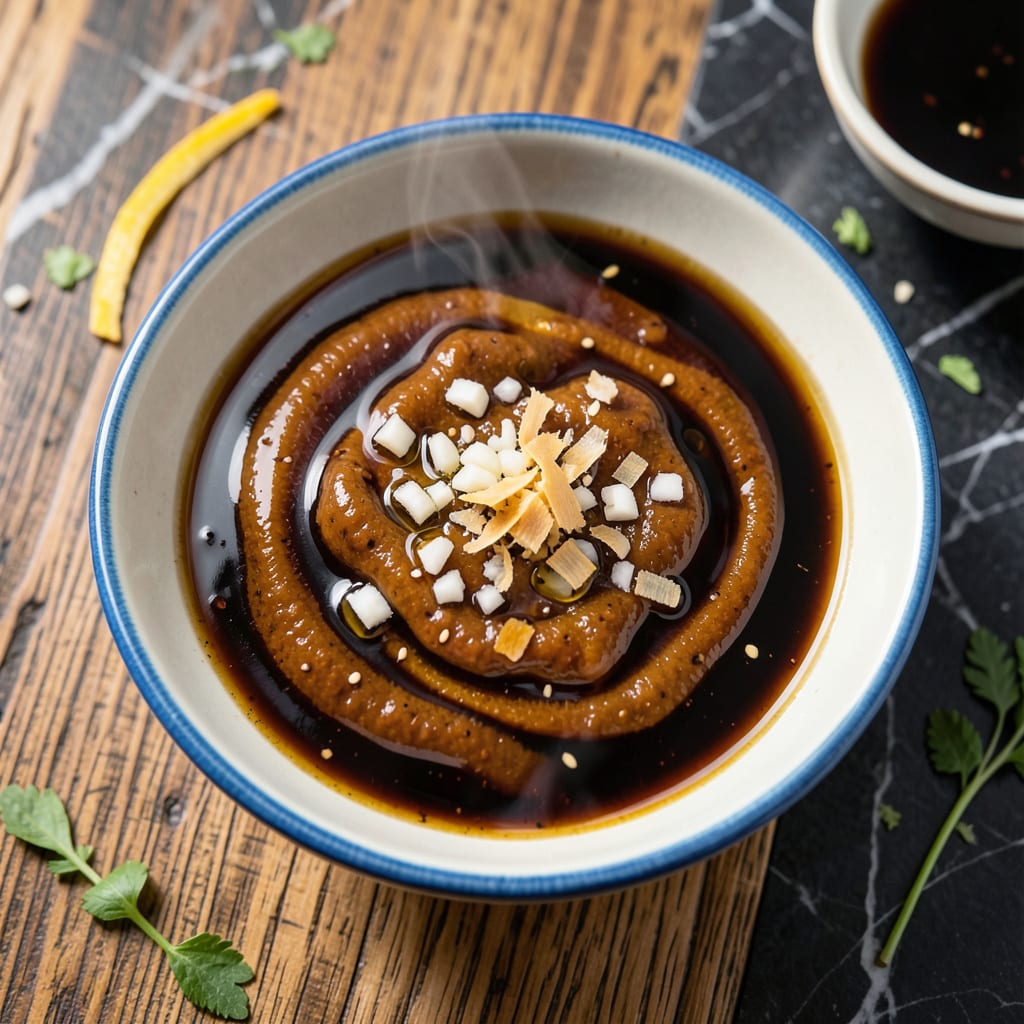
This dipping sauce transforms chicken lettuce wraps into a restaurant-quality experience. A perfect balance of sweet, salty, and umami flavors creates an irresistible complement to any Asian-inspired dish.
With just 5 ingredients and 5 minutes of prep, you’ll have a versatile sauce that elevates wraps, dumplings, or spring rolls. The secret lies in the precise ratio of soy sauce, hoisin, and rice vinegar for authentic depth.
Ingredients for Chicken Lettuce Wrap Dipping Sauce
Five ingredients deliver bold flavor for wraps, dumplings, or spring rolls.
| Ingredient | Amount | Notes |
|---|---|---|
| Low-Sodium Soy Sauce 🥢 | ⅓ cup | For balanced saltiness |
| Hoison Sauce 🍯 | ⅓ cup | Sweet and savory depth |
| Rice Vinegar 🍚 | 2 tbsp | Mild acidity preferred |
| Sesame Oil 🫒 | 1 tsp | Toasted for best flavor |
| Granulated Sugar 🍚 | 1 tbsp | Balances the acidity |
| Garlic Clove 🧄 | 1 clove | Minced finely |
| Fresh Ginger 🌿 | 1 tsp | Grated or minced |
[recipeingredientscaler]
The soy sauce is the foundation. Kikkoman Low-Sodium is the gold standard for consistency—avoid cheaper brands that can taste harsh or metallic. For hoisin, Lee Kum Kee offers the right balance of sweetness and umami. Both are shelf-stable staples at any Asian market or well-stocked supermarket. Rice vinegar should be labeled specifically as such; apple cider vinegar is too assertive here.
No hoisin? Substitute with equal parts oyster sauce and soy sauce plus a touch of honey (though this will slightly alter the flavor profile). Missing rice vinegar? White wine vinegar at half the amount works in a pinch, but it’s sharper. The sesame oil must be toasted—light sesame oil lacks the nutty depth. For a gluten-free version, tamari replaces soy sauce at a 1:1 ratio.
Sauce keeps in the fridge for 1 week in an airtight container. The flavors meld and deepen after a day, so make it ahead. For longer storage, freeze for up to 3 months—thaw and stir well before using. Always bring to room temperature before serving for full flavor expression.
Why You’ll Love This Recipe
- I’ll be real: I always have soy sauce and sesame oil on hand, so this sauce costs next to nothing and comes together in a flash.
- 5-Minute Mix: I just whisk these 5 ingredients together—no cooking, no fuss, and it’s ready before the lettuce wraps hit the table.
- Sweet-Savory Balance: The hoisin brings depth, rice vinegar adds a tangy kick, and that touch of sugar ties it all together beautifully.
- Endless Pairings: Honestly, I use this for more than lettuce wraps—it’s my go-to for spring rolls, grilled chicken, even as a salad dressing.
Step-by-Step Instructions for Chicken Lettuce Wrap Dipping Sauce
This straightforward process combines bold Asian flavors into a perfectly balanced dipping sauce.
Step 1: Prepare the Aromatics
Finely mince the garlic clove and grate or mince the 1 tsp fresh ginger until you have a fine, uniform texture. This step is crucial as the small pieces will infuse the sauce with their flavors without overpowering any single bite.
I always use fresh aromatics rather than powdered versions—their bright, pungent qualities elevate the entire sauce. Set these aside in a small ramekin to keep your workspace organized as you build the sauce.
Step 2: Combine the Liquid Base
In a medium bowl, whisk together the 0.33 cup low-sodium soy sauce and 0.33 cup hoison sauce until fully incorporated. The soy sauce provides a salty backbone while the hoison contributes sweetness and depth.
Add the 2 tbsp rice vinegar and 1 tbsp granulated sugar, then whisk vigorously for 30 seconds until the sugar begins to dissolve. You should see the mixture take on a glossy sheen as the ingredients meld together.
Step 3: Incorporate the Aromatics and Finishing Oil
Add the minced garlic clove and 1 tsp fresh ginger to the bowl, then whisk to distribute evenly. The aromatics will begin to release their essential oils into the sauce immediately.
Finally, drizzle in the 1 tsp sesame oil and whisk for another 15 seconds to emulsify. The sesame oil adds a distinctive nutty aroma that rounds out the flavor profile. Taste and adjust seasoning if needed, though the balance should be spot-on with these proportions.
Step 4: Rest and Serve
Let the sauce rest for 10 minutes at room temperature. This allows the flavors to fully marry and the sugar to completely dissolve, resulting in a smooth, cohesive sauce.
Give it one final whisk before transferring to a serving bowl. The finished sauce should have a rich mahogany color with a glossy texture. It will keep in an airtight container in the refrigerator for up to 1 week, though it’s best used fresh for maximum flavor impact.
Pro Tips For Making Chicken Lettuce Wrap Dipping Sauce
- Whisk Vigorously: Combine the soy sauce and hoisin first—they’re thick and need a good whisk to blend before adding the vinegar and oil. I learned this the hard way when my first batch separated like salad dressing.
- Warm the Hoisin: Microwave the hoisin sauce for 10-15 seconds before mixing—it loosens up and incorporates into the other ingredients much smoother.
- Skip the Chill: Serve this sauce at room temperature so the sesame oil stays fluid and the flavors pop. Cold sauce mutes everything, and nobody wants that.
- Add Sugar Last: Stir in the granulated sugar after the liquids are combined to avoid clumping. Sounds fussy, but it saves you from fishing out little sugar grains later.
Essential Equipment for Perfect Results
Mixing Bowls
I always start with a medium glass mixing bowl from my Pyrex set—it’s non-reactive and lets me see the sauce’s color as it comes together. A 2-cup capacity works perfectly for this recipe’s volume. Glass also makes cleanup easier since sauces don’t stain it like plastic can. 💡
Whisk Selection
A small balloon whisk (about 8 inches) is ideal for emulsifying the sauce. I prefer the OXO Good Grips brand for its comfortable handle. The fine wires help dissolve the sugar completely while incorporating air for a glossy finish.
Measuring Tools
For precise measurements, I use stainless steel measuring cups and spoons. The 1/3 cup and tablespoon measurements are critical here. I also keep a small funneled measuring cup handy for the sesame oil to avoid spills.
Prep Tools
A microplane grater makes quick work of the ginger, while a chef’s knife minces the garlic finely. I use my Wüsthof 8-inch for both tasks. These tools ensure the aromatics are finely processed for even distribution throughout the sauce.
Storage Containers
For storing leftovers, I transfer the sauce to a 16-ounce mason jar with a tight-fitting lid. The glass won’t absorb odors, and the wide mouth makes it easy to pour. I also use these jars for serving—they look great on the table and keep the sauce fresh for up to 1 week. ❄️
Serving Dishes
Small ceramic ramekins (about 4 ounces) are perfect for individual servings. I have a set from Le Creuset that adds a nice touch to the presentation. For larger gatherings, a small glass bowl with a pour spout works beautifully.
Nutrition Facts
Frequently Asked Questions
Can I make this sauce spicy?
Add 1/2 tsp of sriracha or 1/4 tsp red pepper flakes for mild heat. For more kick, increase to 1 tsp or mix in a dash of chili oil.
What if I don’t have hoisin?
Substitute with equal parts oyster sauce and soy sauce plus 1 tsp honey. This mimics the sweet-savory balance, though the flavor will be slightly different.
How long does it keep?
Store in an airtight container in the fridge for up to 1 week. For longer storage, freeze for up to 3 months and thaw overnight.
Can I use this for other dishes?
Yes! It pairs perfectly with dumplings, spring rolls, or grilled meats. The versatile umami flavor works with many Asian-inspired dishes.

- Jollof Rice Sauce Recipe: West African Tomato and Spice Infusion - September 25, 2026
- Japanese Rice Soup Recipe: Umami-Rich Comfort in a Bowl - September 25, 2026
- Homemade Cream Of Rice Recipe: Silk-Smooth Breakfast in Minutes - September 25, 2026