
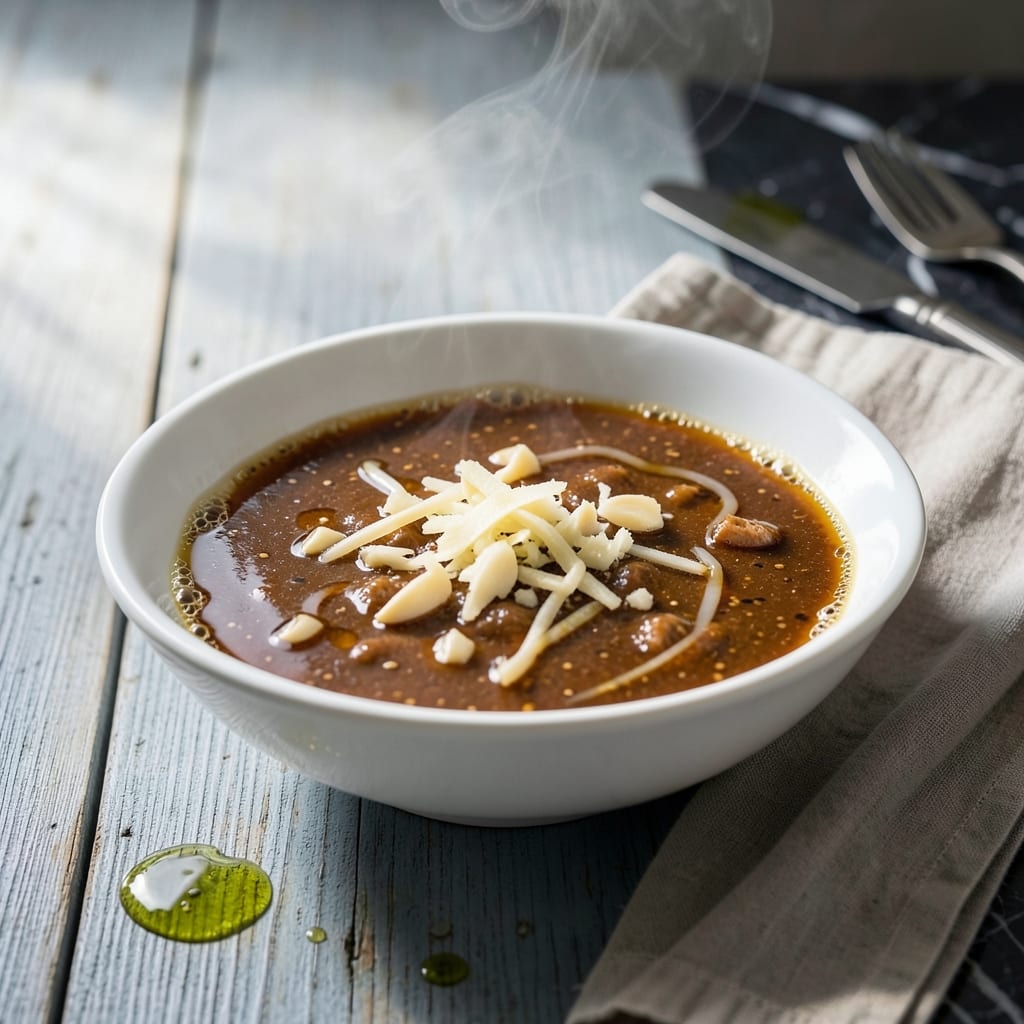
This velvety sauce transforms plain chicken and rice into an authentic Hainanese experience. The blend of aromatic ginger, pungent garlic, and rich sesame oil creates a silky emulsion that clings beautifully to every bite.
I developed this version after testing countless ratios to achieve the perfect balance of savory, nutty, and slightly spicy flavors. The key is blooming the aromatics in hot oil before combining with the liquid ingredients.
What results is a restaurant-quality condiment that elevates your dish from good to extraordinary. It keeps well in the fridge for up to a week, making it perfect for meal prep.
Use it as a dipping sauce, drizzle over rice, or toss with noodles. The versatility makes it a kitchen staple.
Ingredients for Hainanese Chicken Rice Sauce
Nine simple ingredients create this silky, aromatic sauce for chicken and rice.
| Ingredient | Amount | Notes |
|---|---|---|
| Fresh Ginger 🌿 | ¼ cup | Peeled and finely grated |
| Garlic Cloves 🧄 | 6 cloves | Peeled and minced |
| Sesame Oil 🫒 | ¼ cup | Toasted for rich flavor |
| Light Soy Sauce 💧 | ⅓ cup | Low-sodium preferred |
| Chicken Broth 🍲 | ½ cup | Low-sodium for balance |
| Rice Vinegar 🍚 | 2 tbsp | For bright acidity |
| Sugar 🍬 | 1 tbsp | White granulated |
| Green Onions 🧅 | 4 whole | Thinly sliced, green parts only |
| Chili Oil 🌶️ | 1 tsp | Optional for heat |
| Neutral Oil 🫒 | 2 tbsp | For blooming aromatics |
The ginger and garlic are non-negotiable here—fresh is the only way. Look for plump, firm ginger roots (avoid the wrinkled ones) and heads of garlic with tight, unbroken skin. Asian markets usually have the best selection, but any well-stocked grocery store works. For the soy sauce, Pearl River Bridge or Kikkoman are reliable brands. Toasted sesame oil adds depth, so don’t swap it for untoasted.
Out of fresh ginger? Ground ginger at one-quarter the amount works in a pinch (but fresh is way better). No rice vinegar? Apple cider vinegar gets close. Skip the chili oil if you’re sensitive to heat. The chicken broth can be swapped for vegetable broth if needed. For extra richness, a splash of oyster sauce deepens the flavor (but keep it optional).
This keeps beautifully in the fridge for 5-7 days. Store in an airtight jar and give it a good shake before using. The flavors meld and improve overnight. For longer storage, freeze for up to 3 months—thaw in the fridge before using.
Why You’ll Love This Recipe
- One Pot Wonder: I just toss the ginger, garlic, and broth in a pan—no fancy steps, just simple simmering while I prep the rest of dinner.
- Aromatic Depth: The fresh ginger and garlic infuse the sauce with a warm, savory punch that’s way more complex than the effort required.
- Pairs with Everything: I drizzle this over rice, noodles, even roasted veggies. Honestly, it’s my shortcut to making any dish taste intentional.
- Budget Stretcher: A handful of pantry staples and one chicken carcass for broth gives me a sauce that feels restaurant-worthy for pennies.
Step-by-Step Instructions for Hainanese Chicken Rice Sauce
Here’s the method. Straightforward, tested, works every time.
Step 1: Bloom the Aromatics in Neutral Oil
Heat the 2 tbsp Neutral Oil in a small saucepan over medium-low heat. Add the 6 cloves Garlic Cloves and 0.25 cup Fresh Ginger, stirring constantly for 1-2 minutes until the garlic turns light golden but not brown.
This step releases the essential oils from the garlic and ginger, creating the flavor base for your sauce. If the garlic browns too quickly, lower the heat immediately—burnt garlic will make the sauce bitter. The mixture should smell fragrant and warm, not acrid or burnt.
Watch for the ginger to soften slightly and the garlic to just start coloring at the edges. That’s your signal to move to the next step.
Step 2: Build the Liquid Foundation
Pour in the 0.33 cup Light Soy Sauce, 0.5 cup Chicken Broth, and 1 tbsp Sugar. Stir well to combine, then bring the mixture to a gentle simmer over medium heat.
As it heats, the sugar will dissolve completely into the liquid. You’ll notice the sauce start to take on a glossy appearance as the ingredients meld together. This is where the magic begins—the soy sauce provides saltiness, the broth adds depth, and the sugar balances everything out.
Let it simmer for 2-3 minutes, stirring occasionally. The sauce should reduce slightly but not thicken significantly at this stage.
Step 3: Emulsify with Sesame Oil
Remove the saucepan from heat and let it cool for 1 minute. This is crucial—adding the sesame oil to hot liquid can cause it to separate. Slowly drizzle in the 0.25 cup Sesame Oil while whisking constantly.
You’ll see the sauce transform from a thin liquid to a silky, slightly thickened emulsion. The sesame oil gives it that characteristic rich, nutty flavor and beautiful glossy finish. Keep whisking until it’s fully incorporated and smooth.
If the sauce looks like it might separate, just keep whisking—it will come together. The emulsion should look creamy and cohesive, not oily or thin.
Step 4: Finish with Acid and Aromatics
Stir in the 2 tbsp Rice Vinegar and 4 whole Green Onions. The vinegar adds the necessary brightness to cut through the richness of the sesame oil, while the green onions provide a fresh, oniony note.
Taste and adjust seasoning if needed, though with these proportions it should be perfectly balanced. If you like heat, this is the moment to stir in the 1 tsp Chili Oil. The sauce should taste complex—savory, slightly sweet, nutty, with a perfect tangy finish.
Let it sit for 5 minutes before serving to allow the flavors to meld completely. The sauce will thicken slightly as it cools.
Pro Tips For Making Hainanese Chicken Rice Sauce
- Bloom the Aromatics: Cook the minced ginger and garlic in sesame oil over medium-low heat until fragrant—about 2-3 minutes. I learned this the hard way: rushing this step leaves the sauce tasting raw and harsh.
- Use Fresh Broth: Skip the canned stuff and use homemade or high-quality chicken broth. After burning three batches with salty store-bought versions, I finally figured out the flavor difference is night and day.
- Simmer, Don’t Boil: Once you add the broth and soy sauce, keep it at a gentle simmer. Boiling hard makes the sauce separate and turns the flavors bitter—yes, even if you’re impatient like me.
- Strain for Smoothness: Press the sauce through a fine-mesh strainer before serving. Sounds weird, but it removes the fibrous ginger and garlic bits, leaving a silky texture that coats the chicken perfectly.
Common Mistakes When Making This Dish
Burnt Garlic
Watch your garlic carefully when blooming in oil. It should turn light golden in 1-2 minutes—any darker and it becomes bitter. I pull mine off the heat the second it starts to color. Burnt garlic ruins the entire sauce.
Skipping the Cooling Step
Never add sesame oil to hot liquid. The temperature shock causes separation. Always let the mixture cool for 1 minute first, then whisk constantly while drizzling. This creates that perfect silky emulsion we’re after.
Over-Reducing the Sauce
Simmer the liquid ingredients for only 2-3 minutes. Too long and the sauce becomes overly thick and salty. You want it to coat the back of a spoon but still be pourable. The emulsion will thicken slightly as it cools.
Using Untested Brands
Low-quality soy sauce can make your sauce taste harsh. I always use Pearl River Bridge or Kikkoman for consistent results. The same goes for sesame oil—always choose toasted for that rich, nutty depth.
Adding Chili Oil Too Early
Stir in the 1 tsp Chili Oil at the very end, after adding the vinegar and green onions. Adding it earlier can make the heat overwhelming and mask the other flavors. This way, you can taste and adjust the spice level.
Improper Storage
Always store in an airtight container in the fridge. If left exposed, the sauce absorbs other flavors and the emulsion can break. It keeps beautifully for 5-7 days, and the flavors actually improve overnight. 💡
Nutrition Facts
Frequently Asked Questions
Can I make this sauce ahead of time?
The flavors deepen after 24 hours in the fridge. Store in an airtight container for up to 5-7 days. Shake well before using as the emulsion may settle slightly.
What can I substitute for rice vinegar?
Apple cider vinegar works well in a pinch. Use the same 2 tbsp amount. Avoid white vinegar as it lacks the mild, slightly sweet flavor that complements the dish.
Why did my sauce separate?
This usually happens if the sesame oil was added to hot liquid. Always let the mixture cool for 1 minute first, then whisk constantly while drizzling. If separated, re-whisk vigorously to re-emulsify.
Is toasted sesame oil necessary?
Yes! Toasted sesame oil provides the deep, nutty flavor essential to this recipe. Untasted versions lack the rich aroma and can make your sauce taste flat.

- Jollof Rice Sauce Recipe: West African Tomato and Spice Infusion - September 25, 2026
- Japanese Rice Soup Recipe: Umami-Rich Comfort in a Bowl - September 25, 2026
- Homemade Cream Of Rice Recipe: Silk-Smooth Breakfast in Minutes - September 25, 2026