
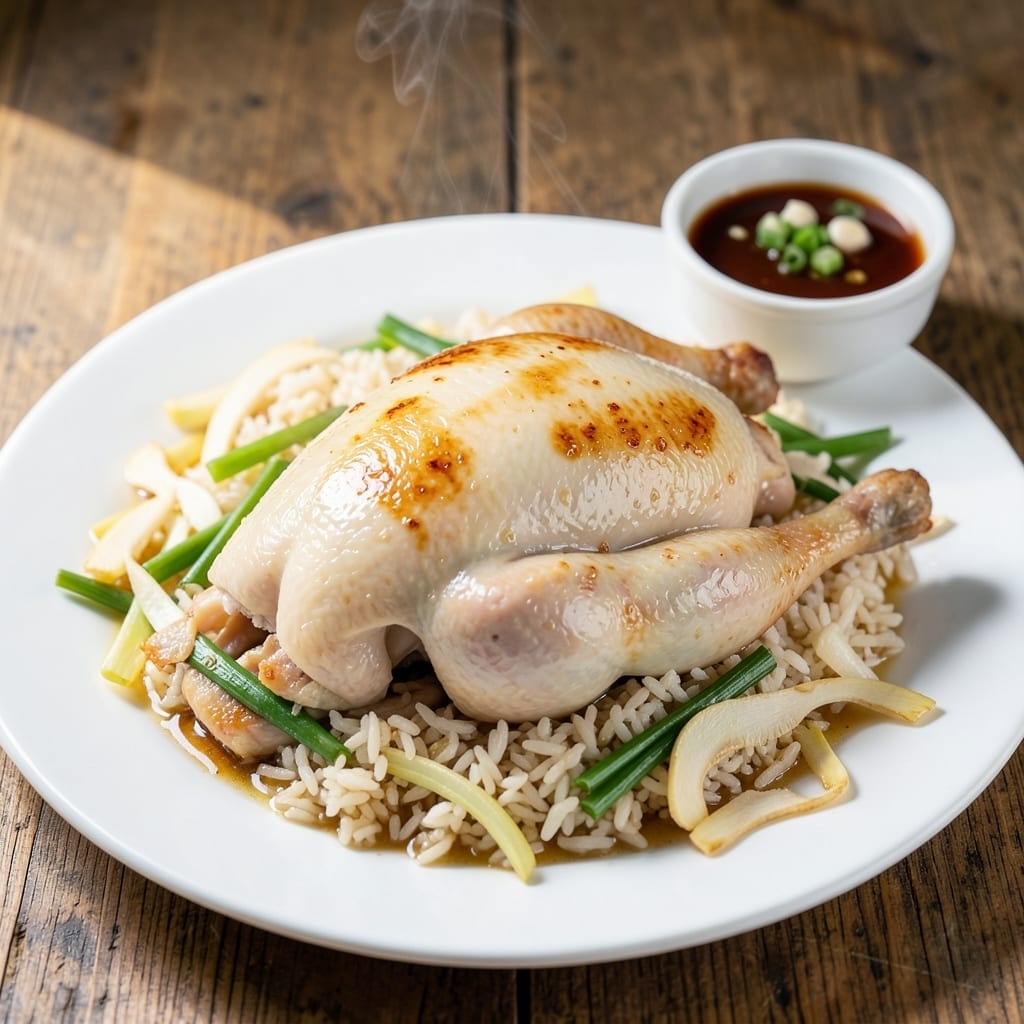
This Hainanese chicken recipe delivers the signature silky smooth texture that made the dish famous. The technique involves precise temperature control during poaching to achieve meat so tender it nearly falls off the bone.
The ginger-garlic sauce provides the essential aromatic punch, while the rice cooked in chicken broth absorbs deep, savory flavors. Every component works together to create the authentic experience you’d find in Singaporean hawker stalls.
What sets this version apart is the attention to traditional details—cold water start for poaching, proper resting time, and the right sauce consistency. The result is perfectly poached chicken with jelly-like skin and juicy flesh.
Serve with cucumber slices and the fragrant broth for dipping. This method ensures restaurant-quality results at home.
Ingredients for Hainese Chicken
Every ingredient here builds toward that signature silky texture and aromatic depth. Nothing superfluous.
| Ingredient | Amount | Notes |
|---|---|---|
| Whole Chicken 🍗 | 3 lb | Skin-on, bone-in, about 3-4 lbs total |
| Fresh Ginger 🌿 | 4 oz | Peeled, sliced into coins |
| Garlic Cloves 🧄 | 8 cloves | Smashed, unpeeled |
| Green Onions 🧅 | 6 whole | White and green parts separated |
| Jasmine Rice 🍚 | 2 cups | Rinsed until water runs clear |
| Chicken Broth 💧 | 6 cups | Low-sodium preferred for control |
| Sesame Oil 🫒 | 2 tbsp | Toasted for depth of flavor |
| Soy Sauce 💧 | 3 tbsp | Light soy sauce recommended |
| Shaoxing Wine 🍷 | 2 tbsp | Dry sherry as substitute |
| Salt 🧂 | 1 tbsp | Diamond Crystal kosher preferred |
| Sugar 🍚 | 1 tsp | Balances sauce flavors |
| Cucumber 🥒 | 1 whole | Thinly sliced for serving |
| Fresh Cilantro 🌿 | ½ cup | Roughly chopped for garnish |
| Neutral Oil 🫒 | 1 tbsp | For finishing sauce |
The chicken quality is non-negotiable. Air-chilled, free-range birds yield superior texture and flavor—seek them at Whole Foods or Asian specialty markets. Ginger should be firm with smooth, taut skin; older rhizomes develop fibrous strings. For the broth, homemade stock provides the cleanest canvas for the aromatic infusions, but premium brands like Kettle & Fire work acceptably.
No Shaoxing wine? Dry sherry at equal volume achieves similar depth. For a non-alcoholic approach, 1 tbsp rice vinegar plus 1 tbsp water mimics the acidity. The rice must be jasmine—its floral notes are essential. If using basmati, reduce water by 15% to prevent mushiness. Green onions can be substituted with chives (use double the amount).
Poached chicken stays moist for 3-4 days refrigerated in its broth. The rice absorbs flavors best when made fresh, but leftover rice reheats well with a splash of broth. Ginger-garlic sauce keeps 1 week tightly sealed. Always bring chicken to room temperature before serving for optimal texture.
Why You’ll Love This Recipe
- One Pot Wonder: I love that the chicken and rice cook together, so I just toss everything in and let the ginger and garlic do their magic.
- Flavor Bomb: The garlic and green onions give it this aromatic kick that makes the chicken taste ridiculously good every single time.
- Meal Prep Hero: This dishes up beautifully for lunches all week—honestly, it tastes even better the next day.
- Budget Friendly: A whole chicken and a handful of pantry staples feed my family for two nights without breaking the bank.
Step-by-Step Instructions for Hainese Chicken
Master the technique for achieving tender, velvety poached chicken with an aromatic ginger-garlic broth.
Step 1: Prepare the Poaching Liquid
In a large stockpot, combine the 6 cups Chicken Broth, 4 oz Fresh Ginger, 8 cloves Garlic Cloves, and the white parts of the 6 whole Green Onions. Bring to a rolling boil over high heat, then reduce to medium-low to maintain a gentle simmer.
This aromatic base infuses the chicken with deep, balanced flavors. The ginger should release its pungent aroma, and the garlic will mellow into sweetness. Simmer for 10 minutes to fully extract their essence before adding the chicken.
Step 2: Poach the Chicken to Silky Perfection
Carefully lower the 3 lb Whole Chicken into the pot, breast-side up. Ensure it is fully submerged in the liquid. If needed, add water to cover. Maintain a gentle simmer—never a boil—to prevent the meat from toughening.
Poach for 35-40 minutes, turning the chicken halfway through, until the internal temperature reaches 165°F and the juices run clear. The chicken is done when it feels firm but still slightly springy to the touch. Remove from heat and let it steep in the broth for 10 minutes to absorb maximum flavor.
Step 3: Rest and Shred the Chicken
Transfer the chicken to a cutting board and let it rest for 15 minutes to allow the juices to redistribute. This step ensures the meat remains moist and tender when shredded.
Once cool enough to handle, remove the skin and bones, then shred the chicken into bite-sized pieces using your hands or two forks. The texture should be silky and uniform, with no dry or stringy bits. Set aside while you prepare the rice and sauce.
Step 4: Cook the Jasmine Rice
Rinse the 2 cups Jasmine Rice under cold water until the water runs clear to remove excess starch, which can make the rice gummy. Drain well.
In a separate pot, bring 2½ cups of the reserved poaching liquid to a boil. Add the rinsed rice, reduce heat to low, cover, and simmer for 15 minutes. Remove from heat and let it sit, covered, for 10 minutes to steam. Fluff with a fork before serving.
Step 5: Prepare the Sauce and Serve
In a small saucepan, heat the 1 tbsp Neutral Oil over medium heat. Add the 3 tbsp Soy Sauce, 2 tbsp Shaoxing Wine, 1 tbsp Salt, and 1 tsp Sugar. Simmer for 2-3 minutes until slightly reduced and the sugar dissolves.
Stir in the 2 tbsp Sesame Oil and the green parts of the Green Onions. Drizzle this fragrant sauce over the shredded chicken. Serve with the jasmine rice, thinly sliced Cucumber, and a sprinkle of 0.5 cup Fresh Cilantro for a refreshing finish.
Pro Tips For Making Hainese Chicken
- Blanch the Chicken: Submerge the whole chicken in boiling water for 2-3 minutes before cooking—this tightens the skin and removes impurities for that signature smooth, pale finish.
- Smash the Ginger: Crush the fresh ginger with the flat side of your knife before slicing—it releases more juice and aroma into the poaching liquid.
- Skip Cold Chicken: Bring the chicken to room temperature for 30 minutes before poaching, or it’ll cook unevenly and dry out near the bones.
- Use Chicken Fat: After poaching, skim off the fat floating on top and drizzle it over the rice—it adds a rich, authentic flavor that oil just can’t match.
Regional Styles of These Flavors
Singapore Original
The classic version from Singapore uses free-range kampung chickens for superior texture. The poaching liquid includes pandan leaves for a subtle floral aroma. The sauce is lighter on soy, emphasizing ginger and garlic. I first tried this at Tian Tian Hainanese Chicken Rice in Maxwell Food Centre. 🌟
Malaysian Adaptation
In Malaysia, they often add turmeric to the poaching liquid for a golden hue. The rice is sometimes cooked with coconut milk for extra richness. The sauce includes chili padi for heat. This version has a more pronounced yellow color.
Thai Variation
Thai cooks add lemongrass and galangal to the broth. The sauce incorporates fish sauce and lime juice for a tangier profile. They often serve it with a side of chili vinegar for dipping. The flavors are brighter and more complex.
Vietnamese Style
Vietnamese versions use brown chicken for deeper flavor. The rice is often cooked with mushroom soy for umami. The sauce includes cilantro stems and black pepper. This adaptation feels heartier and more savory. 💫
Western Fusion
Some modern restaurants serve it as a chicken rice bowl with quinoa or brown rice. The sauce might get a honey-garlic twist. While innovative, purists argue it loses the dish’s delicate balance. I appreciate the creativity but prefer traditional.
Nutrition Facts
Frequently Asked Questions
What’s the secret to silky chicken texture?
Start with cold water and maintain a gentle simmer, never boiling. Poach at 165°F for 35-40 minutes, then rest in broth for 10 minutes. This ensures tender, jelly-like meat.
Can I use chicken breasts instead?
Yes, but reduce poaching time to 15-18 minutes. Breasts dry out faster than whole birds. Keep them submerged in broth to maintain moisture.
Why is jasmine rice essential?
Its floral aroma complements the dish’s delicate flavors. Basmati or long-grain won’t absorb the broth the same way. For best results, rinse until water runs clear.
How do I fix bland sauce?
Balance with extra soy sauce or a touch of sugar. Simmer for 2-3 minutes to blend flavors. Fresh garlic and ginger boost aroma.

- Jollof Rice Sauce Recipe: West African Tomato and Spice Infusion - September 25, 2026
- Japanese Rice Soup Recipe: Umami-Rich Comfort in a Bowl - September 25, 2026
- Homemade Cream Of Rice Recipe: Silk-Smooth Breakfast in Minutes - September 25, 2026