
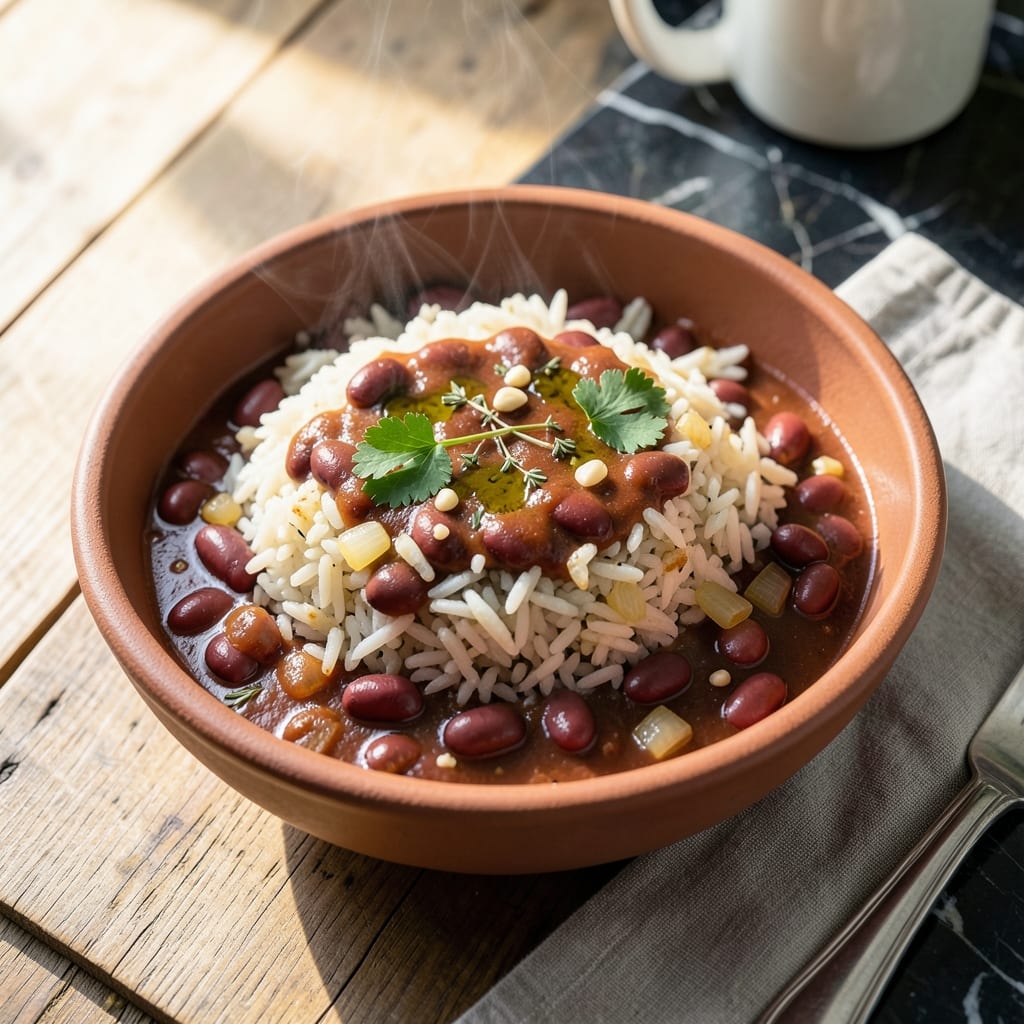
This sauce brings the authentic taste of Haiti to your table with its rich, deeply flavored profile. It’s the perfect companion to rice and beans, elevating every bite with island-inspired warmth.
With simple ingredients and traditional techniques, this creation delivers bold, authentic flavor that’s both comforting and versatile. Ready in minutes, it transforms any meal into a celebration of Haitian cuisine.
Ingredients for Haitian Rice and Beans Sauce
Nine authentic Haitian ingredients blend into this vibrant, traditional island sauce.
| Ingredient | Amount | Notes |
|---|---|---|
| Tomato Paste 🍅 | ¼ cup | For deep umami base |
| Yellow Onion 🧅 | 1 whole | Finely diced for texture |
| Garlic Cloves 🧄 | 4 cloves | Minced for aromatic depth |
| Scotch Bonnet Pepper 🌶️ | ½ whole | Seeds removed for heat control |
| Fresh Thyme Leaves 🌿 | 2 tbsp | Stems discarded, chopped |
| Fresh Parsley 🍃 | ¼ cup | Chopped, flat-leaf preferred |
| Vegetable Broth 🥫 | 1 cup | Low-sodium for balance |
| Extra-Virgin Olive Oil 🫒 | 2 tbsp | For sautéing vegetables |
| Lime Juice 🍈 | 2 tbsp | Freshly squeezed for brightness |
The tomato paste is foundational—San Marzano brands offer the deepest flavor, though any high-quality paste works. Scotch bonnet peppers are non-negotiable for authenticity; find them at Caribbean markets or well-stocked international grocers. Fresh thyme and parsley are standard in Haitian cooking, so avoid dried substitutes if possible for the most genuine profile.
No Scotch bonnet? Habanero at half the quantity works in a pinch, though the flavor differs slightly. Dried thyme can be used at one-third the amount, but fresh is strongly preferred. For the broth, homemade vegetable stock elevates the sauce, though store-bought (like Imagine or Pacific Foods) is acceptable. Lime juice can be swapped for lemon, but lime’s floral notes are traditional.
This sauce keeps well—store in an airtight container in the fridge for up to 1 week or freeze for 3 months. The flavors deepen overnight, so make it a day ahead if possible. Always stir before using, as the herbs may settle.
Why You’ll Love This Recipe
- One Pot Magic: I throw everything in a single pot—the tomato paste, garlic, and thyme—and let it simmer while I fold laundry.
- Flavor Bomb: The scotch bonnet and fresh thyme give this sauce a depth that’s honestly hard to beat.
- Meal Prep Hero: I make a big batch on Sunday and it reheats beautifully for quick weeknight dinners.
- Budget Friendly: A handful of affordable ingredients stretches into multiple meals, and it’s just as good the next day.
Step-by-Step Instructions for Haitian Rice and Beans Sauce
Authentic technique and proper layering of flavors ensure this sauce captures the essence of Haitian cuisine.
Step 1: Sauté Aromatic Base
Heat 2 tbsp Extra-Virgin Olive Oil in a heavy pot over medium heat. Add the 1 whole Yellow Onion (finely diced) and cook for 5-6 minutes until translucent and beginning to soften at the edges. This forms your flavor foundation.
Add the 4 cloves Garlic Cloves (minced) and cook for 1 minute until fragrant. The garlic should sizzle gently but not brown—browned garlic turns bitter. Stir frequently to prevent hot spots from forming in the pot.
Step 2: Develop Umami Depth
Stir in the 0.25 cup Tomato Paste and cook for 2-3 minutes, stirring constantly. The paste will darken slightly and begin to cling to the bottom of the pot—this is the Maillard reaction developing complex flavors. A wooden spoon works best for scraping the fond as it forms.
Add the 0.5 whole Scotch Bonnet Pepper (seeds removed, finely minced) and cook for another 1 minute. The pepper infuses heat without overwhelming the sauce. Be cautious when handling scotch bonnet—wear gloves if sensitive to capsaicin.
Step 3: Build Herbaceous Complexity
Incorporate the 2 tbsp Fresh Thyme Leaves and 0.25 cup Fresh Parsley (chopped). Cook for 1-2 minutes until the herbs soften and their essential oils release. The thyme provides earthy depth while parsley adds freshness.
The mixture should become thick and paste-like at this stage. If it sticks excessively, reduce heat slightly. This concentrated base ensures every spoonful delivers intense Haitian character.
Step 4: Create Sauce Consistency
Pour in the 1 cup Vegetable Broth and stir to combine, scraping any browned bits from the pot bottom. Bring to a gentle simmer over medium-low heat and cook for 10-12 minutes until the sauce thickens to a pourable consistency.
The sauce should coat the back of a spoon but still flow easily. If it reduces too quickly, add a splash of water. This slow reduction allows flavors to meld completely.
Step 5: Finish with Brightness
Remove from heat and stir in the 2 tbsp Lime Juice. The acidity cuts through the richness and brightens all flavors. Taste and adjust seasoning if needed, though the natural saltiness of the tomato paste and broth usually provides sufficient balance.
Let the sauce rest for 5 minutes before serving to allow flavors to fully harmonize. The final texture should be velvety with visible herb flecks throughout, ready to elevate rice and beans to authentic Haitian excellence.
Pro Tips For Making Haitian Rice And Beans Sauce
- Bloom the Paste: Cook the tomato paste for 2-3 minutes in the pot before adding liquids—this deepens the flavor and removes any raw taste. I learned this the hard way after wondering why my sauce tasted flat.
- Bruise the Thyme: Lightly crush the fresh thyme leaves between your fingers before adding them to release more aroma. Sounds weird, but it works and makes the sauce more fragrant.
- Seed the Pepper: Remove the seeds from the Scotch Bonnet before mincing unless you want serious heat. After burning my tongue once, I now double-check every time.
- Sauté Onions Slow: Let the yellow onions caramelize for about 8-10 minutes on medium-low—this builds a sweet base that balances the acidity of the tomato paste.
Dietary Considerations for This Dish
Vegan and Plant-Based
This sauce is naturally 100% plant-based, making it perfect for vegan diets. All ingredients—from the tomato paste to the vegetable broth—are derived from plants, with no animal products involved. It’s a flavorful way to add depth to vegan rice and beans. 🌱
Gluten-Free Friendly
As written, this creation contains no gluten ingredients. The tomato paste, herbs, and broth are all naturally gluten-free. Just ensure your vegetable broth is certified gluten-free, as some brands may contain additives.
Allergen Considerations
This recipe is free from the top allergens like dairy, eggs, and nuts. The only potential concern is the Scotch bonnet pepper for those with nightshade sensitivities. Always check labels on pre-packaged ingredients like broth for hidden allergens.
Low-Sodium Option
To reduce sodium, use low-sodium vegetable broth and no-salt-added tomato paste. Brands like Imagine Foods or Muir Glen offer great options. The lime juice and herbs will still provide plenty of flavor without added salt.
Dietary Flexibility
This sauce fits well into whole-food, Mediterranean, and clean-eating diets. It’s packed with fresh herbs and vegetables, with no processed ingredients. For those watching carbs, it adds big flavor without significant sugar or starch. 💪
Storage and Safety
When storing, use airtight containers and refrigerate within 2 hours of cooking. The sauce keeps for 1 week in the fridge or 3 months in the freezer. Always reheat to 165°F before serving.
Nutrition Facts
Frequently Asked Questions
Can I make this sauce ahead of time?
Yes! The flavors actually deepen overnight. Store in an airtight container in the fridge for up to 1 week or freeze for 3 months.
What if I can’t find Scotch bonnet peppers?
Use habenero at half the quantity as a substitute. The flavor differs slightly, but it maintains the traditional heat level. Avoid jalapeños—they’re too mild.
Why does the tomato paste need to darken?
Cooking the paste develops the Maillard reaction, creating complex, rich flavors. This step ensures your sauce has authentic depth, not a raw tomato taste.
Can I use dried herbs instead of fresh?
Yes, but use 1/3 the amount. Fresh thyme and parsley are traditional, but dried works in a pinch. The sauce may be slightly less vibrant.

- Jollof Rice Sauce Recipe: West African Tomato and Spice Infusion - September 25, 2026
- Japanese Rice Soup Recipe: Umami-Rich Comfort in a Bowl - September 25, 2026
- Homemade Cream Of Rice Recipe: Silk-Smooth Breakfast in Minutes - September 25, 2026