
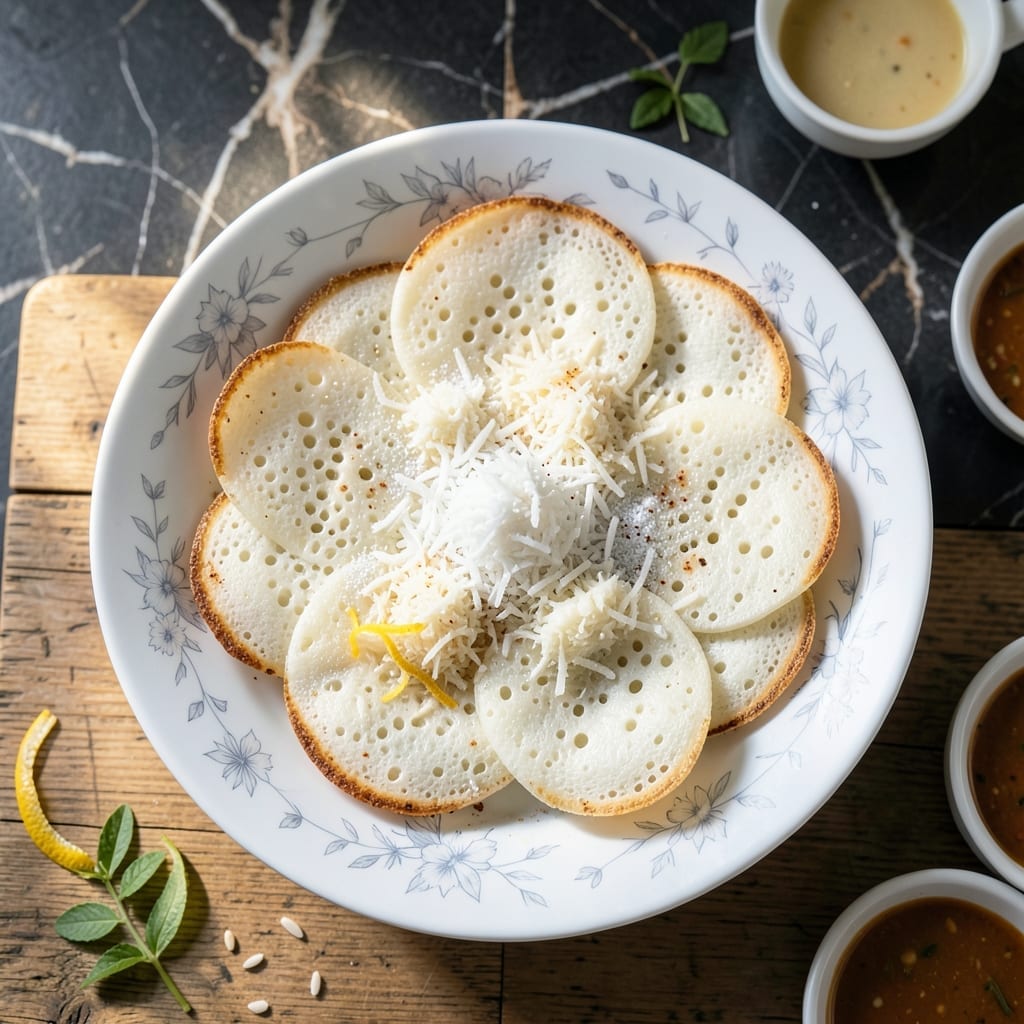
There’s a special satisfaction in mastering traditional appam, with its soft, lacy edges and fluffy centers. This fermentation-based dish transforms simple rice and coconut into something extraordinary.
The process begins with soaking rice overnight, then grinding it into a smooth batter with grated coconut. Fermentation is key, developing the characteristic tang and airy texture that makes appam unique.
Cooking in a special appam pan creates the signature bowl shape with crisp edges and a tender, pillowy middle. The result is a versatile dish perfect for breakfast, lunch, or dinner.
Serve with your favorite curry or sweet coconut milk for a taste of authentic South Indian cuisine.
Ingredients for Rice Appam
Simple rice and coconut transform into these airy, lacy-edged delights with just a little patience.
| Ingredient | Amount | Notes |
|---|---|---|
| Raw Rice 🌾 | 2 cups | Short-grain or parboiled preferred |
| Grated Coconut 🥥 | 1 cup | Fresh or frozen, unsweetened |
| Cooked Rice 🍚 | ½ cup | For smoother batter texture |
| Sugar 🍚 | 2 tbsp | Granulated, for fermentation |
| Active Dry Yeast 🍞 | ¼ tsp | Or 1/4 cup fermented batter |
| Salt 🧂 | ½ tsp | Adjust to taste after fermentation |
| Water 💧 | 1 ½ cups | As needed for batter consistency |
| Coconut Milk 🥥 | ½ cup | Optional, for richer batter |
| Cardamom Pods 🌿 | 4 pieces | Lightly crushed, for aroma |
| Cumin Seeds 🌿 | ½ tsp | Optional, for savory version |
| Curry Leaves 🍃 | 10 pieces | Fresh or dried, optional |
| Coconut Oil 🫒 | 2 tbsp | For greasing appam pan |
The rice is everything here. Short-grain or parboiled rice gives the best texture—avoid basmati, which stays too firm. I source mine from Indian grocery stores (look for raw rice labeled ‘appam rice’ or ‘idli rice’). The grated coconut should be fresh if possible, but unsweetened frozen works in a pinch. Don’t skip the cooked rice—it’s the secret to that velvety batter (worth the extra step).
No yeast? Use 1/4 cup of leftover fermented batter from a previous batch instead. Short on time? Instant yeast at half the amount speeds things up. The sugar isn’t just for sweetness—it feeds the fermentation, so don’t omit it. For a sweeter appam, add 2 extra tablespoons to the batter. Savory version? Skip the sugar and add a pinch of turmeric to the batter.
Batter ferments best in a warm spot (I use my oven with the light on). Once fermented, it keeps in the fridge for 2-3 days. Cooked appam are best fresh, but you can reheat them wrapped in a damp towel in the microwave for 20 seconds. Leftovers? Turn them into appam upma the next day.
Why You’ll Love This Recipe
- Minimal Soaking: I just soak the raw rice for a few hours—no overnight fuss, and the yeast does the rest of the work.
- Sweet Coconut Magic: The grated coconut and sugar blend into this warm, lightly sweet flavor that’s pure comfort in every bite.
- Breakfast or Snack: Honestly, it’s my go-to for breakfast, tea-time, or even a quick dessert—so versatile.
- Budget Stretch: A handful of rice, a little coconut, and it feeds the whole family without breaking the bank.
Step-by-Step Instructions for Rice Appam
This method yields perfectly soft, lacy appams with a delicate coconut aroma every time.
Step 1: Soak and Prepare the Rice Base
Combine the 2 cups Raw Rice and 0.5 cup Cooked Rice in a large bowl. Rinse thoroughly under cold water until it runs clear, then drain completely. Add the 1.5 cups Water and let it soak for at least 4 hours (overnight is ideal for best fermentation).
The cooked rice helps create a smoother batter texture, which is essential for those characteristic soft, pillowy centers. I always use short-grain rice for this dish—it gives the appams their signature softness and slight chew.
Step 2: Blend and Ferment the Batter
Drain the soaked rice completely, then transfer it to a blender. Add the 1 cup Grated Coconut, 2 tbsp Sugar, 0.25 tsp Active Dry Yeast, and 0.5 cup Coconut Milk. Blend until completely smooth—this should take 2-3 minutes with a powerful blender.
Pour the batter into a large bowl, cover with a clean kitchen towel, and let it ferment in a warm place for 6-8 hours or until it doubles in volume and becomes slightly bubbly. The sugar feeds the yeast, ensuring proper fermentation for that light, airy texture.
Step 3: Season and Adjust Consistency
Once fermented, stir in the 0.5 tsp Salt. The batter should be the consistency of thin pancake batter—if it’s too thick, add a little water, but remember you’ve already used the 1.5 cups Water in the soaking step. Now is also the time to add the 4 pieces Cardamom Pods (lightly crushed) for aroma.
For a savory version, I add the 0.5 tsp Cumin Seeds and 10 pieces Curry Leaves at this stage. These ingredients infuse the batter with warm, earthy flavors that complement the coconut perfectly. Let the batter rest for another 30 minutes to allow the flavors to meld.
Step 4: Cook the Appams to Perfection
Heat an appam pan (or small nonstick skillet) over medium heat and brush lightly with coconut oil. Pour a ladleful of batter into the center of the pan, then quickly swirl the pan to coat the sides thinly while leaving a thicker center.
Cover and cook for 2-3 minutes until the edges turn golden brown and crisp, while the center remains soft and slightly custardy. The appam is ready when it easily releases from the pan. Remove carefully and repeat with the remaining batter, greasing the pan with more coconut oil between each appam.
Pro Tips For Making Rice Appam
- Soak the Rice: I learned this the hard way—soak raw rice for at least 4-5 hours (overnight is even better) to get that smooth, lump-free batter.
- Use Warm Water: When activating yeast, use water at about 110°F—hotter than that and you’ll kill it, colder and it won’t bloom properly.
- Skip Old Coconut: Freshly grated coconut makes a real difference; the pre-packaged stuff often tastes stale and ruins the flavor.
- Ferment Longer: After mixing, let the batter ferment for 6-8 hours in a warm spot—rushing this step leaves appams dense instead of light and airy.
Creative Variations of This Recipe
Sweet Coconut Appam
For a dessert version, increase sugar to ¼ cup and add ½ tsp cardamom powder to the batter. The warm spice enhances the coconut flavor beautifully. Serve with coconut milk and jaggery syrup for dipping. 💛
Savory Spiced Appam
Add ½ tsp cumin seeds and 10 curry leaves to the batter before cooking. The earthy notes pair perfectly with coconut. These make excellent companions for vegetable stews or lentil curries.
Egg Appam
For extra protein, beat 1 egg into the fermented batter. This variation, popular in some Kerala households, creates a slightly denser but still fluffy texture. Cook as usual, ensuring the egg is fully incorporated.
Instant Appam
Short on time? Use 1 cup rice flour and ½ cup semolina instead of soaked rice. Mix with coconut and yeast, then let ferment for just 2 hours. The texture differs slightly but still delivers delicious results. ⚡
Rava Appam
Replace ½ cup raw rice with ½ cup semolina (rava) for a nuttier flavor. Soak the rava separately in warm water for 30 minutes before blending. This variation adds a pleasant grainy texture to the soft appam.
Kallappam
This toddy-infused version uses fermented palm sap instead of yeast. For a home-friendly approach, add 1 tbsp vinegar to the batter for tang. The result is slightly sour with a complex depth of flavor.
Nutrition Facts
Frequently Asked Questions
Why does my batter not ferment properly?
Check your yeast freshness and fermentation conditions. Use warm water for yeast activation and place the batter in a warm spot (80-85°F). Cold temperatures slow fermentation significantly.
Can I use store-bought rice flour?
Yes, but soak the flour in warm water for 30 minutes first. The texture won’t be identical to traditional soaked rice, but it works for quick versions. Add 1 tbsp extra coconut for better flavor.
What pan works if I don’t have an appam pan?
A small nonstick skillet with sloped sides works well. Heat on medium-low and swirl the batter immediately. The appams will be slightly thicker but still delicious.
How do I store leftover batter?
Refrigerate in an airtight container for up to 2 days. The fermentation continues slowly, so you may need to thin it with water before using. Discard if it develops an off smell.

- Jollof Rice Sauce Recipe: West African Tomato and Spice Infusion - September 25, 2026
- Japanese Rice Soup Recipe: Umami-Rich Comfort in a Bowl - September 25, 2026
- Homemade Cream Of Rice Recipe: Silk-Smooth Breakfast in Minutes - September 25, 2026