
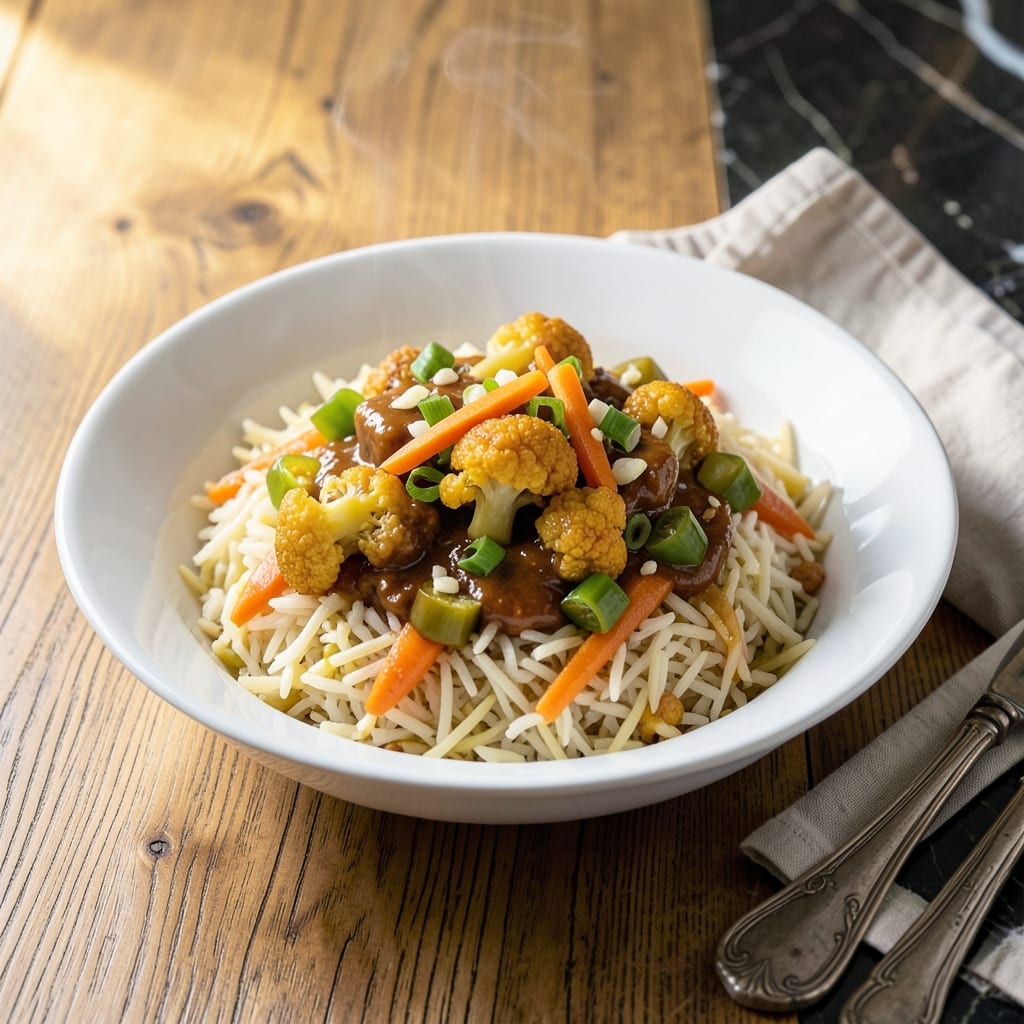
This Indo-Chinese fusion dish brings bold flavors to your table with minimal effort. The combination of savory sauce and fluffy rice creates a satisfying one-bowl meal.
I developed this recipe to capture the restaurant-quality taste at home, using simple pantry staples. The sauce comes together quickly while the rice cooks, making it efficient for busy evenings.
The key is balancing the tangy, spicy, and sweet elements in the sauce. Each bite delivers layers of flavor that keep you reaching for more.
Serve hot with extra green onions for freshness and a sprinkle of sesame seeds for texture.
Ingredients for Manchurian Rice
Bold flavors start with these pantry staples and fresh veggies for a quick meal.
| Ingredient | Amount | Notes |
|---|---|---|
| Basmati Rice 🍚 | 1 ½ cups | Rinsed until water runs clear |
| Cauliflower 🥬 | 3 cups | Cut into small florets |
| Carrots 🥕 | 2 whole | Julienned or finely diced |
| Green Bell Pepper 🌶️ | 1 whole | Diced into small pieces |
| Green Onions 🧅 | 4 whole | Thinly sliced, white and green parts separated |
| Garlic Cloves 🧄 | 4 cloves | Minced finely |
| Ginger 🌿 | 1 tbsp | Freshly grated |
| Soy Sauce 🫒 | 3 tbsp | Low-sodium preferred |
| Tomato Ketchup 🍅 | ½ cup | For tangy sweetness |
| Chili Sauce 🌶️ | 3 tbsp | Adjust to spice preference |
| Rice Vinegar 💧 | 1 tbsp | For acidity balance |
| Brown Sugar 🍚 | 1 tbsp | Or substitute coconut sugar |
| Vegetable Oil 🫒 | 3 tbsp | For stir-frying vegetables |
| Cornstarch 🌾 | 1 tbsp | Mixed with 2 tbsp water for slurry |
| Sesame Oil 🫒 | 1 tsp | For finishing touch |
| Sesame Seeds 🌰 | 1 tbsp | Toasted for garnish |
The cauliflower is key for that classic Manchurian texture. Look for firm heads with tight florets at Whole Foods or your local Asian market—they usually have the best selection. Fresh ginger and garlic make a huge difference here (the pre-minced stuff just doesn’t cut it). Trader Joe’s carries great organic options if you’re in a pinch. For rice, basmati is ideal, but jasmine works too if that’s what you’ve got.
No cauliflower? Broccoli or cabbage can stand in without missing a beat. Out of chili sauce? Sriracha at half the amount plus a touch of sugar gets you close. Vegetable oil can be swapped for peanut or sunflower oil—whatever has a high smoke point. The ketchup might seem odd, but it’s essential for that authentic Indo-Chinese flavor (don’t skip it).
The sauce comes together in minutes—make extra and freeze for up to 3 months. Leftover rice keeps 4-5 days in the fridge, but the cauliflower is best fresh. Always toast your sesame seeds (dry pan, 2 minutes) for maximum crunch.
Why You’ll Love This Recipe
- One Pot Meal: I just toss everything in together—cauliflower, carrots, peppers—and let the rice soak up all the flavor.
- Umami Bomb: The mix of veggies and basmati rice with that savory Manchurian sauce? Ridiculously good.
- Lunchbox Hero: It reheats beautifully, so I pack leftovers for work and my kids never complain.
- Pantry Friendly: Basmati and whatever veggies I have on hand—no last-minute grocery runs.
Step-by-Step Instructions for Manchurian Rice
Here’s how I create this flavor-packed dish with the perfect balance of textures and bold Indo-Chinese flavors.
Step 1: Cook the Basmati Rice to Fluffy Perfection
Rinse the 1.5 cups Basmati Rice under cold water until the water runs clear—this removes excess starch and prevents gummy rice. I use a fine-mesh strainer for this step to make it easier. Once rinsed, cook the rice according to package directions, but use slightly less water than called for to keep the grains separate.
When the rice is done, fluff it with a fork and spread it on a tray to cool completely. This prevents it from clumping when mixed with the sauces later. The grains should be light, dry, and easy to separate with your fingers.
Step 2: Stir-Fry the Vegetables Until Tender-Crisp
Heat 2 tablespoons of the 3 tbsp Vegetable Oil in a large wok or skillet over medium-high heat. Add the 3 cups Cauliflower, 2 whole Carrots, and 1 whole Green Bell Pepper. Stir-fry for 5-6 minutes until the vegetables soften slightly but still retain a bit of bite—you want them tender-crisp.
Push the vegetables to one side of the pan, then add the remaining 1 tablespoon Vegetable Oil to the empty space. Toss in the white parts of the 4 whole Green Onions, the 4 cloves Garlic Cloves, and the 1 tbsp Ginger. Sauté for 1 minute until the aromatics are fragrant and the garlic just begins to turn light golden brown.
Step 3: Build the Manchurian Sauce
In a small bowl, whisk together the 3 tbsp Soy Sauce, 0.5 cup Tomato Ketchup, 3 tbsp Chili Sauce, 1 tbsp Rice Vinegar, and 1 tbsp Brown Sugar until smooth. Pour this sauce over the stir-fried vegetables and toss to coat evenly.
Cook for 2-3 minutes until the sauce thickens slightly and clings to the vegetables. If it seems too thin, mix the 1 tbsp Cornstarch with 2 tablespoons of water to make a slurry, then stir it into the pan. Let it simmer for 1 minute** until the sauce becomes glossy and coats the back of a spoon.
Step 4: Combine Rice and Vegetables for the Final Dish
Add the cooled Basmati Rice to the wok with the saucy vegetables. Gently fold everything together using a spatula, ensuring the rice is evenly coated with the Manchurian sauce. Be careful not to overmix—you want to keep the rice grains intact.
Drizzle the 1 tsp Sesame Oil over the top and toss once more to distribute it evenly. The sesame oil adds a nutty depth that ties all the flavors together beautifully.
Step 5: Garnish and Serve Immediately
Transfer the Manchurian Rice to a serving platter or individual bowls. Sprinkle the green parts of the 4 whole Green Onions and the 1 tbsp Sesame Seeds over the top for a fresh crunch and visual appeal.
Serve hot, with extra chili sauce on the side for those who like it spicier. The dish should have a vibrant color, with the rice glistening from the sauce and the sesame seeds adding a toasty finish.
Pro Tips For Making Manchurian Rice
- Parboil the Cauliflower: Soak cauliflower florets in hot salted water for 3-4 minutes before frying—this keeps them crisp while ensuring they cook through without turning mushy. I learned this the hard way after ending up with half-raw, half-soggy bits in my first few attempts. —
- High Heat for Veggies: Stir-fry the carrots, bell pepper, and green onions on high heat for just 2-3 minutes. Any longer and they’ll lose that bright crunch that makes manchurian rice so satisfying. —
- Rinse the Basmati: Wash the basmati rice until the water runs clear, then soak it for 20 minutes before cooking. Skipping this step leaves you with sticky, clumpy rice instead of those perfect, separate grains. —
- Use Cornstarch Slurry: Thicken the manchurian sauce with a mix of 1 tablespoon cornstarch and 2 tablespoons water—add it at the end for a glossy, restaurant-style coating that clings to the rice and veggies. Sounds simple, but it’s the difference between a saucy dish and a soggy one.
Essential Equipment for Great manchurian rice
Essential Wok
Invest in a 14-inch carbon steel wok for even heat distribution—it handles high heat better than non-stick. I use Made In’s carbon steel wok for its durability and professional results. The wide surface lets you stir-fry vegetables without crowding, which is key for that smoky wok hei flavor. 🔥
High Heat Stove
A gas stove with 15,000+ BTU burners gives you the intense heat needed for authentic stir-frying. If you have an electric range, look for a portable butane burner like Iwatani—it reaches temperatures non-stick pans can’t handle. Always preheat your wok for 2 minutes before adding oil.
Rice Cooker
For perfectly fluffy basmati every time, I swear by my Zojirushi 5.5-cup rice cooker. It consistently produces separate grains that won’t turn mushy when mixed with the sauce. If you don’t have one, use a heavy pot with a tight lid and cook at a 1:1.5 rice-to-water ratio.
Quality Knives
A sharp 8-inch chef’s knife makes quick work of all the veggie prep. I’ve used my Wüsthof Classic for years—it handles cauliflower florets and julienned carrots with ease. Keep it honed with a ceramic sharpening rod before each use for safety and precision.
Mixing Bowls
Have a set of stainless steel mixing bowls in various sizes for prepping ingredients. I use a 3-quart bowl for the sauce and a 5-quart bowl for the rice. The weight helps keep them steady while whisking. They also nest for easy storage.
Wooden Spoons
A flat wooden spatula is perfect for folding rice and vegetables together without crushing the grains. Avoid metal utensils that can scratch your wok’s surface. I keep one dedicated to stir-frying—it develops a natural patina over time.
Nutrition Facts
Frequently Asked Questions
Can I use regular rice instead of basmati?
Yes, but basmati’s long grains stay separate better. Jasmine or long-grain white work too. Rinse well and use 1:1.5 rice-to-water ratio to avoid mushiness.
How do I make it spicier?
Add 1 tsp red chili flakes or 1 tbsp sriracha to the sauce. For extra heat, toss in diced green chilies while stir-frying. Adjust to taste carefully!
Can I prepare the sauce ahead of time?
Mix and store the sauce in an airtight container for up to 3 days in the fridge. Stir well before using as ingredients may settle.
Why did my rice turn mushy?
Likely overmixed or used too much water. Cook rice al dente, cool completely, and fold gently into the sauce. Avoid stirring vigorously.

- Jollof Rice Sauce Recipe: West African Tomato and Spice Infusion - September 25, 2026
- Japanese Rice Soup Recipe: Umami-Rich Comfort in a Bowl - September 25, 2026
- Homemade Cream Of Rice Recipe: Silk-Smooth Breakfast in Minutes - September 25, 2026