
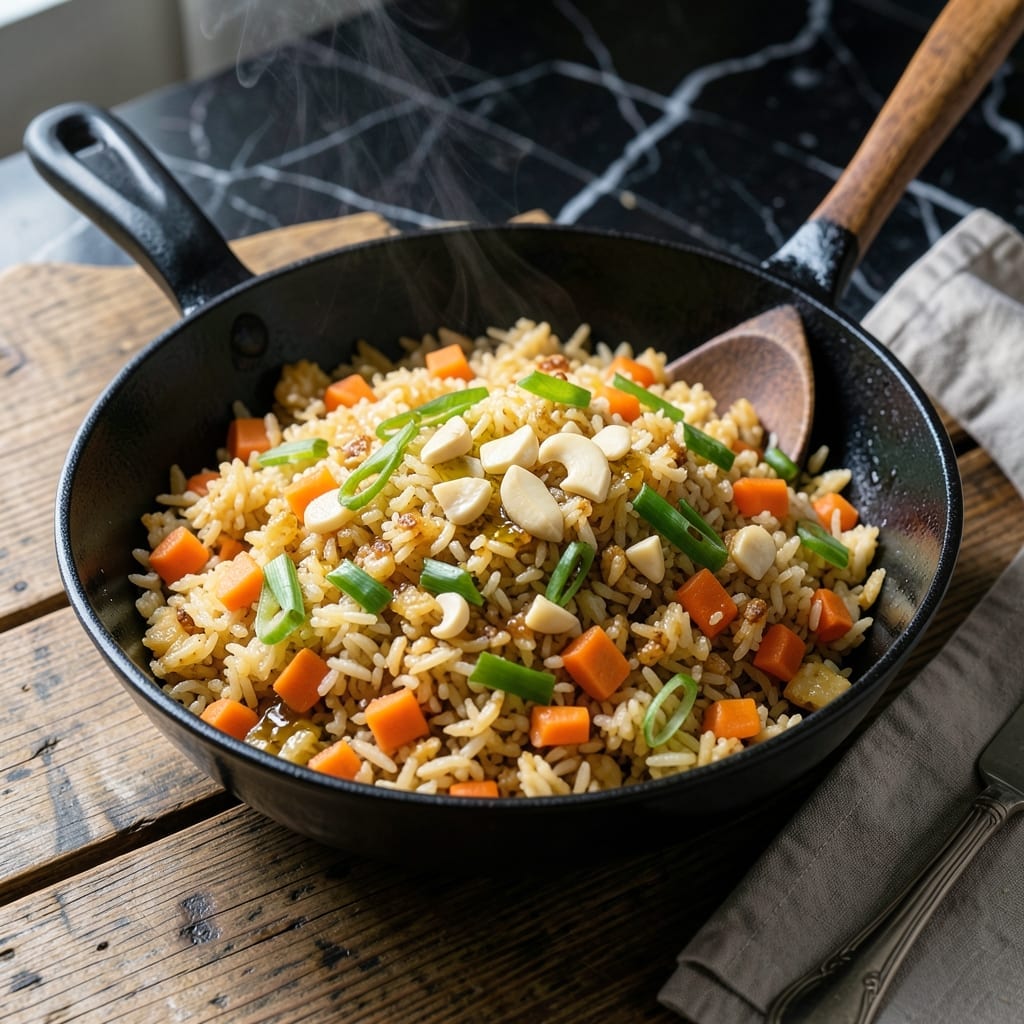
This Hakka-style fried rice delivers the signature wok-hei flavor that defines authentic Chinese takeout. The dish comes together quickly with day-old rice, smoky aromatics, and a perfect balance of savory and umami notes.
What sets it apart is the high-heat wok tossing that creates those characteristic charred bits and layers of flavor. The result is a restaurant-quality dish that’s ready in 20 minutes with simple ingredients.
Ingredients for Hakka Fried Rice
Day-old rice, fresh aromatics, and bold sauces create this smoky, restaurant-quality dish in minutes.
| Ingredient | Amount | Notes |
|---|---|---|
| Day-Old Cooked Jasmine Rice 🍚 | 4 cups | Cold, preferably overnight |
| Vegetable Oil 🫒 | 3 tbsp | High smoke point preferred |
| Garlic Cloves 🧄 | 4 cloves | Minced finely |
| Fresh Ginger 🌿 | 1 tbsp | Peeled and minced |
| Green Onions 🧅 | 4 whole | Thinly sliced, whites and greens separated |
| Medium Carrot 🥕 | 1 whole | Finely diced |
| Frozen Green Peas 🌱 | ¾ cup | Thawed under running water |
| Large Eggs 🥚 | 3 whole | Lightly beaten |
| Soy Sauce 💧 | 2 tbsp | Light or all-purpose |
| Dark Soy Sauce 💧 | 1 tsp | For depth of color |
| Oyster Sauce 🍶 | 1 tbsp | Vegetarian oyster sauce if needed |
| Sesame Oil 🫒 | 1 tsp | Toasted variety for aroma |
| Salt 🧂 | ½ tsp | To taste |
| White Pepper 🌶️ | ½ tsp | Freshly ground preferred |
| Shaoxing Wine 🍷 | 1 tbsp | Or dry sherry substitute |
The rice quality is non-negotiable—day-old jasmine rice yields the best texture. Use high-smoke-point vegetable oil for authentic wok-hei. For the best ginger and garlic, Asian markets typically stock fresher produce than standard supermarkets. Shaoxing wine adds complexity; dry sherry works in a pinch but lacks the same depth. Always prep every ingredient before igniting the wok.
Vegetarian versions can replace oyster sauce with mushroom stir-fry sauce. No Shaoxing wine? Skip it entirely—it’s better than using a poor substitute. For a protein boost, diced char siu or shrimp can be added. Fresh ginger is essential; powdered lacks the brightness. The green onions add crunch—don’t skip the separation of whites and greens.
Store cooked rice in the fridge for up to 3 days before using. Shaoxing wine and oyster sauce keep indefinitely in a cool, dark place. Prepared fried rice reheats well in a wok or skillet for 2-3 minutes, but avoid microwaving to preserve texture.
Why You’ll Love This Recipe
- One Pan Wonder: I toss everything in my wok and it’s done in 15 minutes—no extra pots, no stress.
- Garlic-Ginger Magic: That sizzle when garlic and fresh ginger hit hot oil? It’s the heartbeat of this dish.
- Feeds Any Crowd: Sunday brunch or midnight snack, it adapts—just add whatever protein I have on hand.
- Leftovers Upgraded: Day-old jasmine rice soaks up all that flavor, and honestly, it tastes better the next day.
Step-by-Step Instructions for Hakka Fried Rice
Master the wok technique and timing to achieve that signature smoky aroma and perfect texture.
Step 1: Prepare and Heat the Wok
Place your wok over high heat until it begins to smoke slightly. Add 2 tbsp of the vegetable oil and swirl to coat the surface evenly. The oil should shimmer but not burn—this indicates it has reached the optimal temperature for stir-frying.
Immediately add the minced garlic cloves and fresh ginger, stir-frying for 15-20 seconds until fragrant. Be cautious not to let them burn, as this will impart a bitter taste. The whites of the green onions go in next, cooking for another 20 seconds until they begin to soften.
Step 2: Cook the Vegetables and Eggs
Add the finely diced medium carrot and stir-fry for 1 minute until it starts to soften. Toss in the thawed frozen green peas and cook for an additional 30 seconds. The vegetables should retain a slight crispness to contrast with the soft rice.
Push the vegetables to one side of the wok and add the remaining 1 tbsp of vegetable oil to the empty space. Pour in the lightly beaten large eggs and scramble gently until just set, about 20-30 seconds. Combine the eggs with the vegetables, ensuring even distribution.
Step 3: Incorporate the Rice and Seasonings
Add all 4 cups of the day-old cooked jasmine rice, breaking up any clumps with your spatula. Stir-fry for 2-3 minutes until the rice is heated through and begins to develop a slightly smoky aroma. The cold rice will absorb the flavors better and prevent mushiness.
Drizzle the soy sauce, dark soy sauce, oyster sauce, and shaoxing wine evenly over the rice. Add the salt and white pepper, tossing everything together for another 2 minutes to ensure the rice is thoroughly coated and the flavors meld.
Step 4: Finish and Serve
Remove the wok from heat and stir in the sesame oil and the green parts of the green onions. The sesame oil adds a final layer of aroma, while the green onions provide a fresh, vibrant finish.
Taste and adjust seasoning if needed, though the combination of sauces should provide a balanced flavor. Serve immediately while hot, ensuring each portion has an even mix of rice, vegetables, and egg. The finished dish should have a slightly smoky flavor with distinct, separate grains of rice.
Pro Tips For Making Hakka Fried Rice
- Use Cold Rice: Always start with day-old jasmine rice straight from the fridge—fresh rice turns mushy. I learned this the hard way after my first few batches turned into a gluey mess.
- Crank Up Heat: Get your wok or pan screaming hot before adding oil and aromatics. After burning three batches, I finally figured out that high heat is what gives Hakka fried rice that signature smoky flavor.
- Prep Aromatics Fine: Mince the garlic, ginger, and green onions as finely as possible—about the size of rice grains. Sounds tedious, but it actually changes the outcome by distributing flavor evenly.
- Skip Overcrowding: Cook in batches if needed to avoid steaming the rice. I was skeptical until I tried it, but the texture difference between overcrowded and properly fried rice is night and day.
Best Sauces and Condiments for These Flavors
Classic Sauce Combo
I always start with the trinity of soy sauce, dark soy sauce, and oyster sauce for that authentic umami depth. The 2 tbsp light soy sauce provides saltiness, while 1 tsp dark soy sauce adds rich color and complexity. 💫
Shaoxing Wine Boost
The 1 tbsp Shaoxing wine deglazes the wok and lifts all flavors. I’ve found it makes a noticeable difference compared to skipping it entirely. Dry sherry works in a pinch but lacks the same fermented depth.
Sesame Oil Finish
That final drizzle of 1 tsp toasted sesame oil at the end is non-negotiable. It adds a nutty aroma that ties everything together. I stir it in off-heat to preserve its delicate fragrance.
Spicy Kick Option
For heat lovers, I add 1 tsp chili garlic sauce or ½ tsp sriracha when tossing the rice. It complements the smoky wok-hei without overpowering. A few drops go a long way.
Vegetarian Swap
Replace oyster sauce with mushroom stir-fry sauce for a plant-based version. The flavor profile is remarkably similar, and it maintains the dish’s savory backbone.
Extra Umami Layer
A splash of fish sauce (½ tsp) enhances the umami further. I learned this trick from a Cantonese chef—it deepens the flavor without tasting fishy. Use sparingly. 🔥
Nutrition Facts
Frequently Asked Questions
Why use day-old rice?
Day-old rice is drier and firmer, preventing mushiness when stir-fried. Fresh rice contains excess moisture, which steams the dish instead of frying it. Always break up clumps before cooking.
Can I add protein to this dish?
Traditional additions include diced char siu or shrimp. Cook proteins separately first, then mix in with the rice to avoid overcrowding the wok.
What if I don’t have Shaoxing wine?
Use dry sherry as a substitute, though it lacks complexity. For best results, skip it entirely rather than using a poor alternative. The dish will still taste great.
How do I achieve wok-hei at home?
Use a well-seasoned wok on maximum heat with high-smoke-point oil. Stir-fry in small batches to maintain high temperatures. A gas stove works best for this technique.

- Ground Beef Rice and Beans Recipe: Slow-Simmered Savory Harmony - October 17, 2026
- Guyanese Fried Rice Recipe: Caribbean Spice With Wok-Charred Aromatics - October 17, 2026
- Hakka Thunder Tea Rice Recipe: Wok-Charred Herbal Infusion - October 17, 2026