
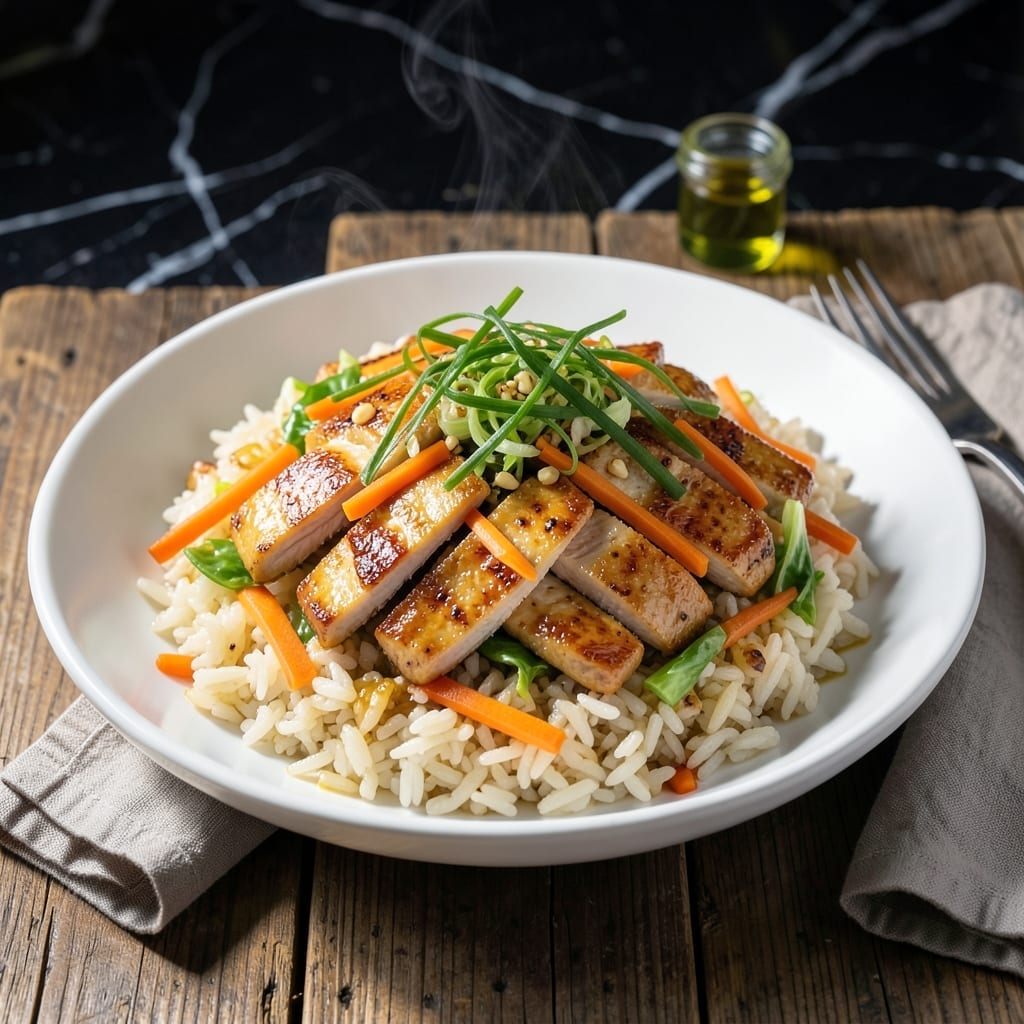
This Cantonese-style wok-fried dish delivers bold, savory flavors with every bite. The technique transforms simple ingredients into a restaurant-quality one-pan meal that’s both satisfying and versatile.
I’ve refined this method to ensure perfect texture and balanced seasoning. High heat and quick cooking preserve the vegetables’ crispness while creating that signature wok hei aroma.
What makes this creation special is its adaptability. You can customize the protein and vegetables based on what’s fresh or available, making it ideal for clearing out the fridge.
The result is fragrant, slightly smoky rice packed with vibrant colors and layers of flavor. Serve it as a main course or alongside your favorite Asian-inspired dishes.
Ingredients for Hakka Rice
Transform simple pantry staples into this fragrant, wok-fried Cantonese delight with bold savory notes.
| Ingredient | Amount | Notes |
|---|---|---|
| Cooked White Rice 🍚 | 4 cups | Day-old, chilled (preferred) |
| Boneless Chicken Breast 🍗 | 1 lb | Thinly sliced against grain |
| Carrots 🥕 | 2 whole | Julienned or finely diced |
| Green Cabbage 🥬 | 2 cups | Thinly shredded |
| Green Onions 🧅 | 4 whole | White and green parts separated |
| Garlic Cloves 🧄 | 4 cloves | Minced finely |
| Ginger Root 🌿 | 1 tbsp | Fresh, grated or minced |
| Light Soy Sauce 💧 | 3 tbsp | Low-sodium preferred |
| Dark Soy Sauce 💧 | 1 tbsp | For color and depth |
| Oyster Sauce 🥫 | 2 tbsp | Vegetarian oyster sauce if needed |
| Sesame Oil 🫒 | 1 tsp | Toasted, for finishing |
| Neutral Cooking Oil 🫒 | 3 tbsp | High smoke point (peanut or vegetable) |
| Salt 🧂 | ½ tsp | Adjust to taste |
| White Pepper 🧂 | ½ tsp | Freshly ground preferred |
| Shaoxing Wine 🍷 | 2 tbsp | Or dry sherry substitute |
The rice is critical here. Day-old, chilled jasmine or long-grain holds its shape better than fresh—it won’t turn mushy under high heat. For the protein, chicken breast stays lean and absorbs the sauce well, but char siu pork or shrimp (available at Asian markets) are traditional upgrades. Slice against the grain for maximum tenderness. The cabbage should be fresh and crisp (skip pre-shredded—it wilts too fast).
No oyster sauce? Mushroom stir-fry sauce or vegetarian oyster sauce (Lee Kum Kee makes a great one) work perfectly. Missing Shaoxing wine? Dry sherry at a 1:1 ratio is a fine substitute. For a darker color, add extra dark soy sauce, but reduce salt accordingly. The ginger and garlic can’t be skipped—they’re the backbone of that signature wok-fried aroma.
Leftovers keep 3-4 days in the fridge, reheating best in a wok or skillet with a splash of water. For freezing, spread cooled rice on a tray first (prevents clumping), then transfer to bags for up to 3 months. Always use high heat to revive that wok hei flavor (the good stuff, not the pre-shredded kind).
Why You’ll Love This Recipe
- One Pan Meal: I toss everything in a single wok—rice, chicken, veggies—and it’s done in 15 minutes flat.
- Umami Bomb: The soy sauce and chicken create this deep, savory richness that makes the rice irresistibly moreish.
- Weeknight Hero: Between us, this is my Tuesday night lifesaver when I need dinner fast but still want flavor.
- Stretches Far: Leftovers taste even better the next day, and it feeds four for the price of a takeout meal.
Step-by-Step Instructions for Hakka Rice
Master the wok technique for this Cantonese classic with perfectly charred bits and balanced flavors.
Step 1: Velouté the Protein and Aromatics
Heat 2 tablespoons Neutral Cooking Oil in a wok over high heat until shimmering. Add the thinly sliced 1 lb Boneless Chicken Breast and stir-fry for 2-3 minutes until just cooked through and no longer pink. Remove the chicken and set aside.
In the same wok, add the remaining 1 tablespoon Neutral Cooking Oil. Add the minced 4 cloves Garlic Cloves and grated 1 tbsp Ginger Root, stir-frying for 30 seconds until fragrant. Immediately add the julienned 2 whole Carrots and shredded 2 cups Green Cabbage, cooking for 2 minutes until slightly softened but still crisp.
Step 2: Deglaze and Season
Pour in the 2 tbsp Shaoxing Wine to deglaze the wok, scraping up any browned bits. Add the 3 tbsp Light Soy Sauce, 1 tbsp Dark Soy Sauce, and 2 tbsp Oyster Sauce. Stir well to combine and cook for 1 minute to allow the flavors to meld.
Sprinkle in the 0.5 tsp Salt and 0.5 tsp White Pepper, ensuring even distribution. This layering of seasonings builds the complex, umami-rich profile characteristic of authentic Hakka rice.
Step 3: Incorporate Rice and Finish
Add the 4 cups Cooked White Rice, breaking up any clumps with your spatula. Stir-fry for 3-4 minutes on high heat, pressing the rice against the wok to achieve slight charring. This creates the coveted “wok hei” or breath of the wok.
Return the cooked chicken to the wok, along with the white parts of the 4 whole Green Onions. Stir-fry for an additional 2 minutes until everything is heated through and the rice has absorbed the sauce evenly.
Step 4: Garnish and Serve
Remove from heat and drizzle with the 1 tsp Sesame Oil. Toss once more to distribute. Garnish with the green parts of the 4 whole Green Onions, reserving some for presentation.
Serve immediately while hot, ensuring each portion has a mix of rice, vegetables, and chicken. The final dish should have a glossy sheen from the sauces and a slight smokiness from the high-heat cooking.
Pro Tips For Making Hakka Rice
- Chill the Rice: Use day-old, refrigerated rice—freshly cooked rice turns mushy when stir-fried. I learned this the hard way after my first batch came out like porridge.
- Velvet the Chicken: Marinate the chicken breast with 1 teaspoon cornstarch and 1 tablespoon soy sauce for 15 minutes before cooking. It stays juicy and tender, even if you overcook it slightly.
- High Heat First: Crank the wok or pan to smoking hot before adding oil and ingredients. After burning three batches, I finally figured out that low heat just steams the rice instead of frying it.
- Prep Everything: Chop all veggies and measure sauces before turning on the heat. Hakka rice cooks fast, and you won’t have time to slice carrots while the chicken burns—trust me, I’ve been there.
Regional Styles of This hakka rice
Cantonese Classic
This version stays true to the traditional Cantonese preparation, emphasizing wok hei with high heat and quick cooking. I always use jasmine rice that’s been chilled overnight for the best texture. The light and dark soy sauces create that perfect balance of saltiness and color. 🔥
Malaysian Adaptation
In Malaysia, this dish often includes dried shrimp for extra umami depth. I soak 2 tbsp dried shrimp in warm water for 10 minutes before adding it with the aromatics. Some versions also incorporate curry powder for a warm, spiced twist.
Indonesian Influence
Indonesian Hakka rice, called nasi goreng Hakka, often features sweet soy sauce (kecap manis) instead of dark soy. I add 1 tbsp kecap manis at the end for a caramelized sweetness. The dish is typically served with a fried egg on top.
Thai Variation
Thai-style Hakka rice incorporates fish sauce and Thai basil for a brighter, herbaceous profile. I swap the oyster sauce for 1 tbsp fish sauce and finish with ½ cup Thai basil leaves. A squeeze of lime at the end adds a refreshing touch. ✨
Vegetarian Version
For a meat-free take, I replace the chicken with extra-firm tofu, pressed and cubed. Shiitake mushrooms add a meaty texture. Use vegetarian oyster sauce and add 1 tsp sugar to balance the flavors.
Fusion Twist
My personal favorite fusion version includes kimchi and Spam—a nod to Hawaiian-style fried rice. I add ½ cup chopped kimchi with the vegetables and ½ cup diced Spam with the protein. The result is tangy, salty, and utterly addictive.
Nutrition Facts
Frequently Asked Questions
Why use day-old rice?
Day-old rice has less moisture, preventing mushiness during high-heat stir-frying. Fresh rice steams instead of frying, ruining the texture.
Can I substitute the protein?
Yes! Try shrimp, char siu pork, or tofu. For best results, cut into small, even pieces so they cook quickly and evenly.
How do I get that smoky wok flavor?
Use high heat and press rice against the wok for 30 seconds to create charred bits. This is the signature wok hei aroma.
What if I don’t have Shaoxing wine?
Dry sherry works as a 1:1 substitute. In a pinch, skip it and add 1 tsp sugar to balance the flavors.

- Jollof Rice Sauce Recipe: West African Tomato and Spice Infusion - September 25, 2026
- Japanese Rice Soup Recipe: Umami-Rich Comfort in a Bowl - September 25, 2026
- Homemade Cream Of Rice Recipe: Silk-Smooth Breakfast in Minutes - September 25, 2026