
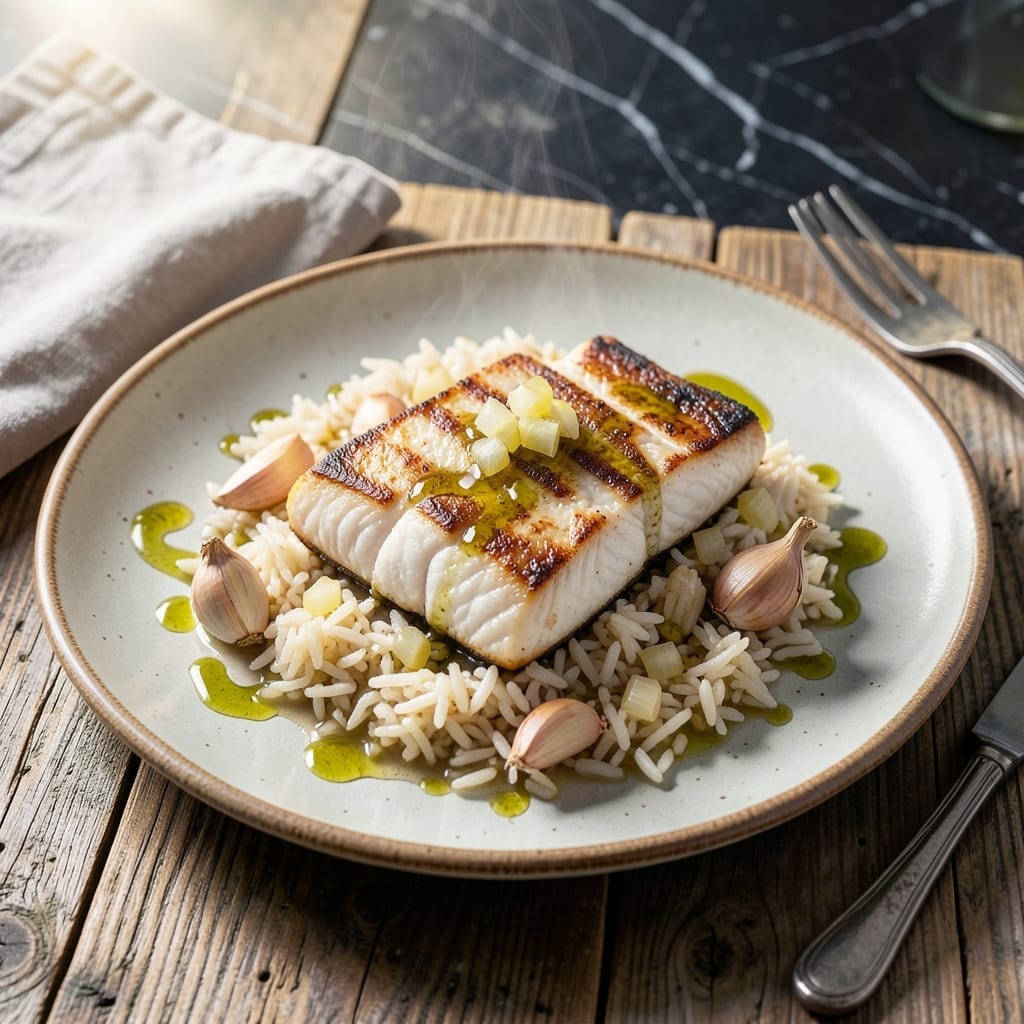
This one-pan meal delivers perfectly flaky halibut nestled atop fragrant rice cooked in the same pot. The fish steams gently while the grains absorb rich broth and aromatics, creating a cohesive dish with minimal effort.
The key is precise timing: start the rice first, then add the halibut during the final 15 minutes. This ensures the fish stays moist and tender while the rice finishes cooking. Simple, elegant, and foolproof for weeknight dinners.
Ingredients for Halibut and Rice
Fresh halibut, fragrant rice, and simple aromatics create this elegant one-pan meal.
| Ingredient | Amount | Notes |
|---|---|---|
| Halibut Fillets 🐟 | 1 ½ lb | Skinless, fresh or thawed |
| Long-Grain White Rice 🍚 | 1 ½ cups | Rinsed until water runs clear |
| Chicken Broth 🥣 | 2 ½ cups | Low-sodium preferred for control |
| Olive Oil 🫒 | 2 tbsp | Divided for cooking and finishing |
| Yellow Onion 🧅 | 1 whole | Finely diced for even flavor |
| Garlic Cloves 🧄 | 3 cloves | Minced for aromatic base |
| Lemon 🍋 | 1 whole | Zested and juiced separately |
| Fresh Dill 🌿 | ¼ cup | Chopped, for bright garnish |
| Dry White Wine 🍷 | ½ cup | Optional for depth, substitute broth |
| Bay Leaves 🍃 | 2 pieces | Whole, for infusion |
| Salt 🧂 | 1 tsp | Kosher or sea salt preferred |
| Black Pepper 🌶️ | ½ tsp | Freshly ground for best flavor |
| Unsalted Butter 🧈 | 2 tbsp | For finishing the dish |
The halibut is the star—look for wild-caught at Whole Foods or Costco for the best texture and sustainability. Fresh fillets should smell clean and have a firm, slightly translucent appearance. If using frozen, thaw overnight in the fridge (never at room temperature). The rice quality matters too: jasmine or basmati work beautifully if you prefer a more aromatic grain.
No white wine? Extra chicken broth with a squeeze of lemon mimics the acidity. Fresh dill can be swapped for fresh parsley or tarragon if that’s what you have. For the broth, vegetable or fish stock both work well—just adjust seasoning to taste. The butter finish is optional but adds richness; olive oil works too for a lighter touch.
Store fresh halibut in the coldest part of your fridge and cook within 1-2 days. Cooked leftovers keep for 3-4 days refrigerated. This dish doesn’t freeze well—the fish texture changes, but the rice portion can be frozen separately for up to 3 months.
Why You’ll Love This Recipe
- One Pan Meal: I love throwing the halibut, rice, and onion in a single skillet with chicken broth and walking away.
- Savory Depth: The onion sweats into the rice while the halibut soaks up the broth—simple but packed with flavor.
- Weeknight Hero: It’s my go-to for busy evenings when I need something hearty and unfussy on the table fast.
- Leftovers? Yes Please: Honestly, the rice tastes even better the next day after soaking up all those juices.
Step-by-Step Instructions for Halibut and Rice
This one-pan method delivers perfectly flaky fish with fragrant, tender rice every time.
Step 1: Sauté Aromatics and Toast the Rice
Heat 1 tablespoon olive oil in a large, deep skillet with a tight-fitting lid over medium heat. Add the finely diced yellow onion and cook for 4-5 minutes until translucent and softened, stirring occasionally.
Add the minced garlic cloves and cook for 30 seconds until fragrant but not browned. Stir in the 1.5 cups long-grain white rice and toast for 1-2 minutes, stirring constantly, until the grains become slightly opaque at the edges.
This toasting step enhances the nutty flavor of the rice and prevents it from becoming mushy as it cooks.
Step 2: Deglaze and Build the Cooking Liquid
Pour in the 0.5 cup dry white wine and scrape up any browned bits from the bottom of the pan. Let it simmer for 2-3 minutes until the liquid reduces by half and the alcohol smell dissipates.
Add the 2.5 cups chicken broth, 2 pieces bay leaves, 1 teaspoon salt, and 0.5 teaspoon black pepper. Stir in the zest of the lemon and bring to a gentle boil. Taste and adjust seasoning if needed—the broth should be well-seasoned since the rice will absorb most of this liquid.
Step 3: Cook the Rice and Prepare the Halibut
Reduce heat to low, cover the skillet, and simmer for 15 minutes. After this time, check that the rice has absorbed most of the liquid and small craters have formed on the surface. Sprinkle the chopped fresh dill evenly over the rice.
Pat the 1.5 lb halibut fillets completely dry with paper towels. This crucial step ensures the fish sears properly and develops a golden crust. Season both sides lightly with a pinch of the salt and black pepper from your measured amounts.
Step 4: Add Halibut and Finish Cooking
Nestle the halibut fillets into the partially cooked rice. Drizzle the juice of the lemon over the fish and rice. Cover the skillet again and cook for 8-10 minutes over low heat until the halibut is opaque and flakes easily with a fork and the rice is tender.
Avoid the urge to peek during cooking—steam is what cooks the halibut gently and keeps it moist. The fish is done when it reaches an internal temperature of 145°F and the rice has absorbed all the liquid.
Step 5: Rest and Finish with Butter
Remove the skillet from heat and let it sit covered for 5 minutes. This resting time allows the halibut to finish cooking gently and the rice to steam to perfect tenderness. Discard the bay leaves.
Dot the top with 2 tablespoons unsalted butter and the remaining 1 tablespoon olive oil. Replace the lid and let it sit for another 2 minutes to melt the butter. Fluff the rice gently with a fork, taking care not to break up the halibut fillets. Serve immediately while hot.
Pro Tips For Making Halibut And Rice
- Pat Halibut Dry: Use paper towels to thoroughly dry the fillets before cooking—this guarantees a good sear instead of steaming the fish.
- Toast the Rice: Sauté the rice in olive oil with the onion for 2-3 minutes until slightly golden; it adds nutty depth to the finished dish.
- Use Room-Temp Broth: I learned this the hard way—cold broth slows down cooking and can make the rice gummy, so take it out of the fridge 30 minutes early.
- Don’t Overflip Fish: Resist the urge to peek or flip the halibut more than once; it breaks easily and needs 3-4 minutes per side to cook through without falling apart.
Make-Ahead Tips for This halibut and rice
Prep Ahead Strategy
You can measure and chop all your aromatics the night before. Store diced onion, minced garlic, and lemon zest in separate small containers in the fridge. This saves 10-15 minutes on cooking day while keeping flavors fresh. 💡
Rice Pre-Cooking
Rinse and toast the rice in advance, then store it dry in an airtight container. When ready to cook, simply add it to your hot pan with the aromatics. The toasting step can even be done 2 days ahead without losing quality.
Broth Infusion
Make your cooking liquid more flavorful by gently heating the chicken broth with bay leaves and lemon zest for 10 minutes before starting. This infused broth adds depth and can be prepped 1 day ahead and refrigerated.
Halibut Prep
Pat the fillets dry and season them 1 hour before cooking, then cover and refrigerate. This helps the seasoning penetrate while keeping the fish cold until cooking time. Avoid seasoning further in advance as the salt can start to break down the texture.
Partial Cook Method
Cook the rice completely through Step 3, then spread it on a baking sheet to cool quickly. When ready to serve, transfer to a skillet, add ¼ cup water, nestle in the halibut, and finish cooking. This works if you’re prepping 4-6 hours ahead. ⏰
Garnish Prep
Chop the fresh dill and store it wrapped in a damp paper towel in the fridge. The lemon can be zested and juiced 1 day ahead—store the juice in a small jar and the zest in a separate container.
Nutrition Facts
Frequently Asked Questions
Can I substitute another fish for halibut?
Try cod, haddock, or mahi-mahi. These have similar textures and cooking times. Just ensure fillets are 1-1.5 inches thick for even cooking.
What if my rice is undercooked?
Add ¼ cup hot broth, cover, and cook on low heat for 5-7 minutes. Avoid stirring to prevent mushy rice. Let it rest off heat for 5 minutes before serving.
How do I prevent the fish from sticking?
Pat fillets completely dry and ensure your skillet is hot before adding them. Use a well-seasoned or nonstick pan, and don’t move the fish until ready to flip.
Can I make this gluten-free?
Yes! Just verify your broth is gluten-free. All other ingredients are naturally gluten-free. No other substitutions are needed.

- Jollof Rice Sauce Recipe: West African Tomato and Spice Infusion - September 25, 2026
- Japanese Rice Soup Recipe: Umami-Rich Comfort in a Bowl - September 25, 2026
- Homemade Cream Of Rice Recipe: Silk-Smooth Breakfast in Minutes - September 25, 2026