
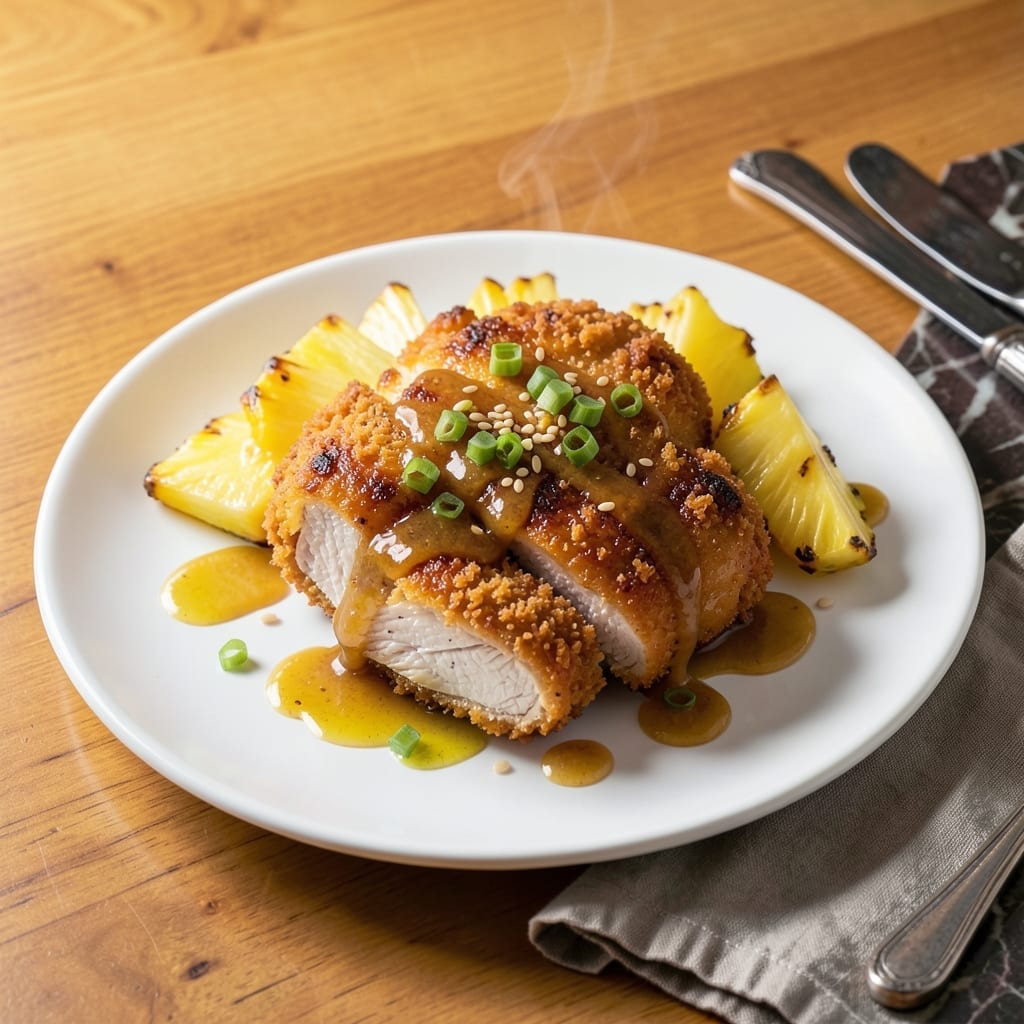
This recipe transforms classic katsu with a tropical twist that’s impossible to resist. The crispy panko crust gives way to juicy chicken, all elevated by a sweet-tangy pineapple glaze that defines the dish’s Hawaiian flair.
The secret is in the double-dredging for maximum crunch and a glaze that caramelizes just enough to cling to every bite. I’ve perfected the method to ensure the cutlets stay crispy even after glazing.
Serve these golden cutlets with steamed rice and a side of macaroni salad for the full island experience. The balance of textures and flavors makes this a standout main course.
Ready in under an hour, this dish brings restaurant-quality results to your home kitchen with minimal effort.
Ingredients for Hawaiian Chicken Katsu
Pantry staples and fresh chicken come together for this island-inspired crispy dish.
| Ingredient | Amount | Notes |
|---|---|---|
| Boneless Skinless Chicken Breasts 🍗 | 1 ½ lb | Pounded to 1/2-inch thickness |
| All-Purpose Flour 🌾 | 1 cup | For initial dredging |
| Large Eggs 🥚 | 2 whole | Beaten for egg wash |
| Panko Breadcrumbs 🍞 | 2 cups | Japanese-style for extra crunch |
| Vegetable Oil 🫒 | 1 cup | For frying, neutral flavor |
| Pineapple Juice 🍍 | 1 cup | 100% juice, no added sugar |
| Brown Sugar 🍚 | ½ cup | Light or dark variety |
| Soy Sauce 🥄 | ¼ cup | Low-sodium preferred |
| Rice Vinegar 🧂 | 2 tbsp | For glaze tanginess |
| Fresh Ginger 🌿 | 1 tbsp | Grated for glaze |
| Garlic Cloves 🧄 | 3 cloves | Minced for glaze |
| Cornstarch 🌾 | 1 tbsp | For glaze thickening |
| Salt 🧂 | 1 tsp | Kosher or sea salt |
| Black Pepper 🌶️ | ½ tsp | Freshly ground preferred |
The chicken quality matters most here—look for uniform thickness to ensure even cooking. Panko breadcrumbs are non-negotiable for that signature crunch (regular breadcrumbs won’t cut it). Most Asian markets carry the best selection, but larger supermarkets like Kroger or Walmart stock it in the international aisle. For the pineapple juice, Dole or Del Monte brands work perfectly—avoid the canned versions with added syrups.
No pineapple juice? Orange juice with a splash of lime gets you close. Substitute half the panko with crushed cornflakes if that’s what you’ve got on hand (the texture’s different but still crispy). Low-sodium soy sauce is ideal, but regular works—just reduce the added salt. The ginger and garlic can be swapped for 1 tsp each of ground versions in a pinch, though fresh is always better.
The glaze can be made 2 days ahead and refrigerated. Leftover katsu keeps well in the fridge for 3-4 days—reheat in the oven to maintain crispiness. Freezing isn’t recommended as the breading loses its crunch. Always bring the chicken to room temperature before frying for even cooking.
Why You’ll Love This Recipe
- One Bowl Wonder: I coat the chicken in flour, egg, and panko right in a single bowl—no extra dishes piling up.
- Crispy Perfection: That panko crust fries up golden and shatters with every bite, while the chicken stays juicy inside.
- Feeds the Gang: I’ve served this at birthdays and weeknight dinners alike—kids and adults always clean their plates.
- Budget Stretch: Boneless chicken breasts stay affordable, and a little panko goes a long way for that restaurant-quality crunch.
Step-by-Step Instructions for Pineapple-Glazed Chicken Katsu
Here’s the method for achieving ultra-crispy cutlets with a sweet-tangy glaze every time.
Step 1: Prep and Bread the Chicken
Pat the 1.5 lb boneless skinless chicken breasts dry, then pound them to an even ½-inch thickness between plastic wrap. This ensures even cooking and maximum crispiness. Season both sides with 1 tsp salt and 0.5 tsp black pepper.
Set up a breading station: dredge each piece in 1 cup all-purpose flour, shaking off excess. Dip into 2 beaten large eggs, letting any excess drip off. Press firmly into 2 cups panko breadcrumbs to create a thick, even coating. The panko’s coarse texture guarantees extra crunch.
Step 2: Fry to Golden Perfection
Heat 1 cup vegetable oil in a large skillet over medium-high heat until shimmering. Test the oil by dropping in a pinch of panko—if it sizzles immediately, it’s ready.
Fry the chicken in batches for 4-5 minutes per side until deep golden brown and the internal temperature reaches 165°F. Don’t overcrowd the pan, or the oil temperature will drop, leading to soggy breading. Transfer to a wire rack to drain excess oil.
Step 3: Simmer the Pineapple Glaze
In a small saucepan, combine 1 cup pineapple juice, 0.5 cup brown sugar, 0.25 cup soy sauce, 2 tbsp rice vinegar, 1 tbsp grated fresh ginger, and 3 minced garlic cloves. Bring to a boil over medium heat.
Mix 1 tbsp cornstarch with 1 tbsp water, then whisk into the saucepan. Simmer for 3-4 minutes, stirring constantly, until the glaze thickens enough to coat the back of a spoon. Remove from heat—it will thicken further as it cools.
Step 4: Glaze and Serve
Drizzle the warm glaze over the crispy chicken cutlets or serve it on the side for dipping. The contrast of the sticky-sweet glaze and the shatteringly crisp panko is what makes this dish special.
Let the chicken rest for 2-3 minutes before slicing to preserve the crunch. Serve immediately while the breading is at its peak crispiness. The glaze should cling to each bite, balancing the savory crunch with tropical sweetness.
Pro Tips For Making Hawaiian Chicken Katsu
- Pound the Chicken: Even out those chicken breasts to 1/2-inch thickness with a rolling pin or meat mallet—I learned this the hard way after biting into dry, overcooked edges while the center stayed raw.
- Chill the Breaded Cutlets: Pop the panko-coated chicken in the fridge for 10-15 minutes before frying. Sounds weird, but it works: the crust stays put and fries up crispier.
- Skip the Overcrowding: Fry in batches with at least an inch between pieces, or the oil temp drops and you’ll end up with greasy, soggy katsu instead of that golden crust.
- Use Fresh Panko: Old panko absorbs oil like a sponge—check the bag’s date and give it a quick toast in a dry pan for 2 minutes if it’s been sitting in your pantry for months.
Flavor Customization for hawaiian chicken katsu
Spicy Pineapple Glaze
Add ½ tsp red pepper flakes or 1 tbsp sriracha to the glaze while simmering for a sweet-spicy kick. The heat pairs perfectly with the tropical pineapple and balances the richness of the fried chicken. I love the extra depth this adds. 🌶️
Citrus Twist
Replace 2 tbsp of pineapple juice with fresh lime or orange juice for a brighter, citrus-forward flavor. The acidity cuts through the breading and adds a refreshing note that complements the dish beautifully.
Extra Crunch
Mix ¼ cup crushed macadamia nuts or toasted coconut flakes into your panko breading for a Hawaiian-inspired texture. Press the mixture firmly onto the chicken to ensure it adheres during frying. The nutty crunch takes this to another level.
Sweet Heat Balance
Increase the rice vinegar to 3 tbsp and add 1 tbsp honey to the glaze for a tangier, slightly sweeter profile. This version works especially well if you’re serving the katsu with spicy sides like kimchi.
Umami Boost
Stir 1 tbsp oyster sauce or 1 tsp fish sauce into the glaze for a deeper, more complex flavor. This small addition enhances the savory notes and makes the glaze even more addictive. 💛
Herb Infusion
Finish the glaze with 1 tbsp chopped fresh cilantro or Thai basil for a fresh, aromatic touch. Sprinkle the herbs over the glazed chicken just before serving to preserve their vibrant color and flavor.
Nutrition Facts
Frequently Asked Questions
Can I use chicken thighs instead of breasts?
Yes! Boneless thighs work well and often stay juicier. Pound them to ½-inch thickness for even cooking. The frying time remains 4-5 minutes per side.
How do I keep the breading crispy?
Use a wire rack after frying to prevent steam buildup. Serve immediately, as the glaze can soften the crust over time. Avoid covering until ready to eat.
Can I bake instead of fry?
For a lighter version, bake at 400°F for 20-25 minutes. Spray breaded chicken with oil first. The texture won’t be as crispy but still delicious.
What if my glaze is too thin?
Simmer it longer or mix in a cornstarch slurry (1 tsp cornstarch + 1 tsp water). Stir constantly until it thickens enough to coat a spoon.

- Jollof Rice Sauce Recipe: West African Tomato and Spice Infusion - September 25, 2026
- Japanese Rice Soup Recipe: Umami-Rich Comfort in a Bowl - September 25, 2026
- Homemade Cream Of Rice Recipe: Silk-Smooth Breakfast in Minutes - September 25, 2026