
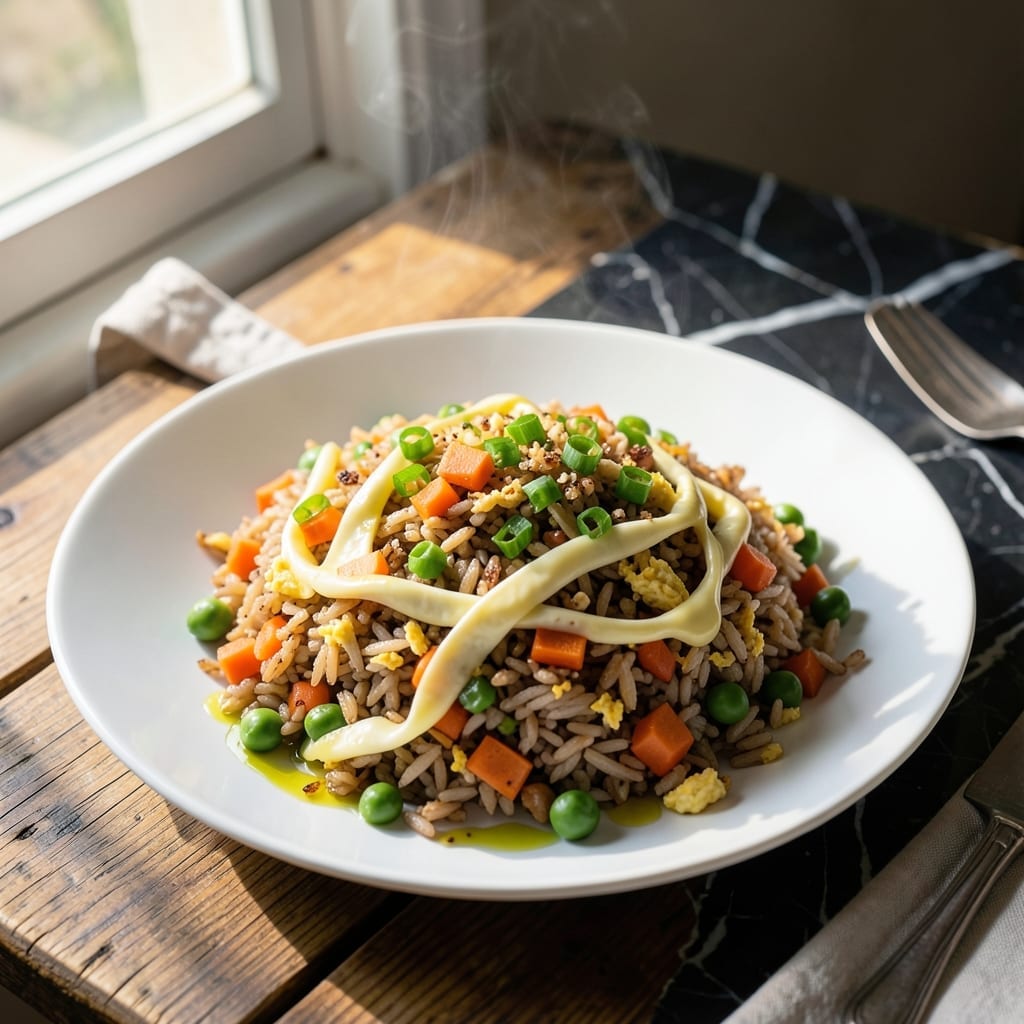
I transformed traditional fried rice into a nutritious version without losing flavor. This lightened-up dish uses less oil and more vegetables for a balanced meal.
With simple swaps like brown rice and low-sodium soy sauce, you’ll enjoy the same savory taste with better nutrition. Ready in 20 minutes, it’s perfect for busy weeknights.
Ingredients for Healthier Fried Rice
Brown rice, fresh veggies, and a few pantry staples make this dish shine.
| Ingredient | Amount | Notes |
|---|---|---|
| Brown Rice 🍚 | 3 cups | Cooked and cooled overnight |
| Eggs 🥚 | 2 whole | Large, lightly beaten |
| Carrots 🥕 | 1 cup | Finely diced, fresh |
| Frozen Peas 🌱 | 1 cup | Thawed and drained |
| Green Onions 🧅 | ½ cup | Thinly sliced, white and green parts |
| Garlic Cloves 🧄 | 3 cloves | Minced for maximum flavor |
| Low-Sodium Soy Sauce 🫒 | 2 tbsp | Or tamari for gluten-free |
| Sesame Oil 🫒 | 1 tsp | Toasted for best aroma |
| Vegetable Oil 🫒 | 1 tbsp | Divided for cooking stages |
| Ginger Root 🌿 | 1 tbsp | Freshly grated, peeled |
| Bell Pepper 🌶️ | ½ cup | Red or green, finely diced |
| Salt 🧂 | ½ tsp | Kosher or sea salt |
| Black Pepper 🌶️ | ¼ tsp | Freshly ground preferred |
The brown rice is key here—use day-old, fully cooled rice to prevent mushiness. I grab mine from Trader Joe’s or bulk bins at natural food stores. For the veggies, farmers market carrots and bell peppers add the best crunch. Don’t skip the ginger and garlic; they’re doing most of the flavor heavy lifting in this lightened-up version.
No brown rice? White rice works in a pinch, but expect a softer texture. Swap peas for edamame or corn if that’s what you’ve got. Low-sodium soy sauce can be replaced with coconut aminos for a gluten-free option. If you’re out of sesame oil, a dash of toasted peanut oil adds a similar depth (but it’s not quite the same).
This keeps 3-4 days in the fridge—great for lunches. Freeze for up to 3 months (just thaw and reheat in a skillet). Pro tip: cool completely before storing to keep the texture spot-on.
Why You’ll Love This Recipe
- One Pan Wonder: I toss everything—the brown rice, eggs, and veggies—into a single skillet. Between us, cleanup takes less time than the cooking.
- Umami Boost: The carrots caramelize just enough to bring out their sweetness, and the green onions add that fresh, sharp finish.
- Meal Prep Hero: I make a big batch on Sunday and it reheats beautifully for lunches all week. Honestly, it tastes even better the next day.
- Budget Stretcher: Frozen peas and brown rice keep costs low, and I can stretch one batch to feed four without breaking the bank.
Step-by-Step Instructions for Healthier Fried Rice
Here’s my tested method for achieving perfectly textured fried rice with maximum flavor and nutrition.
Step 1: Sauté Aromatics and Vegetables
Heat 1 tablespoon vegetable oil in a wok or large skillet over medium-high heat until it shimmers. Add the minced garlic cloves and freshly grated ginger root, stirring constantly for 30 seconds until fragrant but not browned.
Immediately add the finely diced carrots and finely diced bell pepper. Stir-fry for 4-5 minutes until the vegetables soften slightly but retain a bit of crunch. This builds the flavor foundation while keeping the vegetables vibrant.
Push the vegetables to one side and add the thawed and drained frozen peas to warm through for 1 minute. The peas should be heated but still bright green—overcooking turns them mushy.
Step 2: Scramble the Eggs
Create a well in the center of the pan and add the lightly beaten eggs. Let them sit for 10 seconds before gently stirring with a spatula to create soft, curdy bits. Cook for 1-2 minutes until the eggs are just set but still slightly moist.
Break the eggs into small pieces as they cook, then mix them into the vegetables. I keep the heat at medium-high here to ensure the eggs cook quickly without turning rubbery. The residual heat from the pan will finish cooking them as you combine everything.
Season this mixture with 0.5 teaspoon salt and 0.25 teaspoon black pepper, distributing it evenly. This layers the seasoning throughout the dish rather than concentrating it in one spot.
Step 3: Add Rice and Create the Base
Add the 3 cups cooked and cooled overnight brown rice to the pan, breaking up any clumps with your fingers or the spatula. The cold rice is crucial—it prevents the dish from becoming mushy as it fries.
Stir-fry for 3-4 minutes, pressing the rice against the hot pan to create some crispy bits. You’ll hear a slight sizzle when the rice makes contact—that’s the sound of proper texture developing. Keep the ingredients moving constantly to prevent burning.
Drizzle 1 tablespoon vegetable oil around the edges of the pan to ensure even cooking. The rice should start to take on a slightly toasted appearance, with some grains turning light golden brown.
Step 4: Finish with Sauce and Green Onions
Reduce heat to medium and add the 2 tablespoons low-sodium soy sauce and 1 teaspoon toasted sesame oil. Stir everything together, making sure the sauce coats every grain of rice. The sesame oil adds a nutty depth that’s essential to authentic flavor.
Cook for an additional 2 minutes, allowing the rice to absorb the sauce. Taste and adjust seasoning if needed, though the soy sauce typically provides enough saltiness. The rice should be hot throughout with a glossy sheen from the sauce.
Remove from heat and stir in the thinly sliced green onions, reserving some for garnish if desired. The green onions add a fresh, bright finish that contrasts beautifully with the rich, savory rice.
Pro Tips For Making Healthier Fried Rice
- Pre-cook the rice: Use day-old brown rice—freshly cooked grains turn mushy when stir-fried. Spread it on a baking sheet to cool and dry out for 30 minutes if you’re in a rush.
- Crank the heat: High heat is non-negotiable for that smoky wok flavor. I learned this the hard way after too many sad, soggy batches at medium temperature.
- Thaw the peas: Skip adding frozen peas straight from the bag—they’ll water down your rice. Run them under warm water for 2 minutes to thaw and pat dry first.
- Scramble eggs first: Push scrambled eggs to one side of the pan before adding veggies, so they don’t get lost in the mix. This small step actually changes the outcome, giving you distinct bits of egg in every bite.
Health Benefits of This Dish
Whole Grain Power
Brown rice brings 3x more fiber than white rice—about 3.5g per serving—which keeps you full longer. This complex carb also provides steady energy without blood sugar spikes. I notice I stay satisfied for hours after eating this version. 💪
Veggie Nutrient Boost
Carrots add beta-carotene for eye health, while bell peppers provide 100% of your daily vitamin C in just ½ cup. Peas contribute plant-based protein and iron. Together, they create a colorful, vitamin-packed dish that supports immunity.
Heart-Healthy Fats
Using 1 tablespoon oil instead of the traditional 3-4 tablespoons cuts saturated fat significantly. Sesame oil adds healthy unsaturated fats and antioxidants. This small change reduces calories by about 120 per serving without sacrificing flavor.
Sodium Smart
Low-sodium soy sauce reduces sodium by 40% compared to regular versions. At just 2 tablespoons for the whole recipe, you’ll consume about 600mg sodium total—far less than typical takeout fried rice. Your heart will thank you.
Protein Balance
Eggs provide 6g protein each, while brown rice adds 5g per cup. This combination creates a complete protein profile with all essential amino acids. Perfect for a light yet satisfying meal that fuels your day. 🥗
Antioxidant Rich
Garlic and ginger contain powerful antioxidants that fight inflammation. Fresh ginger also aids digestion, making this dish gentle on your stomach. The aromatics do double duty by boosting both flavor and your body’s natural defenses.
Nutrition Facts
Frequently Asked Questions
Can I use white rice instead of brown?
Yes, but texture will differ. Brown rice stays firmer and adds fiber. If using white, cook it 1 day ahead and chill completely to prevent mushiness.
How do I make this gluten-free?
Swap low-sodium soy sauce for tamari or coconut aminos. Both provide similar flavor without gluten. Always check labels for certification.
What’s the best way to reheat leftovers?
Use a skillet over medium heat with a splash of water. Microwaving works but can make rice soggy. Stir occasionally for even heating.
Can I add chicken or tofu for extra protein?
Cook diced chicken first, then set aside. Add cubed tofu directly with vegetables. Both absorb flavors beautifully.

- Ground Beef Rice and Beans Recipe: Slow-Simmered Savory Harmony - October 17, 2026
- Guyanese Fried Rice Recipe: Caribbean Spice With Wok-Charred Aromatics - October 17, 2026
- Hakka Thunder Tea Rice Recipe: Wok-Charred Herbal Infusion - October 17, 2026