
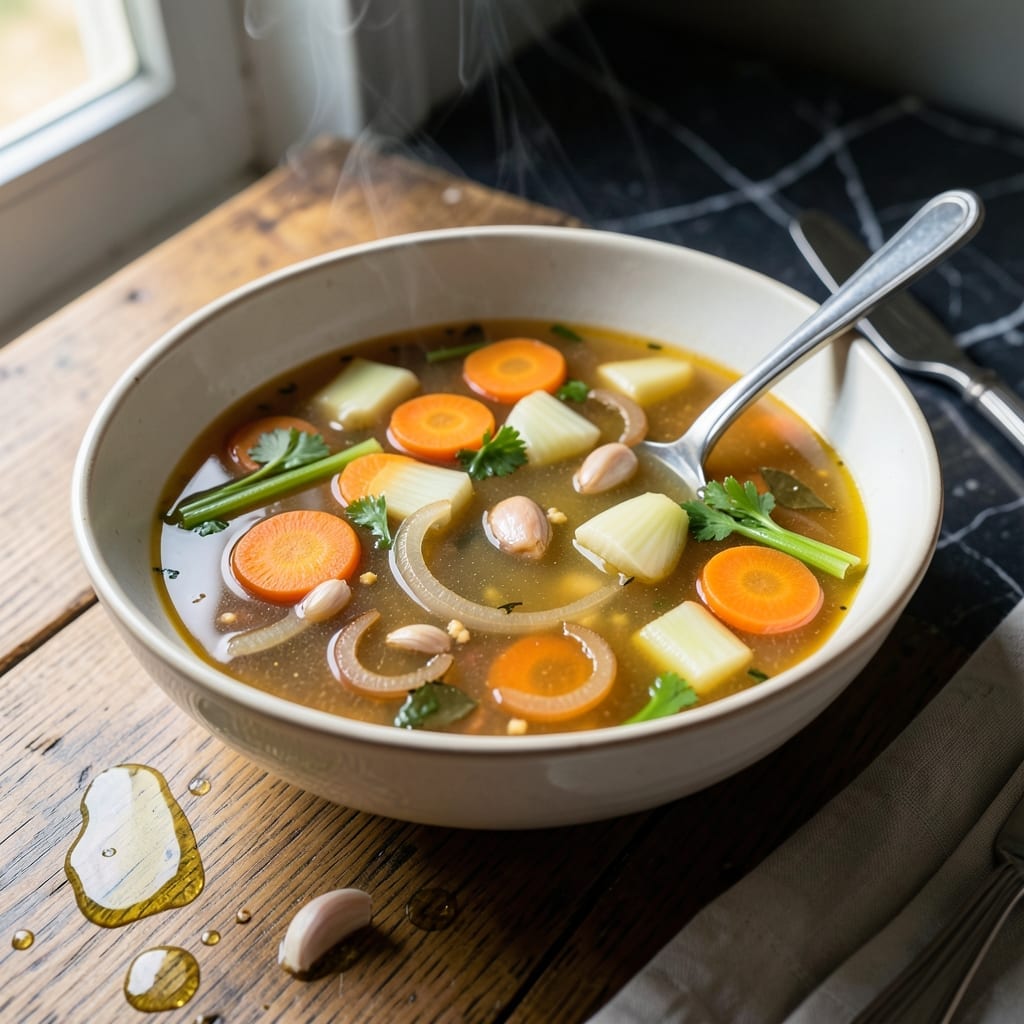
There’s nothing like the depth of flavor in a homemade chicken stock, and this version delivers rich, nourishing results without unnecessary additives. I developed this method to maximize nutrient extraction while keeping the process simple and approachable.
The key is using quality ingredients—bones from pastured chickens, fresh vegetables, and aromatic herbs—simmered gently to coax out every bit of flavor. This approach ensures a clear, healthy broth that’s packed with natural collagen and minerals.
With a low-and-slow cooking method, you’ll produce a stock that’s far superior to store-bought versions. The aroma alone signals the difference, but the taste confirms it: pure, clean, and deeply satisfying.
Perfect for soups, sauces, or sipping on its own. Here’s how to make it right every time.
Ingredients for Healthy Chicken Stock
Quality bones and fresh aromatics create a deeply nourishing, flavorful foundation for this dish.
| Ingredient | Amount | Notes |
|---|---|---|
| Chicken Bones 🍗 | 2 lb | Pastured, necks, backs, or carcasses |
| Cold Water 💧 | 3 cups | Enough to cover bones by 2 inches |
| Yellow Onion 🧅 | 1 whole | Roughly chopped, skin on |
| Carrots 🥕 | 2 whole | Peeled and roughly chopped |
| Celery Stalks 🌿 | 2 whole | Roughly chopped with leaves |
| Garlic Cloves 🧄 | 4 cloves | Smashed, skin on |
| Fresh Parsley 🌿 | 1 bunch | Stems included, roughly chopped |
| Fresh Thyme Sprigs 🌿 | 4 whole | Whole sprigs for easy removal |
| Bay Leaves 🍃 | 2 pieces | Dried, whole leaves |
| Whole Black Peppercorns 🌶️ | 1 tsp | Lightly crushed |
| Apple Cider Vinegar 🍎 | 2 tbsp | For collagen extraction |
| Sea Salt 🧂 | 1 tsp | Adjust to taste after cooking |
Optimal quality requires sourcing pastured chicken bones from a trusted butcher or Whole Foods. The gelatin and collagen content in these bones is superior to conventional options. Fresh vegetables are non-negotiable—look for organic carrots and celery when possible, as they contribute cleaner, more vibrant flavors to the finished stock.
In a pinch, frozen chicken bones work adequately, though fresh yields better results. If pastured bones are unavailable, free-range chicken parts are an acceptable substitute. The apple cider vinegar can be replaced with white vinegar or lemon juice at the same quantity. For herb variations, fresh rosemary or a parsley stem bouquet garnish work well.
This stock keeps well in the refrigerator for up to 5 days or can be frozen for 6 months. For best results, cool quickly in an ice bath, then strain and store in airtight containers. Skim off any fat that solidifies at the top after chilling.
Why You’ll Love This Recipe
- Set and Forget: I toss everything in the pot, bring to a simmer, and let it work its magic for hours with zero babysitting.
- Rich Depth: Honestly, the slow extraction from chicken bones and veggies gives a clean, robust flavor that store-bought can’t touch.
- Meal Prep MVP: I make a big batch on Sunday and use it all week—soups, grains, sauces, you name it.
- Pennywise Perfection: Between us, turning leftover chicken bones and basic veggies into liquid gold saves me a bundle.
Step-by-Step Instructions for Homemade Chicken Stock
This method extracts maximum flavor and nutrients while maintaining clarity in your finished stock.
Step 1: Prepare and Par-Cook the Bones
Place the 2 lb Chicken Bones in a large stockpot and cover with the 3 cups Cold Water. Add the 2 tbsp Apple Cider Vinegar—this helps draw out collagen and minerals from the bones. Bring to a gentle simmer over medium heat, then reduce to low heat and maintain for 30 minutes.
You’ll notice a layer of impurities rising to the surface. Skim this off with a fine-mesh strainer or spoon. This initial par-cooking removes blood and other elements that could cloud your stock, resulting in a cleaner, more refined final product.
Step 2: Add Aromatics and Simmer
Add the 1 whole Yellow Onion, 2 whole Carrots, 2 whole Celery Stalks, 4 cloves Garlic Cloves, 1 bunch Fresh Parsley, 4 whole Fresh Thyme Sprigs, 2 pieces Bay Leaves, and 1 tsp Whole Black Peppercorns to the pot. The skin on the onion and garlic adds depth and color to your stock.
Return the mixture to a gentle simmer over low heat. Partially cover the pot and maintain this slow simmer for 4-6 hours. The surface should barely bubble, with occasional small bubbles breaking through—never a rolling boil, which would make the stock cloudy.
Step 3: Strain and Finish
After simmering, remove the pot from heat and let the stock cool slightly for 10-15 minutes. This brief rest allows solids to settle, making straining more effective. Place a fine-mesh strainer over a large bowl or another clean pot and carefully ladle the stock through.
Discard all solids—bones, vegetables, and herbs. Stir in the 1 tsp Sea Salt and taste. Adjust seasoning if needed, remembering that the stock will reduce slightly when used in other recipes. Your finished stock should have a rich golden color and clear appearance.
Step 4: Cool and Store
Let the strained stock cool completely at room temperature. For faster cooling, you can place the pot in an ice bath. Once cool, transfer to airtight containers. The stock will keep in the refrigerator for 4-5 days or in the freezer for 3-4 months.
When storing in the freezer, leave 1 inch of headspace in each container to allow for expansion. This homemade stock forms the perfect foundation for soups, sauces, and braises, with a depth of flavor that commercial versions simply can’t match.
Pro Tips For Making Healthy Chicken Stock
- Start With Cold Water: Always cover your chicken bones with cold water, not hot—it helps slowly draw out impurities and gelatin for a clearer, richer stock.
- Roast The Bones: I learned this the hard way—toss the bones in a 400°F oven for 20-30 minutes first. It deepens the flavor and gives the stock that golden color everyone wants.
- Skim The Foam: For the first 30 minutes, skim off the gray foam that rises to the top—it’s the impurities, and leaving it in makes the stock cloudy and bitter.
- Add Vinegar: Sounds weird, but it works: a splash of apple cider vinegar (about 2 tablespoons) helps pull more minerals and collagen from the bones for a healthier, more nutritious stock.
Best Sauces and Condiments for This Recipe
Classic Herbed Sauces
This stock makes a luxurious base for béchamel or velouté sauces. I whisk in 2 tbsp butter and 2 tbsp flour to create a roux, then slowly add 2 cups warm stock for a silky texture. Finish with fresh tarragon for a French touch. 💫
Asian-Inspired Variations
For a Asian twist, reduce 3 cups stock by half, then add 2 tbsp soy sauce, 1 tbsp fresh ginger, and 1 minced garlic clove. This creates a rich base for stir-fries or noodle dishes. I love it with udon noodles.
Mediterranean Flavor Boost
Simmer 1 cup stock with ½ cup white wine, 1 tbsp lemon zest, and 2 sprigs rosemary for 15 minutes. Strain and drizzle over roasted vegetables or grilled chicken. The brightness complements the stock’s depth beautifully.
Spicy Kick
Add 1 tbsp harissa paste and 1 tsp smoked paprika to 2 cups stock for a North African-inspired sauce. Perfect for braising meats or as a bold soup base. I often use this for lamb shanks.
A pinch of cayenne pepper enhances the heat without overpowering. 🌶️
Creamy Finish
For a rich, velvety sauce, reduce 2 cups stock by half, then stir in ½ cup heavy cream and 2 tbsp Dijon mustard. This pairs wonderfully with roasted chicken or pork tenderloin.
Nutrition Facts
Frequently Asked Questions
What’s the best way to store leftover stock?
Let it cool completely, then transfer to airtight containers. Refrigerate for up to 5 days or freeze for 6 months. Leave 1 inch headspace to prevent expansion cracks.
Can I use a slow cooker instead of a stovetop?
Yes! Combine all ingredients in a slow cooker and cook on low heat for 8-10 hours. The gentle, consistent temperature works perfectly for extracting flavors.
Why did my stock turn cloudy?
Cloudiness usually means it boiled too vigorously or wasn’t skimmed initially. Always maintain a gentle simmer and remove impurities in the first 30 minutes.
Can I reuse the bones for a second batch?
For maximum flavor, use fresh bones each time. However, you can simmer leftover bones for 2-3 hours for a lighter, second stock. Just expect less intensity.

- Jollof Rice Sauce Recipe: West African Tomato and Spice Infusion - September 25, 2026
- Japanese Rice Soup Recipe: Umami-Rich Comfort in a Bowl - September 25, 2026
- Homemade Cream Of Rice Recipe: Silk-Smooth Breakfast in Minutes - September 25, 2026