
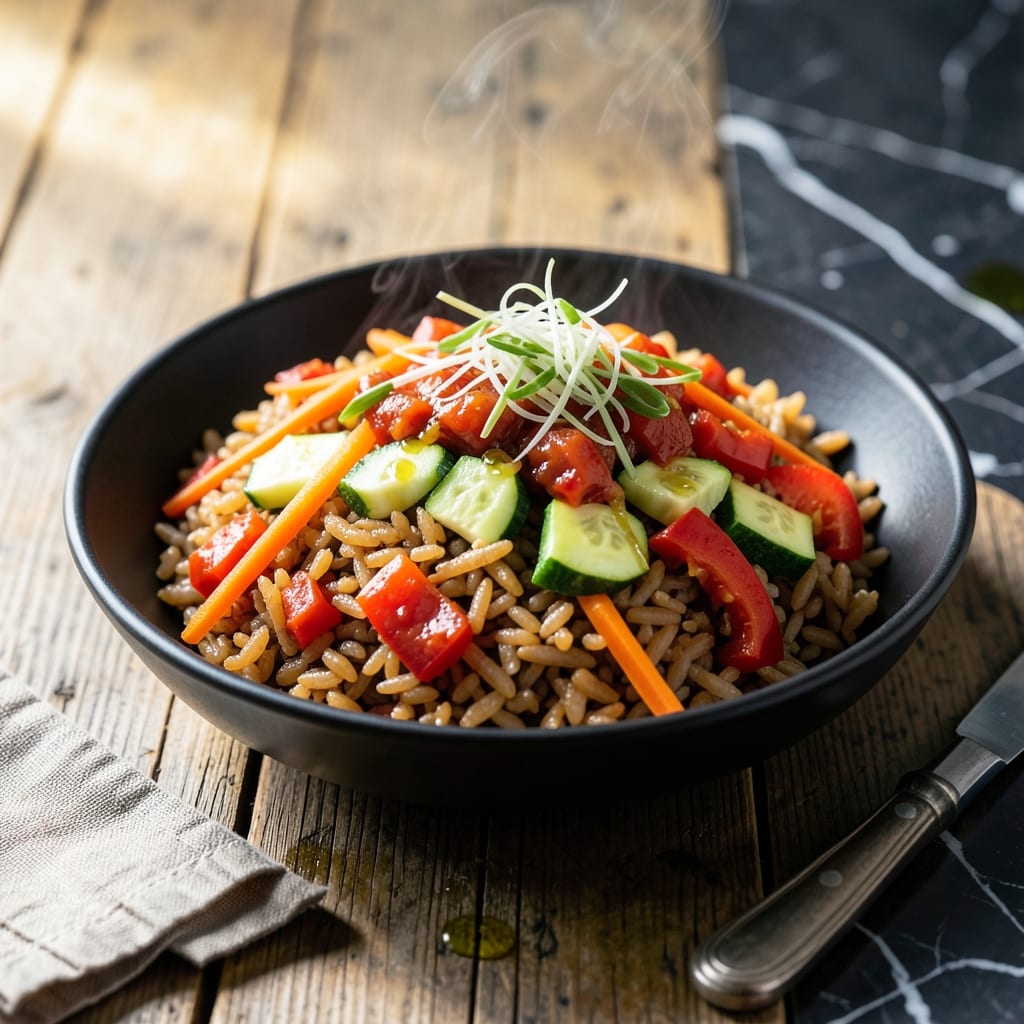
This dish proves healthy eating doesn’t mean sacrificing flavor. A spicy, fermented kick meets fresh vegetables in every bite, creating a balanced meal that’s as nutritious as it is satisfying.
I developed this version to pack in extra veggies without overpowering the bold kimchi flavor. The key is using minimal oil and letting the ingredients shine through careful layering of textures and tastes.
The result is a vibrant, veggie-packed fried rice with just the right amount of heat. Each mouthful delivers crisp-tender vegetables, chewy rice, and that signature kimchi tang.
Ready in under 30 minutes, it’s a quick way to turn leftovers into something extraordinary.
Ingredients for Healthy Kimchi Fried Rice
Vibrant vegetables and fermented heat come together in this nutrient-packed dish with bold flavors.
| Ingredient | Amount | Notes |
|---|---|---|
| Cooked Brown Rice 🍚 | 4 cups | Day-old, chilled for best texture |
| Kimchi 🥬 | 1 ½ cups | Well-fermented, chopped with juice reserved |
| Carrots 🥕 | 2 whole | Medium, julienned for even cooking |
| Zucchini 🥒 | 1 whole | Medium, diced into small cubes |
| Red Bell Pepper 🌶️ | 1 whole | Cored, seeded, finely diced |
| Scallions 🧅 | 4 whole | Thinly sliced, whites and greens separated |
| Garlic Cloves 🧄 | 4 cloves | Minced for maximum flavor dispersion |
| Fresh Ginger 🌿 | 1 tbsp | Peeled, finely grated |
| Soy Sauce 🫒 | 3 tbsp | Low-sodium for controlled seasoning |
| Sesame Oil 🫒 | 1 tbsp | Toasted for nutty aroma |
| Vegetable Oil 🫒 | 1 tbsp | Neutral flavor for frying |
| Large Eggs 🥚 | 4 whole | Lightly beaten for even distribution |
| Sesame Seeds 🌾 | 1 tbsp | Toasted for garnish |
| Gochujang 🌶️ | 1 tbsp | Korean chili paste for depth |
The kimchi is non-negotiable here. Look for napa cabbage kimchi at H Mart or Korean markets—it has the right balance of spice and tang. The rice should be day-old (freshly cooked turns mushy). Brown rice adds fiber, but jasmine or short-grain white works too. Organic produce for the veggies ensures the cleanest flavors, especially since they’re not peeled.
No kimchi? Sauerkraut plus a dash of sriracha gets you in the ballpark (though the flavor profile won’t be the same). Swap eggs for extra-firm tofu if you want it vegan. Gochujang can be replaced with miso paste mixed with chili flakes. The sesame oil is worth hunting down—Kadoya or Ottogi brands are reliable. For the vegetables, use whatever you have: snap peas, broccoli, or mushrooms all work well.
This keeps 3-4 days in the fridge, though the kimchi flavor intensifies over time. Reheat in a skillet with a splash of water to revive the rice. Freezing isn’t ideal (the veggies get soggy), but if you must, consume within 1 month.
Why You’ll Love This Recipe
- One Pan Meal: I love that everything cooks together in one skillet—brown rice, kimchi, and those colorful veggies just toss right in.
- Tangy & Spicy: Honestly, the fermented kimchi gives it that bold kick while the brown rice keeps it hearty and satisfying.
- Meal Prep Hero: I make a big batch on Sunday and it reheats beautifully for lunches all week.
- Budget Stretcher: Between us, a little kimchi goes a long way, and those veggies are cheap year-round.
Step-by-Step Instructions for Healthy Kimchi Fried Rice
This method ensures optimal texture and balanced flavors while preserving the dish’s nutritional integrity.
Step 1: Prepare Vegetables and Aromatics
Begin by julienning the 2 whole Carrots into thin, even strips for consistent cooking. Dice the 1 whole Zucchini into small cubes and finely dice the 1 whole Red Bell Pepper. Thinly slice the 4 whole Scallions, keeping the whites and greens separate for layered flavor.
Mince the 4 cloves Garlic Cloves and finely grate the 1 tbsp Fresh Ginger. These preparations ensure even distribution of flavors throughout the dish. I maintain uniform cuts to guarantee all components cook at the same rate.
Step 2: Sauté Aromatics and Vegetables
Heat 1 tbsp Vegetable Oil in a large skillet or wok over medium-high heat until shimmering. Add the minced garlic and grated ginger, stirring constantly for 30 seconds until fragrant but not browned. This prevents bitterness while developing depth of flavor.
Add the carrots, zucchini, and red bell pepper. Stir-fry for 4-5 minutes until the vegetables are tender-crisp and the carrots begin to soften. The goal is to retain their vibrant color and slight bite, which contrasts beautifully with the soft rice.
Step 3: Combine Rice, Kimchi, and Seasonings
Increase heat to high and add the 4 cups Cooked Brown Rice, breaking up any clumps with your spatula. The chilled rice will absorb flavors better and resist turning mushy. Stir-fry for 2 minutes to heat through.
Add the 1.5 cups Kimchi with its reserved juice, the 3 tbsp Soy Sauce, 1 tbsp Gochujang, and 1 tbsp Sesame Oil. Stir thoroughly for 3-4 minutes until the rice is evenly coated and the kimchi softens. The mixture should develop a glossy sheen from the sesame oil.
Step 4: Incorporate Eggs and Final Touches
Create a well in the center of the rice mixture. Pour in the 4 whole Large Eggs and scramble gently with your spatula. Cook for 2-3 minutes, stirring occasionally, until the eggs are just set and evenly distributed throughout the rice.
Remove from heat and fold in the scallion greens. The residual heat will soften them slightly while maintaining their fresh, oniony bite. This final touch adds color and brightness to the finished dish.
Step 5: Garnish and Serve
Transfer to serving plates and sprinkle with the 1 tbsp Sesame Seeds. The toasted seeds add a nutty crunch that complements the dish’s textures perfectly. Serve immediately while hot, as the flavors meld beautifully when fresh.
Each serving should showcase the vibrant colors of the vegetables against the golden-brown rice, with the sesame seeds providing visual contrast. The dish should be aromatic, with the spicy kimchi and gochujang providing a balanced kick.
Pro Tips For Making Healthy Kimchi Fried Rice
- Dry the Rice First: Spread your cooked brown rice on a tray and let it air-dry for 10-15 minutes before frying. I learned this the hard way—soggy rice turns to mush, but dry grains crisp up and soak up the kimchi flavor like a sponge.
- Squeeze the Kimchi: Drain and give your kimchi a good squeeze to remove excess liquid. Sounds weird, but it works: this prevents a watery stir-fry and lets the tangy spice cling to your rice and veggies.
- High Heat, Fast Cook: Crank your pan to medium-high and work quickly—brown rice burns faster than white. After charring a few batches, I finally figured out that 2-3 minutes per veggie batch is the sweet spot.
- Prep All Veggies: Chop your carrots, zucchini, and bell pepper into small, uniform pieces before you start cooking. My grandmother swore by this, and she was right: it guarantees even cooking and no frantic chopping mid-stir-fry.
Serving Suggestions for Leftovers
Family-Style Plating
Serve this directly from a large cast iron skillet at the table for a rustic, communal feel. The sizzling presentation lets everyone customize their portion. I love how the skillet keeps the rice crispy at the edges while the center stays soft and steaming. 🔥
Bowl Presentation
For individual servings, use shallow rice bowls to showcase the vibrant colors. Press the rice slightly with a spoon to create a dome shape, then arrange extra scallion greens and sesame seeds in a radial pattern for visual appeal.
Garnish with Freshness
Add a handful of baby spinach leaves on top just before serving—the residual heat will wilt them slightly. A drizzle of sriracha or extra gochujang on the side lets guests adjust the heat level to their preference.
Side of Pickles
Offer quick-pickled cucumbers or radishes on the side to cut through the richness. I make mine with rice vinegar, a pinch of sugar, and salt—they add a refreshing crunch that balances the spicy kimchi beautifully.
Breakfast Twist
Top each serving with a fried egg for a breakfast-ready version. The runny yolk creates a luxurious sauce that coats every bite. This is my go-to weekend brunch after a night of testing recipes in my tiny Boston kitchen.
Kid-Friendly Adaptation
For picky eaters, serve the kimchi and gochujang on the side. Let them mix in just the amount they’re comfortable with—this dish is forgiving and still delicious with less heat. ✨
Nutrition Facts
Frequently Asked Questions
Can I use fresh rice instead of day-old?
Fresh rice will turn mushy. Use chilled, day-old rice to maintain the ideal texture. If in a hurry, spread hot rice on a tray and refrigerate for 30 minutes to cool quickly.
How can I make this dish vegan?
Skip the eggs and use extra-firm tofu instead. Ensure your kimchi is vegan (some contain fish sauce). Replace gochujang with a mix of miso and chili flakes.
What if my kimchi isn’t very spicy?
Boost the heat by adding 1 teaspoon of chili flakes or an extra 1 tablespoon of gochujang. Taste as you cook and adjust to your preferred spice level.

- Jamaican Jollof Rice Recipe: Island Spice in Every Bite - October 18, 2026
- Hamburger Rice Hot Dish Recipe: Midwest Comfort in One Pan - October 18, 2026
- Iranian Cabbage Rice Recipe: Aromatic Herbs and Spiced Layers - October 18, 2026