
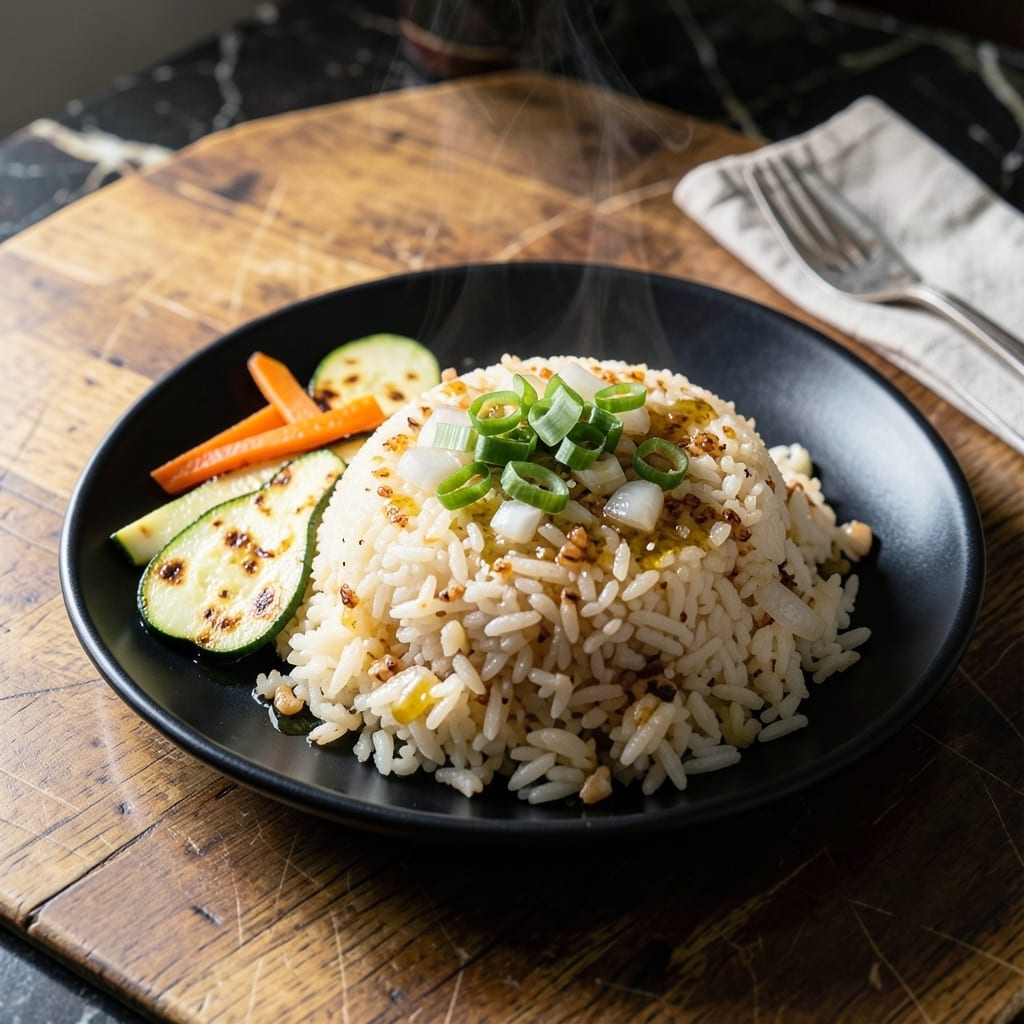
This hibachi-style dish brings restaurant-quality flavor to your home kitchen with minimal effort. I developed this recipe after countless attempts to replicate the smoky, umami-packed rice I loved at my favorite Japanese steakhouse.
The secret lies in cooking the rice and vegetables together in a hot wok or skillet, allowing them to develop those signature charred edges while staying tender. A simple soy-based sauce adds depth without overpowering the natural sweetness of the veggies.
What you get is a dish with crisp-tender vegetables, slightly caramelized rice, and that unmistakable hibachi aroma. It’s the kind of meal that feels special but comes together in under 30 minutes.
Serve it as a side or make it a main with added protein. Here’s how to achieve that perfect wok-charred flavor at home.
Ingredients for Hibachi Rice and Vegetables
Pantry staples and fresh veggies come together for that smoky hibachi flavor at home.
| Ingredient | Amount | Notes |
|---|---|---|
| Jasmine Rice 🍚 | 2 cups | Uncooked, rinsed thoroughly |
| Zucchini 🥒 | 2 whole | Medium, sliced into half-moons |
| Carrots 🥕 | 2 whole | Medium, julienned or thinly sliced |
| White Onion 🧅 | 1 whole | Medium, thinly sliced |
| Garlic Cloves 🧄 | 3 cloves | Minced finely |
| Green Onions 🌱 | 3 whole | Thinly sliced, green parts only |
| Soy Sauce 🫒 | ¼ cup | Low-sodium preferred |
| Sesame Oil 🫒 | 1 tbsp | Toasted, for finishing |
| Vegetable Oil 🫒 | 3 tbsp | High smoke point, divided |
| Unsalted Butter 🧈 | 2 tbsp | For richness and flavor |
| Eggs 🥚 | 2 whole | Large, beaten lightly |
| Salt 🧂 | ½ tsp | Kosher or sea salt |
| Black Pepper 🌶️ | ¼ tsp | Freshly ground preferred |
| Sesame Seeds 🌰 | 1 tsp | Toasted, for garnish |
The rice is key here—jasmine gives you that sticky, slightly sweet base hibachi is known for. Rinse it until the water runs clear to remove excess starch. For the veggies, pick firm, fresh produce—zucchini and carrots should snap, not bend. I grab mine from Whole Foods or the local farmers market when I can. The onion and garlic build the flavor foundation, so don’t skip them.
No jasmine rice? Short-grain white rice works in a pinch. Swap zucchini for mushrooms if you prefer more umami. Out of sesame oil? Skip it entirely—the dish will still taste great. For extra protein, toss in tofu or shrimp (if you’re not vegetarian). The soy sauce can be tamari for gluten-free, but reduce salt by half since tamari is saltier.
Leftover rice keeps in the fridge for 4-5 days—reheat in a skillet with a splash of water to revive. The veggies are best fresh but hold up for 2-3 days. Freeze cooked rice for up to 3 months (thaw overnight before reheating).
Why You’ll Love This Recipe
- One Pan Wonder: It’s just jasmine rice, zucchini, carrots, onion, and garlic—all cooked together, so I’m not juggling pots and pans.
- Garlic-Butter Magic: The sizzle of minced garlic in butter with those crisp-tender veggies makes every bite ridiculously good.
- Lunchbox Hero: I pack leftovers for lunch the next day, and the rice soaks up all the flavor overnight.
- Budget Stretcher: Honestly, five simple ingredients feed my whole family without breaking the bank.
Step-by-Step Instructions for Hibachi Rice and Vegetables
Here’s the method I rely on for restaurant-quality results at home.
Step 1: Cook the Jasmine Rice to Perfection
Rinse the 2 cups jasmine rice thoroughly under cold water until the water runs clear. This removes excess starch and prevents the rice from becoming gummy. I like to swirl it around with my hand and change the water 3-4 times.
Cook the rice according to package instructions or use a rice cooker with a 1:1.25 rice-to-water ratio. Once done, fluff it with a fork and let it cool slightly. The grains should be separate and tender, not mushy. Spread it on a baking sheet to cool completely and prevent clumping—this ensures your hibachi rice gets that signature slightly dry texture that chars beautifully.
Step 2: Stir-Fry the Vegetables Until Crisp-Tender
Heat 2 tablespoons vegetable oil in a large wok or skillet over high heat until it shimmers. Add the sliced white onion, julienned carrots, and zucchini half-moons. Stir-fry for 4-5 minutes until the vegetables are bright in color and just beginning to soften but still have a slight bite.
Add the minced garlic cloves and cook for 30 seconds until fragrant. I keep the vegetables moving constantly with a pair of tongs to prevent burning. The goal is to achieve that perfect balance of tenderness and slight char that makes hibachi vegetables so addictive.
Season with 0.5 tsp salt and 0.25 tsp black pepper, then transfer the vegetables to a plate and set aside. Don’t overcrowd the pan—this steams the vegetables instead of stir-frying them.
Step 3: Scramble the Eggs and Combine Everything
In the same wok, add the remaining 1 tablespoon vegetable oil and the 2 tablespoons unsalted butter. Once the butter melts and foams, pour in the beaten eggs. Let them set for 10 seconds before gently scrambling with a spatula until just set but still slightly runny.
Add the cooled rice to the wok, breaking up any clumps with your spatula. Press the rice down firmly with the back of the spatula to create maximum contact with the hot surface. This is how you achieve that coveted crispy texture. Cook undisturbed for 1-2 minutes until you hear a slight sizzle and see the rice beginning to brown.
Step 4: Finish with Sauce and Garnish
Drizzle the 0.25 cup soy sauce evenly over the rice and stir to combine. The soy sauce should coat every grain without making the mixture soggy. Return the cooked vegetables to the wok and toss everything together for 1-2 minutes until heated through.
Remove from heat and stir in the thinly sliced green onions. Drizzle with the 1 tablespoon sesame oil and toss to distribute evenly. The sesame oil adds a nutty aroma that ties all the flavors together beautifully.
Garnish with 1 tsp sesame seeds and serve immediately while hot. The rice should have a slight crispness on the bottom with tender vegetables throughout, and that unmistakable umami flavor in every bite.
Pro Tips For Making Hibachi Rice And Vegetables
- Use Day-Old Rice: Fresh rice is too moist and will turn mushy on the hibachi grill or pan—spread leftover jasmine rice on a tray and refrigerate overnight for that perfect dry, separate texture.
- Cut Evenly: Slice zucchini, carrots, and onion into uniform 1/4-inch pieces so they cook at the same rate; I learned this the hard way after pulling out half-burnt, half-raw veggies.
- High Heat Only: Crank the heat to medium-high or high and resist the urge to stir constantly—this is how you get those slightly charred edges on the veggies that make hibachi taste like hibachi.
- Mince the Garlic: Pressing or mincing the garlic cloves instead of slicing releases more flavor into the oil, and it distributes evenly across the rice and vegetables without overpowering any single bite.
Essential Equipment for This Dish
Wok or Skillet
A 14-inch carbon steel wok is my top choice for authentic hibachi results. I use the Made In brand because it heats evenly and develops a natural non-stick surface. A large cast iron skillet works well too if you don’t own a wok.
Rice Cooker
For perfectly cooked jasmine rice every time, a rice cooker takes the guesswork out. I recommend the Zojirushi 3-Cup model for home cooks. It maintains consistent temperature and automatically switches to keep warm. 💡
Sharp Chef’s Knife
Precise vegetable prep is crucial for even cooking. I use my 8-inch Wüsthof chef’s knife for all the slicing and dicing. Keep it sharp—it makes julienning those carrots much safer and more efficient.
High Heat Tools
Hibachi cooking requires high heat, so use long-handled tongs and a wooden spatula to protect your hands. I prefer OXO brand for both—their grips stay cool and provide excellent control when stir-frying.
Mixing Bowls
Have at least two medium mixing bowls ready—one for the beaten eggs and one for the cooked vegetables. I like the Pyrex glass set because they’re microwave-safe and I can see the contents clearly. 🔥
These are the essentials I rely on in my Boston kitchen for perfect hibachi rice and vegetables every time.
Nutrition Facts
Frequently Asked Questions
Can I use a different type of rice?
Yes, short-grain white rice works well as a substitute. It has a similar sticky texture to jasmine. Just rinse it thoroughly and use the same 1:1.25 rice-to-water ratio for best results.
How do I prevent my veggies from getting soggy?
Cook them in batches if your pan is small, and always use high heat. Overcrowding steams instead of stir-frying. Keep them moving constantly for even cooking.
Can I add protein to this dish?
Tofu, shrimp, or chicken work great. Cook the protein first, set it aside, then add it back at the end with the vegetables and sauce.
How do I store leftovers?
Keep in an airtight container in the fridge for 4-5 days. Reheat in a skillet with a splash of water to restore moisture. Freeze rice for up to 3 months.

- Indian Jasmine Rice Recipe: Fragrant Basmati-Free Elegance - October 19, 2026
- KFC Rizo Rice Recipe: Copycat Side Dish With Savory Spice Blend - October 19, 2026
- Jeerakasala Rice Recipe: Fragrant Cumin-Infused Kerala Delight - October 19, 2026