
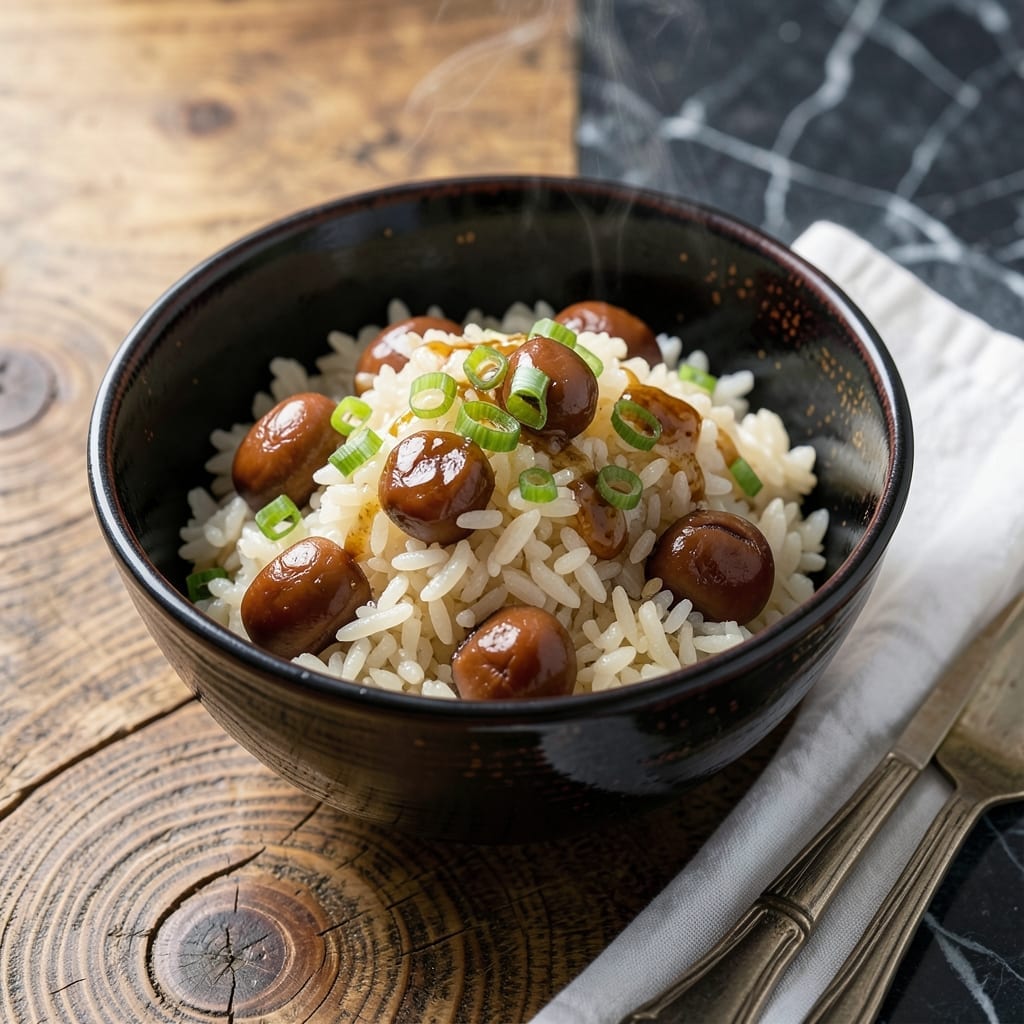
There’s a quiet elegance to this traditional Japanese dish that transforms simple rice into something extraordinary.
I’ve perfected the method for achieving that signature nutty sweetness and fluffy texture that defines kuri gohan. The chestnuts soften beautifully while maintaining their shape, infusing every grain with subtle earthy richness.
The key is using pre-cooked chestnuts and soaking them briefly to prevent breaking during cooking. A rice cooker makes the process foolproof, though a heavy pot works just as well with careful attention.
What emerges is a bowl of rice that’s both comforting and sophisticated, with chestnuts adding natural sweetness and a satisfying chew. Serve it alongside grilled fish or pickled vegetables for a complete meal.
Ingredients for Japanese Chestnut Rice
Elevated simplicity with Japanese short-grain rice and chestnuts as the stars of this dish.
| Ingredient | Amount | Notes |
|---|---|---|
| Japanese Short-Grain Rice 🍚 | 2 cups | Rinsed until water runs clear |
| Pre-Cooked Chestnuts 🌰 | 1 ½ cups | Peeled, whole or halved |
| Dashi Stock 🥣 | 2 cups | Or substitute water with dashi powder |
| Soy Sauce 🫒 | 2 tbsp | Low-sodium preferred for balance |
| Sake 🍶 | 2 tbsp | Dry variety for cooking |
| Mirin 🍯 | 1 tbsp | Sweet rice wine for glaze |
| Granulated Sugar 🧂 | 1 tsp | Adjust to taste preference |
| Salt 🧂 | ½ tsp | Diamond Crystal kosher preferred |
| Neutral Oil 🫒 | 1 tsp | For rinsing rice bowl optionally |
| Toasted Sesame Seeds 🌿 | 1 tsp | For garnish, optional |
| Thinly Sliced Green Onions 🧅 | 2 tbsp | For garnish, optional |
The rice is non-negotiable—Japanese short-grain (sushi rice) delivers the required sticky texture. Koshihikari or Nishiki brands are widely available at Asian markets or the international aisle. Pre-cooked chestnuts (vacuum-packed) save hours of prep; Trader Joe’s carries them seasonally. For dashi, instant dashi granules dissolve easily and store indefinitely. Seek out hon-mirin over aji-mirin for authentic depth.
No sake? Dry white wine at half the amount works in a pinch. Swap mirin for 1 tsp sugar plus 1 tbsp water. For vegetarian dashi, use kombu (dried kelp) simmered briefly—avoid bonito flakes. Chestnuts can be fresh (roast and peel yourself) but require 30 extra minutes of prep. The sugar can be omitted if your chestnuts are particularly sweet.
Cooked rice holds 4-5 hours at room temperature in the cooker’s keep-warm function. Store leftovers airtight in the fridge for 3 days—reheat with a splash of water to revive. Freezes beautifully for 1 month. Garnishes should be added fresh when serving.
Why You’ll Love This Recipe
- One Pot Wonder: I just dump everything in the rice cooker—rice, pre-cooked chestnuts, dashi, soy, and sake—and walk away.
- Sweet-Savory Magic: The chestnuts soak up the dashi and soy, turning each bite into this crazy good mix of nutty sweetness and umami.
- Feeds a Crowd: I make a big batch for potlucks and it’s always the first thing gone.
- Leftovers for Days: Honestly, it tastes even better the next day—if there’s any left.
Step-by-Step Instructions for Japanese Chestnut Rice
Achieve perfectly balanced flavor and texture with this traditional preparation method.
Step 1: Rinse and Prepare the Japanese Short-Grain Rice
Place the 2 cups Japanese Short-Grain Rice in a fine-mesh strainer and rinse under cold running water, gently rubbing the grains together with your fingers. Continue this process until the water runs completely clear—this removes excess starch and ensures the rice cooks up fluffy rather than gummy.
Once rinsed, transfer the rice to a medium bowl. I like to add the 1 tsp Neutral Oil to the bowl at this stage, which prevents the grains from sticking together. Gently swirl to coat evenly, then drain off any excess oil before proceeding.
Step 2: Combine Rice and Seasoning Liquids
In a rice cooker or heavy-bottomed pot, combine the rinsed 2 cups Japanese Short-Grain Rice with the 2 cups Dashi Stock, 2 tbsp Soy Sauce, 2 tbsp Sake, 1 tbsp Mirin, 1 tsp Granulated Sugar, and 0.5 tsp Salt. Stir gently to distribute the seasonings evenly throughout the rice.
The dashi stock provides a subtle umami depth, while the sake and mirin add a delicate sweetness that complements the chestnuts. Make sure all the grains are submerged in the liquid for even cooking.
Step 3: Add Chestnuts and Cook
Evenly distribute the 1.5 cups Pre-Cooked Chestnuts over the rice. Do not stir—this ensures the chestnuts remain whole and create beautiful visual layers in the finished dish. Gently press the chestnuts into the liquid so they are partially submerged.
If using a rice cooker, select the standard white rice setting. For stovetop preparation, bring the mixture to a boil over medium-high heat, then reduce to low heat, cover, and simmer for 15-20 minutes until all the liquid is absorbed and the rice is tender. Avoid lifting the lid during cooking, as this releases steam and can lead to uneven cooking.
Step 4: Rest and Garnish
Once cooking is complete, let the rice rest, covered, for 10 minutes. This allows the grains to steam and absorb any remaining moisture, resulting in a more cohesive texture. The chestnuts will soften further during this time, infusing the rice with their nutty flavor.
Before serving, fluff the rice gently with a fork, taking care not to break the chestnuts. Sprinkle with 1 tsp Toasted Sesame Seeds and 2 tbsp Thinly Sliced Green Onions for a fresh, aromatic finish. Serve warm in individual bowls, ensuring each portion includes a generous share of chestnuts.
Pro Tips For Making Japanese Chestnut Rice
- Soak the Rice: Rinse the short-grain rice until the water runs clear, then soak it for at least 30 minutes—I learned this the hard way after ending up with unevenly cooked rice more times than I’d like to admit.
- Slit the Chestnuts: Even if they’re pre-cooked, cut a small slit in each chestnut before adding them to the rice, or they might burst and turn your pot into a messy surprise.
- Use Fresh Dashi: Skip the instant dashi powder if you can; a light, freshly made stock (even just simmered for 10 minutes with kombu and bonito flakes) makes a real difference in depth of flavor.
- Rest Before Serving: After cooking, let the rice sit covered for 10 minutes—this gives the grains time to absorb all the liquid and the chestnuts to plump up just right.
Perfect Pairings for japanese chestnut rice
Protein Pairings
This dish pairs beautifully with grilled salmon brushed with a light miso glaze. The sweetness of the chestnuts complements the fish’s natural richness. I also love it with teriyaki chicken thighs for a heartier meal.
Vegetable Sides
A simple spinach gomaae (spinach with sesame dressing) adds freshness. Or try pickled daikon and carrots for a tangy contrast. Both balance the earthy sweetness of the rice.
For a quicker option, steamed broccoli with a sprinkle of toasted sesame seeds works wonderfully. 🌱
Soup Complements
A light miso soup with tofu and wakame makes a perfect starter. The umami flavors tie the meal together without overpowering the chestnut rice.
Alternatively, clear dashi-based soups like sumashijiru maintain the Japanese theme while letting the rice shine.
Beverage Pairings
Green tea (sencha or genmaicha) is traditional and refreshing. The subtle bitterness cleanses your palate between bites. For alcohol, sake (try a dry junmai) enhances the dish’s depth.
Dessert Ideas
End with matcha ice cream or black sesame mochi for a cohesive Japanese meal experience. The nutty, earthy flavors create a satisfying progression from start to finish. 💛
Nutrition Facts
Frequently Asked Questions
Can I use raw chestnuts instead of pre-cooked?
Yes, but they need roasting and peeling first. Raw chestnuts require 30-40 minutes of prep to soften and remove skins. Pre-cooked saves time and ensures consistent texture.
What if I don’t have a rice cooker?
Use a heavy pot with a tight lid. Bring to boil over medium-high heat, then reduce to low, cover, and simmer for 15-20 minutes. Avoid peeking to trap steam.
How do I prevent the rice from sticking?
Rinse the rice thoroughly until water runs clear, and add 1 tsp neutral oil to the bowl after rinsing. This keeps grains separate and fluffy.
Can I make this dish vegetarian?
Use kombu dashi (seaweed-based) instead of traditional dashi. Skip bonito flakes entirely. The flavor remains rich and balanced.

- Indian Jasmine Rice Recipe: Fragrant Basmati-Free Elegance - October 19, 2026
- KFC Rizo Rice Recipe: Copycat Side Dish With Savory Spice Blend - October 19, 2026
- Jeerakasala Rice Recipe: Fragrant Cumin-Infused Kerala Delight - October 19, 2026