
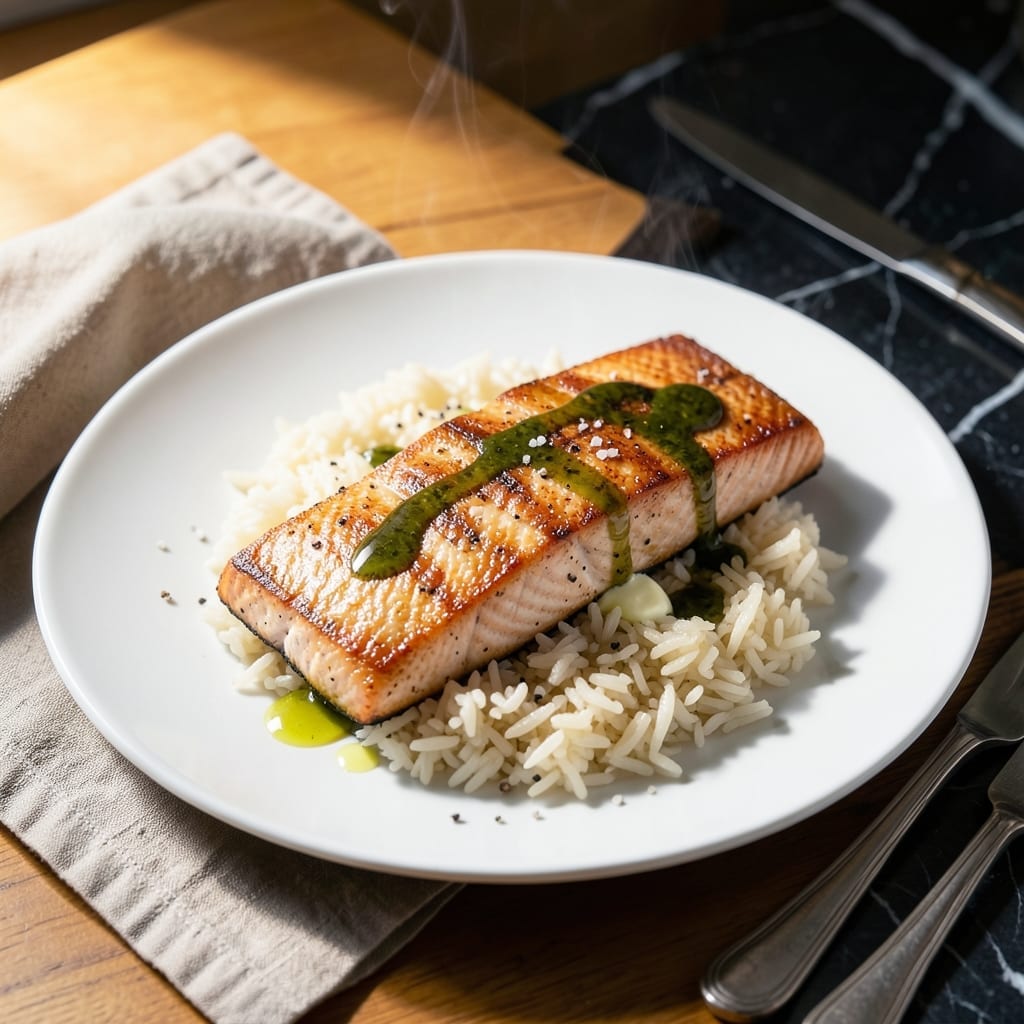
Mastering the art of pairing white rice with salmon creates a meal that’s both elegant and approachable. The key lies in perfectly cooked grains that serve as the ideal canvas for rich, flavorful fish.
I developed this method through years of testing, focusing on rice that stays fluffy and separate, ready to absorb every drop of salmon’s natural juices. The technique requires precision but delivers consistent results every time.
What emerges is a dish where each component complements the other perfectly. The rice provides a neutral base, while the salmon contributes its buttery richness, creating a harmonious balance of textures and flavors.
This combination works for both weeknight dinners and special occasions, proving that simplicity often leads to the most satisfying meals.
Ingredients for White Rice Recipe for Salmon
Elegant yet simple ingredients for a dish where fluffy rice meets buttery salmon perfectly.
| Ingredient | Amount | Notes |
|---|---|---|
| Jasmine Rice 🌾 | 1 ½ cups | Rinsed until water runs clear |
| Water 💧 | 3 cups | Filtered for best texture |
| Salmon Fillets 🐟 | 1 ½ lb | Skin-on, wild-caught preferred |
| Kosher Salt 🧂 | 1 tsp | Diamond Crystal brand preferred |
| Unsalted Butter 🧈 | 2 tbsp | For finishing rice and salmon |
| Extra-Virgin Olive Oil 🫒 | 1 tbsp | For cooking salmon |
| Fresh Lemon Juice 🍋 | 1 tbsp | For brightening salmon |
| Fresh Dill 🌿 | ¼ cup | Chopped, for garnish |
| Garlic Cloves 🧄 | 2 cloves | Minced, for salmon seasoning |
| Black Pepper 🌶️ | ½ tsp | Freshly ground for best flavor |
| Bay Leaf 🍃 | 1 whole | For infusing rice |
| Fresh Parsley 🌿 | ¼ cup | Chopped, for garnish |
The rice selection is critical for achieving the ideal texture. Jasmine rice provides the perfect balance of fluffiness and subtle fragrance, while wild-caught salmon offers the rich, buttery flavor that defines this dish. Source your salmon from Whole Foods or a trusted local fishmonger for optimal freshness. The Diamond Crystal kosher salt ensures precise seasoning without overpowering the natural flavors.
For substitutions, basmati rice can replace jasmine, though the texture will be slightly firmer. If fresh dill is unavailable, dried dill at one-third the amount works, but fresh delivers superior aroma. Farm-raised salmon may be substituted for wild-caught if necessary, though the flavor profile will differ. The bay leaf can be omitted, but it adds a subtle depth to the rice.
Store the rice in an airtight container in a cool, dry place for up to 1 year. The salmon should be cooked immediately or stored in the refrigerator for no more than 2 days. Leftover cooked salmon and rice keep for 3-4 days in the fridge, though both are best enjoyed fresh.
Why You’ll Love This Recipe
- One Pot Wonder: I love that I can cook the jasmine rice and pan-sear the salmon in the same pot—minimal cleanup, maximum flavor.
- Buttery Harmony: The unsalted butter melts into the rice while the salmon cooks, giving every bite this rich, velvety finish.
- Weeknight Hero: Honestly, it’s my go-to for busy evenings when I need something fast but still feel like a real meal.
- Budget Stretcher: Jasmine rice is cheap, salmon fillets go a long way, and leftovers taste even better the next day.
Step-by-Step Instructions for White Rice to Pair with Salmon
Master the technique for perfectly fluffy grains that complement rich salmon flavors.
Step 1: Rinse and Prepare the Jasmine Rice
Place the 1.5 cups jasmine rice in a fine-mesh strainer and rinse under cold water, swirling with your hand, until the water runs completely clear. This removes excess starch that can make rice gummy rather than fluffy.
Drain thoroughly and transfer to a medium saucepan. The rice should be damp but not wet—excess moisture affects the water ratio. I always shake the strainer vigorously to remove all lingering water droplets before proceeding.
Step 2: Infuse and Simmer the Rice
Add the 3 cups water, 1 tsp kosher salt, and 1 whole bay leaf to the saucepan with the rice. The bay leaf adds subtle depth that pairs beautifully with the salmon without overpowering it.
Bring to a boil over medium-high heat, then immediately reduce to low heat, cover with a tight-fitting lid, and simmer for 12-15 minutes. You’ll notice the steam escaping slows significantly when it’s time to check.
Step 3: Cook the Salmon Fillets
While the rice simmers, pat the 1.5 lb salmon fillets dry with paper towels. Season both sides with 0.5 tsp black pepper, 2 cloves minced garlic cloves, and any remaining kosher salt from the measured amount.
Heat 1 tbsp extra-virgin olive oil in a large skillet over medium heat until shimmering. Add the salmon skin-side down and cook undisturbed for 4-5 minutes until the skin is crisp and golden brown. Flip and cook for another 3-4 minutes until the fish flakes easily with a fork.
Step 4: Finish and Combine
Remove the saucepan from heat and let the rice steam, covered, for 10 minutes. Stir in 2 tbsp unsalted butter until melted and fully incorporated. This final step enhances the rice’s richness and sheen.
Drizzle the salmon with 1 tbsp fresh lemon juice and let it rest for 2 minutes. The acid brightens the fish and cuts through its natural oils, creating perfect harmony with the rice.
Step 5: Garnish and Serve
Fluff the rice gently with a fork to separate the grains. Discard the bay leaf and adjust seasoning if needed. The texture should be light and airy, with each grain distinct.
Plate the salmon alongside the rice and garnish with 0.25 cup fresh dill and 0.25 cup fresh parsley. The herbs add a fresh, vibrant contrast to the rich, buttery flavors of the dish.
Pro Tips For Making White Rice Recipe For Salmon
- Rinse the Rice: Always rinse jasmine rice until the water runs clear—I learned this the hard way after ending up with gummy rice that stuck to my salmon.
- Salt the Water: Use 1 teaspoon kosher salt per cup of water, more than you think, especially since unsalted butter won’t add any seasoning.
- Rest the Salmon: Let the fillets sit at room temperature for 10 minutes before cooking—sounds weird, but it guarantees even cooking without dry edges.
- Use Cold Butter: Stir in cold, cubed unsalted butter at the end for a glossy finish that coats the rice and salmon beautifully—this isn’t the prettiest method, but it’s the tastiest.
Make-Ahead Tips for This Dish
Prep Ahead Rice
Cook the rice up to 2 days in advance and store it in the refrigerator in an airtight container. When ready to serve, reheat with a splash of water in a skillet over medium-low heat for 5-7 minutes, stirring occasionally. This keeps the grains fluffy and separate. 💡
Salmon Prep Tips
Season your salmon fillets with salt, pepper, and garlic the night before cooking. Store them uncovered on a plate in the fridge to let the skin dry slightly—this helps achieve that perfect crispy texture when cooked.
Combined Storage
Once cooked, store the salmon and rice separately in the refrigerator for up to 3 days. This prevents the rice from absorbing too much moisture from the fish, which can make it mushy. I always use glass containers for easy reheating.
Freezing Option
For longer storage, freeze cooked rice in 1-cup portions in freezer bags for up to 1 month. Thaw overnight in the fridge before reheating. Salmon doesn’t freeze as well after cooking, so I recommend preparing it fresh when possible. ❄️
Reheating Salmon
Gently reheat salmon in a skillet over low heat with a pat of butter for 3-4 minutes per side. Avoid the microwave, as it can dry out the fish. The goal is to warm it through without overcooking.
Last-Minute Assembly
If prepping ahead, garnish with fresh dill and parsley just before serving to maintain their vibrant color and flavor. A final squeeze of lemon juice brightens the dish and ties all the elements together beautifully.
Nutrition Facts
Frequently Asked Questions
What’s the best rice-to-water ratio?
Use a 1:2 ratio of jasmine rice to water. For this recipe, that means 1.5 cups rice to 3 cups water. This ensures fluffy, separate grains every time.
Can I use a different type of rice?
Basmati works well, though it stays firmer. Avoid instant rice, as it lacks the texture needed to complement the salmon’s richness.
How do I prevent the salmon skin from sticking?
Pat the fillets completely dry and heat the skillet until the oil shimmers before adding the fish. Let it cook undisturbed for 4-5 minutes to develop a crisp crust.
Should I season the rice?
Yes, but subtly. The 1 tsp kosher salt and bay leaf in the cooking water add enough flavor without overpowering the salmon.

- Jollof Rice Sauce Recipe: West African Tomato and Spice Infusion - September 25, 2026
- Japanese Rice Soup Recipe: Umami-Rich Comfort in a Bowl - September 25, 2026
- Homemade Cream Of Rice Recipe: Silk-Smooth Breakfast in Minutes - September 25, 2026