
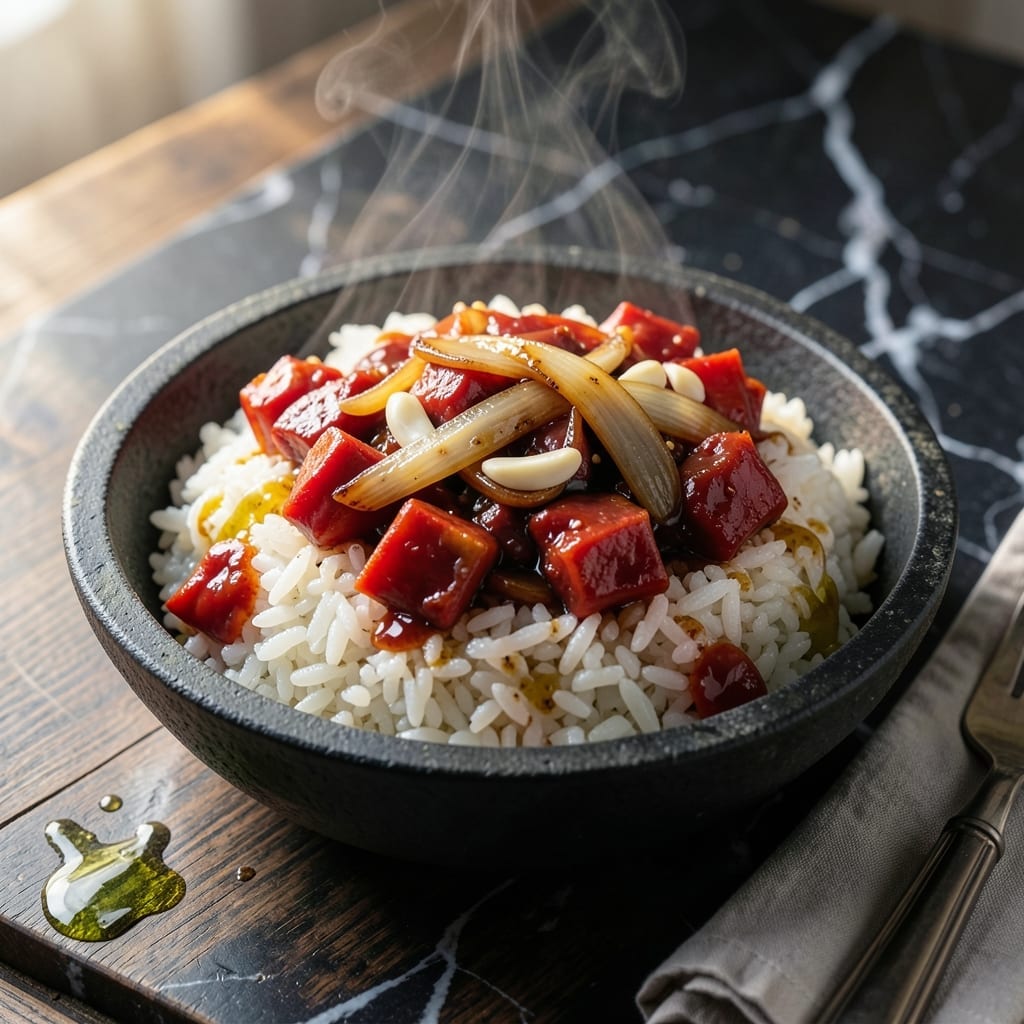
This Korean-inspired dish transforms leftover rice into a bold, flavorful meal that’s as comforting as it is exciting. The secret lies in using well-fermented kimchi, which brings both heat and depth to the dish.
I’ve refined this method to balance the tangy kimchi with savory elements like bacon or spam, creating a perfectly harmonious bite every time. The rice crisps slightly in the pan, adding texture that contrasts beautifully with the soft kimchi.
What you get is a dish that’s quick to make yet deeply satisfying, with layers of spice, umami, and a subtle sweetness from the caramelized kimchi. It’s a staple in my kitchen for busy weeknights.
Serve it topped with a fried egg for extra richness. Here’s how to make it.
Ingredients for Kimchi Rice Recipe Korean
Transform leftover rice with bold Korean flavors and a few pantry staples for this comforting dish.
| Ingredient | Amount | Notes |
|---|---|---|
| Cooked White Rice 🍚 | 4 cups | Day-old, chilled preferred |
| Kimchi 🥬 | 2 cups | Well-fermented, chopped |
| Vegetable Oil 🫒 | 2 tbsp | Or sesame oil for depth |
| Onion 🧅 | ½ whole | Small, finely diced |
| Garlic Cloves 🧄 | 3 cloves | Minced for maximum flavor |
| Gochujang 🌶️ | 1 tbsp | Korean red pepper paste |
| Soy Sauce 🫒 | 1 tbsp | Low-sodium preferred |
| Sesame Oil 🫒 | 1 tsp | Toasted for finishing |
| Green Onions 🧅 | ½ cup | Thinly sliced for garnish |
| Large Eggs 🥚 | 4 whole | For topping each serving |
| Sesame Seeds 🌰 | 1 tsp | Toasted for garnish |
| Sugar 🍚 | ½ tsp | Optional, balances spice |
The kimchi is non-negotiable here. Look for well-fermented, sour kimchi—it’s got more depth. Korean markets have the best selection, but check the refrigerated section at Whole Foods or HMart. Day-old rice works best (fresh is too wet), but if you’re in a pinch, spread hot rice on a tray to cool fast. The gochujang adds serious umami—Sempio or Kochujang brands are my go-tos.
No gochujang? Miso paste plus a dash of sriracha gets you close. Out of kimchi? Sauerkraut plus chili flakes in a pinch (not ideal, but works). Vegetable oil can be swapped for any neutral oil. For extra richness, add a splash of toasted sesame oil at the end. The egg topping is optional but highly recommended—runny yolk ties it all together.
This keeps 3 days in the fridge but honestly tastes best fresh. Reheat leftovers in a skillet with a splash of water to revive the rice. For meal prep, store components separately—add the egg just before serving.
Why You’ll Love This Recipe
- One Pan Wonder: I just toss the rice, kimchi, onion, and garlic into a pan with oil—no fancy steps, no extra dishes.
- Flavor Explosion: The tangy kimchi and sizzling garlic turn plain rice into something ridiculously good.
- Weeknight Savior: I throw this together on busy evenings when I need dinner fast—no stress, no fuss.
- Budget Stretch: A little kimchi goes a long way, and it’s a solid way to use up leftover rice.
Step-by-Step Instructions for Kimchi Rice
This method turns humble ingredients into a flavor-packed dish with minimal effort.
Step 1: Sauté Aromatics in Hot Oil
Heat the 2 tbsp Vegetable Oil in a large skillet or wok over medium-high heat until it shimmers. Add the 0.5 whole Onion and cook for 3-4 minutes until the pieces soften and turn translucent.
Push the onion to one side and add the 3 cloves Garlic Cloves. Stir constantly for 30 seconds until fragrant—don’t let the garlic burn, or it’ll turn bitter. This base builds the foundation for all the bold flavors to come.
Step 2: Add Kimchi and Seasonings
Increase heat to high and add the 2 cups Kimchi to the skillet. Break it up with a spatula and cook for 4-5 minutes until the edges start to caramelize and the liquid has mostly evaporated.
Stir in the 1 tbsp Gochujang, 1 tbsp Soy Sauce, and 0.5 tsp Sugar. The gochujang will deepen the color and add a sweet-spicy kick, while the soy sauce balances everything with saltiness. Cook for 1-2 minutes to meld the flavors together.
Step 3: Incorporate the Rice
Add the 4 cups Cooked White Rice to the skillet, breaking up any clumps with your spatula. Stir-fry for 5-6 minutes over medium-high heat until the rice is hot throughout and slightly crispy in spots.
This step is key—you want the grains to absorb all the kimchi and seasoning flavors while developing a bit of texture. If the mixture looks dry, add a splash of water and continue cooking until it’s evenly moist.
Step 4: Finish with Garnishes and Eggs
Drizzle the 1 tsp Sesame Oil over the rice and stir to combine. Taste and adjust seasoning if needed. Transfer the rice to serving bowls, leaving space on top for the eggs.
In the same skillet, fry the 4 whole Large Eggs sunny-side up or over-easy until the whites are set but yolks remain runny—about 2-3 minutes. Slide one egg onto each serving of rice.
Sprinkle with the 0.5 cup Green Onions and 1 tsp Sesame Seeds for a fresh, nutty finish. Serve immediately while the egg yolks are still warm and ready to mix into the rice.
Pro Tips For Making Kimchi Rice Recipe Korean
- Use Aged Kimchi: The older, sourer kimchi is, the better it tastes in this dish. I learned this the hard way—fresh kimchi just doesn’t give that tangy depth you want.
- High Heat First: Crank the heat to medium-high when frying the onion and kimchi—about 2 minutes—to get a little char, then drop to medium to finish cooking.
- Break Up Rice: Use your hands or a fork to break up any clumps in the cooked rice before adding it to the pan. Sounds tedious, but it prevents mushy spots in the final dish.
- Add Kimchi Juice: Pour in 2-3 tablespoons of the kimchi liquid when stir-frying. It packs a flavor punch and keeps the rice from drying out.
Regional Styles of These Flavors
Seoul Street Food
In bustling Seoul markets, kimchi rice is often served with extra gochujang on the side for customizable heat. Vendors use short-grain rice for its sticky texture, which holds up well to the bold flavors. I tested this with Austin’s Central Market rice and got great results. 🌟
Busan Coastal Twist
Coastal Busan adds dried seaweed and imitation crab to their version, known as kimchi bokkeumbap. The seaweed adds umami depth while the crab provides a sweet contrast. David loved this variation when I tested it on him recently.
Jeonju Royal Style
In Jeonju, the birthplace of bibimbap, they elevate kimchi rice with beef bulgogi and more vegetables. The dish becomes heartier and more colorful. I recommend using ribeye for the beef when trying this at home.
Modern Fusion
Korean-American restaurants often add cheddar cheese on top of the egg, creating a gooey, decadent version. The cheese melts into the hot rice beautifully. My kids, Emma and Jack, request this version constantly.
For extra crunch, some places include crushed potato chips as a garnish. 💛
Nutrition Facts
Frequently Asked Questions
Can I use fresh rice instead of day-old?
Fresh rice is too moist and may turn mushy. Spread hot rice on a tray and refrigerate for 30 minutes to dry it out before cooking. This mimics day-old texture perfectly.
What if my kimchi isn’t very sour?
Add 1 tsp rice vinegar or lemon juice to boost tanginess. You can also let the kimchi sit at room temperature for 1 hour to ferment slightly before cooking.
How do I make this dish vegetarian?
Skip the bacon or spam entirely. Boost flavor with extra 1 tbsp gochujang or add tofu cubes for protein. The dish will still be packed with umami from the kimchi and soy sauce.

- Jollof Rice Sauce Recipe: West African Tomato and Spice Infusion - September 25, 2026
- Japanese Rice Soup Recipe: Umami-Rich Comfort in a Bowl - September 25, 2026
- Homemade Cream Of Rice Recipe: Silk-Smooth Breakfast in Minutes - September 25, 2026