
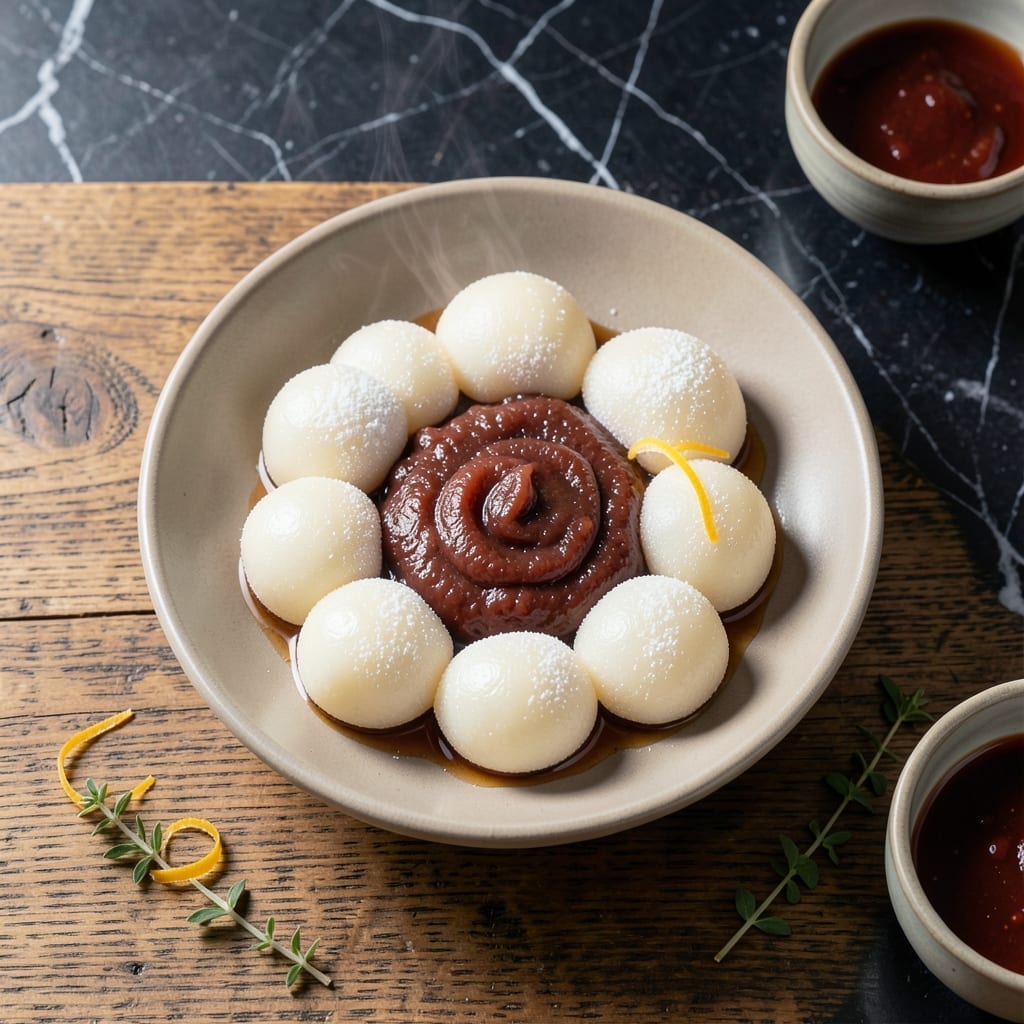
There’s something special about the first time you bite into a warm, pillowy rice ball filled with sweet red bean paste. This traditional Japanese treat captures the essence of mochi’s signature chewy texture paired with the earthy sweetness of anko.
I developed this recipe after years of experimenting with rice flour ratios and steaming techniques. The key is achieving that perfect soft yet elastic consistency that defines authentic mochi. The process requires patience but rewards you with restaurant-quality results.
Each bite delivers a delicate balance of the rice ball’s subtle sweetness with the rich, velvety red bean filling. The contrast in textures—smooth paste against springy dough—makes this dessert truly memorable.
The beauty lies in its simplicity: just a few ingredients transformed through careful preparation into something extraordinary.
Ingredients for Japanese Sweet Rice Balls
A handful of plant-based ingredients deliver that signature chewy mochi texture with sweet red bean filling.
| Ingredient | Amount | Notes |
|---|---|---|
| Glutinous Rice Flour 🌾 | 2 cups | Also called mochiko or sweet rice flour |
| Granulated Sugar 🍚 | ½ cup | Divided for dough and filling |
| Water 💧 | 1 cup | Warm, for mixing dough |
| Cornstarch 🌽 | ¼ cup | For dusting work surface |
| Canned Adzuki Beans 🫘 | 1 can | 15 oz, drained and rinsed |
| Maple Syrup 🍁 | ¼ cup | For sweetening red bean paste |
| Coconut Oil 🥥 | 1 tbsp | Melted, for shaping dough |
| Vanilla Extract 🌿 | 1 tsp | Pure extract for best flavor |
| Salt 🧂 | ¼ tsp | Fine sea salt preferred |
| Matcha Powder 🍃 | 1 tsp | Optional, for green tea variation |
The glutinous rice flour is non-negotiable for authentic texture—Mochiko brand is the gold standard, available at Asian markets or Amazon. Look for finely milled flour with no additives. For the adzuki beans, Eden Organic or Kikkoman brands are reliable and pre-cooked for convenience. Coconut oil adds a subtle richness without dairy, and organic maple syrup ensures vegan sweetness.
No adzuki beans? Sweet potato puree makes a great substitute for the filling—roast and mash with maple syrup. Out of maple syrup? Agave nectar at one-to-one ratio works perfectly. If you can’t find glutinous rice flour, do not substitute regular rice flour—the texture will be completely wrong. For extra flavor, add a pinch of cinnamon or cardamom to the red bean paste.
Store uncooked dough wrapped tightly in plastic for 2 days in the fridge. Completed mochi keep for 3 days in an airtight container at room temperature—if they last that long. The red bean paste can be made ahead and refrigerated for 1 week.
Why You’ll Love This Recipe
- One Bowl Wonder: I just mix the glutinous rice flour, sugar, and water in a single bowl—no fancy tools, no mess.
- Sweet-Savory Magic: The adzuki bean filling gives that perfect contrast—sweet, earthy, and just the right texture.
- Feeds a Crowd: I make a big batch for potlucks, and they’re always the first to disappear.
- Budget Friendly: Honestly, five simple ingredients and I’ve got a dessert that feels like a treat from a Tokyo café.
Step-by-Step Instructions for Japanese Sweet Rice Balls
Master the technique for achieving the perfect chewy texture with this traditional method.
Step 1: Prepare the Sweet Red Bean Filling
Drain and rinse the 1 can Canned Adzuki Beans thoroughly to remove excess sodium and starch. Transfer to a saucepan and add the 0.5 cup Granulated Sugar and 0.25 cup Maple Syrup for balanced sweetness.
Simmer over medium heat for 10-12 minutes, stirring frequently, until the mixture thickens to a paste-like consistency and the beans are soft enough to mash easily with a spoon. Remove from heat and stir in the 1 tsp Vanilla Extract. Set aside to cool completely—the filling should be thick enough to hold its shape when rolled.
Step 2: Make the Mochi Dough
In a microwave-safe bowl, whisk together the 2 cups Glutinous Rice Flour, remaining 0.5 cup Granulated Sugar, and 0.25 tsp Salt. Gradually add the 1 cup Water while stirring to create a smooth, lump-free batter. This is your base for the signature chewy texture.
Cover the bowl with plastic wrap and microwave on high power for 1 minute. Stir well, then microwave in 30-second intervals for a total of 2-3 minutes until the mixture becomes translucent and stretchy. The dough should be hot to the touch but manageable with silicone gloves or oil-coated hands.
Step 3: Shape and Assemble the Rice Balls
Dust your work surface generously with the 0.25 cup Cornstarch to prevent sticking. Divide the mochi dough into 12 equal portions (about 2 tablespoons each) and roll into balls. Keep unused portions covered with a damp towel to prevent drying.
Flatten a dough ball into a 3-inch circle in your palm. Place 1 teaspoon of the cooled red bean filling in the center, then carefully pleat the edges to seal completely. Roll the sealed ball gently between your palms to smooth the surface, using the 1 tbsp Coconut Oil on your hands if needed to prevent sticking.
Step 4: Optional Matcha Variation and Serving
For a green tea twist, divide the dough in half before shaping. Knead the 1 tsp Matcha Powder into one portion until evenly colored. Use this for half of your rice balls, creating a visually striking two-tone presentation.
Serve at room temperature within 2 hours for optimal texture. The exterior should have a subtle sheen with a slightly sticky surface, while the interior remains soft and pillowy. Store any leftovers in an airtight container with parchment paper between layers to prevent sticking.
Pro Tips For Making Japanese Sweet Rice Balls
- Steam the Dough: After mixing the glutinous rice flour, sugar, and water, steam the dough for 15-20 minutes until translucent—I learned this the hard way after my first batch stayed gummy in the middle.
- Drain the Beans: Rinse and thoroughly drain the canned adzuki beans before using, or your filling will be watery and dilute the sweetness.
- Dust with Cornstarch: Roll your hands and the rice balls in cornstarch while shaping to prevent sticking—sounds simple, but it’s the only way to keep them smooth.
- Use Warm Water: Mix the dough with warm water (about 110°F) to activate the glutinous flour properly; cold water makes the texture stiff and crackly.
Wine and Beer Pairings for This japanese sweet rice balls
Green Tea Pairings
Japanese green teas complement these treats beautifully. I love sencha—its grassy, slightly bitter notes cut through the sweetness. For a more ceremonial experience, try matcha prepared traditionally. The earthy flavor mirrors the optional matcha variation in the dough. 🍃
Sweet Dessert Wines
Moscato d’Asti from Italy offers a light, fizzy sweetness that enhances the red bean filling. The low alcohol content (around 5-6% ABV) makes it perfect for daytime enjoyment. Serve chilled at 45-50°F for best results.
Fruity White Wines
A slightly off-dry Riesling from Germany provides balancing acidity against the chewy texture. Look for Kabinett or Spätlese styles with 8-10% residual sugar. The citrus and stone fruit notes create a harmonious pairing.
Japanese Beer Options
Asahi Super Dry or Sapporo offer crisp, clean profiles that refresh your palate between bites. The mild bitterness cleanses the mouth of the sweet filling. Serve at 40-45°F in small, chilled glasses.
Sake Recommendations
Try a nigori sake like Tyku Junmai Nigori—its creamy texture and slight sweetness mirror the rice balls. The unfiltered style has a cloudy appearance that visually complements the dish. Serve slightly chilled at 50°F. ✨
Non-Alcoholic Pairings
For a alcohol-free option, ramune soda in lychee or melon flavors provides a fun, fizzy contrast. The marble-topped bottles add a playful presentation. Alternatively, cold brew green tea with a touch of honey offers a more sophisticated choice.
Nutrition Facts
Frequently Asked Questions
Can I use regular rice flour instead of glutinous?
No, regular rice flour won’t give the right chewy texture. Glutinous rice flour is essential for authentic results. It contains the right starch structure to create that signature stretchy, elastic consistency.
How do I prevent the dough from sticking?
Dust your surface and hands generously with cornstarch. Also, keep unused dough covered with a damp towel. Use coconut oil on your palms when shaping for extra insurance.
Can I make these ahead of time?
Yes! Store completed rice balls in an airtight container with parchment between layers for up to 3 days. The dough can be refrigerated for 2 days before shaping.
What if my filling is too runny?
Simmer it longer over medium heat until thickened. The mixture should hold its shape when rolled. If needed, mash the beans more to help bind the filling.

- Indian Jasmine Rice Recipe: Fragrant Basmati-Free Elegance - October 19, 2026
- KFC Rizo Rice Recipe: Copycat Side Dish With Savory Spice Blend - October 19, 2026
- Jeerakasala Rice Recipe: Fragrant Cumin-Infused Kerala Delight - October 19, 2026