
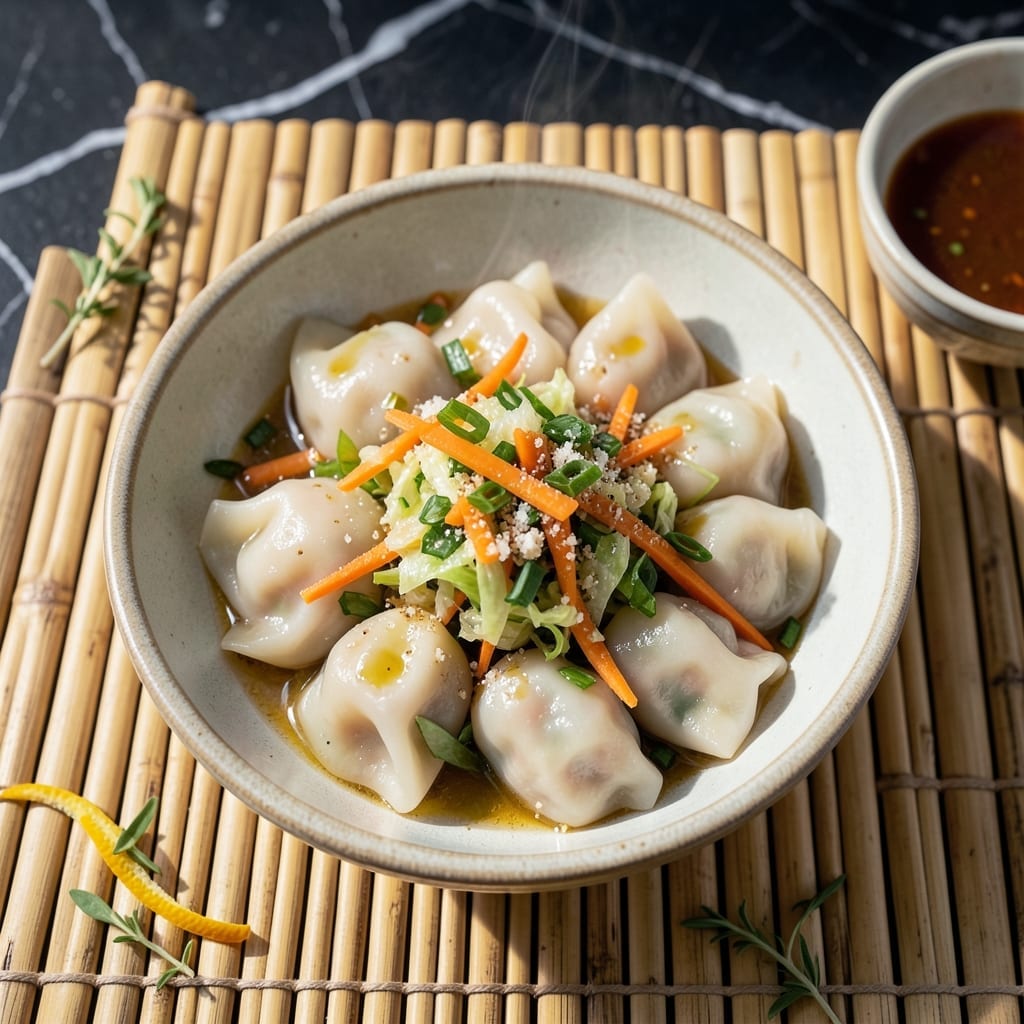
These dumplings redefine texture with their pillowy soft interiors and satisfying chew. The glutinous rice flour creates a unique bite that’s both tender and resilient.
A simple dough comes together quickly, then steams to perfection in minutes. The result is a delicate yet sturdy dumpling that holds its shape and delivers authentic Asian street food flavor at home.
Ingredients for Glutinous Rice Flour Dumpling
Glutinous rice flour and fresh vegetables create these authentic, chewy dumplings at home.
| Ingredient | Amount | Notes |
|---|---|---|
| Glutinous Rice Flour 🌾 | 2 cups | Also called sweet rice flour |
| Tapioca Starch 🌾 | ¼ cup | For extra chewiness |
| Warm Water 💧 | ¾ cup | About 110-115°F |
| Vegetable Oil 🫒 | 1 tbsp | Neutral flavor preferred |
| Salt 🧂 | ½ tsp | Fine sea salt |
| Sugar 🍚 | 1 tsp | Granulated white sugar |
| Cornstarch 🌽 | 2 tbsp | For dusting work surface |
| Chives 🌿 | ¼ cup | Finely chopped for filling |
| Cabbage 🥬 | 1 cup | Finely shredded, for filling |
| Carrot 🥕 | ½ cup | Julienned, for filling |
| Soy Sauce 🫒 | 1 tbsp | Low-sodium preferred |
| Sesame Oil 🫒 | ½ tsp | Toasted for flavor |
| Garlic Cloves 🧄 | 2 cloves | Minced for filling |
| Ginger Root 🌿 | 1 tbsp | Freshly grated |
The glutinous rice flour is non-negotiable here. Bob’s Red Mill or Mochiko brands are reliable and widely available at Whole Foods or Asian markets. Avoid regular rice flour—it lacks the sticky texture essential for that pillowy bite. Tapioca starch adds elasticity, but cornstarch works in a pinch (though texture suffers slightly). The dough should feel like soft Play-Doh when ready.
No chives? Green onions work at a 1:1 ratio. Short on cabbage? Napa cabbage or bok choy add similar crunch. Want more protein? Finely chopped shiitake mushrooms or tofu soak up the filling flavors beautifully. The soy sauce can be swapped for tamari (gluten-free) or coconut aminos. Always use toasted sesame oil—untoasted lacks depth.
Fresh dumplings keep in the fridge for 1 day (covered tightly). Freeze uncooked on a tray first, then transfer to bags—they’ll last 2 months. Steam from frozen, adding 3-4 extra minutes. The dough itself can be made a day ahead; just seal it well to prevent drying.
Why You’ll Love This Recipe
- Minimal Effort: I just mix the glutinous rice flour, tapioca starch, and warm water—no fancy techniques, no fuss.
- Chewy Delight: That perfect bounce and slight stickiness from the rice flour? Honestly, it’s the texture I crave every time.
- Feeds a Crowd: I make a big batch for potlucks, and they disappear faster than I can serve them.
- Budget Friendly: A bag of rice flour and tapioca starch goes a long way, and it costs pennies per dumpling.
Step-by-Step Instructions for Glutinous Rice Flour Dumplings
Master the technique for achieving that perfect pillowy texture with a satisfying chew.
Step 1: Prepare the Filling Mixture
In a mixing bowl, combine the 1 cup Cabbage, 0.5 cup Carrot, 0.25 cup Chives, 2 cloves Garlic Cloves, and 1 tbsp Ginger Root. These finely prepared vegetables create a flavorful base.
Add the 1 tbsp Soy Sauce and 0.5 tsp Sesame Oil to the vegetable mixture. Stir thoroughly to ensure all ingredients are evenly coated. The soy sauce provides umami depth while the sesame oil adds a nutty aroma that defines this filling.
Step 2: Create the Dumpling Dough
In a separate large bowl, whisk together the 2 cups Glutinous Rice Flour and 0.25 cup Tapioca Starch. These starches combine to create the ideal elastic yet tender texture. Add the 0.5 tsp Salt and 1 tsp Sugar to balance the flavors.
Slowly pour in the 0.75 cup Warm Water while mixing with chopsticks or a wooden spoon until a shaggy dough forms. Then add the 1 tbsp Vegetable Oil and knead vigorously for 8-10 minutes until the dough becomes smooth and pliable. The warmth of the water activates the starches for proper development.
Step 3: Shape and Fill the Dumplings
Lightly dust your work surface with the 2 tbsp Cornstarch to prevent sticking. Divide the dough into 16 equal portions (about 1.5-inch balls) and roll each into a thin circle, keeping the edges slightly thicker than the center for durability.
Place 1 tablespoon of the prepared filling in the center of each dough circle. Fold the dough over the filling to create a half-moon shape, then pleat the edges tightly to seal completely. Ensure no air pockets remain, as these can cause the dumplings to burst during cooking.
Step 4: Cook to Perfection
Bring a large pot of water to a rolling boil. Gently add the dumplings in batches, being careful not to overcrowd the pot. Stir gently to prevent sticking. When the dumplings float to the surface after 3-4 minutes, continue cooking for an additional 2 minutes to ensure they’re fully cooked through.
You’ll know they’re ready when the dough becomes translucent and the filling is heated. The dumplings should have a slight bounce when pressed. Remove with a slotted spoon and transfer to a serving plate.
Pro Tips For Making Glutinous Rice Flour Dumpling
- Knead While Warm: Use warm water to mix the glutinous rice flour and tapioca starch, then knead the dough immediately—it becomes unworkably stiff as it cools. I learned this the hard way after wrestling with a rock-hard lump.
- Rest the Dough: After kneading, let the dough rest for 10-15 minutes under a damp towel. This relaxes the starches, making it easier to shape and preventing cracks when boiling.
- Skip Cold Water: Never use cold water for the dough or for boiling—it makes the dumplings gummy and dense. Warm water for mixing, hot (not boiling) water for cooking.
- Oil Your Hands: Rub a little vegetable oil on your hands before shaping the dumplings. This stops the sticky dough from clinging to your fingers, and you’ll work twice as fast.
Dietary Considerations for This glutinous rice flour dumpling
Naturally Gluten-Free
This creation is inherently gluten-free thanks to the glutinous rice flour base, which contains no wheat proteins. Despite its name, this flour is safe for celiac sufferers. Always verify your tapioca starch and cornstarch are certified gluten-free to avoid cross-contamination. 💪
Vegan by Design
The vegetable-based filling and plant-derived flours make this dish completely vegan. I love that we can enjoy authentic dumpling texture without any animal products. The soy sauce and sesame oil provide all the umami depth you’d expect from traditional versions.
Allergen Considerations
While naturally free of common allergens, check your soy sauce for wheat if avoiding gluten. The sesame oil is the only top-9 allergen here. For a sesame-free version, use avocado oil instead—it has a similar neutral flavor.
Low-FODMAP Adaptation
To make this gentler on sensitive digestive systems, swap the cabbage and garlic for green onions and ginger-only filling. Use garlic-infused oil instead of fresh cloves to maintain flavor without the fermentable carbs.
Nutrient Boost
Add ½ cup finely chopped spinach or shredded zucchini to the filling for extra vitamins without altering the texture. I often include 1 tbsp nutritional yeast for a B-vitamin boost and cheesy flavor that complements the dumplings perfectly.
Nutrition Facts
Frequently Asked Questions
Can I use regular rice flour instead?
No, regular rice flour won’t work. Glutinous rice flour is essential for the chewy texture. Regular rice flour lacks the sticky properties needed to hold the dumplings together.
How do I store leftover dumplings?
Store cooked dumplings in an airtight container in the fridge for up to 2 days. Reheat by steaming for 3-4 minutes until warm. For longer storage, freeze uncooked dumplings on a tray first.
Why did my dumplings burst while cooking?
This usually happens if there are air pockets in the dough or if the sealing isn’t tight.
Can I bake or pan-fry these instead of boiling? Yes! For crispy dumplings, pan-fry in 1 tbsp oil over medium heat for 3-4 minutes per side. Baking at 375°F for 15-20 minutes works too, though the texture will be slightly different.

- Gobi Fried Rice Recipe: Spiced Cauliflower Wok Delight - October 8, 2026
- Glutinous Rice Roll Recipe: Chewy Pillows With Savory Fillings - October 8, 2026
- Garlic Jasmine Rice Recipe: Fragrant Grains with Aromatic Depth - October 8, 2026