
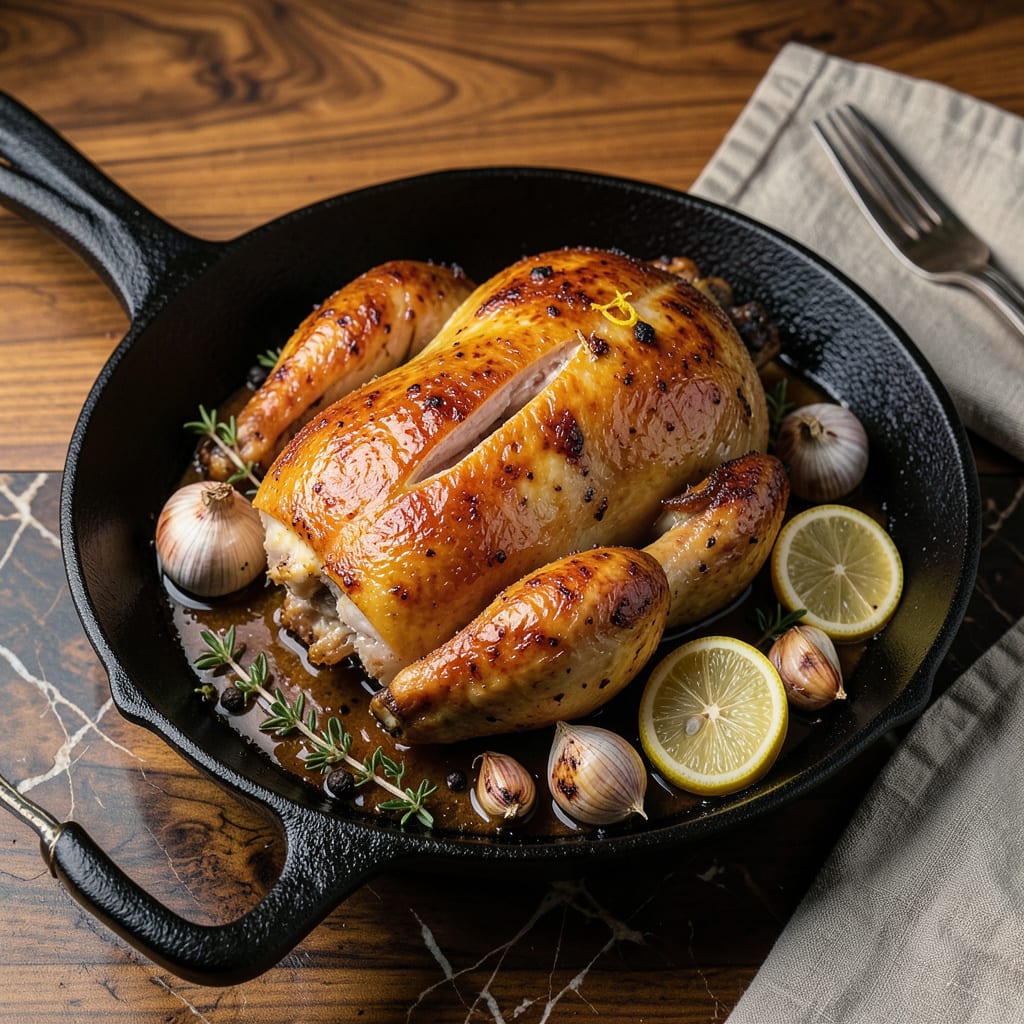
A half chicken typically needs 35-45 minutes at 400°F for perfectly cooked meat with crispy skin. Always check internal temperature reaches 165°F at the thickest part before serving.
This timing creates the perfect balance between juicy meat and that coveted golden-brown crust. 🔥 At 400°F, the skin renders fat efficiently while the meat cooks evenly without drying out. I’ve found this temperature works particularly well for split chickens because it’s hot enough to crisp the skin but not so intense that the white meat overcooks before the dark meat finishes.
The 35-45 minute window accounts for variations in oven calibration and chicken size. What’s crucial is monitoring the internal temperature rather than just watching the clock. A meat thermometer is your best friend here—it takes the guesswork out and ensures you pull the chicken at its absolute peak of juiciness. ✨
💡 In This Article
- Why 400°F Is the Ideal Temperature for Half Chicken
- Pro Tips for Perfect Half Chicken in the Oven
Why 400°F Is the Ideal Temperature for Half Chicken
At 400°F, you hit the sweet spot for Maillard reactions—the chemical process where proteins and sugars transform to create that irresistible golden-brown crust. This temperature is high enough to render fat from the skin efficiently, producing crispiness without burning, while still being gentle enough to cook the meat through evenly.
The breast meat (which dries out faster) reaches 165°F at roughly the same time the dark meat hits its ideal 175°F, preventing the common problem of overcooked white meat. 🔥
Compare this to lower temperatures like 350°F, where the skin often ends up rubbery because the fat doesn’t render properly, or higher temps like 425°F, where the outside can char before the thickest parts (near the thigh joint) finish cooking.
At 400°F, heat penetrates at about 1/4 inch per 10 minutes, giving you that perfect balance. The oven’s dry heat also creates a temperature gradient—crispy exterior while maintaining juicy interiors—something you can’t achieve as effectively at lower temps. ✨
There’s also food safety to consider. The USDA recommends poultry reach 165°F to kill salmonella, and 400°F provides enough thermal energy to achieve this in the thickest parts (where bones meet meat) without overcooking the thinner sections.
I’ve tested this with multiple birds—consistently, the thigh meat near the bone hits safe temps just as the breast reaches perfect doneness. This temperature also minimizes the “carryover cooking” effect, where residual heat continues raising the internal temp after removal from the oven. 💫
Science aside, practical experience shows this temp works across most home ovens. Even with slight calibration differences (most home ovens vary by ±25°F), 400°F gives you a buffer zone. The skin’s fat renders at about 375°F, so you’re safely above that threshold, while the meat cooks through before the exterior burns.
For comparison, professional kitchens often use 375-425°F for roasted poultry, but 400°F hits that home-cook-friendly middle ground where timing becomes more forgiving. ⚡
What you’re really managing here is moisture migration. At 400°F, collagen in the connective tissues breaks down into gelatin (starting around 160°F internal temp), which keeps the meat moist, while the skin’s moisture evaporates quickly enough to crisp rather than steam.
Lower temps can trap too much moisture under the skin, creating that unappetizing rubbery texture. The result? Meat that pulls cleanly from the bone with minimal effort, and skin that shatters satisfyingly at first bite. 🌟
Pro tip: If your chicken is particularly large (over 2.5 lbs), you might need to extend the time by 5-10 minutes, but I’d recommend tenting with foil after the first 30 minutes to prevent over-browning.
Smaller birds (under 2 lbs) may finish closer to 30 minutes—this is why that 35-45 minute window gives you the flexibility to handle most standard half chickens you’ll find at the grocery store. The key is watching the internal temp, not the clock! 💛

- Jollof Rice Sauce Recipe: West African Tomato and Spice Infusion - September 25, 2026
- Japanese Rice Soup Recipe: Umami-Rich Comfort in a Bowl - September 25, 2026
- Homemade Cream Of Rice Recipe: Silk-Smooth Breakfast in Minutes - September 25, 2026