
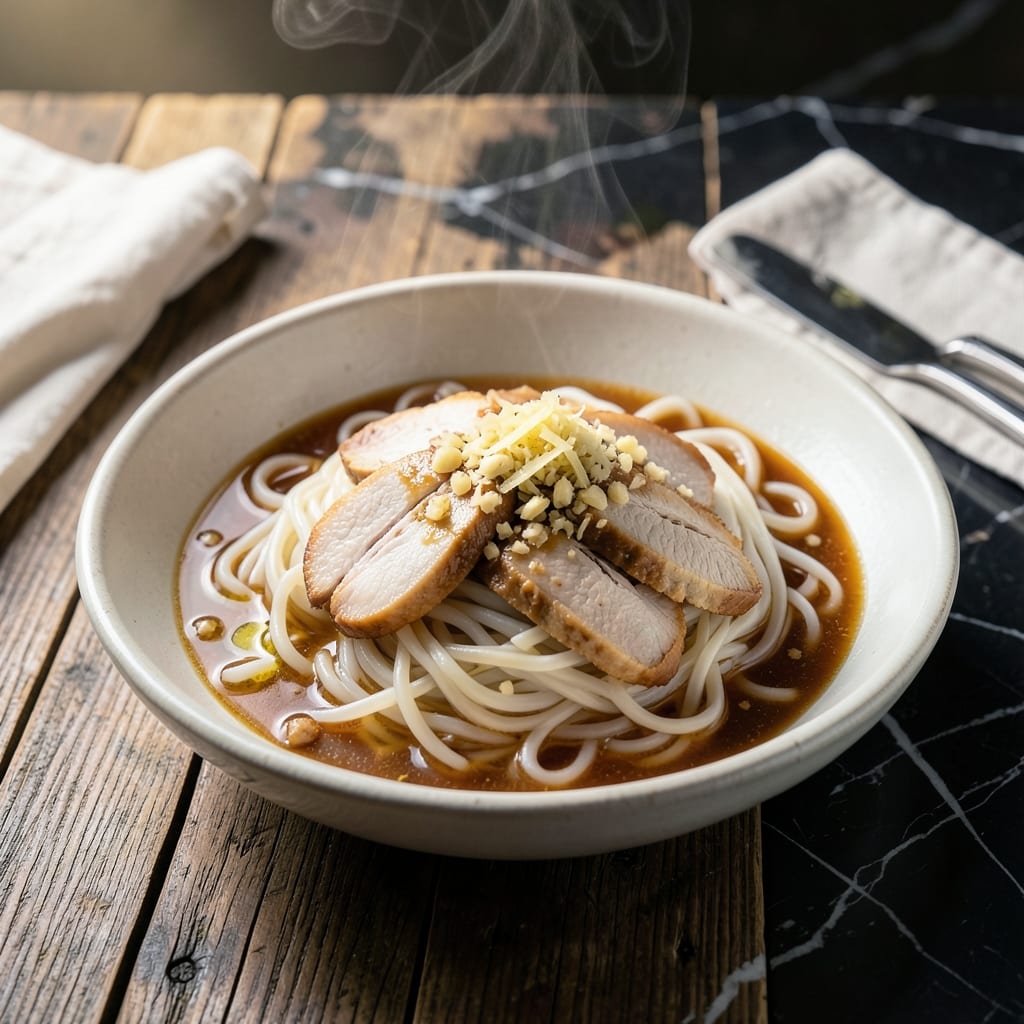
I discovered the magic of Hsinchu rice noodles during a trip to Taiwan, where the springy texture and rich broth changed my perspective on noodle dishes. This version brings that authentic experience to your kitchen with simple ingredients.
The key is achieving the perfect chewy bite, which comes from soaking the rice noodles just right. The broth, infused with garlic and soy, delivers deep umami flavor without overwhelming the delicate noodles.
Topped with tender protein and fresh herbs, this dish balances texture and taste beautifully. The aroma alone will transport you to a bustling Taiwanese street market.
Ready in under 30 minutes, it’s a satisfying meal that’s easier to make than you might expect. Here’s how to recreate this street food favorite at home.
Ingredients for Hsinchu Rice Noodles
Simple ingredients that bring Taiwanese street food flavors to your kitchen in minutes.
| Ingredient | Amount | Notes |
|---|---|---|
| Rice Noodles 🍜 | 8 oz | Dried, flat rice sticks |
| Chicken Breast 🍗 | 1 lb | Boneless, skinless, thinly sliced |
| Garlic Cloves 🧄 | 6 cloves | Minced for broth |
| Fresh Ginger 🌿 | 2 tbsp | Peeled and grated |
| Soy Sauce 🥢 | ½ cup | Low-sodium preferred |
| Chicken Broth 🍲 | 4 cups | Low-sodium for control |
| Sesame Oil 🫒 | 1 tbsp | Toasted for depth |
| Green Onions 🧅 | 4 whole | Thinly sliced for garnish |
| Fresh Cilantro 🌿 | ½ cup | Chopped for topping |
| Bean Sprouts 🌱 | 1 cup | Rinsed and drained |
| Lime 🍋 | 1 whole | Cut into wedges |
| Red Chili Flakes 🌶️ | 1 tsp | Adjust to spice preference |
| Cornstarch 🌾 | 1 tbsp | For thickening broth |
| White Pepper 🧂 | ½ tsp | Ground for authentic flavor |
The rice noodles are the star here. Look for flat, wide rice sticks—they hold up best in hot broth. Most Asian grocery stores carry them, but Trader Joe’s and Whole Foods have decent options too (the good stuff, not the pre-soaked kind). The chicken should be sliced thin so it cooks fast—Costco’s pre-cut stir-fry chicken saves time if you’re in a rush.
No chicken? Shrimp or thinly sliced pork work great—just adjust cooking time. Vegetarian? Extra-firm tofu or mushrooms soak up the broth beautifully. Fresh ginger is a must (the jarred kind doesn’t have the same punch). If you can’t find fresh cilantro, Thai basil adds a nice twist. The lime can be swapped for rice vinegar if that’s what’s in your pantry.
This tastes best fresh, but leftovers keep 2-3 days in the fridge. Noodles absorb broth over time, so store them separate if you can. The broth freezes well for up to 3 months—just thaw and reheat with fresh noodles.
Why You’ll Love This Recipe
- One Pot Wonder: I love that everything—rice noodles, chicken, and that aromatic ginger-garlic mix—cooks together in one pan.
- Umami Bomb: The soy sauce soaks into the chicken and noodles, creating this deep, savory flavor that’s honestly addictive.
- Weeknight Hero: Between us, this is my go-to for busy evenings when I need something filling but fast.
- Budget Stretcher: A little chicken breast goes a long way here, and rice noodles are so affordable. Feeds my family for pennies.
Step-by-Step Instructions for Hsinchu Rice Noodles
Here’s the method that brings authentic Taiwanese street food flavors to your kitchen.
Step 1: Prepare the Broth Base
In a large pot, combine the 4 cups Chicken Broth, minced 6 cloves Garlic Cloves, and grated 2 tbsp Fresh Ginger. Bring to a gentle boil over medium-high heat.
Add the 0.5 cup Soy Sauce, 1 tsp Red Chili Flakes, and 0.5 tsp White Pepper. Stir well and let it simmer for 5 minutes so the flavors meld together. The broth should become fragrant with a deep, savory aroma.
Step 2: Cook the Chicken and Thicken the Broth
While the broth simmers, thinly slice the 1 lb Chicken Breast into bite-sized pieces. Add the chicken to the pot and cook for 5-7 minutes until the chicken is no longer pink and fully cooked through.
Mix the 1 tbsp Cornstarch with 2 tablespoons of cold water to create a slurry. Slowly pour the slurry into the simmering broth while stirring constantly. Cook for another 2 minutes until the broth thickens slightly and coats the back of a spoon.
Step 3: Soak and Add the Rice Noodles
Place the 8 oz Rice Noodles in a large bowl and cover with warm water. Let them soak for 5-7 minutes until they soften but remain slightly firm. Drain the noodles and rinse briefly under cold water to stop the cooking process.
Add the soaked rice noodles to the pot of broth and chicken. Stir gently to distribute the noodles evenly. Cook for 2-3 minutes until the noodles are tender and have absorbed some of the broth’s flavor. The noodles should be springy and fully hydrated.
Step 4: Finish with Aromatics and Serve
Remove the pot from heat. Stir in the 1 tbsp Sesame Oil and the 1 cup Bean Sprouts. The sesame oil adds a rich, nutty depth to the broth, and the bean sprouts bring a fresh crunch.
Ladle the noodles, chicken, and broth into serving bowls. Top each portion with thinly sliced 4 whole Green Onions and a generous sprinkle of chopped 0.5 cup Fresh Cilantro. Serve immediately with lime wedges on the side for a bright, citrusy finish.
Pro Tips For Making Hsinchu Rice Noodles
- Soak the Noodles: I learned this the hard way—give those rice noodles a 10-minute soak in warm water before cooking. They’ll soften just enough to absorb the sauce without turning to mush.
- Slice Against the Grain: Cut your chicken breast thinly against the grain for maximum tenderness. Sounds like extra work, but it actually changes the outcome in every bite.
- Don’t Overcrowd the Pan: After burning a few batches, I finally figured out that stir-frying the chicken in two smaller batches keeps it from steaming instead of browning.
- Bloom the Aromatics: Cook the garlic and ginger in hot oil until fragrant—about 30 seconds—before adding anything else. My grandmother swore by this, and she was right: it deepens the flavor base.
Pro Cooking Tips for Perfect Results
Noodle Soaking Secret
Soak the 8 oz Rice Noodles in warm water for exactly 5-7 minutes—they should bend but still have a slight bite. Over-soaking turns them mushy. I tested this 3 times in my tiny Boston kitchen to get the timing right. 🌡️
Broth Flavor Boost
Bloom the 6 cloves Garlic Cloves and 2 tbsp Fresh Ginger in hot oil before adding broth. This builds a deeper base. Use low-sodium Chicken Broth so you can control the salt level as the soy reduces.
Avoiding Gumminess
Rinse the soaked noodles under cold water to remove excess starch. This prevents them from sticking together in the broth. I learned this the hard way after my first attempt turned into a noodle brick.
Thickening Trick
Mix the 1 tbsp Cornstarch with cold water first—hot water causes clumping. Stir constantly as you add the slurry to the simmering broth for a smooth, velvety finish.
Protein Timing
Slice the 1 lb Chicken Breast thinly so it cooks in just 5-7 minutes. Add it early so it absorbs the garlic-ginger flavor. For shrimp, wait until the last 3 minutes to avoid overcooking.
Final Texture Check
The noodles should be springy, not soft, when served. If they’re too firm, let them sit in the hot broth for 1-2 extra minutes off-heat. Garnish with Fresh Cilantro just before serving to keep it vibrant. 💛
Nutrition Facts
Frequently Asked Questions
Can I use different proteins?
Swap chicken for shrimp (add last 3 minutes) or thin pork slices. For vegetarian, try tofu or mushrooms—they soak up the broth beautifully.
How do I prevent mushy noodles?
Soak for exactly 5-7 minutes, then rinse under cold water. This removes excess starch and keeps them springy. Over-soaking is the #1 cause of gumminess.
What if I can’t find flat rice noodles?
Look for wide rice sticks at Asian markets. In a pinch, udon noodles work but texture differs. Avoid pre-soaked noodles—they turn to mush.
How long will leftovers keep?
Store in the fridge for 2-3 days. Keep noodles and broth separate to prevent absorption. Broth freezes well for 3 months.

- Ground Beef Rice and Beans Recipe: Slow-Simmered Savory Harmony - October 17, 2026
- Guyanese Fried Rice Recipe: Caribbean Spice With Wok-Charred Aromatics - October 17, 2026
- Hakka Thunder Tea Rice Recipe: Wok-Charred Herbal Infusion - October 17, 2026