
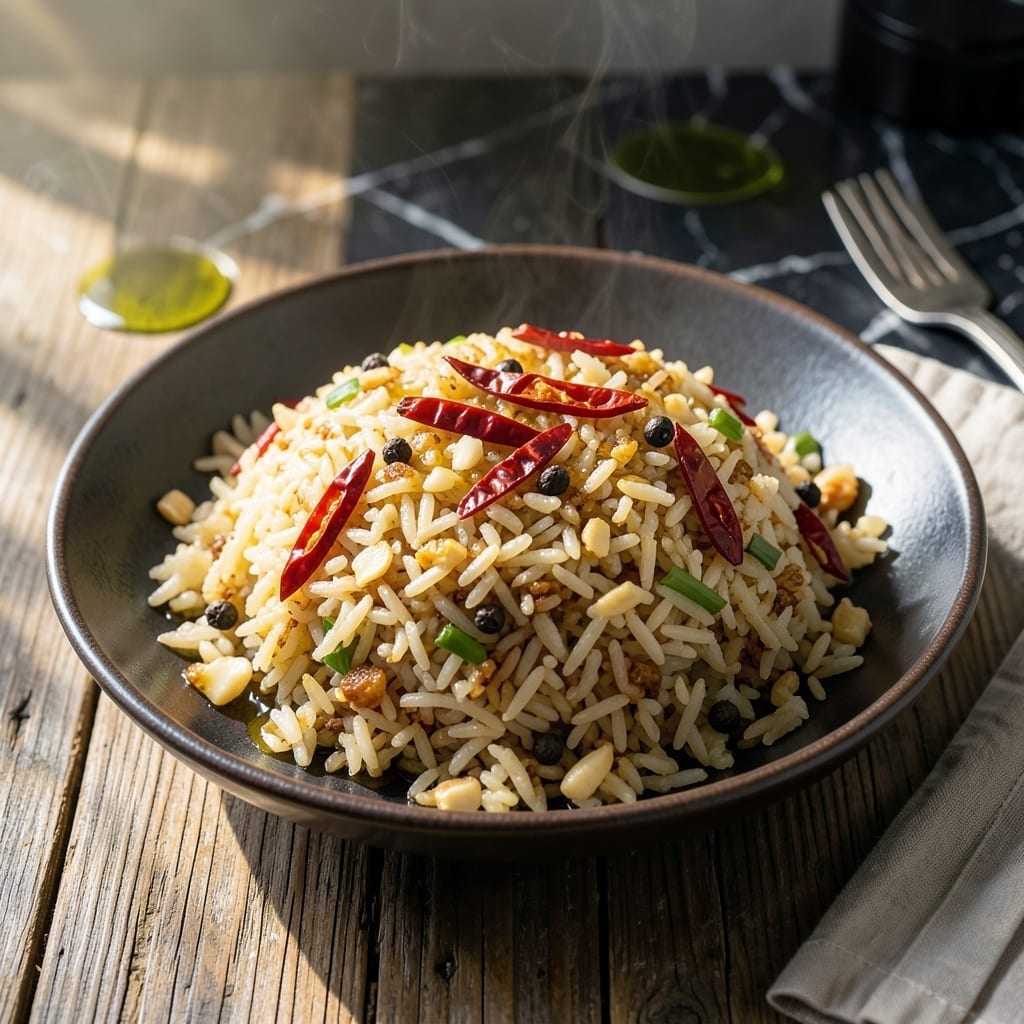
I’ve spent years perfecting this authentic Hunan-style dish to capture the bold, spicy flavors of the region. The secret lies in the traditional seasoning blend and high-heat wok technique that creates that signature smoky depth.
This recipe delivers the genuine taste of Hunan with its fiery chili heat balanced by aromatic garlic and ginger. The rice gets a slight char from the wok, while vegetables maintain their crisp texture. It’s the perfect balance of spice and substance.
What you’ll achieve is a dish with complex layers – the smoky wok hei aroma, the numbing heat from Sichuan peppercorns, and the umami richness from fermented black beans. Each bite delivers the authentic Hunan experience.
Serve it as a main course or alongside other Chinese dishes. The flavors only improve as they meld together.
Ingredients for Hunan Fried Rice
Authentic Hunan flavor starts with day-old rice and traditional Chinese pantry staples.
| Ingredient | Amount | Notes |
|---|---|---|
| Jasmine Rice 🍚 | 3 cups | Day-old, cooked and cooled |
| Peanut Oil 🫒 | 3 tbsp | High smoke point essential |
| Garlic Cloves 🧄 | 4 cloves | Minced finely for even distribution |
| Fresh Ginger 🌿 | 1 tbsp | Grated or minced |
| Dried Red Chilies 🌶️ | 6 whole | Adjust for heat preference |
| Sichuan Peppercorns 🌶️ | 1 tsp | Lightly crushed for aroma |
| Fermented Black Beans ⚫ | 2 tbsp | Rinsed and chopped |
| Scallions 🧅 | 4 whole | Thinly sliced, whites and greens separated |
| Carrots 🥕 | 1 cup | Diced into small cubes |
| Green Peas 🌱 | ¾ cup | Fresh or frozen |
| Light Soy Sauce 💧 | 2 tbsp | For salty umami base |
| Dark Soy Sauce 💧 | 1 tsp | For color and depth |
| Shaoxing Wine 🍶 | 2 tbsp | Or dry sherry as substitute |
| Sesame Oil 🫒 | 1 tsp | Toasted, for finishing aroma |
| Large Eggs 🥚 | 3 whole | Beaten for scrambling |
The rice is non-negotiable—day-old jasmine from the fridge has the right dry texture to char properly in the wok. For the chilies, dried Tien Tsin from an Asian market delivers authentic heat (the ones in plastic bags at H Mart or 99 Ranch are perfect). Sichuan peppercorns are the secret to that numbing tingle—look for them in the spice aisle or online at Amazon or The Mala Market.
No Sichuan peppercorns? Black pepper plus a pinch of cinnamon mimics the warmth (not perfect, but close). Swap Shaoxing wine with dry sherry in a pinch. For heat control, remove chili seeds or reduce quantity. The fermented black beans are salty—rinse them well to avoid over-salting. Fresh ginger and garlic are essential for aroma; pre-minced from jars won’t cut it.
Cooked rice keeps 3-4 days in the fridge for meal prep. Store fermented black beans and dried chilies in airtight containers—they’ll last 6-12 months in a cool, dark place. Toasted sesame oil should be kept sealed; it oxidizes quickly. Always have day-old rice ready—make extra the night before.
Why You’ll Love This Recipe
- 20-Minute Meal: I can have this on the table faster than ordering takeout, and honestly, it’s just as satisfying.
- Punch of Heat: The garlic, ginger, and dried chilies in peanut oil give it that bold, spicy kick Hunan is famous for.
- Leftovers Love: It reheats like a dream—sometimes I make extra just so I can have it for lunch the next day.
- Budget Stretcher: A handful of pantry staples and leftover rice turn into something crave-worthy without breaking the bank.
Step-by-Step Instructions for Hunan Fried Rice
Authentic wok-fried rice requires high heat and constant motion for that signature smoky depth.
Step 1: Prep and Heat the Wok
Begin by having all ingredients prepped and within reach—this dish moves quickly. Heat 1 tbsp Peanut Oil in a wok over high heat until it shimmers but doesn’t smoke. The oil should ripple across the surface when ready.
Add the 4 cloves Garlic Cloves, 1 tbsp Fresh Ginger, 6 whole Dried Red Chilies, and 1 tsp Sichuan Peppercorns. Stir-fry for 20-30 seconds until the aromatics release their fragrance and the chilies begin to darken. Be careful not to burn the garlic.
Step 2: Cook the Eggs and Vegetables
Push the aromatics to one side of the wok and add the remaining 2 tbsp Peanut Oil. Pour in the 3 whole Large Eggs and scramble quickly with a spatula until just set but still slightly runny. This should take 30-45 seconds.
Add the 1 cup Carrots and 0.75 cup Green Peas, stir-frying for 1-2 minutes until the carrots soften slightly but retain a crisp bite. Then add the 2 tbsp Fermented Black Beans and the white parts of the 4 whole Scallions, tossing to combine for another 30 seconds.
Step 3: Add Rice and Seasonings
Increase the heat to maximum and add the 3 cups Jasmine Rice, breaking up any clumps with your spatula. Stir-fry for 2-3 minutes until the rice is heated through and begins to crisp slightly at the edges. The grains should be separate and lightly toasted.
Drizzle the 2 tbsp Light Soy Sauce, 1 tsp Dark Soy Sauce, and 2 tbsp Shaoxing Wine evenly over the rice. Toss continuously to coat every grain. The rice should turn a deep, appetizing color as the sauces are absorbed.
Step 4: Finish and Serve
Remove the wok from heat and stir in the green parts of the 4 whole Scallions and 1 tsp Sesame Oil. Toss once more to distribute the scallions and the aromatic sesame oil evenly throughout the dish.
Transfer to a serving platter immediately. The rice should be fragrant with a balance of smoky, spicy, and umami flavors. Each grain should be distinct, coated in sauce, and studded with bits of egg, vegetables, and fermented black beans. Serve hot for the best texture and flavor.
Pro Tips For Making Hunan Fried Rice
- Use Day-Old Rice: Fresh rice turns mushy—spread leftover jasmine rice on a tray and refrigerate overnight to dry it out. I learned this the hard way after my first batch turned into a sticky mess.
- Sear the Aromatics: Cook the minced garlic and ginger in peanut oil over medium-high until just golden, about 30 seconds, then add the chilies. After burning three batches, I finally figured out they need constant stirring.
- Skip the Overcrowding: Fry the rice in batches if needed—too much in the pan at once steams instead of fries. Sounds weird, but it works: your wok or skillet should sizzle, not sweat.
- Toast the Chilies: Add dried red chilies to the hot oil for 10-15 seconds before anything else to wake up their flavor. My grandmother swore by this, and she was right.
Creative Variations of These Flavors
Extra Spicy Version
For serious heat lovers, add 2 tbsp gochujang or 1 tbsp chili oil with the soy sauces. I also toss in 3-4 fresh Thai bird’s eye chilies when stir-frying the aromatics. The heat builds beautifully but stays balanced with the umami. 🌶️
Vegetarian Adaptation
Swap eggs for 1 cup cubed tofu (pressed and drained). Use mushrooms instead of fermented black beans for umami. Add bell peppers and bok choy for extra crunch. The key is maintaining that wok hei char.
Seafood Twist
Add ½ lb shrimp or scallops after the eggs are scrambled. Toss in 2 tbsp fish sauce with the soy sauces for extra depth. I love how the seafood absorbs the spicy, aromatic flavors. 💪
Protein-Packed Version
Incorporate 1 cup diced chicken breast or char siu pork after cooking the eggs. The chicken should be pre-cooked to ensure it gets hot without overcooking. This makes the dish more substantial for hungrier eaters.
Milder Family-Friendly
Reduce dried chilies to 2-3 and omit Sichuan peppercorns. Add ½ cup corn kernels for sweetness. The dish keeps its authentic flavor profile but becomes more approachable for sensitive palates.
Grain Swap
Try brown rice or jasmine rice blend for extra texture. Cook and cool the same way. The nuttier flavor of brown rice pairs surprisingly well with the bold Hunan seasonings.
Nutrition Facts
Frequently Asked Questions
Why use day-old rice?
Day-old rice has less moisture, so it fries up fluffier with better texture. Fresh rice tends to clump and turn mushy in the wok.
Can I substitute the Sichuan peppercorns?
Yes, use ½ tsp black pepper plus a pinch of cinnamon for a similar warming effect. It won’t be identical but works in a pinch.
How do I control the spice level?
Remove seeds from chilies or reduce the quantity. For milder heat, use just 2-3 chilies and skip the peppercorns.
What’s the best wok heat setting?
Use maximum heat throughout. The goal is that smoky wok hei flavor, which only happens at very high temperatures.

- Ground Beef Rice and Beans Recipe: Slow-Simmered Savory Harmony - October 17, 2026
- Guyanese Fried Rice Recipe: Caribbean Spice With Wok-Charred Aromatics - October 17, 2026
- Hakka Thunder Tea Rice Recipe: Wok-Charred Herbal Infusion - October 17, 2026