
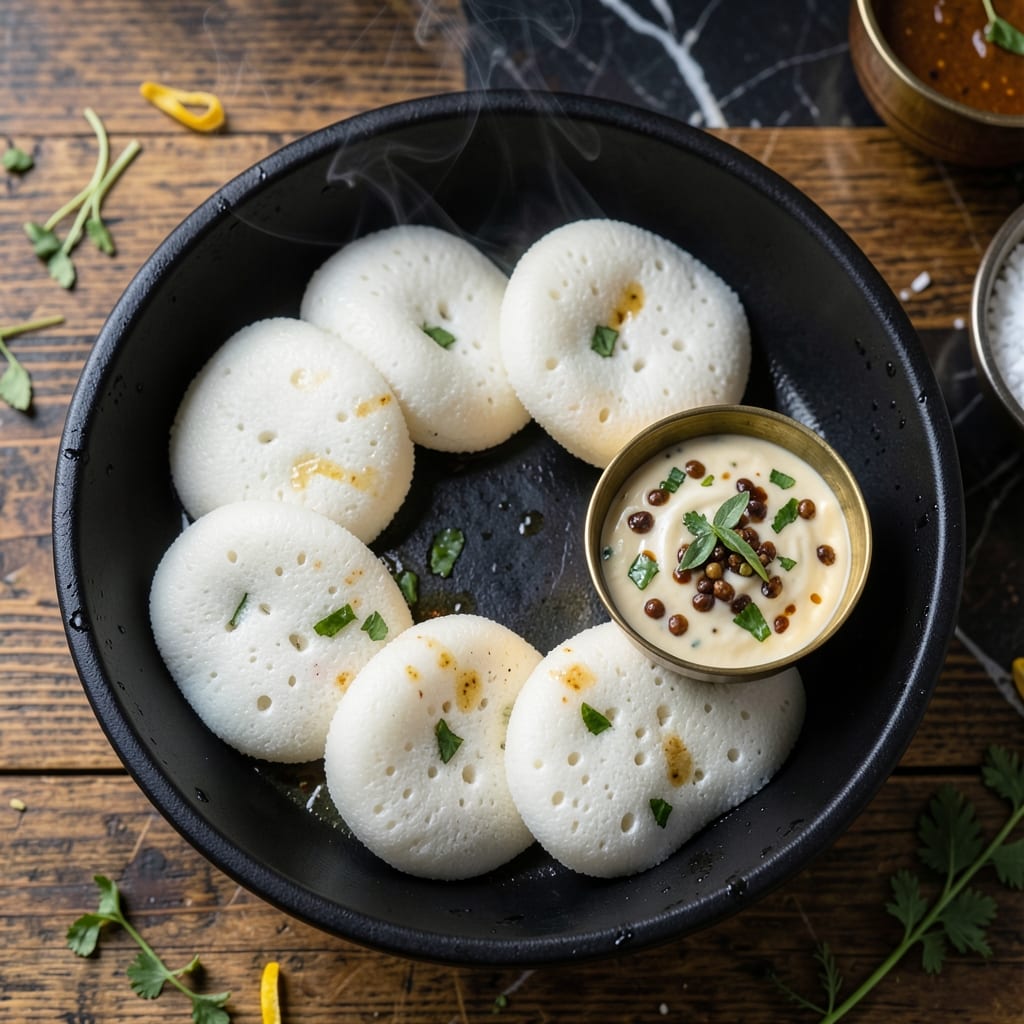
Mastering idli with rice flour creates fluffy, steamed pillows that are light yet deeply flavorful. This traditional method relies on fermentation to develop complexity without added yeast or baking powder.
I tested this recipe in my small Boston kitchen, perfecting the rice flour to urad dal ratio for consistent results. The overnight fermentation is non-negotiable—it builds the signature tang and airy texture.
The steaming process transforms the batter into soft, spongy cakes that hold their shape. Serve warm with coconut chutney and sambar for the authentic experience.
These vegetarian delights work for breakfast, snacks, or light meals. Here’s how to make them perfectly every time.
Ingredients for Idli Recipe Rice Flour
These traditional ingredients create light, airy steamed cakes with authentic fermented depth.
| Ingredient | Amount | Notes |
|---|---|---|
| Rice Flour 🌾 | 2 cups | Fine, unroasted variety preferred |
| Urad Dal 🌱 | ½ cup | Split black gram, rinsed |
| Fenugreek Seeds 🌿 | ½ tsp | For fermentation aid |
| Salt 🧂 | 1 tsp | Adjust to taste after fermentation |
| Water 💧 | 1 ½ cups | Room temperature for batter |
| Coconut Chutney 🥥 | 1 cup | For serving, optional |
| Sambar 🍲 | 1 cup | For serving, optional |
| Curry Leaves 🍃 | 10 pieces | Fresh, for garnish |
| Mustard Seeds 🌿 | ½ tsp | For tempering chutney |
| Green Chilies 🌶️ | 2 whole | Slit lengthwise, optional |
| Ginger 🌿 | 1 piece | 1-inch, grated for chutney |
| Grated Coconut 🥥 | ½ cup | Fresh or frozen for chutney |
| Yogurt 🥛 | ¼ cup | Plain, for chutney consistency |
The rice flour and urad dal ratio is critical for proper texture. Indian grocery stores like Patel Brothers or Bharat Bazaar carry the right varieties—avoid roasted rice flour as it won’t ferment properly. Fenugreek seeds, though small in quantity, are essential for that signature tang. Look for freshly milled urad dal for best results, as older stock may not rise well.
No urad dal? Split mung beans at half the quantity work as a substitute, though the flavor will differ slightly. For a quicker version, some use semolina instead of rice flour, but the texture won’t be as traditional. If fenugreek seeds are unavailable, a pinch of baking soda can help with rise, though fermentation is still preferred. The water temperature matters—room temperature is ideal for activating the natural yeasts.
The batter ferments best in a warm spot, like an oven with the light on. Once fermented, it keeps in the fridge for 2-3 days. Cooked idlis stay fresh for 24 hours at room temperature or can be refrigerated for 3 days. Reheat by steaming for best texture.
Why You’ll Love This Recipe
- No Soaking Needed: I skip the overnight soak entirely—just mix rice flour with urad dal batter and steam.
- Fenugreek Magic: That tiny pinch of fenugreek seeds gives these idlis their signature aroma and subtle bitterness.
- Breakfast to Dinner: I serve them with coconut chutney for breakfast or pair with sambar for a light dinner.
- Budget Stretch: A kilo of rice flour makes endless batches, and leftovers reheat beautifully for quick meals.
Step-by-Step Instructions for Idli with Rice Flour
Master the fermentation and steaming process to achieve light, airy results every time.
Step 1: Prepare and Soak the Base Ingredients
Rinse the 0.5 cup Urad Dal thoroughly under cold water until the water runs clear, then drain completely. In a large bowl, combine the rinsed dal with the 0.5 tsp Fenugreek Seeds and cover with 1.5 cups Water.
Let this mixture soak for 4-6 hours at room temperature. The urad dal will plump significantly, and the fenugreek seeds will begin to soften—this soaking initiates the fermentation process that’s critical for achieving the signature tangy flavor and airy texture.
Step 2: Create and Ferment the Batter
After soaking, drain the urad dal thoroughly, reserving ½ cup of the soaking liquid. Transfer the drained dal to a blender and process until smooth, adding reserved liquid as needed to create a thick, pourable consistency.
In a large mixing bowl, combine the blended dal with the 2 cups Rice Flour and 1 tsp Salt. Mix thoroughly until no dry spots remain. The batter should be thick but pourable, similar to pancake batter. Cover with a clean kitchen towel and let ferment for 8-12 hours in a warm place until visibly puffy and slightly bubbly.
Step 3: Steam the Idli to Perfection
Once fermented, gently stir the batter. It should have a slightly sour aroma and a lighter texture. Fill idli molds with the batter, leaving ¼ inch of space at the top for expansion during steaming.
Place the molds in a steamer over boiling water. Steam for 12-15 minutes until a toothpick inserted in the center comes out clean. The idli should be firm to the touch and have a matte, slightly spongy appearance. Avoid opening the steamer lid during cooking, as the sudden temperature change can cause them to collapse.
Step 4: Prepare the Coconut Chutney
For the chutney, combine the 0.5 cup Grated Coconut, 1 piece Ginger (grated), 2 whole Green Chilies, and 0.25 cup Yogurt in a blender. Process until smooth, adding 1-2 tablespoons of water if needed for consistency.
In a small pan, heat 1 teaspoon of oil over medium heat. Add the 0.5 tsp Mustard Seeds and 10 pieces Curry Leaves. Once the mustard seeds begin to pop, pour this tempering over the coconut mixture and stir well. The chutney should have a vibrant green color and a balance of creamy, spicy, and tangy flavors.
Pro Tips For Making Idli Recipe Rice Flour
- Soak Urad Dal Longer: I learned this the hard way—give the urad dal at least 4-6 hours in water, or your idlis will turn out dense. The fenugreek seeds can soak alongside it for the same time.
- Use Fine Rice Flour: Skip the coarse grind; fine rice flour blends smoother with the urad dal batter, and your idlis will be lighter. I was skeptical until I tried it.
- Ferment Overnight: After mixing, let the batter sit covered for 8-12 hours in a warm spot. Sounds weird, but it works—this is what gives idlis their fluffy texture.
- Steam on High: Once the water in your steamer is boiling, keep it at high heat the whole time. My grandmother swore by this, and she was right: low heat makes them rubbery.
Perfect Pairings for This Dish
Chutney Companions
Coconut chutney is the classic partner, but I love adding a twist with mint-coriander chutney for extra freshness. Blend ½ cup mint leaves, ½ cup cilantro, 1 green chili, and 2 tbsp yogurt for a vibrant green dip. 🌿
Sambar Pairing
A well-made sambar elevates the meal. Simmer ½ cup toor dal, 1 cup mixed vegetables, and 1 tsp sambar powder for 20 minutes. The tangy, spiced lentil stew soaks into the idli beautifully.
Breakfast Sides
For a hearty breakfast, serve with upma or poha. I make upma with 1 cup semolina, ½ cup peas, and 1 tsp mustard seeds. The contrast between soft idli and savory upma is perfect.
Beverage Matches
South Indian filter coffee balances the meal’s lightness. Brew 2 tbsp coffee powder with ½ cup hot water and ½ cup milk. For a non-caffeine option, masala chai with cardamom and ginger complements the flavors. 💛
Simple Garnishes
Fresh curry leaves and a drizzle of coconut oil add aroma. I also sprinkle roasted cumin powder for earthy depth. These small touches make the dish feel restaurant-quality.
Modern Twists
Try a fusion approach with avocado slices and mango chutney. The creaminess and sweetness pair surprisingly well with the fermented tang of the idli.
Nutrition Facts
Frequently Asked Questions
Can I use regular rice flour or does it need to be special?
Use fine, unroasted rice flour for best results. Roasted varieties won’t ferment properly. Indian grocery stores carry the right type.
How do I know when the batter is ready?
After 8-12 hours, it should be puffy with small bubbles and a slightly sour aroma. The texture will be lighter than when first mixed.
Why did my idlis turn out dense instead of fluffy?
Insufficient fermentation is the most common cause. Ensure warm conditions and enough time. Also check your urad dal is fresh.
Can I make these without a special idli steamer?
Yes! Use any steamer basket or even a colander over a pot. Line molds with greased parchment paper for easy removal.

- Mujadara Rice and Lentils Recipe: Earthy Spiced Lentils With Caramelized Onions - November 1, 2026
- Naija Fried Rice Recipe: Street-Style Spice With Veggie Crunch - November 1, 2026
- Mushy Rice Recipe: Fluffy Grains Transformed in Minutes - November 1, 2026