
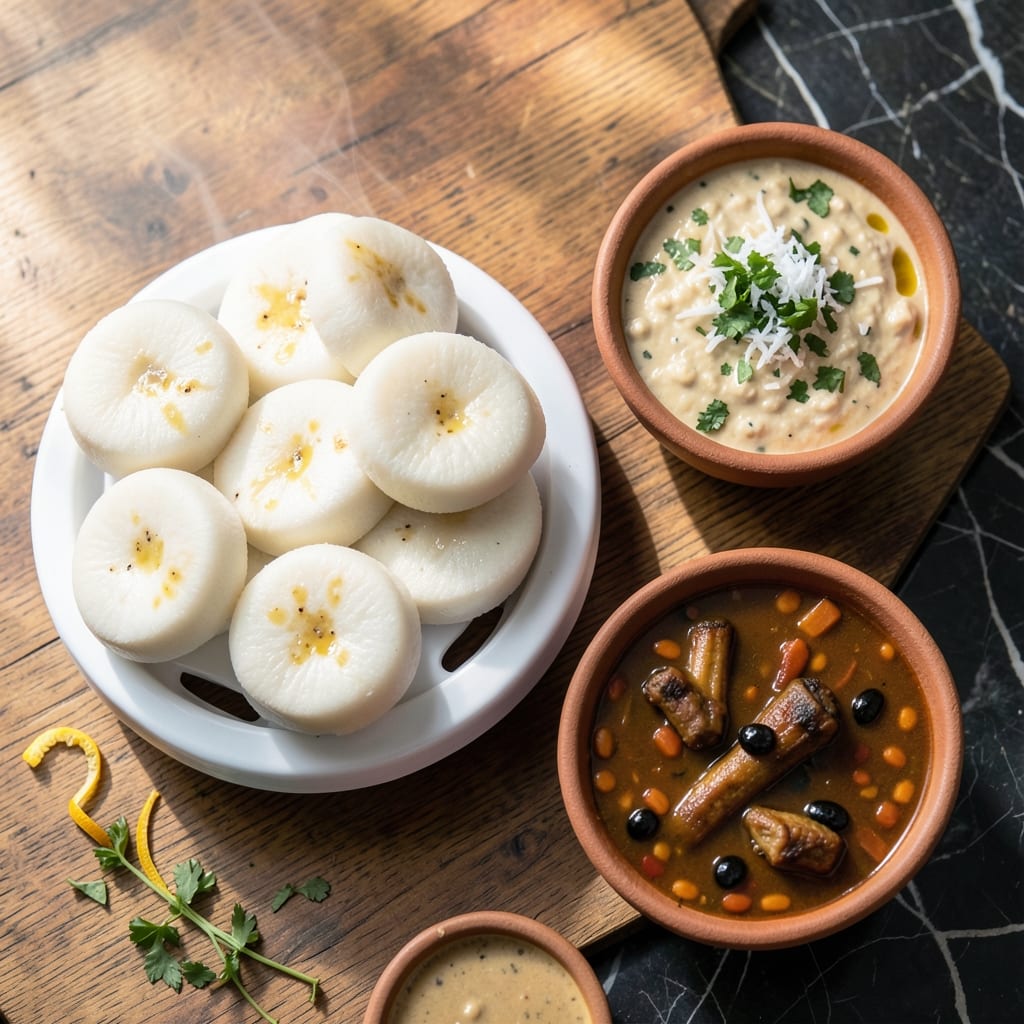
This foolproof method delivers perfectly fluffy idli every time, using a simple combination of rice flour and urad dal. The fermentation process develops that signature tangy depth that makes these steamed cakes irresistible.
I’ve tested this recipe in my small Boston kitchen, adjusting ratios until I achieved the ideal texture—soft, spongy, and light as air. The key is allowing the batter to ferment for 8-12 hours, which transforms the flavors.
When steamed properly, these idli rise beautifully without collapsing, creating those characteristic pillowy shapes. The rice flour base makes them naturally gluten-free while maintaining the authentic taste and texture.
Serve with coconut chutney and sambar for the classic experience. Here’s how to make them at home with professional results.
Ingredients for Idli Recipe with Rice Flour and Urad Dal
Rice flour and urad dal create these pillowy, fermented steamed cakes with ease.
| Ingredient | Amount | Notes |
|---|---|---|
| Rice Flour 🌾 | 2 cups | Fine, white rice flour preferred |
| Urad Dal 🌱 | ½ cup | Split black gram, washed |
| Salt 🧂 | 1 ½ tsp | Fine sea salt or kosher |
| Water 💧 | 2 ½ cups | Room temperature for batter |
| Fenugreek Seeds 🌿 | ½ tsp | Optional, aids fermentation |
| Coconut Oil 🥥 | 1 tbsp | For greasing idli molds |
| Eno Fruit Salt 🧪 | 1 tsp | For instant fermentation if needed |
| Curry Leaves 🍃 | 8 whole | Optional, for tempering batter |
| Mustard Seeds 🌶️ | ½ tsp | Optional, for tempering batter |
| Green Chili 🌶️ | 1 whole | Finely chopped, optional |
| Cilantro 🌿 | 2 tbsp | Fresh, chopped for garnish |
The rice flour must be fine and fresh—Indian grocery stores like Patel Brothers or H-Mart carry the best quality. Urad dal (split black gram) is non-negotiable; don’t substitute with other lentils. Look for whole skinless urad dal for authentic texture. I source mine from local Indian markets in Boston, where turnover is high and quality is reliable.
No urad dal? This isn’t a traditional idli, but chana dal or moong dal at half the amount can work in a pinch (texture will differ). For instant fermentation, Eno fruit salt is a lifesaver—add it just before steaming. The coconut oil for greasing can be swapped with neutral oil, but coconut adds a subtle aroma that complements the dish.
Batter ferments best in a warm place (like an oven with the light on). Store soaked urad dal in the fridge for up to 24 hours before use. Fermented batter keeps for 1-2 days in the fridge, but use it fresh for the fluffiest idli. Steamed idli stay warm for 30 minutes covered.
Why You’ll Love This Recipe
- No Soaking Needed: I skip the overnight soak entirely—just mix rice flour and urad dal batter, and it’s ready to steam.
- That Fermented Tang: The urad dal and fenugreek seeds ferment into this slightly sour, nutty flavor that makes the idlis irresistible.
- Breakfast or Dinner: Honestly, I make a big batch on Sunday and we’re set for quick breakfasts or light dinners all week.
- Pantry Staples Only: Between us, I always have rice flour and urad dal on hand, so this is my go-to when the fridge looks empty.
Step-by-Step Instructions for Idli With Rice Flour and Urad Dal
Master this technique for perfectly light, airy idli with authentic fermented flavor.
Step 1: Soak and Prepare the Urad Dal
Begin by thoroughly washing the 0.5 cup Urad Dal to remove any impurities. Drain completely, then combine with the 0.5 tsp Fenugreek Seeds in a bowl. Cover with enough water to submerge by 2 inches and soak for 4-6 hours.
The dal should expand to nearly double its volume and feel slightly soft when pressed between fingers. Drain the soaked dal completely—any residual moisture will affect the batter consistency. I use a fine-mesh strainer to ensure no water remains.
Step 2: Create the Batter
In a large mixing bowl, combine the 2 cups Rice Flour with the 1.5 tsp Salt. Gradually whisk in 2.5 cups Water until you achieve a smooth, lump-free batter with the consistency of thick pancake batter.
Drain the soaked urad dal and fenugreek seeds, then blend them with ¼ cup of the measured water until completely smooth. Fold this dal paste into the rice flour mixture. The batter should be slightly thicker than pancake batter but still pourable. Cover and let ferment in a warm place for 8-12 hours.
Step 3: Prepare for Steaming
Just before steaming, stir the fermented batter gently. If using instant fermentation, add the 1 tsp Eno Fruit Salt and mix well—the batter will immediately become frothy. For tempered flavor, heat the 1 tbsp Coconut Oil in a small pan.
Add the 0.5 tsp Mustard Seeds and let them sizzle for 10 seconds until they pop. Quickly add the 8 whole Curry Leaves, 1 whole Green Chili (finely chopped), and pour this tempering into the batter. Stir to incorporate evenly.
Step 4: Steam to Perfection
Grease idli molds lightly with additional coconut oil or use the remaining from your tempering. Pour batter into each mold, filling them about ¾ full. The batter will rise slightly during steaming.
Bring water to a rolling boil in your idli steamer. Place the filled molds in the steamer, cover with a lid, and steam on medium-high heat for 10-12 minutes. Resist opening the lid during steaming—condensation can make the idli dense. They’re done when a toothpick inserted comes out clean and the surface appears matte rather than wet.
Step 5: Serve Warm
Remove the idli from the steamer and let them cool in the molds for 2-3 minutes. This brief rest makes them easier to remove without sticking. Gently tap the molds to release the idli onto a serving plate.
Garnish with the 2 tbsp Cilantro and serve immediately while hot. The ideal idli should be snow-white with a slightly spongy texture, and each bite should offer a subtle tang from fermentation with a fluffy, airy mouthfeel. Pair with coconut chutney or sambar for a complete experience.
Pro Tips For Making Idli Recipe With Rice Flour And Urad Dal
- Soak Urad Dal Longer: I learned this the hard way—give the urad dal at least 4-6 hours in water with a pinch of fenugreek seeds. Skimping here means dense, flat idlis that won’t fluff up.
- Use Fine Rice Flour: After burning three batches with coarse flour, I finally figured out that fine-milled rice flour blends smoothly with the batter and steams into soft, even idlis.
- Ferment Fully: Sounds weird, but it works: let the batter rise until it’s slightly bubbly and doubles in volume—usually 8-12 hours in warm weather. Rushing this step leaves a raw, sour taste.
- Grease Idli Molds Well: My grandmother swore by this, and she was right: brush each mold with oil or ghee before pouring the batter to prevent sticking and guarantee clean, golden idlis every time.
Serving Suggestions for Leftovers
Classic South Indian Pairing
Serve these idli hot with coconut chutney and sambar for the traditional experience. The cool, creamy chutney balances the subtle tang of fermented idli perfectly. I make my chutney with ½ cup grated coconut, 2 tbsp roasted chana dal, and 1 green chili for authentic flavor. 💛
Chutney Variations
For variety, try tomato-onion chutney or mint-coriander chutney. The tomato version adds sweetness that complements the idli’s fermentation. My mint chutney uses 1 cup fresh mint and ½ cup cilantro – it’s refreshing with the steamed cakes.
Breakfast Platter
Create a South Indian breakfast spread with dosa, upma, and filter coffee. The idli’s soft texture contrasts beautifully with crispy dosa. I love serving with podi (gunpowder) for dipping – just mix ¼ cup idli rice flour with spices.
Modern Fusion Ideas
For contemporary twists, serve with avocado chutney or yogurt dips. The avocado version uses 1 ripe avocado, ¼ cup yogurt, and lime juice. These pairings work surprisingly well with the fermented flavors.
Sweet Option
Try sweet idli with coconut milk and jaggery syrup for dessert. I add 2 tbsp jaggery and ¼ tsp cardamom to the batter. Serve with fresh berries for a fusion dessert that’s still authentically inspired.
Nutrition Facts
Frequently Asked Questions
Why do we need to ferment the batter?
Fermentation develops the tangy flavor and makes the idli fluffy. It also improves digestibility and enhances the nutritional value of the dish.
Can I use store-bought rice flour?
Yes, but ensure it’s fine and fresh. Older or coarse rice flour may result in dense idli. For best results, use Indian rice flour from specialty stores.
What if my batter doesn’t rise?
Check if the urad dal was soaked long enough or if the environment was warm enough. If in a hurry, add 1 tsp Eno Fruit Salt just before steaming for instant fermentation.
How do I store leftover idli?
Let them cool completely, then store in an airtight container in the fridge for up to 2 days. Reheat by steaming for 2-3 minutes to restore softness.

- Mujadara Rice and Lentils Recipe: Earthy Spiced Lentils With Caramelized Onions - November 1, 2026
- Naija Fried Rice Recipe: Street-Style Spice With Veggie Crunch - November 1, 2026
- Mushy Rice Recipe: Fluffy Grains Transformed in Minutes - November 1, 2026