
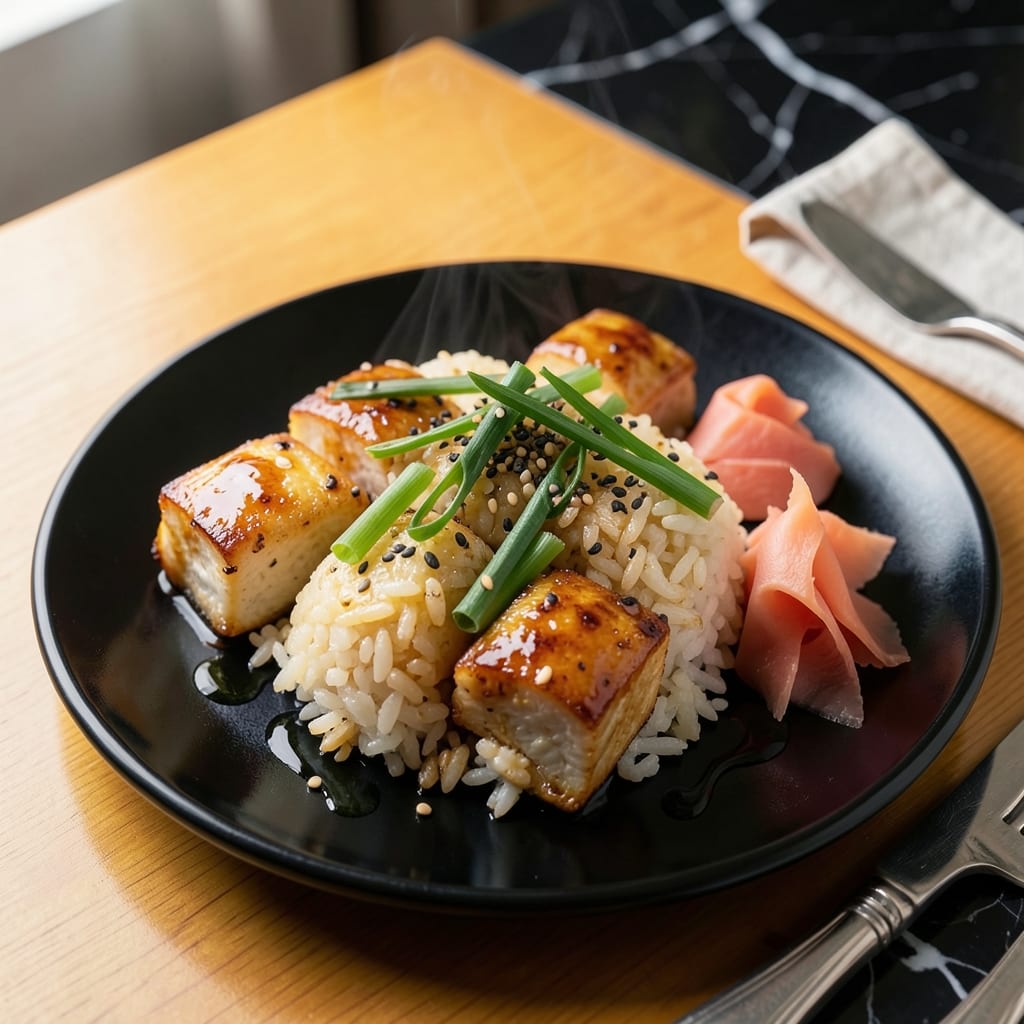
This traditional Japanese dish combines seasoned sushi rice with crispy tofu pockets for a perfect balance of sweet and savory flavors. The key lies in properly preparing the rice with the right vinegar-sugar-salt ratio.
I’ve refined this method to ensure the rice holds its shape while absorbing just enough seasoning to complement the inari age. The tofu pockets should be gently simmered to remove excess oil before stuffing.
What results is a tender, slightly sticky rice filling that pairs beautifully with the golden tofu pouches. Each bite delivers a harmonious blend of textures and tastes.
Serve warm or at room temperature for an authentic sushi bar experience at home. Here’s how to make it right every time.
Ingredients for Inari Rice
Simple ingredients for authentic inari sushi with perfectly seasoned rice and crispy tofu pockets.
| Ingredient | Amount | Notes |
|---|---|---|
| Sushi Rice 🍚 | 2 cups | Short-grain, rinsed thoroughly |
| Water 💧 | 2 ½ cups | For cooking rice |
| Rice Vinegar 🍶 | ½ cup | Unseasoned, for seasoning |
| Granulated Sugar 🍬 | 3 tbsp | Dissolved in vinegar mixture |
| Sea Salt 🧂 | 1 ½ tsp | Fine grain preferred |
| Inari Age (Tofu Pockets) 🍳 | 12 pieces | Canned or pre-fried, drained |
| Soy Sauce 🥄 | 1 tbsp | Light or regular variety |
| Sesame Seeds 🌰 | 1 tbsp | Toasted, for garnish |
| Green Onions 🧅 | 2 whole | Thinly sliced for topping |
| Pickled Ginger 🌸 | ¼ cup | Optional, for serving |
| Nori Sheets 🍱 | 2 sheets | Cut into thin strips |
| Vegetable Oil 🫒 | 1 tbsp | For simmering tofu pockets |
The sushi rice is the foundation here. Short-grain Japanese rice (like Koshihikari or Nishiki) is essential for the right sticky texture. Find it at Asian grocery stores or well-stocked supermarkets. For the rice vinegar, unseasoned is key—seasoned vinegar has added sugar and salt that will throw off the balance. The inari age (tofu pockets) should be high-quality; Koyo or Nasoya brands work well if you can’t find them fresh.
No rice vinegar? Apple cider vinegar in a pinch—it’s slightly fruitier but acceptable. Short on sugar? Agave syrup or maple syrup can substitute, though the flavor profile shifts. If you can’t find inari age, extra-firm tofu slices can be pan-fried and formed into pouches (less traditional but functional). The soy sauce can be tamari for a gluten-free version.
Cooked sushi rice keeps in the fridge for 2 days—store it covered to prevent drying. Inari age can be kept in their canning liquid for up to 1 week. Assemble the sushi just before serving to maintain the crispy texture of the tofu pockets. Any leftovers taste best eaten the same day.
Why You’ll Love This Recipe
- No-Cook Sushi Rice: I just mix the rice with vinegar, sugar, and salt—no fancy techniques needed.
- Sweet-Tangy Bite: The rice vinegar and sugar give that perfect balance of sweet and sour I crave.
- Bento Box Star: Honestly, it’s my go-to for meal prep—fills those inari pockets like a dream.
- Stretches Further: One batch makes enough for lunch all week, and the ingredients cost pennies.
Step-by-Step Instructions for Inari Rice
This method ensures perfectly seasoned sushi rice with tender, flavorful tofu pockets every time.
Step 1: Prepare and Cook the Sushi Rice
Rinse the 2 cups Sushi Rice thoroughly under cold water until the water runs clear. This removes excess starch that would make the rice gummy. Drain well in a fine-mesh sieve.
Combine the rinsed rice with the 2.5 cups Water in a rice cooker or heavy pot. Cook according to your rice cooker’s instructions or bring to a boil, then reduce to a simmer, cover, and cook for 15-20 minutes until the water is absorbed and the rice is tender.
Step 2: Season the Rice with Vinegar Mixture
While the rice cooks, heat the 0.5 cup Rice Vinegar, 3 tbsp Granulated Sugar, and 1.5 tsp Sea Salt in a small saucepan over medium heat. Stir until the sugar and salt dissolve completely, then remove from heat and let cool slightly.
Once the rice is done, transfer it to a large wooden or glass bowl. Gently fold in the vinegar mixture using a rice paddle or spatula, cutting through the rice in a slicing motion to avoid crushing the grains. Fan the rice while folding to give it a glossy finish and help it cool to room temperature.
Step 3: Simmer the Inari Age (Tofu Pockets)
Drain the 12 pieces Inari Age (Tofu Pockets) and pat them dry with paper towels. Heat the 1 tbsp Vegetable Oil in a skillet over medium heat. Add the tofu pockets and simmer for 2-3 minutes on each side until lightly golden and heated through.
Add the 1 tbsp Soy Sauce to the skillet and toss the tofu pockets gently to coat evenly. This adds a subtle savory depth to balance the sweetness of the seasoned rice. Remove from heat and set aside to cool slightly.
Step 4: Assemble the Inari Rice
Once the rice is cool enough to handle, take each tofu pocket and gently open it. Fill each with a generous spoonful of the seasoned sushi rice, pressing lightly to shape but not overpacking.
Arrange the filled tofu pockets on a serving platter. Thinly slice the 2 whole Green Onions and sprinkle them over the top along with the 1 tbsp Sesame Seeds. Cut the 2 sheets Nori Sheets into thin strips for an optional garnish.
Step 5: Serve with Traditional Accompaniments
Serve the inari rice immediately at room temperature. Offer the 0.25 cup Pickled Ginger on the side for a refreshing contrast. The combination of sweet rice, savory tofu, and tangy ginger creates a balanced bite.
For best texture, consume within a few hours of assembly, though they can be refrigerated for up to 24 hours if stored in an airtight container.
Pro Tips For Making Inari Rice
- Rinse the Rice: Wash the sushi rice until the water runs clear—this removes excess starch and prevents gummy inari rice. I learned this the hard way after my first few batches turned out pasty.
- Heat the Vinegar: Gently warm the rice vinegar, sugar, and salt mixture before folding it into the rice. It dissolves faster and coats the grains more evenly—no crunchy sugar bits.
- Skip the Overmixing: Fold the seasoning into the rice with a cutting motion, not a stirring one. Overmixing turns it mushy, and nobody wants sad, gluey inari rice.
- Use Warm Rice: Mix the seasoning into the rice while it’s still warm. Cold rice absorbs the vinegar poorly, and you’ll end up with uneven flavor that tastes more like regret than sushi.
Perfect Pairings for This Dish
Traditional Sides
I love serving these with miso soup for a complete meal—the umami broth complements the sweet-savory balance. A simple cucumber sunomono adds a refreshing crunch and tangy contrast to the richness.
Fresh Garnishes
Thinly sliced green onions and toasted sesame seeds add color and texture. For extra flair, I sprinkle nori strips on top just before serving—they add a subtle oceanic note that ties everything together.
Dipping Sauces
Offer soy sauce mixed with a touch of wasabi for dipping. I also enjoy a drizzle of eel sauce for added sweetness. These enhance the flavors without overpowering the delicate rice and tofu. 🥢
Beverage Pairings
Green tea is the classic choice—its clean, grassy notes cut through the dish’s richness. For something different, try a crisp sake served chilled, which enhances the subtle sweetness of the rice.
Pickled Accompaniments
Pickled ginger is traditional, but I also serve pickled daikon radish for variety. The acidity balances the dish’s sweetness beautifully. These small additions elevate the meal significantly. ✨
Nutrition Facts
Frequently Asked Questions
What kind of rice works best?
Use short-grain Japanese rice like Koshihikari or Nishiki. Its sticky texture holds the shape perfectly when stuffed into tofu pockets. Avoid long-grain varieties as they lack the needed cohesion.
Can I make this ahead?
Cook the rice and simmer the tofu pockets up to 1 day in advance. Store separately in the fridge, then assemble just before serving. This keeps the tofu crispy and prevents sogginess.
Why rinse the rice?
Rinsing removes excess starch that would make the rice gummy. Stop when the water runs clear, usually after 3-4 rinses. This ensures fluffy, separate grains that absorb seasoning evenly.
What if my tofu pockets are too oily?
Pat them dry with paper towels before simmering. The extra 2-3 minutes of cooking in the skillet helps remove residual oil. This step guarantees a cleaner taste and better texture.

- Jollof Rice Sauce Recipe: West African Tomato and Spice Infusion - September 25, 2026
- Japanese Rice Soup Recipe: Umami-Rich Comfort in a Bowl - September 25, 2026
- Homemade Cream Of Rice Recipe: Silk-Smooth Breakfast in Minutes - September 25, 2026