
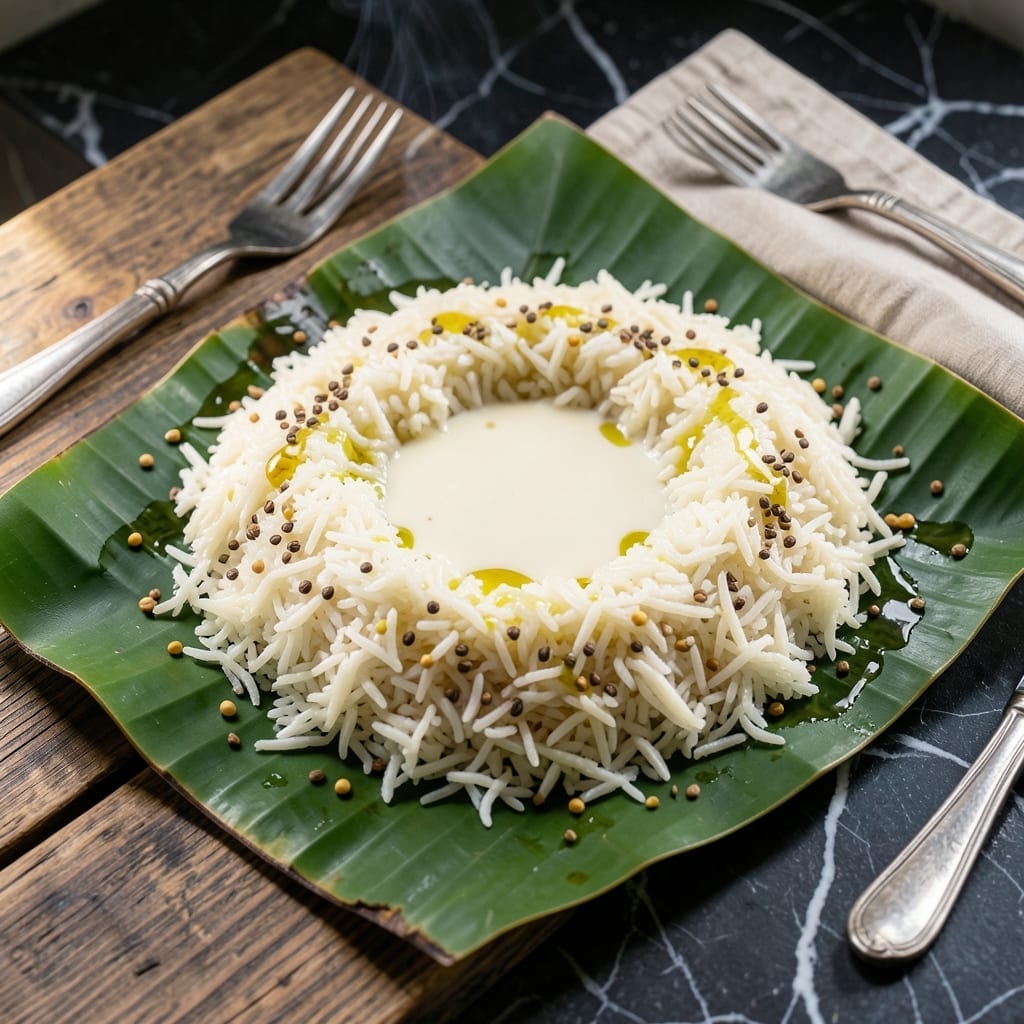
This traditional South Indian meal transforms simple ingredients into a fragrant, multi-sensory dining experience. I developed this version after studying authentic methods, ensuring every component stays true to its roots while working in home kitchens.
The dish brings together perfectly cooked rice, flavorful curries, and fresh accompaniments all served on a banana leaf. The leaf adds a subtle aroma while keeping the meal authentic to its heritage.
Each element is prepared with care—spiced rice, vegetable sides, and protein-rich curries that create a balanced, aromatic feast. The presentation on the leaf elevates the meal from everyday to extraordinary.
This is more than just food; it’s a celebration of tradition and flavor that turns any dinner into a memorable occasion.
Ingredients for Indian Banana Leaf Rice
Traditional South Indian ingredients create a fragrant, authentic feast served on banana leaves.
| Ingredient | Amount | Notes |
|---|---|---|
| Basmati Rice 🌾 | 2 cups | Rinsed until water runs clear |
| Banana Leaves 🍌 | 4 pieces | Fresh or thawed if frozen |
| Coconut Milk 🥥 | 1 can | Full-fat for creaminess |
| Vegetable Oil 🫒 | ½ cup | Neutral flavored for cooking |
| Mustard Seeds 🌿 | 1 tsp | Yellow or black variety |
| Cumin Seeds 🌿 | 1 tsp | Whole seeds preferred |
| Dried Red Chilies 🌶️ | 4 whole | Stems removed, broken |
| Curry Leaves 🍃 | 10 pieces | Fresh for authentic flavor |
| Turmeric Powder 🌶️ | 1 tsp | Ground, for color and spice |
| Asafoetida 🧂 | ¼ tsp | Hing, for umami depth |
| Chickpeas 🥜 | 1 can | Drained and rinsed thoroughly |
| Mixed Vegetables 🥕 | 2 cups | Carrots, beans, peas mixed |
| Fresh Cilantro 🌿 | ½ cup | Chopped for garnish |
| Lemon Juice 🍋 | 2 tbsp | Freshly squeezed preferred |
| Salt 🧂 | 1 ½ tsp | Adjust to taste |
The banana leaves are essential for authenticity—Indian grocery stores often carry fresh ones, or frozen at Asian markets. Basmati rice must be aged for proper texture. For the spices, whole cumin and mustard seeds provide the best flavor when tempered. Asafoetida (hing) is a key umami element—Patel Brothers or Bharat Bazaar stock it. Fresh curry leaves are non-negotiable for genuine taste.
No fresh curry leaves? Dried work at half the amount, but rehydrate first. Can’t find asafoetida? A pinch of garlic powder offers some depth. Coconut milk can be light, but full-fat delivers authentic richness. Frozen mixed vegetables are fine (just thaw first). For the chickpeas, any legume works—lentils or kidney beans substitute well.
Banana leaves should be briefly heated to soften before use. Store fresh leaves in the fridge for 2-3 days, or freeze for up to 3 months. Cooked rice and curries keep 4-5 days refrigerated. Reheat gently to preserve flavors.
Why You’ll Love This Recipe
- One Pot Wonder: I just toss the basmati rice, coconut milk, and mustard seeds together on the banana leaf—no fancy techniques, no stress.
- Aromatic Heaven: The mustard seeds popping in oil with that coconut milk richness? It’s the kind of smell that makes the whole house gather in the kitchen.
- Feeds a Crowd: Honestly, this dish stretches beautifully for family dinners or potlucks, and it tastes even better the next day.
- Budget Friendly: Basmati rice and banana leaves are inexpensive, and a little coconut milk goes a long way—my wallet always thanks me.
Step-by-Step Instructions for Indian Banana Leaf Rice
Master the art of this traditional preparation with precise timing and authentic techniques.
Step 1: Prepare the Rice and Banana Leaves
Rinse the 2 cups Basmati Rice under cold water until the water runs completely clear—this removes excess starch and prevents the grains from sticking. Drain thoroughly in a fine-mesh strainer and set aside. Meanwhile, prepare the 4 pieces Banana Leaves by briefly passing them over an open flame for 10-15 seconds on each side.
This softens the leaves and makes them pliable for folding. If using frozen leaves, thaw them completely first. Wipe the leaves with a damp cloth to remove any dirt, then cut into manageable 12-inch squares. The leaves should be vibrant green and flexible, not brittle.
Step 2: Temper the Spices and Aromatics
Heat the 0.5 cup Vegetable Oil in a heavy-bottomed pot over medium heat. When shimmering, add the 1 tsp Mustard Seeds and allow them to pop for 30-45 seconds until they dance in the oil. Immediately add the 1 tsp Cumin Seeds, 4 whole Dried Red Chilies, and 10 pieces Curry Leaves.
Stir constantly for 2 minutes until the cumin turns golden brown and the curry leaves release their citrusy aroma. Add the 0.25 tsp Asafoetida and 1 tsp Turmeric Powder, stirring quickly to prevent burning. The mixture should be fragrant with visible sizzling.
Step 3: Cook the Rice with Coconut Milk
Add the drained 2 cups Basmati Rice to the tempered spices and toast for 2-3 minutes, stirring to coat each grain in the oil and spice mixture. Pour in the 1 can Coconut Milk and 2.5 cups water, then add the 1.5 tsp Salt. Stir well and bring to a boil.
Once boiling, reduce heat to low, cover, and simmer for 15 minutes until the rice is 90% cooked—grains should still have a slight bite. Turn off the heat and let it sit covered for 5 minutes to finish cooking with residual steam.
Step 4: Assemble on Banana Leaves
Lay out the prepared Banana Leaves and divide the partially cooked rice among them, spreading it in an even layer. Top with the 1 can Chickpeas (drained and rinsed) and 2 cups Mixed Vegetables, distributing evenly. Drizzle with 2 tbsp Lemon Juice for brightness.
Fold the leaves over to create enclosed packets, securing the edges by tucking them under. The packets should be snug but not burst at the seams. This traps steam to finish cooking the rice and infuse it with the banana leaf’s subtle floral notes.
Step 5: Steam to Perfection
Place the packets seam-side up in a steamer basket over boiling water. Steam for 10-12 minutes until the rice is fully tender and the leaves deepen in color. Remove from heat and let rest for 5 minutes before opening.
Unwrap carefully to avoid tearing the leaves. Garnish with 0.5 cup Fresh Cilantro and serve immediately. The rice should be fragrant, with distinct grains and a vibrant yellow hue from the turmeric, while the banana leaf imparts a unique, earthy aroma.
Pro Tips For Making Indian Banana Leaf Rice
- Preheat the Leaves: Pass the banana leaves over an open flame for 10-15 seconds to soften them—this keeps them from cracking when you fold the rice parcels. I learned this the hard way after my first three attempts split apart.
- Rinse the Rice: Soak basmati rice for 20 minutes, then rinse until the water runs clear to remove excess starch. Skipping this step gives you gummy rice instead of those perfect, separate grains.
- Temper the Seeds: Heat the oil until it shimmers before adding mustard seeds—if they don’t pop within 10 seconds, the oil isn’t hot enough. My grandmother swore by this, and she was right: it changes the flavor entirely.
- Use Full-Fat Coconut: Skip the light coconut milk; the full-fat version adds richness that thin versions just can’t. Sounds weird, but it works—after trying both, I never go back.
Dietary Considerations for This Recipe
Gluten-Free Friendly
This meal is naturally gluten-free as it relies on rice, vegetables, and legumes. I always double-check my Basmati Rice packaging for cross-contamination warnings, especially when serving gluten-sensitive guests. Most Indian grocery stores carry certified gluten-free options. 💪
Vegan Adaptation
The recipe is already vegan with its plant-based ingredients. For extra richness, I sometimes add ½ cup toasted cashews to the rice. The Coconut Milk provides all the creaminess needed without any dairy products.
Nut Allergy Considerations
While the dish itself contains no nuts, coconut is technically a fruit. For those with coconut allergies, substitute 1 cup vegetable broth for the Coconut Milk. The flavor profile changes slightly but remains delicious and authentic.
Legume-Free Option
If chickpeas aren’t suitable, diced firm tofu works beautifully as a protein substitute. I cube 1 cup extra-firm tofu and pan-fry it with ½ tsp turmeric before adding to the banana leaf packets. This maintains the dish’s hearty nature.
Low-Sodium Adjustments
To reduce sodium, cut the Salt in half and boost flavor with 1 tsp lemon zest and 2 tbsp fresh cilantro. I find this enhances the natural flavors without relying on salt. The Curry Leaves also add depth without added sodium. ✨
Spice Level Control
For milder heat, reduce the Dried Red Chilies to 2 whole and remove seeds. For more heat, add ½ tsp cayenne pepper. I always taste the tempered spices before adding rice to adjust the spice level to my preference.
Nutrition Facts
Frequently Asked Questions
Where can I find banana leaves?
Check Indian or Asian grocery stores for fresh or frozen leaves. Some Latin markets carry them too. If unavailable, you can order online, but fresh is ideal for authentic aroma.
Can I use a different type of rice?
Jasmine rice works as a substitute, though the grains are shorter. Avoid sticky varieties like sushi rice. Rinse well to remove starch and prevent clumping.
How do I prevent the leaves from tearing when folding?
Soften them first by briefly heating over an open flame for 10-15 seconds per side. This makes them pliable. Avoid overfilling packets to prevent splits.
What if I don’t have asafoetida?
A pinch of garlic powder can mimic some depth, though the flavor won’t be identical. Skip it entirely if needed—the dish will still taste delicious.

- Mujadara Rice and Lentils Recipe: Earthy Spiced Lentils With Caramelized Onions - November 1, 2026
- Naija Fried Rice Recipe: Street-Style Spice With Veggie Crunch - November 1, 2026
- Mushy Rice Recipe: Fluffy Grains Transformed in Minutes - November 1, 2026