
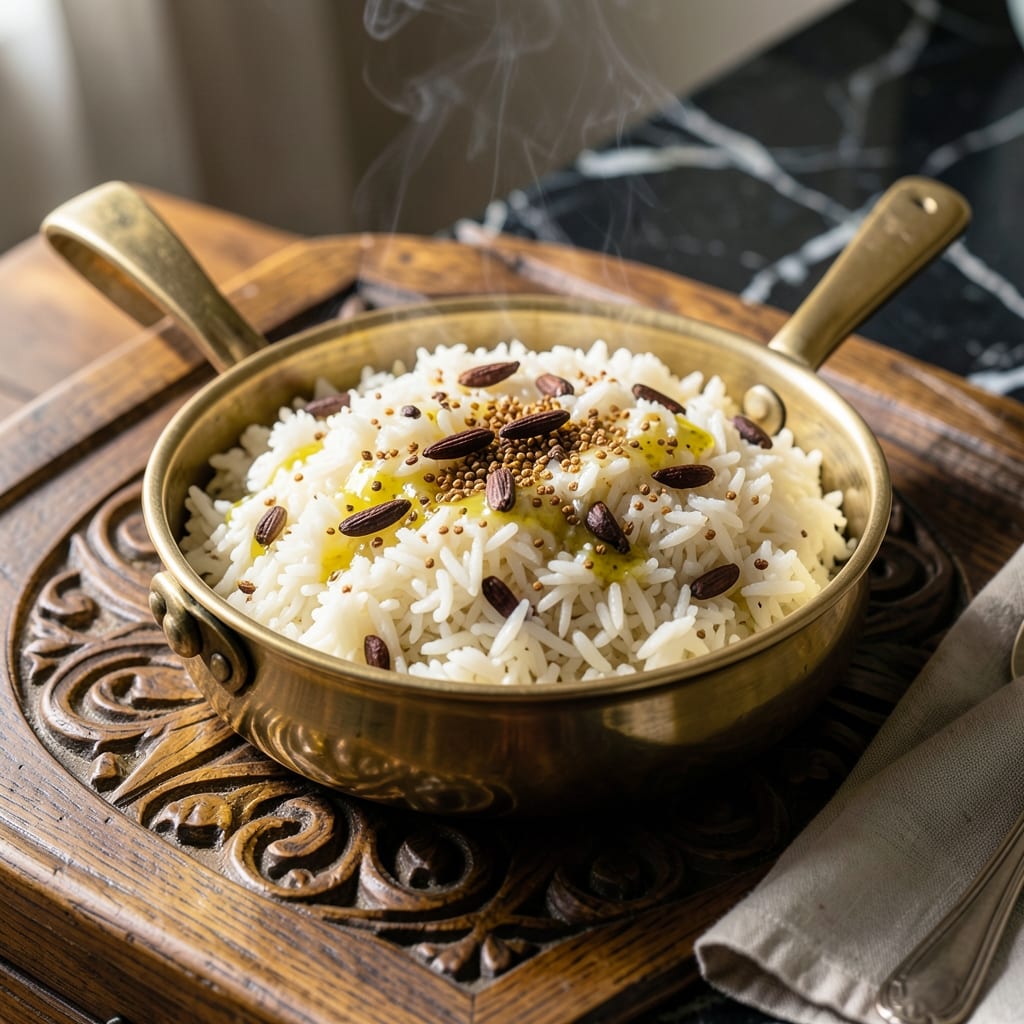
There’s a reason basmati rice is the foundation of countless Indian meals—its long, fragrant grains transform any dish into something special. I developed this method after years of trial and error, focusing on the perfect water ratio and soaking time for fluffy, separate grains every time.
The secret lies in toasting the whole spices before cooking, which releases their aromatic oils into the rice. This simple technique elevates plain rice to a dish that stands proudly alongside curries, stews, or roasted vegetables. No fancy equipment is required—just a pot, patience, and attention to detail.
What you’ll achieve is perfectly cooked basmati with a delicate fragrance and grains that stay distinct, never sticky. The toasted spices add subtle depth without overpowering the natural nuttiness of the rice itself. It’s the kind of dish that turns an ordinary meal into a memorable one.
Serve it with your favorite dal, curry, or simply enjoy it plain with a drizzle of ghee. This is how to make it right.
Ingredients for Indian Basmati Rice
A handful of spices and fragrant basmati create this aromatic, fluffy rice dish.
| Ingredient | Amount | Notes |
|---|---|---|
| Basmati Rice 🌾 | 2 cups | Rinsed until water runs clear |
| Water 💧 | 4 cups | Divided for soaking and cooking |
| Ghee 🧈 | 2 tbsp | Or substitute vegetable oil |
| Cumin Seeds 🌿 | 1 tsp | Whole, not ground |
| Cardamom Pods 🌿 | 4 whole | Lightly crushed to release seeds |
| Cloves 🌰 | 4 whole | Optional for depth of flavor |
| Bay Leaf 🍃 | 1 whole | Dried or fresh |
| Cinnamon Stick 🌿 | 1 whole | 1-inch piece for subtle warmth |
| Salt 🧂 | 1 ½ tsp | Adjust to taste after cooking |
| Fresh Cilantro 🌿 | ¼ cup | Chopped, for garnish |
The basmati is non-negotiable here. Look for aged basmati (often labeled as such) at Indian grocery stores or Whole Foods—it has that signature fragrance and elongated grains. The whole spices are key: fresh cardamom pods (green ones, not black) and cumin seeds should be vibrant, not dull. I grab mine from Patel Brothers or any well-stocked Indian market. Ghee adds richness, but don’t stress if you don’t have it (vegetable oil works fine).
No ghee? Substitute with butter or coconut oil. Missing a spice? Skip the cloves or cinnamon if you must, but keep the cumin and cardamom—they’re doing most of the heavy lifting. Fresh out of cilantro? Parsley or mint work in a pinch. The rice-to-water ratio here is sacred: 1:2 for perfectly fluffy grains. Don’t mess with it unless you’re at high altitude.
Uncooked rice keeps indefinitely in a cool, dry place. Once cooked, it’s best fresh but reheats beautifully with a splash of water. Leftovers? Store in an airtight container for up to 3 days in the fridge. For longer storage, freeze portions for up to 3 months.
Why You’ll Love This Recipe
- 20-Minute Meal: I can have this fragrant rice ready faster than ordering takeout—just rinse, simmer, and let the cumin and cardamom work their magic.
- Buttery Heaven: The ghee gives each grain a rich, nutty depth that plain rice just can’t compete with.
- Pairs with Anything: I serve it with curries, grilled meats, or even as a base for fried rice the next day.
- Budget Stretch: A pound of basmati feeds my family for days, and those spices? A little goes a long way.
Step-by-Step Instructions for Aromatic Basmati Rice
Master the technique for perfectly fluffy grains with warm, fragrant spices every time.
Step 1: Rinse and Soak the Basmati Rice
Place the 2 cups Basmati Rice in a fine-mesh strainer and rinse under cold water until the water runs completely clear. This removes excess starch, which is crucial for achieving separate, non-sticky grains.
Transfer the rinsed rice to a large bowl and cover with 2 cups Water from the 4 cups Water. Let it soak at room temperature for 20-30 minutes. Soaking hydrates the grains evenly and ensures they cook uniformly without breaking.
Step 2: Toast the Whole Spices in Ghee
In a heavy-bottomed pot with a tight-fitting lid, melt the 2 tbsp Ghee over medium heat. Once melted and shimmering, add the 1 tsp Cumin Seeds, 4 whole Cardamom Pods, 4 whole Cloves, 1 whole Bay Leaf, and 1 whole Cinnamon Stick.
Toast the spices for 30-45 seconds until the cumin seeds turn golden brown and release their aroma. Stir constantly to prevent burning—the spices should sizzle gently, not smoke. This step blooms their flavors and infuses the ghee with warm, complex notes.
Step 3: Cook the Rice with Remaining Water
Drain the soaked rice thoroughly, then add it to the pot with the toasted spices. Stir gently for 30 seconds to coat the grains with the spiced ghee. This step ensures every grain absorbs the aromatic flavors.
Add the remaining 2 cups Water from the 4 cups Water and the 1.5 tsp Salt. Stir once to distribute the spices and salt evenly, then bring the mixture to a rolling boil over medium-high heat.
Step 4: Simmer and Steam to Perfection
Once boiling, reduce the heat to low, cover the pot with the tight-fitting lid, and let it simmer undisturbed for 15 minutes. Resist the urge to peek—releasing steam disrupts the cooking process and can result in unevenly cooked rice.
After 15 minutes, turn off the heat and let the rice steam, still covered, for an additional 10 minutes. This resting period allows the grains to absorb any remaining moisture and finish cooking gently.
Step 5: Fluff and Garnish Before Serving
Remove the lid and use a fork to gently fluff the rice from the bottom up. This separates the grains without crushing them and releases any trapped steam. Taste and adjust the salt if needed, though the 1.5 tsp Salt should be perfect.
Transfer the rice to a serving dish and garnish with the 0.25 cup Fresh Cilantro. The cilantro adds a bright, fresh contrast to the warm spices. Serve immediately while hot and fragrant.
Pro Tips For Making Indian Basmati Rice
- Soak the Rice: I learned this the hard way—soak basmati rice for at least 30 minutes before cooking to prevent it from breaking and guarantee long, fluffy grains.
- Toast the Spices: Heat cumin seeds and cardamom pods in ghee for 20-30 seconds until fragrant before adding water—this actually changes the outcome by deepening their flavor.
- Use the Right Ratio: Resist the urge to eyeball it: 1.5 cups water per 1 cup rice is non-negotiable for perfect, non-mushy basmati.
- Rest Off Heat: After cooking, let the rice sit covered for 10 minutes—sounds weird, but it works by letting the steam finish the job evenly.
Health Benefits of This Recipe
Digestive Benefits
Basmati rice is easier to digest than other varieties due to its lower glycemic index, which helps maintain stable blood sugar levels. The whole spices like cumin seeds and cardamom pods aid digestion naturally, reducing bloating and discomfort. I notice I feel lighter after eating this compared to heavier rice dishes. 💪
Rich in Energy
This dish provides sustained energy thanks to its complex carbohydrates, perfect for active days. The 2 cups basmati rice offers about 400 calories per serving, fueling you without weighing you down. The natural nuttiness of the grains adds a satisfying depth to every bite.
Low in Fat
With just 2 tbsp ghee for the entire recipe, this remains a low-fat option that doesn’t sacrifice flavor. The spices add richness without excess calories, making it a great side for health-conscious meals. I often pair it with steamed vegetables for a balanced plate.
Gluten-Free Goodness
Naturally gluten-free, this rice is safe for anyone with celiac disease or gluten sensitivity. The aromatic spices and fluffy texture make it a favorite in my household—even my daughter Lily loves it. It’s a versatile base for countless gluten-free meals.
Nutrient Boost
The spices bring more than flavor—they pack antioxidants and minerals. Cardamom supports metabolism, while cumin is rich in iron. Combined with the rice’s natural B vitamins, this dish nourishes your body as much as it delights your palate. 🌟
Hydration Helper
The 4 cups water used in cooking hydrates the grains thoroughly, but it also means you’re consuming moisture-rich food. This can contribute to your daily hydration needs, especially when paired with water-based curries or soups.
Nutrition Facts
Frequently Asked Questions
Why do I need to soak the rice first?
Soaking for 20-30 minutes hydrates the grains evenly, ensuring they cook uniformly without breaking. It also removes excess starch for fluffier results.
Can I make this in a rice cooker?
Yes! Toast the spices in a pan first, then add everything to your rice cooker with the same 1:2 rice-to-water ratio. Use the standard white rice setting.
What if my rice turns out sticky?
This usually means too much water or not enough rinsing. Stick to 2 cups water per 1 cup rice and rinse until the water runs clear.
How long can I store leftovers?
Keep in an airtight container in the fridge for up to 3 days. Reheat with a splash of water to restore moisture.

- Mujadara Rice and Lentils Recipe: Earthy Spiced Lentils With Caramelized Onions - November 1, 2026
- Naija Fried Rice Recipe: Street-Style Spice With Veggie Crunch - November 1, 2026
- Mushy Rice Recipe: Fluffy Grains Transformed in Minutes - November 1, 2026