
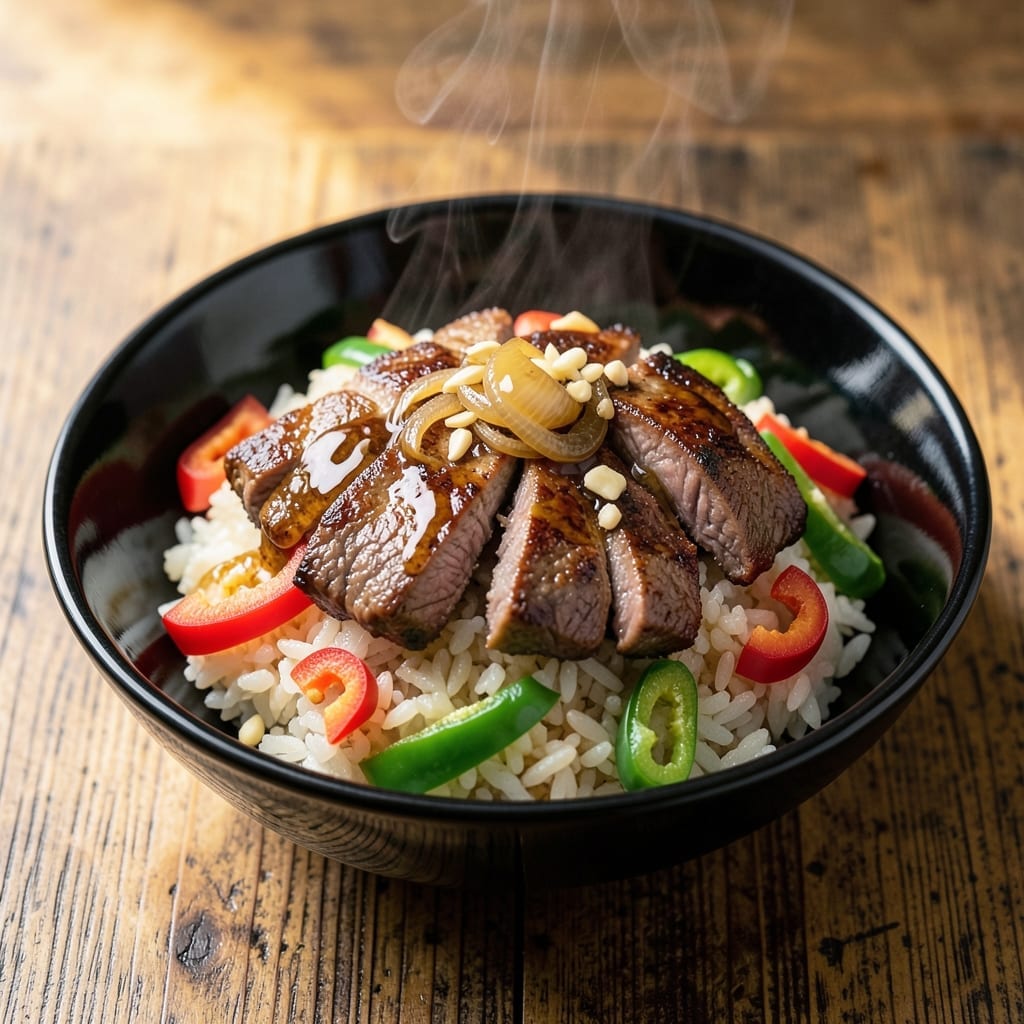
This Japanese-inspired dish transforms simple ingredients into a flavor-packed meal with minimal effort. The combination of tender beef, crisp peppers, and steamed rice creates a satisfying balance of textures and tastes.
The key lies in quick wok-searing the beef and vegetables to lock in their natural juices while building layers of umami. A simple sauce ties everything together, infusing each bite with savory depth.
What you’ll get is a restaurant-quality dish that’s ready in under 30 minutes. The beef stays juicy, the peppers retain a slight crunch, and the rice soaks up all the delicious flavors.
Perfect for a quick weeknight dinner or meal prep. Here’s how to make it.
Ingredients for Japanese Beef Pepper Rice
Tender beef, crisp peppers, and jasmine rice come together for umami-packed perfection.
| Ingredient | Amount | Notes |
|---|---|---|
| Ribeye Steak 🥩 | 1 ½ lb | Thinly sliced against the grain |
| Green Bell Peppers 🌶️ | 2 whole | Thinly sliced into strips |
| Red Bell Peppers 🌶️ | 1 whole | Thinly sliced into strips |
| White Onion 🧅 | 1 whole | Thinly sliced into half-moons |
| Garlic Cloves 🧄 | 4 cloves | Minced finely for sauce |
| Fresh Ginger Root 🌿 | 1 tbsp | Grated or minced |
| Soy Sauce 🫒 | ⅓ cup | Low-sodium preferred for balance |
| Oyster Sauce 🫒 | 2 tbsp | Vegan alternative if needed |
| Mirin 🍶 | 2 tbsp | Sweet rice wine for depth |
| Sesame Oil 🫒 | 1 tbsp | Toasted for aromatic finish |
| Jasmine Rice 🍚 | 2 cups | Uncooked, rinsed before steaming |
| Neutral Cooking Oil 🛢️ | 2 tbsp | High smoke point for wok-searing |
| Sesame Seeds 🌾 | 1 tbsp | Toasted for garnish |
| Green Onions 🧅 | 3 whole | Thinly sliced for garnish |
| Granulated Sugar 🧂 | 1 tsp | Balances savory flavors |
The beef is the star here—ribeye from a good butcher (or the well-marbled stuff at Whole Foods) gives you that melt-in-your-mouth texture. Slice it paper-thin against the grain (freeze 20 minutes first for easier slicing). For the peppers, bell peppers in vibrant colors add sweetness and crunch. Look for firm ones with glossy skin—no soft spots. The ginger? Fresh only, none of that jarred stuff.
No ribeye? Flank or sirloin work too—just slice extra thin. Short on mirin? Mix 1 tbsp sugar + 1 tbsp water + 1 tbsp rice vinegar for a quick sub. Oyster sauce can be swapped for hoisin or mushroom sauce if needed. The rice? Jasmine is ideal, but basmati or short-grain in a pinch (adjust water ratios).
Cook the rice fresh—day-old gets dry. Leftovers keep 3-4 days in the fridge, reheat gently with a splash of water. Freeze without the rice for up to 3 months (rice gets mushy when thawed).
Why You’ll Love This Recipe
- One Pan Meal: I love that I can sear the ribeye, sauté the bell peppers and onions, and cook the rice all in the same pan—minimal cleanup, maximum flavor.
- Umami Bomb: The ribeye’s richness paired with garlic and those sweet, crisp peppers creates a depth of flavor that’s ridiculously satisfying.
- Weeknight Hero: Honestly, it’s my go-to for busy evenings—filling enough for dinner but quick enough to make after work.
- Leftovers Win: The flavors actually taste better the next day, so I always double the batch for an easy lunch the following afternoon.
Step-by-Step Instructions for Japanese Beef Pepper Rice
Here’s the method for perfect wok-seared beef and veggies over fluffy steamed rice.
Step 1: Steam the Jasmine Rice
Rinse the 2 cups jasmine rice under cold water until the water runs clear, removing excess starch. This prevents gummy rice. Use a rice cooker or pot with a tight-fitting lid. Add the rice and 2¼ cups water—the standard 1:1.125 ratio for jasmine.
Cook on medium-low heat for 15 minutes, then let it steam off-heat for 10 minutes. Don’t peek during cooking; the trapped steam is what makes it fluffy. You’ll know it’s done when all liquid is absorbed and the grains are tender with a slight bite.
Step 2: Slice and Prep All Vegetables
Thinly slice the 2 whole green bell peppers, 1 whole red bell peppers, and 1 whole white onion into uniform strips. I like to cut them into ¼-inch pieces so they cook quickly and evenly in the wok. Keep the colors separate for now—you’ll combine them during cooking.
Mince the 4 cloves garlic cloves and grate the 1 tbsp fresh ginger root. Having everything prepped before cooking (mise en place) is crucial for stir-frying, which happens fast. Thinly slice the 3 whole green onions and set aside for garnish.
Step 3: Slice the Ribeye and Make the Sauce
Place the 1.5 lb ribeye steak in the freezer for 20 minutes to firm up—this makes it easier to slice thinly against the grain. Cut into ¼-inch thick strips. The thinner the slices, the more surface area for that delicious browning.
In a small bowl, whisk together the ⅓ cup soy sauce, 2 tbsp oyster sauce, 2 tbsp mirin, 1 tsp granulated sugar, and 1 tbsp sesame oil. This umami-packed sauce is the heart of the dish. Taste it—you should get that perfect balance of salty, sweet, and savory.
Step 4: Stir-Fry Beef and Vegetables
Heat a wok or large skillet over high heat until smoking hot. Add 1 tbsp neutral cooking oil and swirl to coat. Working in batches to avoid overcrowding, add the ribeye strips and sear for 1-2 minutes until browned but still slightly pink. Remove and set aside.
Add the remaining 1 tbsp neutral cooking oil, then toss in the minced garlic, grated ginger, and sliced peppers and onion. Stir-fry for 3-4 minutes until the vegetables soften but retain a slight crunch. Return the beef to the wok and pour in the sauce. Toss everything together for 1-2 minutes until heated through and glossy.
Step 5: Assemble and Garnish
Divide the steamed jasmine rice among four bowls. Top generously with the beef and pepper mixture, spooning extra sauce over the top. Garnish with the sliced green onions and 1 tbsp sesame seeds.
The sesame seeds add a nutty crunch that contrasts beautifully with the tender beef and crisp-tender vegetables. Serve immediately while everything is hot—the sauce will soak into the rice slightly, infusing every bite with flavor.
Pro Tips For Making Japanese Beef Pepper Rice
- Chill the Ribeye: Pop the steak in the freezer for 15-20 minutes before slicing—makes thin, even cuts way easier and prevents chewy bits in your pepper rice.
- Blister the Peppers: Cook the bell peppers on high heat first until slightly charred. I learned this the hard way—skipping this step leaves them too watery and bland in the final dish.
- Don’t Overcrowd the Pan: Cook the beef in batches if needed. Steer clear of packing the pan full, or you’ll end up steaming the ribeye instead of searing it.
- Use Day-Old Rice: Sounds weird, but it works: leftover rice that’s dried out a bit soaks up the sauce better and won’t turn to mush when stir-fried with the beef and peppers.
Regional Styles of This japanese beef pepper rice
Osaka-Style Yakiniku
In Osaka, this dish takes on a grill-focused approach with thinly sliced beef cooked on a teppanyaki griddle or cast-iron skillet. The beef is marinated briefly in the sauce before grilling, creating a caramelized crust. I love adding shishito peppers for a smoky twist. 🗺️
Tokyo Home Cooking
Tokyo home cooks often use ground beef instead of slices for a quicker, more budget-friendly version. The peppers are cut into larger chunks to hold their shape during stir-frying. A splash of dashi stock in the sauce adds depth without overpowering the dish.
Hokkaido Dairy Twist
Hokkaido’s famous dairy makes an appearance here with a dollop of butter melted into the sauce at the end. The region’s cold climate also means using winter vegetables like cabbage alongside the peppers. This rich variation is perfect for colder months.
Kyoto Refined
Kyoto’s version elevates the dish with high-quality wagyu beef and a more delicate sauce reduction. The peppers are often blanched first to soften their texture. I find this approach highlights the beef’s natural sweetness beautifully.
Okinawa Tropical
Okinawa incorporates local ingredients like bitter melon or goya alongside the peppers for a unique bitter-sweet contrast. The sauce might include a touch of awamori, a local distilled spirit, for complexity. This version feels lighter and more tropical. ✨
Nagoya Miso Flavor
Nagoya’s signature red miso makes its way into the sauce, adding a deep, fermented richness. The beef is sometimes pounded thin before cooking to ensure tenderness. This hearty variation is a winter favorite in the region.
Nutrition Facts
Frequently Asked Questions
Can I use a different cut of beef?
While ribeye is ideal, flank or sirloin work well too. Slice them extra thin against the grain for best results.
How do I prevent the rice from getting mushy?
Rinse the jasmine rice until water runs clear to remove excess starch. Use a 1:1.125 rice-to-water ratio and avoid peeking while cooking.
What if I don’t have mirin?
Mix 1 tbsp sugar, 1 tbsp water, and 1 tbsp rice vinegar as a quick substitute. It mimics mirin’s sweetness and acidity.
Can I make this ahead of time?
Cook the rice fresh, but the beef and veggies keep 3-4 days refrigerated. Reheat gently with a splash of water.

- Mujadara Rice and Lentils Recipe: Earthy Spiced Lentils With Caramelized Onions - November 1, 2026
- Naija Fried Rice Recipe: Street-Style Spice With Veggie Crunch - November 1, 2026
- Mushy Rice Recipe: Fluffy Grains Transformed in Minutes - November 1, 2026