
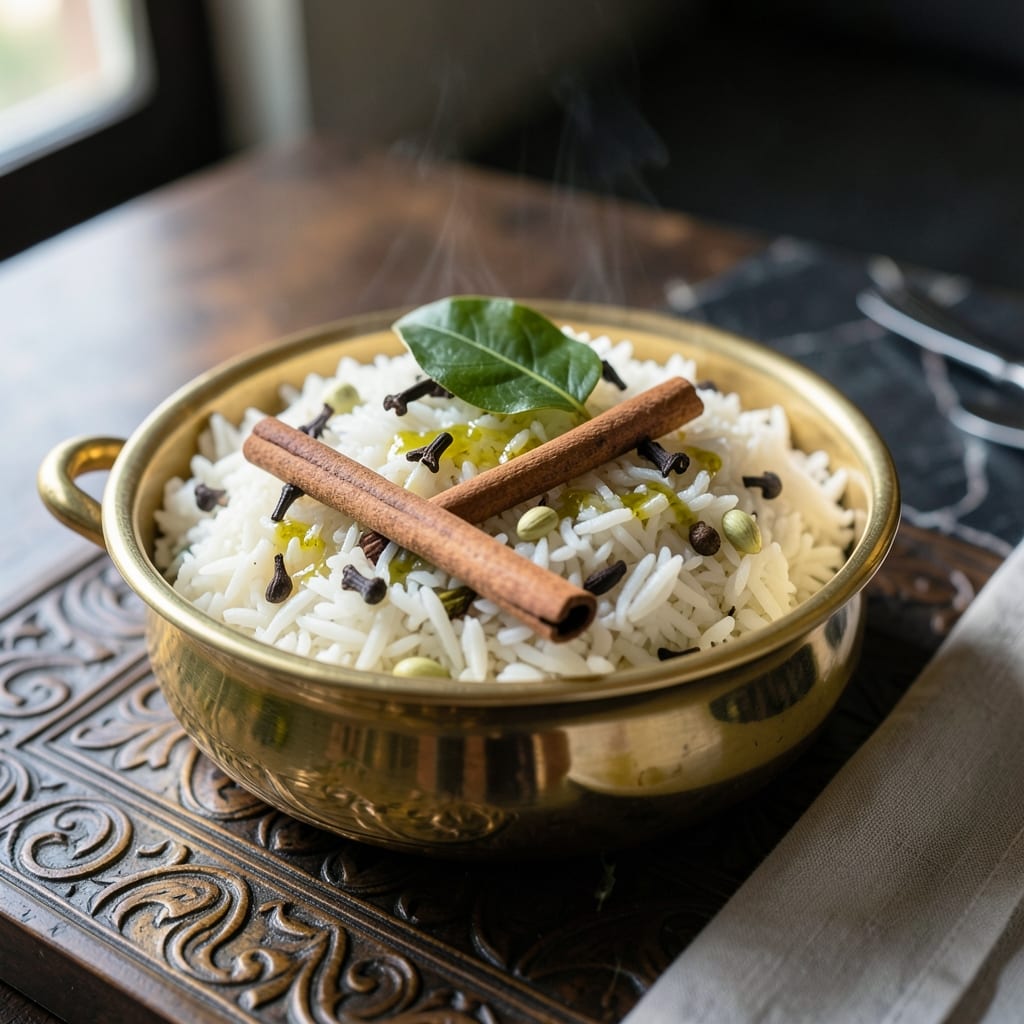
I’ve tested countless methods to recreate that signature Indian restaurant basmati rice at home. The secret lies in the soaking and gentle cooking process that transforms ordinary grains into fragrant, fluffy perfection.
Most home cooks skip the crucial soaking step, but it’s essential for achieving those separate, long-grain results. I use a precise ratio of water to rice and infuse the cooking liquid with whole spices for authentic flavor.
What emerges is rice that’s light, aromatic, and never sticky. Each grain stays distinct yet tender, with a subtle perfume that complements any curry or dal.
This technique works in any kitchen, not just professional ones. The process is simple but requires attention to detail for perfect results every time.
Ingredients for Indian Restaurant Basmati Rice
A few whole spices and premium basmati deliver that signature restaurant aroma and texture.
| Ingredient | Amount | Notes |
|---|---|---|
| Basmati Rice 🌾 | 2 cups | Rinsed until water runs clear |
| Water 💧 | 4 cups | Divided for soaking and cooking |
| Bay Leaf 🍃 | 1 whole | Dried, for infusion |
| Green Cardamom Pods 🌿 | 4 pieces | Lightly crushed |
| Cloves 🌰 | 4 pieces | Whole, for aromatic depth |
| Cinnamon Stick 🌳 | 1 piece | 2-inch, for warmth |
| Cumin Seeds 🌶️ | 1 tsp | Toasted lightly |
| Salt 🧂 | 1 ½ tsp | Adjust to taste |
| Ghee 🧈 | 2 tbsp | Clarified butter, or vegetable oil |
| Fresh Cilantro 🌿 | ¼ cup | Chopped, for garnish |
The rice is non-negotiable here—Tilda or Daawat basmati (look for the extra-long grain variety) gives you that authentic restaurant texture. Indian grocery stores carry these brands at better prices than mainstream supermarkets. Soak the rice for at least 30 minutes (longer is better) to ensure those separate, fluffy grains. The whole spices? Patel Brothers or local Indian markets are goldmines for fresh stock.
No ghee? Vegetable oil or vegan butter works fine, but you’ll lose some depth. Missing a spice? Skip it rather than subbing—each one plays a specific role. Bay leaves are often overlooked, but they add a subtle complexity (dried is fine). Want more fragrance? Add a star anise pod to the cooking water. The cilantro is optional but adds freshness.
Cooked rice keeps 3-4 days in the fridge—reheat with a splash of water to restore moisture. Freezes well for up to 3 months (portion before freezing). Soaked rice can sit in water for 2 hours max before cooking (drain and rinse if longer).
Why You’ll Love This Recipe
- One Pot Wonder: I just toss the basmati rice, water, bay leaf, cardamom, and cloves in a pot—no fancy steps, no stress.
- Restaurant-Quality Aroma: The cardamom and cloves infuse the rice with that warm, fragrant depth I usually only get at my favorite Indian spot.
- Pairs With Everything: Honestly, it’s my go-to side for curries, grilled meats, or even a simple dal—never fails to complement the main dish.
- Budget Stretch: A pound of basmati goes a long way, and those whole spices last forever in my pantry.
Step-by-Step Instructions for Aromatic Basmati Rice
Here’s the method I use to get that signature restaurant-style texture and fragrance.
Step 1: Rinse and Soak the Rice
Place the 2 cups Basmati Rice in a fine-mesh strainer and rinse under cold running water until the water runs completely clear. This removes excess starch, which would otherwise make the rice gummy instead of light and fluffy.
Transfer the rinsed rice to a large bowl and cover with 2 cups of the 4 cups Water. Add the 1.5 tsp Salt and stir to dissolve. Let it soak at room temperature for 30 minutes. This hydrates the grains evenly, preventing them from breaking during cooking.
Step 2: Toast the Whole Spices
While the rice soaks, heat the 2 tbsp Ghee in a large, heavy-bottomed pot over medium heat. Add the 1 whole Bay Leaf, 4 pieces Green Cardamom Pods, 4 pieces Cloves, 1 piece Cinnamon Stick, and 1 tsp Cumin Seeds. Toast for 1-2 minutes until the spices become fragrant and the cumin seeds sizzle.
Be careful not to let them burn—burnt spices will make the rice bitter. The ghee should be hot enough to gently foam but not smoke. This step infuses the fat with deep, aromatic flavors that will permeate every grain.
Step 3: Cook the Rice with Infused Ghee
Drain the soaked rice thoroughly and add it to the pot with the toasted spices. Stir gently for 1 minute to coat the grains in the spiced ghee. Then pour in the remaining 2 cups Water and stir once to distribute the rice evenly.
Bring the mixture to a rolling boil over medium-high heat. Once boiling, reduce the heat to low, cover the pot with a tight-fitting lid, and simmer for 12-15 minutes. You’ll know it’s done when the water is fully absorbed and small craters appear on the surface.
Step 4: Rest and Fluff for Perfect Texture
Turn off the heat and let the rice sit, covered, for an additional 10 minutes. This steaming period is crucial—it allows the grains to finish cooking gently and absorb any remaining moisture without turning mushy.
After resting, remove the lid and use a fork to gently fluff the rice from the bottom up. This separates the grains without crushing them. Discard the whole spices if you prefer, or leave them in for a more rustic presentation.
Step 5: Garnish and Serve
Transfer the rice to a serving dish and sprinkle with the 0.25 cup Fresh Cilantro. The cilantro adds a bright, fresh contrast to the warm, aromatic spices. Serve immediately while hot and fluffy, with your favorite curry or dal.
Each grain should be distinct, fragrant, and perfectly tender—not sticky or clumped together. The spices should be subtle but unmistakable, with the ghee adding a rich, nutty depth that makes this rice irresistibly restaurant-quality.
Pro Tips For Making Indian Restaurant Basmati Rice
- Soak the Rice: Give the basmati a 30-minute soak in cold water—this prevents the grains from breaking and guarantees that fluffy, separate texture you get in restaurants.
- Toast the Spices: Lightly dry-toast the bay leaf, cardamom pods, and cloves in the pot for 10-15 seconds before adding water; it wakes up their oils and makes the rice taste far more aromatic.
- Resist the Stir: Once the rice is in the pot, don’t stir it after the first boil—you’ll smoosh the grains and end up with mushy rice instead of those perfect, individual pieces.
- Use a Ratio: Stick to 1 part rice to 1.5 parts water; I learned this the hard way after too many batches came out either crunchy or soggy.
Essential Equipment for Great indian restaurant basmati rice
Quality Rice Matters
For authentic results, I always use Tilda or Daawat basmati rice—the extra-long grain variety you find at Patel Brothers or other Indian grocery stores. These brands cost a bit more but deliver that signature restaurant texture. 💛
Perfect Soaking Vessel
A large mixing bowl with a flat bottom works best for soaking rice evenly. I avoid metal bowls since they can react with acidic ingredients. A fine-mesh strainer is essential for rinsing—look for one with a sturdy handle that fits over your sink.
Heavy-Duty Cooking Pot
Use a heavy-bottomed pot (like Le Creuset enameled cast iron) to prevent scorching. The pot should be wide enough to hold the rice in a single layer with 2 inches of headspace. A tight-fitting lid is non-negotiable for trapping steam.
Spice Toasting Tool
A wooden spoon is ideal for stirring whole spices in hot ghee—it won’t scratch your pot and lets you control the toasting. I keep a dedicated spoon just for this purpose. Toast until fragrant but never smoking.
Ghee Clarification
If making ghee from scratch, use a light-colored saucepan so you can monitor the butter’s color change. Store-bought ghee works fine—I like Ancient Organics brand for its clean, nutty flavor. Always measure ghee after melting for accuracy.
Fluffing Utensil
A rice paddle or wide fork gently separates grains without crushing them. Never use a spoon—it compresses the rice. I fluff from the bottom up in a lifting motion to maintain that airy texture.
Nutrition Facts
Frequently Asked Questions
Why is soaking the rice so important?
Soaking hydrates the grains evenly, preventing breakage during cooking. It also removes excess starch for fluffier results. 30 minutes is minimum, but 1 hour is ideal.
Can I use regular butter instead of ghee?
Yes, but ghee has a higher smoke point and nuttier flavor. Use 2 tbsp butter and clarify it first by melting and skimming off the milk solids.
How do I fix mushy rice?
Drain immediately and spread on a tray to cool. Next time, use less water (1:1.5 rice-to-water ratio) and avoid stirring while cooking.
Can I make this in a rice cooker?
Toast spices in ghee first, then add to the rice cooker with soaked rice and water. Use the standard white rice setting.

- Mujadara Rice and Lentils Recipe: Earthy Spiced Lentils With Caramelized Onions - November 1, 2026
- Naija Fried Rice Recipe: Street-Style Spice With Veggie Crunch - November 1, 2026
- Mushy Rice Recipe: Fluffy Grains Transformed in Minutes - November 1, 2026