
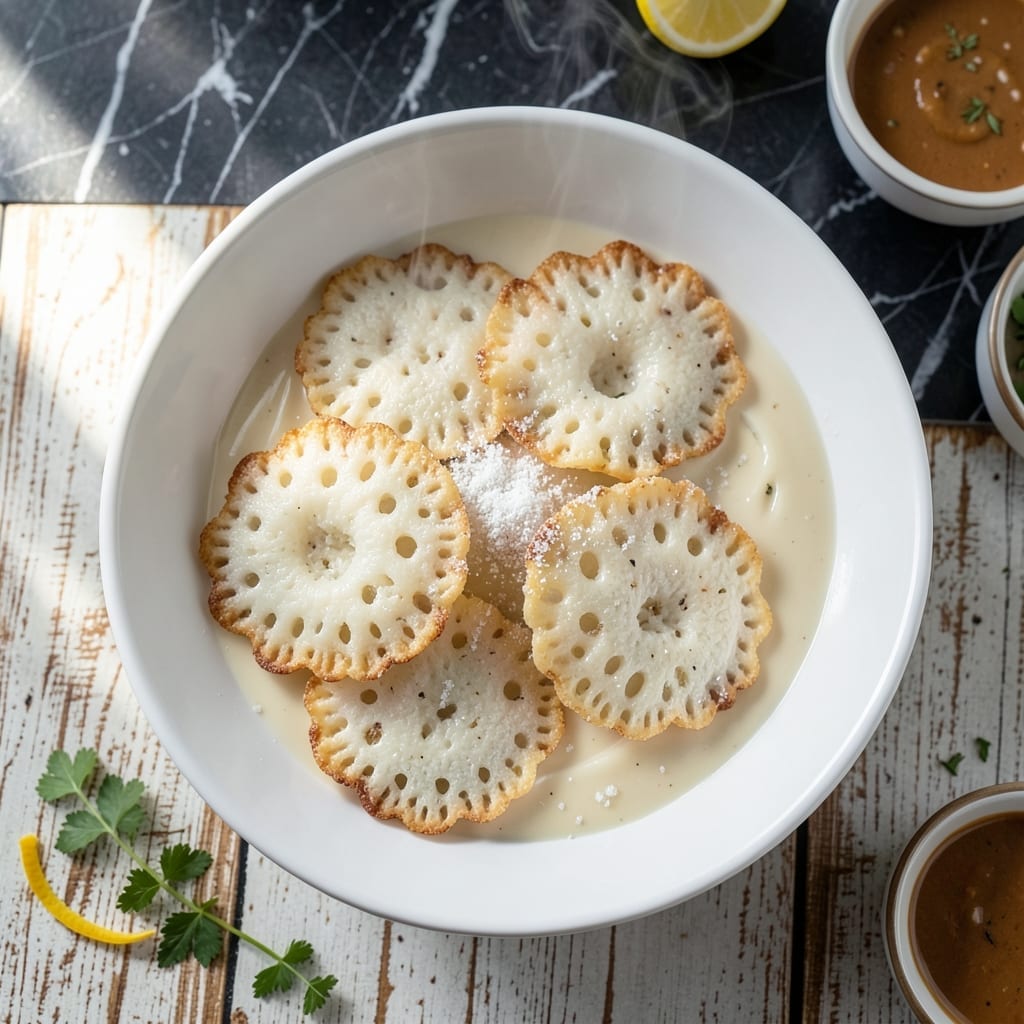
I discovered this method after too many failed attempts at traditional fermentation. The key is using rice flour as the base, which eliminates the need for lengthy soaking and grinding.
This approach delivers soft, lacy appam with those signature crisp edges in under an hour. The batter comes together quickly with pantry staples, making it perfect for spontaneous cooking.
You’ll get restaurant-quality results without the traditional overnight preparation. The rice flour creates that authentic texture and flavor that defines appam.
Ideal for breakfast or pairing with curries. This version proves great food doesn’t need complicated methods.
Ingredients for Instant Appam Recipe with Rice Flour
Pantry staples transform into delicate, lacy appam with authentic flavor and texture.
| Ingredient | Amount | Notes |
|---|---|---|
| Rice Flour 🌾 | 2 cups | Fine, white variety preferred |
| Semolina 🌾 | ½ cup | Fine or medium grind |
| Granulated Sugar 🍚 | 2 tbsp | Adjust to taste preference |
| Active Dry Yeast 🍞 | 1 tsp | Instant yeast works too |
| Salt 🧂 | ½ tsp | Fine sea salt preferred |
| Coconut Milk 🥥 | 1 ½ cups | Full-fat for richness |
| Water 💧 | ½ cup | Lukewarm for yeast activation |
| Cooked White Rice 🍚 | ½ cup | Cooled, for texture |
| Coconut Oil 🫒 | 2 tbsp | For greasing appachatti |
| Shallots 🧅 | 2 whole | Finely chopped for batter |
| Fresh Cilantro 🌿 | ¼ cup | Chopped, for garnish |
| Green Chilies 🌶️ | 2 whole | Finely chopped, optional |
The rice flour is non-negotiable here—Bob’s Red Mill or Anthony’s Goods brands deliver consistent results. Avoid coarse rice flour as it creates grainy batter. Coconut milk should be full-fat for that rich, traditional mouthfeel. Most Asian grocery stores carry both rice flour and semolina in bulk, often at better prices than standard supermarkets.
No coconut milk? Heavy cream at half the quantity plus water works in a pinch, though it alters the flavor profile slightly. Short on time? Instant yeast cuts proofing to 10 minutes. For extra authenticity, replace water with coconut water (use the canned kind, not fresh). The cooked rice adds structure—day-old rice works best as it’s drier.
Batter keeps in the fridge for 24 hours—actually improves overnight. Cooked appam should be served immediately for that perfect crisp edge. Leftovers? Reheat in a dry skillet to revive the texture, but they’re best fresh. The cilantro and chilies can be prepped ahead and stored in damp paper towels.
Why You’ll Love This Recipe
- No Fuss Batter: I just mix rice flour, semolina, yeast, and sugar—no grinding, no overnight soaking, and it’s ready to cook in minutes.
- Sweetly Fermented: The yeast and sugar create a light, slightly tangy flavor that makes these appams irresistibly soft and fluffy.
- Breakfast or Snack: Honestly, these work for a quick morning bite with coconut milk or as a sweet afternoon treat.
- Pantry Staples Only: Between us, I always have rice flour and semolina on hand, so this is my go-to when I need something warm and comforting fast.
Step-by-Step Instructions for Instant Appam With Rice Flour
This method delivers perfect lacy edges and soft centers without lengthy fermentation.
Step 1: Activate the Yeast and Combine Dry Ingredients
In a small bowl, combine the 1 tsp Active Dry Yeast with the 0.5 cup Water that’s been heated to 110°F—it should feel warm but not hot to the touch. Let it sit for 5 minutes until foamy. This confirms the yeast is active and ready to leaven the batter.
Meanwhile, in a large mixing bowl, whisk together the 2 cups Rice Flour, 0.5 cup Semolina, 2 tbsp Granulated Sugar, and 0.5 tsp Salt until evenly distributed. The semolina adds structure, while the sugar feeds the yeast for a proper rise.
Step 2: Create the Batter with Coconut Milk and Rice
Pour the 1.5 cups Coconut Milk into the dry ingredients, then add the yeast mixture. Stir until just combined—small lumps are fine at this stage. Fold in the 0.5 cup Cooked White Rice, which adds a subtle chewiness to the final texture.
The batter should be smooth but slightly thick, like pancake batter. If it’s too stiff, add a splash of warm water, but avoid over-thinning. Cover the bowl with a damp towel and let it rest in a warm place for 30 minutes to allow the flavors to meld and the yeast to begin working.
Step 3: Incorporate Aromatics and Rest
Finely chop the 2 whole Shallots and 2 whole Green Chilies, then fold them into the batter along with half of the 0.25 cup Fresh Cilantro. The shallots and chilies infuse the appam with a delicate heat and aroma, while the cilantro adds freshness.
Let the batter rest for another 15 minutes. This second rest ensures the semolina absorbs the liquid fully, preventing a gritty texture. The batter will rise slightly and develop a light, airy quality.
Step 4: Cook in an Appachatti for Lacy Edges
Heat an appachatti (or small nonstick skillet) over medium heat and brush lightly with coconut oil. Pour a ladleful of batter into the center, then immediately swirl the pan in a circular motion to coat the bottom and sides thinly. This technique creates the signature lacy edges.
Cover with a lid and cook for 2-3 minutes until the edges turn golden brown and crisp, while the center remains soft and slightly custardy. Do not flip—the appam cooks only on one side. Remove from the pan and repeat with the remaining batter, greasing the appachatti between batches.
Step 5: Garnish and Serve Warm
Stack the appam on a plate and garnish with the remaining Fresh Cilantro. The contrast between the crisp edges and the soft, slightly sweet center is what makes this dish special. Serve immediately while warm, as they tend to firm up as they cool.
Pair with a coconut-based curry or stew for dipping, allowing the appam to soak up the rich, spiced sauces. The subtle sweetness of the batter balances savory dishes beautifully.
Pro Tips For Making Instant Appam Recipe With Rice Flour
- Bloom the Yeast: Mix the yeast with 1 teaspoon sugar and ¼ cup warm water first—if it doesn’t foam in 5-10 minutes, your yeast is dead and the appam won’t rise. I learned this the hard way after wasting a batch of rice flour. —
- Rest the Batter: Let the batter sit for at least 30 minutes after mixing. Sounds tedious, but it lets the semolina absorb the liquid and the rice flour soften—skip this and you’ll get dense, gummy appam. —
- Use Thin Batter: The consistency should be like a crepe batter, not pancake batter. Too thick and your appam will be heavy; too thin and it won’t hold its shape. About 1 cup of water per 1 cup of rice flour is my sweet spot. —
- Heat the Pan Properly: Use a medium-low flame and preheat the appam pan well before adding the batter. If the pan isn’t hot enough, the appam will stick and tear—after ruining two, I finally started testing with a drop of water to check for sizzling.
Storing and Reheating This Recipe
Room Temperature Storage
These are best enjoyed fresh, but if you have leftovers, let them cool completely before storing. Place in an airtight container lined with parchment paper to prevent sticking. They’ll keep at room temperature for up to 4 hours—any longer and they’ll lose that signature crispness. 💡
Refrigerator Storage
For longer storage, transfer cooled appam to a sealed container with layers separated by parchment paper. Refrigerate for up to 2 days. I’ve tested this in my tiny Boston kitchen, and the texture holds up surprisingly well. The lacy edges soften but revive nicely when reheated.
Freezing for Later
To freeze, stack cooled appam with parchment paper between each piece, then place in a freezer bag. Squeeze out excess air and freeze for up to 1 month. Honestly, I prefer fresh, but this works for meal prep. Thaw overnight in the fridge before reheating.
Stovetop Reheating
Heat a nonstick skillet over medium-low heat and add appam for 30-45 seconds per side. This restores the crisp edges beautifully. Add a few drops of coconut oil to the pan for extra authenticity. Watch closely—they can burn quickly.
Microwave Method
Place appam on a microwave-safe plate and cover with a damp paper towel. Heat on 50% power for 20-30 seconds. This softens them without making them rubbery. Not as crispy as stovetop, but it’s quick. ❄️
Pro Tip for Meal Prep
If making ahead, prepare the batter and refrigerate it overnight. The flavors deepen, and the texture improves. Cook fresh in the morning—this is my go-to for lazy weekend breakfasts. Just stir the batter well before using, as it thickens when chilled.
Nutrition Facts
Frequently Asked Questions
Can I skip the semolina?
Not recommended. Semolina adds structure and prevents the appam from becoming too fragile. Without it, the lacy edges may not form properly.
Why does my batter turn out lumpy?
Small lumps are fine, but large ones mean the rice flour wasn’t whisked thoroughly. Use a fine-mesh sieve for the flour first, then mix gently.
Can I use a blender for the batter?
Yes, but pulse briefly—over-blending develops gluten in semolina, making appam tough. Stop when just smooth.
What if I don’t have an appachatti?
A small nonstick skillet or wok works fine. Swirl the batter quickly to coat the sides thinly for lacy edges.

- Mujadara Rice and Lentils Recipe: Earthy Spiced Lentils With Caramelized Onions - November 1, 2026
- Naija Fried Rice Recipe: Street-Style Spice With Veggie Crunch - November 1, 2026
- Mushy Rice Recipe: Fluffy Grains Transformed in Minutes - November 1, 2026