
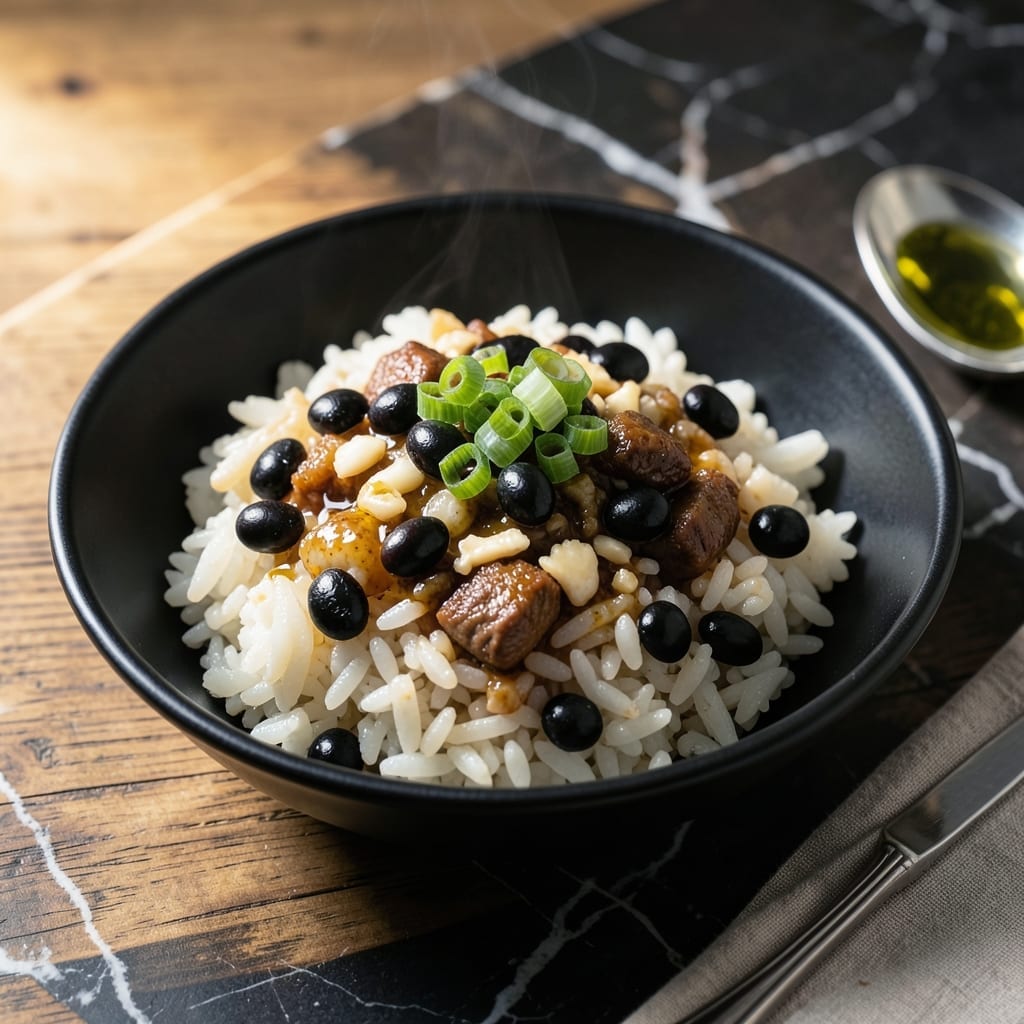
This one-pot Korean black bean rice delivers a nutty depth that transforms simple ingredients into something extraordinary. The fermented black beans create a rich, savory base that infuses every grain.
Traditional techniques ensure authentic flavor—soaking the rice briefly and toasting the beans before cooking. The result is perfectly cooked rice with a subtle crunch and deep umami taste.
What emerges is a dish that’s both comforting and complex, with each bite offering layers of texture and flavor. The black beans add protein and a satisfying chew.
Serve this as a side or main dish. It pairs beautifully with grilled meats or kimchi for a complete Korean meal.
Ingredients for Korean Black Bean Rice
Fermented black soybeans and short-grain rice create this umami-packed one-pot wonder with minimal effort.
| Ingredient | Amount | Notes |
|---|---|---|
| Fermented Black Soybeans ⚫ | 1 cup | Rinsed and drained well |
| Short-Grain White Rice 🍚 | 2 cups | Rinsed until water runs clear |
| Vegetable Broth 🥣 | 3 ½ cups | Low-sodium preferred for control |
| Garlic Cloves 🧄 | 4 cloves | Minced finely for even distribution |
| Fresh Ginger 🌿 | 1 tbsp | Grated or minced finely |
| Green Onions 🧅 | 4 whole | Thinly sliced, whites and greens separated |
| Soy Sauce 🫒 | 2 tbsp | Use tamari for gluten-free version |
| Sesame Oil 🫒 | 1 tbsp | Toasted for deeper aroma |
| Rice Vinegar 🍶 | 1 tbsp | Balances richness of beans |
| Gochugaru 🌶️ | ½ tsp | Korean red pepper flakes, adjust to taste |
| Sugar 🍚 | 1 tsp | Or substitute with maple syrup |
| Toasted Sesame Seeds 🌰 | 1 tbsp | For garnish and crunch |
| Neutral Oil 🫒 | 1 tbsp | For toasting black beans |
The fermented black soybeans are non-negotiable here. Look for them in Korean markets or the international aisle at Whole Foods—they’re often labeled as chunpi or douchi. Avoid the canned versions (too soft) and opt for vacuum-packed for the best texture. Short-grain rice is essential; sushi rice works perfectly if you can’t find Korean short-grain. Rinse it thoroughly to remove excess starch, which ensures separate, fluffy grains.
No fermented black beans? Regular black beans plus a splash of soy sauce and miso can mimic the depth, though the texture won’t be identical. Gochugaru can be swapped with half the amount of cayenne for heat, but you’ll lose the fruity complexity. For gluten-free, tamari replaces soy sauce seamlessly. The sesame oil is key—Kadoya or Ottogi brands are widely available and reliable for that authentic toasted flavor.
Store unopened fermented beans in a cool, dark place for up to 1 year. Once opened, transfer to the fridge and use within 3 months. Cooked rice keeps well for 4-5 days refrigerated or can be frozen for 3 months. Reheat with a splash of water to restore moisture (the grains plump right back up).
Why You’ll Love This Recipe
- One Pot Meal: I just dump everything in the rice cooker—soybeans, rice, broth—and walk away.
- Umami Bomb: The fermented black soybeans and garlic create this deep, savory richness that’s honestly addictive.
- Meal Prep Star: It reheats beautifully, so I make a big batch for lunches all week.
- Pantry Friendly: Between us, I keep those black soybeans on hand because they’re cheap and last forever.
Step-by-Step Instructions for Korean Black Bean Rice
This one-pot method delivers perfectly cooked rice with deep, nutty flavor in every bite.
Step 1: Toast the Fermented Black Soybeans
Heat the 1 tbsp Neutral Oil in a heavy pot or Dutch oven over medium heat. Add the 1 cup Fermented Black Soybeans and toast for 3-4 minutes, stirring frequently, until they become fragrant and slightly darkened in color.
This step intensifies the beans’ natural umami and nutty notes, which will infuse the entire dish. Watch closely to prevent burning—the beans should sizzle gently but not smoke. Remove from heat once they’re uniformly toasted and glossy from the oil.
Step 2: Sauté Aromatics and Rice
Add the minced 4 cloves Garlic Cloves and 1 tbsp Fresh Ginger to the pot with the toasted beans. Cook for 1 minute until fragrant, then stir in the 2 cups Short-Grain White Rice. Toast the rice with the aromatics for 2 minutes.
The rice grains should appear slightly translucent at the edges when ready. This brief toasting enhances the rice’s natural sweetness and ensures it absorbs the maximum flavor from the beans and broth. The whites of the 4 whole Green Onions can be added now for deeper flavor integration.
Step 3: Add Liquids and Seasonings
Pour in the 3.5 cups Vegetable Broth, 2 tbsp Soy Sauce, 1 tbsp Sesame Oil, 1 tbsp Rice Vinegar, 0.5 tsp Gochugaru, and 1 tsp Sugar. Stir well to distribute the seasonings evenly and ensure no rice sticks to the bottom of the pot.
Bring the mixture to a boil over high heat. Once boiling, reduce to low heat, cover tightly, and simmer for 18-20 minutes. The liquid should be fully absorbed and the rice tender when done—check that the surface appears dry with small steam holes.
Step 4: Rest and Finish
Remove from heat and let the rice rest, covered, for 10 minutes. This crucial step allows the grains to steam and become evenly tender. While resting, the residual heat will finish cooking the rice perfectly.
After resting, gently fluff the rice with a fork. Stir in the green parts of the Green Onions and sprinkle with 1 tbsp Toasted Sesame Seeds just before serving. The final texture should be tender yet slightly chewy, with each grain distinct and coated in the savory-sweet sauce.
Pro Tips For Making Korean Black Bean Rice
- Rinse the Beans: Fermented black soybeans can be salty—give them a quick rinse under cold water to mellow the flavor without losing their funk. I learned this the hard way after one overpowering batch.
- Toast the Rice: Before adding liquid, cook the rice in the pot for 2-3 minutes to deepen its nutty flavor. It’s a small step that actually changes the outcome.
- Skip the Boil: Resist the urge to crank the heat—keep it at a gentle simmer once the broth goes in, or the rice will turn mushy and the beans bitter.
- Use Fresh Ginger: Dried ginger won’t cut it here. Grate about a tablespoon of fresh ginger for bright, sharp warmth that cuts through the richness of the beans.
Regional Styles of This Recipe
Jeonju Style
In Jeonju, Korea’s culinary capital, this dish often includes dried shiitake mushrooms rehydrated and sliced thin. The mushrooms are sautéed with the black beans for added earthy depth. I learned this version from a Jeonju grandma who insisted on 20-minute rice soaking time before cooking. 🌟
Seoul Street Food
Seoul vendors serve this as bap (rice) in portable containers with extra gochujang on the side. They often add diced zucchini for texture contrast. The street version uses less broth for a firmer bite that holds up in takeout boxes.
Busan Coastal
Near the coast, they incorporate dried anchovies and kelp in the broth for oceanic umami. The rice gets a 10-minute steam with seaweed sheets layered on top. This creates a subtle briny note that pairs beautifully with seafood banchan.
Gangwon Mountain
Mountain regions use wild mushrooms like pine or enoki, and sometimes chestnut pieces for autumnal richness. The cooking method shifts to a stone pot for crispy bottom layer, called nurungji. The nutty black beans shine against these earthy additions.
I love how the stone pot creates that coveted crunch at the bottom. ✨
Nutrition Facts
Frequently Asked Questions
Can I use regular black beans instead of fermented?
While possible, fermented black soybeans are essential for authentic flavor. Regular black beans lack the deep umami. For a substitute, use 1 cup regular black beans plus 1 tbsp each soy sauce and miso paste to mimic the depth.
Why do I need to toast the black beans first?
Toasting intensifies their natural nuttiness and umami. Skip this, and your rice will taste flat. 3-4 minutes over medium heat is ideal—just until fragrant and slightly darkened.
Can I make this in a rice cooker?
Yes! Toast the beans and rice in a pan first, then transfer to your rice cooker with all liquids and seasonings. Use the standard rice setting. The texture may be slightly softer than stovetop.
How do I prevent the rice from sticking?
Use a heavy pot and stir well after adding liquids. Never peek while cooking! Let it rest 10 minutes covered after cooking to steam perfectly.

- Mujadara Rice and Lentils Recipe: Earthy Spiced Lentils With Caramelized Onions - November 1, 2026
- Naija Fried Rice Recipe: Street-Style Spice With Veggie Crunch - November 1, 2026
- Mushy Rice Recipe: Fluffy Grains Transformed in Minutes - November 1, 2026