
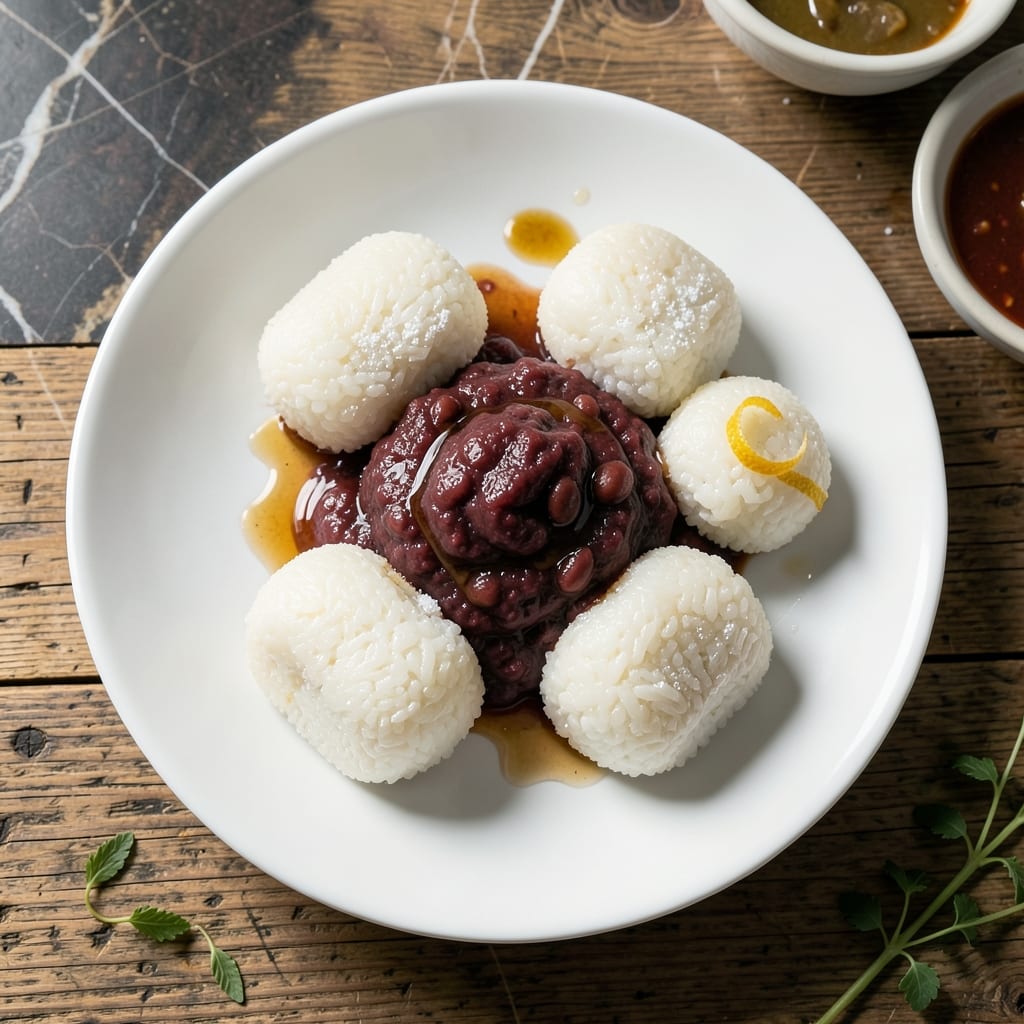
There’s a special satisfaction in making traditional Korean rice cakes from scratch, and this version with sweet red bean filling delivers both texture and flavor in every bite.
The process combines simple ingredients with precise steaming to achieve that signature chewy consistency. The red bean paste, sweetened just right, creates a perfect contrast to the soft, slightly sticky rice cake exterior.
What makes this dish stand out is the balance between the earthy red beans and the delicate rice flour base. Each piece offers a comforting, authentic taste that’s both nostalgic and deeply satisfying.
Serve warm for the best experience, when the flavors and textures are at their peak.
Ingredients for Red Bean Rice Cake
Simple pantry staples transform into this authentic Korean treat with chewy texture and sweet filling.
| Ingredient | Amount | Notes |
|---|---|---|
| Glutinous Rice Flour 🌾 | 2 cups | Also called sweet rice flour |
| Red Bean Paste 🫘 | 1 ½ cups | Sweetened, store-bought or homemade |
| Granulated Sugar 🍚 | ½ cup | Adjust to taste for filling |
| Water 💧 | 1 ½ cups | Warm, for dough |
| Vegetable Oil 🫒 | 2 tbsp | For steaming and greasing |
| Salt 🧂 | ¼ tsp | Fine sea salt preferred |
| Dried Adzuki Beans 🫘 | 1 cup | For homemade paste option |
| Cornstarch 🌽 | 2 tbsp | For dusting work surface |
| Sesame Oil 🫒 | 1 tsp | For finishing touch |
| Toasted Sesame Seeds 🌰 | 1 tbsp | For garnish |
| Brown Sugar 🍚 | ¼ cup | For deeper flavor in paste |
The glutinous rice flour is non-negotiable here—look for brands like Bob’s Red Mill or Koda Farms at Whole Foods or Asian markets. Don’t confuse it with regular rice flour; the sticky texture comes from this specific type. For the red bean paste, store-bought versions from H Mart or Korean grocery stores work beautifully, but homemade gives you control over sweetness and texture. Use warm water for the dough to achieve that perfect chewy consistency.
No glutinous rice flour? Mochiko flour is the exact same thing—just a different label. Can’t find red bean paste? Make your own by cooking dried adzuki beans with sugar until soft and sweet. Substitute half the sugar with honey if you prefer a different sweetness profile. The sesame oil and seeds add authenticity but can be skipped if needed. Cornstarch keeps the dough from sticking—all-purpose flour works in a pinch.
Store rice flour in an airtight container in a cool, dark place for up to 6 months. Red bean paste keeps for 1 week in the fridge or 3 months frozen. Steam the rice cakes fresh for the best texture—reheating works but fresh is ideal.
Why You’ll Love This Recipe
- Minimal Effort: I just mix the glutinous rice flour, sugar, and water—no kneading, no fuss.
- Sweet Surprise: That first bite of warm, gooey red bean paste wrapped in soft rice cake? Ridiculously good.
- Crowd Pleaser: Honestly, it’s a hit at potlucks and my kid’s birthday—everyone reaches for seconds.
- Budget Friendly: A bag of rice flour and a jar of paste make a dozen cakes for pennies. Leftovers? Still delicious the next day.
Step-by-Step Instructions for Red Bean Rice Cake
This method ensures a chewy texture with a balanced sweetness that defines Korean rice cakes.
Step 1: Prepare the Glutinous Rice Flour Dough
In a large mixing bowl, combine the 2 cups Glutinous Rice Flour, 0.5 cup Granulated Sugar, and 0.25 tsp Salt. Whisk until evenly distributed—this prevents clumping when the liquid is added.
Gradually pour in the 1.5 cups Water while stirring continuously with a wooden spoon. The mixture will transform from a dry powder to a thick, slightly sticky batter. I keep mixing until it reaches the consistency of pancake batter, with no dry spots remaining.
Let the batter rest for 10 minutes at room temperature. This hydration period allows the flour to fully absorb the liquid, which is crucial for achieving the signature chewy texture later.
Step 2: Shape and Fill the Rice Cakes
Lightly dust your work surface with 2 tbsp Cornstarch to prevent sticking. Divide the batter into 4 equal portions (since this recipe serves 4). Take one portion and flatten it into a thin circle in your palm, about ¼-inch thick.
Place 2-3 tablespoons of Red Bean Paste in the center of each circle. I use my fingers to gently flatten the paste slightly—this helps it spread evenly when steamed. Fold the edges of the dough up and over the filling, pinching to seal completely. Roll the ball gently between your palms to smooth the surface.
Arrange the filled rice cakes on a plate lined with parchment paper, spaced apart so they don’t touch. Cover with a damp kitchen towel to prevent drying while you work with the remaining portions.
Step 3: Steam the Rice Cakes to Perfection
Fill a steamer pot with 2 inches of water and bring to a boil over high heat. Grease the steamer basket with 1 tbsp Vegetable Oil to prevent sticking. Once the water is boiling, place the rice cakes in the basket, leaving 1 inch of space between each for expansion.
Cover and steam for 20-25 minutes until the dough becomes translucent and springy to the touch. You’ll notice the rice cakes plump up significantly—this is how you know they’re cooking properly. Avoid opening the lid during steaming, as the drop in temperature can cause uneven cooking.
Step 4: Finish and Serve
Carefully remove the steamed rice cakes from the basket using a spatula. Transfer them to a serving plate and let them cool for 5 minutes—this makes them easier to handle and enhances their texture.
For the finishing touch, brush the tops lightly with the remaining 1 tbsp Vegetable Oil and 1 tsp Sesame Oil. This adds a subtle nutty aroma and prevents sticking. Sprinkle with 1 tbsp Toasted Sesame Seeds for garnish and serve warm. The contrast of the soft, chewy exterior with the sweet, smooth filling is best enjoyed fresh.
Pro Tips For Making Red Bean Rice Cake
- Steam Long Enough: I learned this the hard way—under-steaming leaves the center gummy. Give it a full 25-30 minutes over boiling water, no peeking.
- Use Warm Water: Mixing the glutinous rice flour with cold water makes the batter lumpy. Warm water blends smoother and saves you from clumps.
- Skip Cheap Paste: That ultra-sweet, grainy red bean paste from the dollar store ruins the texture. Splurge on the smooth, less sugary kind—it’s worth every penny.
- Oil the Pan Well: Sounds obvious, but I used to skimp and half my cake would stick. Use about a tablespoon of vegetable oil and coat every nook of the pan.
Perfect Pairings for This Recipe
Traditional Pairings
Serve these with Korean barley tea (boricha), which you can find at H Mart or Asian grocery stores. The nutty, toasted flavor cuts through the sweetness perfectly. I recommend steeping 2 tbsp of roasted barley in 4 cups hot water for 5 minutes. 💪
Fruit Complements
Fresh sliced strawberries or persimmons add a bright contrast to the earthy flavors. Their natural sweetness enhances the red bean filling without overpowering it. I like to arrange ½ cup of fruit per serving on the side.
Tea Alternatives
For a caffeine-free option, yuja tea (citron tea) offers a refreshing citrus note that pairs beautifully. Mix 1 tbsp yuja concentrate with 1 cup hot water and a touch of honey. This is a favorite in Korean households.
Savory Balance
Add kimchi on the side for a spicy, tangy counterpoint to the sweetness. The fermentation in kimchi cleanses your palate between bites. I use ¼ cup per serving of my favorite Nongshim brand kimchi. 🔥
Dessert Combos
Pair with Korean sweet pancakes (hotteok) for a dessert spread. The crispy exterior and gooey filling of hotteok contrast nicely with the soft rice cakes. Serve 1 pancake per person alongside.
Beverage Options
For a modern twist, try matcha green tea—its earthy bitterness balances the sweetness. Whisk 1 tsp matcha powder with 2 oz hot water, then add 6 oz more water. This is a popular choice in Korean cafes.
Nutrition Facts
Frequently Asked Questions
Can I use regular rice flour instead of glutinous?
No, regular rice flour won’t give the same chewy texture. Glutinous rice flour is essential for that signature sticky consistency. Look for brands like Mochiko if you’re having trouble finding it.
How do I store leftover rice cakes?
Keep them in an airtight container at room temperature for 1-2 days. For longer storage, freeze for up to 1 month. Reheat by steaming for 5-10 minutes before serving.
Why did my rice cakes turn out hard?
This usually happens from over-steaming or using too much flour. Stick to 20-25 minutes of steaming and measure ingredients precisely. The dough should be slightly sticky, not dry.

- Beaten Rice Recipe: Fluffy Grains With Nutty Depth - September 25, 2026
- Machboos Rice Recipe: Bahraini Spiced One-Pot Tradition - September 25, 2026
- Recipe For Zucchini Rice Casserole: Cheesy Bake With Garden Freshness - September 25, 2026