
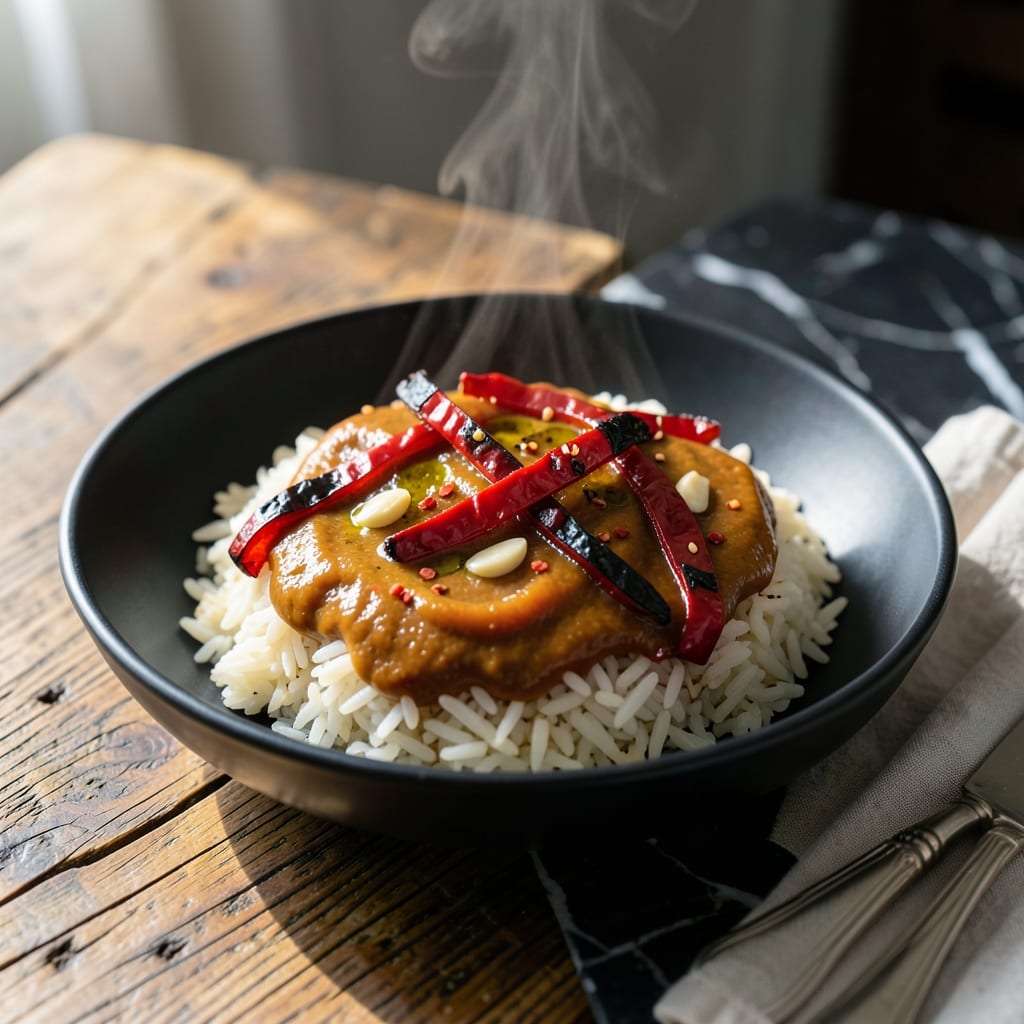
This sauce transforms plain grains into something extraordinary with minimal effort. A blend of bold umami and subtle heat creates depth that elevates every dish it touches.
The secret lies in toasted peppers and aromatic spices that build layers of flavor. With just 5 ingredients and 10 minutes, you can make a batch that keeps for weeks in the fridge.
Its versatility shines with rice, quinoa, or even as a marinade. The smooth consistency coats every grain perfectly, ensuring no bite is left without flavor.
Vegan, gluten-free, and packed with complexity, this condiment proves simple ingredients can deliver restaurant-quality results at home.
Ingredients for Pepper Rice Sauce
Seven simple components create this bold, umami-packed sauce for grains.
| Ingredient | Amount | Notes |
|---|---|---|
| Red Bell Peppers 🌶️ | 2 whole | Roasted and peeled |
| Garlic Cloves 🧄 | 4 cloves | Peeled, roughly chopped |
| Soy Sauce 🫒 | ¼ cup | Use tamari for gluten-free |
| Rice Vinegar 🍶 | 2 tbsp | Unseasoned variety preferred |
| Toasted Sesame Oil 🫒 | 1 tbsp | For finishing and depth |
| Red Pepper Flakes 🌶️ | 1 tsp | Adjust for heat preference |
| Maple Syrup 🍁 | 1 tbsp | Balances umami and heat |
The peppers are non-negotiable here. Roasting and peeling them yourself yields the best depth, but jarred roasted peppers from Trader Joe’s work in a pinch (drain them well). Look for bright, firm peppers at the store—wrinkled ones lack sweetness. The soy sauce should be low-sodium if you’re watching salt, but regular is fine too.
No soy sauce? Coconut aminos give a similar umami kick without the gluten. Out of rice vinegar? Apple cider vinegar at half the amount works, though the flavor shifts slightly. The sesame oil must be toasted—untasted lacks the nutty depth. For a smoother sauce, blend the peppers into a paste before adding liquids.
This keeps beautifully. Store in an airtight jar in the fridge for up to 3 weeks. The flavors deepen after 24 hours, so make it ahead if possible. Freeze in ice cube trays for up to 6 months.
Why You’ll Love This Recipe
- 5-Minute Blend: Honestly, I just toss roasted red peppers, garlic, soy sauce, and rice vinegar into the blender—no chopping marathons here.
- Umami Bomb: That toasted sesame oil finish? It turns the sweet peppers into this rich, savory sauce I could drink with a spoon.
- Meals for Days: I drizzle it over rice bowls, stir it into noodles, or use it as a marinade—leftovers disappear fast.
- Pantry Hero: Between us, this costs pennies and keeps for a week. I’ve stopped buying bottled sauces since nailing this one.
Step-by-Step Instructions for Pepper Rice Sauce
Master this technique to create a versatile condiment that elevates any grain dish with depth and complexity.
Step 1: Roast and Peel the Red Bell Peppers
Preheat your oven to 425°F. Place the 2 whole Red Bell Peppers on a baking sheet and roast for 25-30 minutes, turning occasionally, until the skins are charred and blistered on all sides. The peppers should collapse slightly when fully roasted.
Transfer the roasted peppers to a large bowl, cover tightly with plastic wrap, and let steam for 10 minutes. This loosens the skins for easy removal. Peel away the charred skin, then remove the stems, seeds, and any white membranes. The peppers should be completely clean of skin for a smooth sauce.
Step 2: Sauté the Garlic and Toast the Spices
In a dry skillet over medium heat, add the 1 tsp Red Pepper Flakes and toast for 30 seconds until fragrant. Be careful not to burn them—they should just release their aroma. Immediately remove from heat and transfer to a small bowl to cool slightly.
In the same skillet, add the 4 cloves Garlic Cloves and sauté over low heat for 1-2 minutes until just golden at the edges. Garlic burns easily, so keep the heat low and move the pan frequently. The garlic should soften but not brown deeply, as it will continue cooking in the next steps.
Step 3: Blend All Ingredients into a Smooth Sauce
In a blender or food processor, combine the peeled roasted peppers, toasted Red Pepper Flakes, sautéed Garlic Cloves, 0.25 cup Soy Sauce, 2 tbsp Rice Vinegar, and 1 tbsp Maple Syrup. Pulse until the mixture is smooth, scraping down the sides as needed.
For a completely silky texture, blend for an additional 30-60 seconds on high speed. The sauce should be thick but pourable. If it’s too thick, add a splash of water and blend again. The color should be a deep, vibrant red with no visible chunks of pepper or garlic.
Step 4: Finish and Store the Sauce
Transfer the blended sauce to a bowl and stir in the 1 tbsp Toasted Sesame Oil. This adds a rich, nutty depth that balances the other flavors. Taste and adjust seasoning if needed—though the Soy Sauce and Maple Syrup should provide the perfect balance of salty, sweet, and umami.
Let the sauce sit for 10 minutes to allow the flavors to meld together. It will keep in an airtight container in the refrigerator for up to 1 week. For the best flavor, bring it to room temperature before serving. The sauce should coat the back of a spoon and have a glossy, appetizing sheen.
Pro Tips For Making Pepper Rice Sauce
- Char the Peppers: Roast the red bell peppers over high heat until blackened in spots—this deepens the sweetness and adds a smoky edge that raw peppers just can’t match.
- Mince Garlic Fine: I learned this the hard way—garlic chunks in the sauce can be overpowering. Finely mince it so it distributes evenly and cooks through without bitter bites.
- Balance the Acid: Taste before adding all the rice vinegar. Some peppers are sweeter than others, and you might need less acid to keep the sauce from tasting harsh.
- Bloom in Oil: Toast the minced garlic in the sesame oil for just 30 seconds before adding other ingredients—it pulls out the nutty, aromatic flavors that make the sauce sing.
Serving Suggestions for pepper rice sauce
Drizzle Over Rice
This sauce shines drizzled over steamed white or brown rice—start with 1 tbsp per serving and adjust to taste. I love it over jasmine rice with its floral notes complementing the sauce’s depth. The glossy texture clings perfectly to each grain. 💛
Grain Bowl Base
Use it as the foundation for grain bowls with quinoa or farro. Add 2 tbsp to your base, then top with roasted veggies, avocado, and a fried egg. The umami richness pairs beautifully with earthy grains.
Marinade Magic
Thin with 1 tbsp water and use as a marinade for tofu or tempeh. Let proteins soak for at least 30 minutes—I find the flavor penetrates best overnight. The acidity from the vinegar helps tenderize.
Dipping Sauce
Serve as a dip for spring rolls or dumplings. Thin with 1 tsp warm water for a smoother consistency. I keep a small bowl in the fridge for spontaneous snacking with crudités.
No-Cook Noodles
Toss with cold rice noodles for a quick no-cook meal. Use 3 tbsp sauce per 8 oz noodles and add fresh herbs like cilantro or Thai basil. This works great for packed lunches.
Stir-Fry Finisher
Stir a spoonful into hot stir-fries at the end of cooking. The heat releases the aromatics beautifully. I add 1-2 tbsp to my veggie stir-fries for instant depth without overpowering.
Nutrition Facts
Frequently Asked Questions
Can I use jarred roasted peppers?
Yes, but drain them well first. Fresh roasted peppers yield better flavor, but jarred works in a pinch. Just pat them dry to avoid a watery sauce.
How spicy is this sauce?
Mild with a gentle kick from 1 tsp red pepper flakes. Adjust to taste—add ½ tsp more for extra heat or omit for a sweeter profile.
What if my sauce is too thick?
Thin it with 1-2 tbsp warm water and blend again. For dipping, aim for a pourable consistency like heavy cream.
Can I make this ahead?
Flavors deepen after 24 hours. Store in an airtight container in the fridge for up to 3 weeks.

- Machboos Rice Recipe: Bahraini Spiced One-Pot Tradition - September 25, 2026
- Recipe For Zucchini Rice Casserole: Cheesy Bake With Garden Freshness - September 25, 2026
- Somali Banana and Rice Recipe: Sweet and Spiced East African Tradition - September 25, 2026