
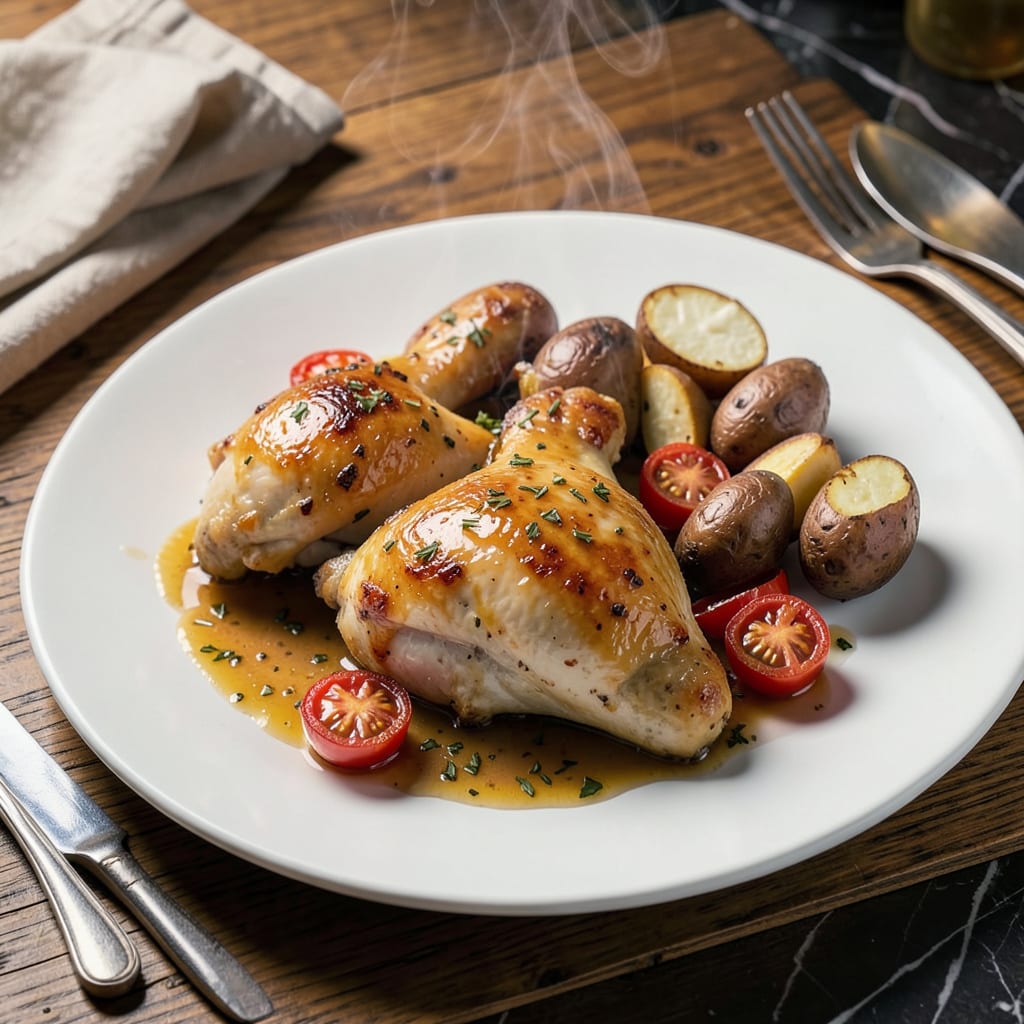
Boneless chicken thighs should cook for 12-15 minutes at 375°F (190°C) in an oven, 6-8 minutes per side on a stovetop, or until they reach 165°F (74°C) internally. Grilling takes 8-10 minutes per side over medium-high heat.
What sets boneless thighs apart is their forgiving nature—the extra fat keeps them juicy even if you overshoot the timing slightly. I always recommend using a meat thermometer for foolproof results, as color alone can be misleading with dark meat. 🔥 The key is pulling them off heat just as they hit that 165°F sweet spot, then letting them rest for 5 minutes to redistribute juices before serving.
Different methods yield different textures: oven-baking gives even cooking, while stovetop searing creates that coveted crispy exterior. For grilling, watch for flare-ups from the fat content—keep a spray bottle handy for quick control. ✨
💡 In This Article
- Why Internal Temperature Matters for Boneless Chicken Thighs
- Best Cooking Methods for Juicy Boneless Chicken Thighs
Why Internal Temperature Matters for Boneless Chicken Thighs
The USDA’s 165°F recommendation isn’t arbitrary—it’s the temperature where harmful bacteria like salmonella are instantly destroyed. Dark meat contains more myoglobin (the protein that gives it color) and connective tissue than white meat, which means it needs that precise heat level to break down collagen while staying juicy.
The fat content (about 10-12%) creates a buffer against dryness, but only if you don’t exceed the target temperature. 🔥
Here’s what happens at the cellular level: collagen melts into gelatin between 160-165°F, transforming tough fibers into tender, moist meat. Unlike breast meat that dries out quickly, thighs have intramuscular fat that renders slowly—this is why they can handle slightly longer cooking without becoming cardboard-like.
I’ve tested this with side-by-side comparisons: thighs cooked to 175°F were noticeably drier than those pulled at 165°F, though still edible.
The visual “no pink” rule fails with dark meat because myoglobin stays red even when fully cooked. That’s why color is unreliable—you might overcook waiting for it to turn white. A quality instant-read thermometer is your best tool, especially since thighs cook unevenly. Probe the thickest part, avoiding bone areas where heat conducts differently. ✨
Overcooking ruins texture despite the fat safety net. At 180°F+, muscle fibers contract violently, squeezing out moisture. The fat can’t compensate for this structural damage. I once left thighs in a 400°F oven for 25 minutes (distracted by phone calls)—they registered 190°F internally and had the texture of overworked chewing gum.
Even with marinades, temperature control is non-negotiable.
Pro tip: Carryover cooking adds about 5-10°F after removal from heat. This is why I pull thighs at 160-162°F when grilling or searing—they’ll coast to perfection while resting. The 5-minute rest isn’t just for juices; it lets the muscle fibers relax from heat-induced tension. 💫
- Collagen breakdown: Starts at 160°F, complete by 165°F
- Fat rendering point: Begins melting at 130°F, fully liquid by 160°F
- Danger zone: 40-140°F—thighs move through this quickly due to even heat distribution
The 165°F rule balances safety with quality. While some chefs argue for lower temps with sous vide, traditional methods need that threshold to ensure even doneness throughout the irregularly shaped pieces. Remember: dark meat’s forgiveness comes from fat, not magic—precision still matters. ⚡

- Jollof Rice Sauce Recipe: West African Tomato and Spice Infusion - September 25, 2026
- Japanese Rice Soup Recipe: Umami-Rich Comfort in a Bowl - September 25, 2026
- Homemade Cream Of Rice Recipe: Silk-Smooth Breakfast in Minutes - September 25, 2026