
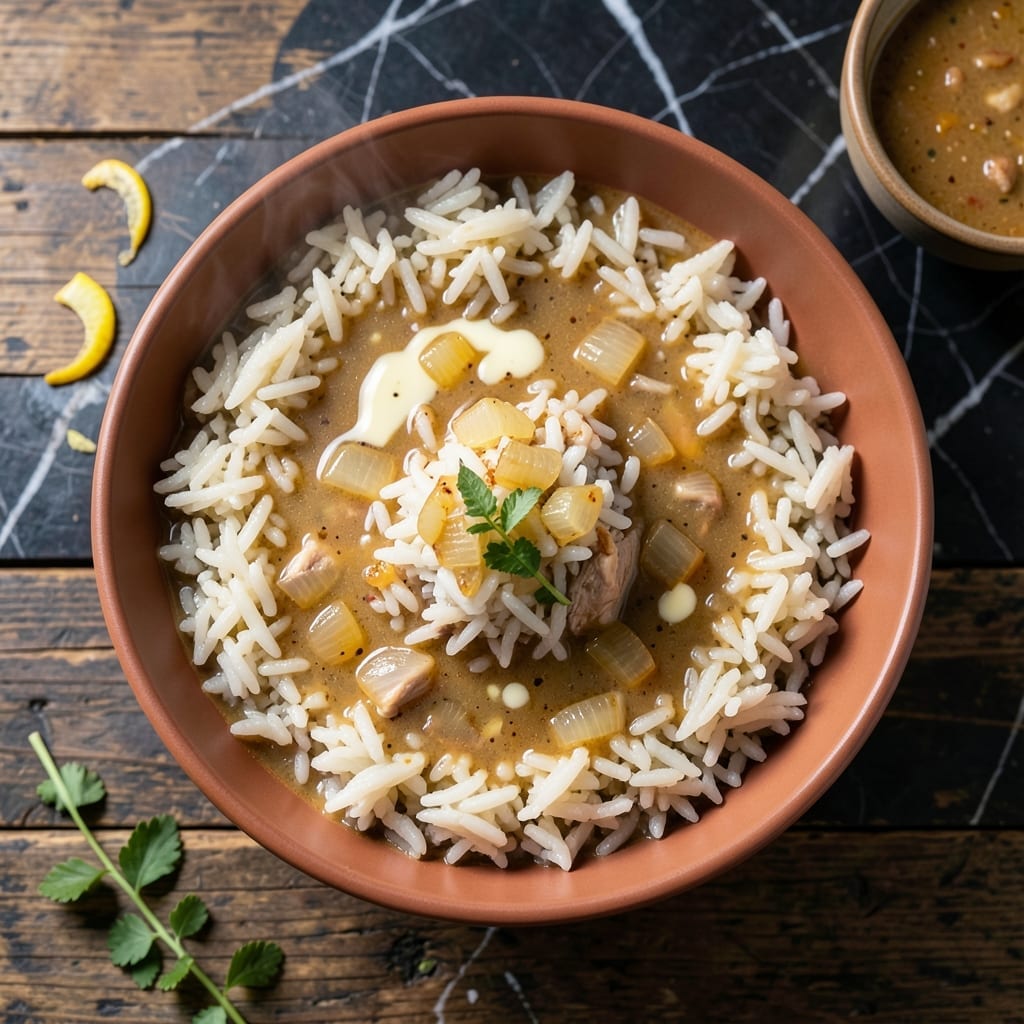
There’s a reason this broth-based recipe has stood the test of time. The combination of savory soup mix with perfectly cooked rice creates a dish that’s both comforting and effortless to prepare.
This method ensures every grain absorbs the rich, seasoned flavor without turning mushy. The key is precise timing and the right ratio of liquid to rice, which guarantees consistent results every time.
What you get is a bowl of tender, flavorful rice swimming in a warm, aromatic broth. It’s simple enough for a weeknight but satisfying enough for a cozy weekend meal.
Serve it as a light main dish or alongside your favorite protein. Here’s how to make it right.
Ingredients for Lipton Soup Rice
Pantry staples and a few fresh veggies deliver comforting, perfectly cooked grains every time.
| Ingredient | Amount | Notes |
|---|---|---|
| Long-Grain White Rice 🍚 | 1 ½ cups | Uncooked, rinsed thoroughly |
| Lipton Onion Soup Mix 🥣 | 1 package | 1.41 oz packet |
| Chicken Broth 🍲 | 4 cups | Low-sodium preferred |
| Water 💧 | 2 ½ cups | For adjusting consistency |
| Unsalted Butter 🧈 | 2 tbsp | For richness and depth |
| Yellow Onion 🧅 | 1 whole | Medium, finely diced |
| Garlic Cloves 🧄 | 3 cloves | Minced for aromatic base |
| Celery Stalks 🌿 | 2 pieces | Finely chopped for texture |
| Carrots 🥕 | 2 whole | Peeled and diced small |
| Dried Parsley 🌿 | 1 tsp | For garnish and color |
| Black Pepper 🌶️ | ½ tsp | Freshly ground preferred |
| Bay Leaf 🍃 | 1 whole | Optional for depth |
The soup mix is non-negotiable here—Lipton Onion is the classic, though their beef or vegetable versions work too. Grab it from any grocery store (it’s usually near the canned soups). For the broth, Swanson or College Inn are solid choices. The rice needs to be long-grain white (jasmine or basmati) for that fluffy, separate texture. Don’t swap in instant rice—it’ll turn to mush.
No chicken broth? Vegetable broth plus a pinch of poultry seasoning gets you close. Short on celery? Add a bit more onion for the aromatic base. Butter can be swapped for olive oil (use extra-virgin for best results). The veggies are flexible—mushrooms or bell peppers work if you’re out of carrots. Just keep the total volume similar.
Leftovers keep well for 4-5 days in the fridge. Reheat with a splash of water or broth to loosen the rice. Freezes okay for 3 months, though the texture changes slightly—best for soups or casseroles. Always rinse the rice first (don’t skip this part).
Why You’ll Love This Recipe
- One Pot Wonder: I just dump rice, soup mix, broth, and butter in a pot and walk away—no chopping, no fuss.
- Savory Comfort: That onion soup mix turns plain rice into something rich and deeply flavorful with zero effort.
- Meal Prep Hero: I make a big batch on Sunday and it reheats beautifully for quick lunches all week.
- Pantry Lifesaver: Five ingredients I always have on hand, and it costs pennies per serving. Honestly, it’s my emergency dinner.
Step-by-Step Instructions for Savory Broth With Perfectly Cooked Grains
Here’s the method that guarantees fluffy rice and rich, aromatic broth every time.
Step 1: Sauté the Aromatics for Depth
Heat a large pot or Dutch oven over medium heat. Add the 2 tbsp unsalted butter and let it melt, swirling to coat the bottom. Toss in the finely diced yellow onion, minced garlic cloves, chopped celery stalks, and diced carrots, stirring to combine.
Cook for 5-7 minutes until the onion turns translucent and the carrots begin to soften. This builds a flavor foundation that makes the dish taste deeply savory. Watch carefully—you want the vegetables to sweat, not brown.
Step 2: Toast the Rice and Soup Mix
Add the 1.5 cups long-grain white rice and 1 package Lipton Onion Soup Mix to the pot. Stir constantly for 1-2 minutes until the rice is fully coated and the soup mix begins to smell fragrant.
Toasting the rice in the fat and aromatics enhances its nutty flavor and prevents a starchy texture. The soup mix will start to cling to the grains—that’s exactly what you want. Don’t let it burn, but do let it develop color.
Step 3: Simmer in Broth and Water
Pour in the 4 cups chicken broth and 2.5 cups water, then add the bay leaf and 0.5 tsp black pepper. Stir well to distribute the rice and soup mix evenly. Bring the mixture to a boil over medium-high heat.
Once boiling, reduce the heat to low, cover the pot, and let it simmer for 18-20 minutes. You’ll know it’s ready when the liquid is mostly absorbed and the rice is tender. Resist the urge to stir—this keeps the grains intact.
Step 4: Rest and Finish
Remove the pot from heat and let it sit, covered, for 10 minutes. This resting period allows the rice to steam in its own residual heat, ensuring every grain is perfectly cooked. Fluff the rice gently with a fork to separate any clumps.
Discard the bay leaf, then sprinkle the 1 tsp dried parsley over the top for a pop of color and freshness. The rice should be light and fluffy, with a rich, savory broth that’s been fully absorbed. Serve warm and enjoy the comforting depth of flavor.
Pro Tips For Making Lipton Soup Rice
- Toast the Rice: Heat the rice in the butter for 2-3 minutes before adding liquids—it deepens the flavor and prevents a mushy texture.
- Use Full-Sodium Broth: Skip low-sodium chicken broth here; the Lipton mix needs the extra salt to balance its bold onion flavor.
- Resist the Stir: Once the rice starts simmering, don’t stir it—this breaks the grains and turns your dish into porridge.
- Rest 10 Minutes: After cooking, let the rice sit covered off the heat for a full 10 minutes so the steam finishes the job and the grains firm up.
Essential Equipment for lipton soup rice
Pot or Dutch Oven
A heavy-bottomed 5-6 quart pot or Dutch oven is ideal for even heat distribution. I use my enamel-coated cast iron from Lodge—it retains heat beautifully. Avoid thin pots that cause hot spots and burn the rice. 🔥
Wooden Spoon
Use a wooden spoon for stirring to prevent scratching your pot. It’s also gentle on the rice grains. I keep a 12-inch wooden spoon dedicated for soups and stews. It’s my go-to for any dish that needs gentle stirring.
Sharp Chef’s Knife
A good 8-inch chef’s knife makes quick work of dicing the onion, celery, and carrots. I recommend Victorinox Fibrox for its durability and comfort. A sharp knife is safer and more efficient than a dull one.
Cutting Board
Choose a large cutting board (at least 12×18 inches) to give yourself plenty of space for chopping. I prefer bamboo for its gentle surface and natural antimicrobial properties. It’s easy on your knives and your countertops.
Measuring Cups
Accurate measurements are key for the perfect rice-to-liquid ratio. Use a standard 1-cup measure for the rice and broth. I like the OXO Good Grips set—the handles are comfortable and the markings are clear. 💡
Fine Mesh Strainer
Rinsing the rice before cooking removes excess starch for fluffier grains. A fine mesh strainer from Cuisinox works perfectly. Rinse under cold water until the water runs clear, then shake off excess water before adding to the pot.
Nutrition Facts
Frequently Asked Questions
Can I use a different soup mix flavor?
Yes, beef or vegetable Lipton soup mixes work too. Each adds a unique twist—beef deepens the savory notes, while vegetable keeps it lighter. Adjust seasoning to taste.
What if my rice turns out mushy?
This usually means too much liquid or stirring during cooking. Stick to 1.5 cups rice and 6.5 cups total liquid, and avoid stirring once simmering begins.
How can I make this dish vegetarian?
Swap chicken broth for vegetable broth and use vegetable soup mix. Add mushrooms or tofu for extra protein. The flavor remains rich and satisfying.
Can I double the recipe?
Yes, but use a larger pot and increase cooking time slightly. Keep the rice-to-liquid ratio the same for best results.

- Somali Banana and Rice Recipe: Sweet and Spiced East African Tradition - September 25, 2026
- Rice Valenciana Recipe: Festive Saffron and Chicken One-Pan Feast - September 25, 2026
- Lipton Soup Rice Recipe: Savory Broth With Perfectly Cooked Grains - September 25, 2026