
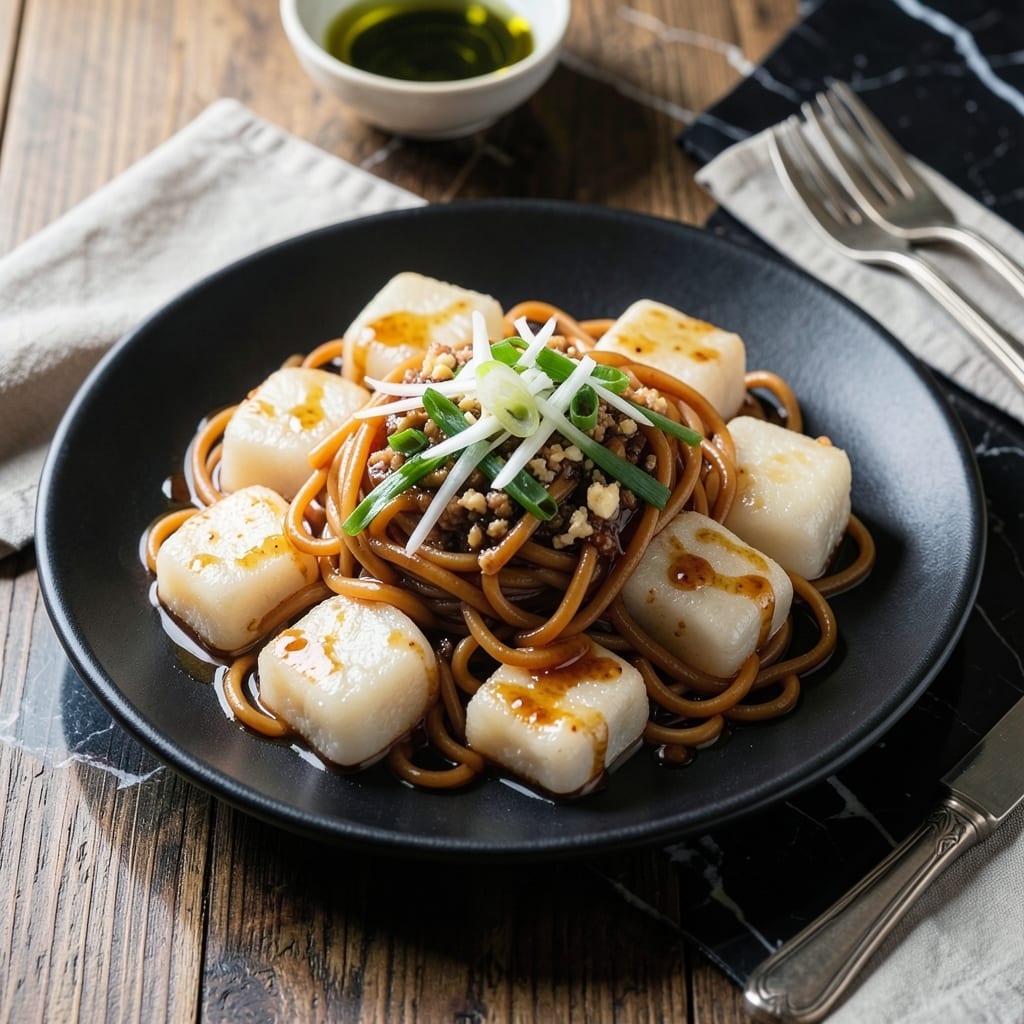
This dish brings together the best of Asian flavors with chewy rice cakes and tender noodles in perfect harmony. I developed this fusion recipe to satisfy cravings for something both comforting and exciting.
The secret lies in cooking the rice cakes just until they’re soft but still maintain their signature chew. Meanwhile, the noodles absorb the savory sauce, creating layers of texture that keep every bite interesting.
What you’ll get is a bowl where each component shines—rice cakes with a slight bounce, noodles that slurp beautifully, and a sauce that ties everything together with bold, balanced flavors.
Serve it hot, and watch it disappear. This is Asian-inspired comfort food at its finest.
Ingredients for Rice Cake and Noodles
Pantry raid plus a quick stop at the Asian market. Bold flavors, chewy textures await.
| Ingredient | Amount | Notes |
|---|---|---|
| Korean Rice Cakes 🍚 | 8 oz | Cylindrical, pre-soaked if hard |
| Fresh Udon Noodles 🍜 | 12 oz | Or substitute with thick wheat noodles |
| Soy Sauce 🫒 | ⅓ cup | Low-sodium preferred for balance |
| Gochujang 🌶️ | 2 tbsp | Korean chili paste for heat |
| Sesame Oil 🫒 | 1 tbsp | Toasted, for finishing aroma |
| Garlic Cloves 🧄 | 4 cloves | Minced for maximum flavor |
| Fresh Ginger 🌿 | 1 tbsp | Peeled and grated finely |
| Brown Sugar 🍚 | 2 tbsp | Balances the savory and spicy |
| Rice Vinegar 🍋 | 1 tbsp | Adds tangy brightness to sauce |
| Green Onions 🧅 | 4 whole | Thinly sliced for garnish |
| Sesame Seeds 🌾 | 1 tbsp | Toasted for garnish |
| Vegetable Oil 🫒 | 2 tbsp | Neutral flavor for cooking |
| Red Bell Pepper 🌶️ | 1 whole | Thinly sliced for color |
| Shiitake Mushrooms 🍄 | 4 whole | Fresh, sliced for umami |
The rice cakes are the star here. Look for the cylindrical kind at H Mart or Korean grocers—they’ve got that perfect chew. If they’re rock-hard, soak them in warm water for 10 minutes before cooking. The gochujang is non-negotiable though—Sempio or Chung Jung One are my go-tos. Udon noodles can be fresh or frozen (frozen actually holds up better in leftovers).
No gochujang? Sriracha plus a little miso paste gets you close, but the flavor won’t be as deep. Out of udon? Thick spaghetti or lo mein noodles work in a pinch. Fresh ginger is ideal but ground ginger at half the amount does the job. The shiitakes can be swapped for cremini—just don’t skip the mushrooms entirely (they soak up that sauce beautifully).
Leftovers keep 3-4 days in the fridge—reheat with a splash of water to bring back the chew. Freezes for 2 months (the rice cakes soften a bit, but still tasty). I always make extra sauce to pour over rice the next day.
Why You’ll Love This Recipe
- One Pot Wonder: I toss everything in a single pan—rice cakes, udon, and the sauce—and it’s done in 15 minutes.
- Umami Bomb: The gochujang and soy sauce create this deep, savory-sweet flavor that coats every bite.
- Meal Prep Hero: I make a big batch on Sunday and it tastes even better reheated for lunch the next day.
- Budget Friendly: Korean rice cakes and udon are cheap, and a little gochujang goes a long way.
Step-by-Step Instructions for Rice Cake and Noodles
This fusion dish comes together quickly with a few key techniques.
Step 1: Sauté Aromatics and Vegetables
Heat 2 tbsp vegetable oil in a large skillet or wok over medium-high heat. Add minced 4 cloves garlic cloves and 1 tbsp fresh ginger, stirring constantly for 30 seconds until fragrant but not browned.
Immediately add thinly sliced 1 whole red bell pepper and sliced 4 whole shiitake mushrooms. Cook for 4-5 minutes until the veggies soften and start to develop light golden edges. This builds the flavor foundation for your sauce.
Step 2: Build the Sauce Base
Reduce heat to medium and add 0.33 cup soy sauce, 2 tbsp gochujang, 2 tbsp brown sugar, and 1 tbsp rice vinegar. Whisk everything together until the brown sugar dissolves completely.
Let the sauce simmer for 2-3 minutes until it thickens slightly and the gochujang loses its raw edge. You’ll notice the mixture becoming glossy and slightly syrupy—that’s when you know it’s ready for the next step.
Step 3: Cook the Rice Cakes and Noodles
Add the 8 oz Korean rice cakes to the skillet first, stirring to coat them in the sauce. Cook for 3-4 minutes until they begin to soften and plump up. I like to press them gently with my spatula to help them absorb the flavors.
Add the 12 oz fresh udon noodles and toss everything together. Cook for another 2-3 minutes until the noodles are heated through and the rice cakes are chewy but tender. If the mixture seems dry, add a splash of water.
Step 4: Finish and Garnish
Remove from heat and drizzle with 1 tbsp sesame oil, tossing to distribute. The sesame oil adds a nutty aroma that brings all the flavors together. Taste and adjust seasoning if needed—sometimes I add a pinch more brown sugar if it needs balance.
Transfer to serving plates and top with thinly sliced 4 whole green onions and 1 tbsp sesame seeds. The green onions add freshness while the sesame seeds give a satisfying crunch. Serve immediately while hot.
Pro Tips For Making Rice Cake And Noodles
- Boil Rice Cakes First: Soak Korean rice cakes in hot water for 5-10 minutes before cooking—I learned this the hard way after ending up with rock-hard pieces in my stir-fry.
- Parboil Udon Noodles: Fresh udon noodles need just 30-45 seconds in boiling water to soften before stir-frying; skip this and they’ll stay gummy and undercooked.
- Bloom Gochujang: Heat gochujang in a bit of sesame oil for 1-2 minutes before adding other ingredients—it deepens the flavor and removes the raw bite.
- Use Cold Noodles: Rinse parboiled udon under cold water to stop cooking and prevent clumping; it also helps them absorb the sauce better when stir-fried.
Dietary Considerations for rice cake and noodles
Gluten-Free Adaptation
Swap the udon noodles for 12 oz rice noodles or sweet potato starch noodles to make this dish gluten-free. The rice cakes are naturally gluten-free, but always check the packaging for cross-contamination warnings. I love using Thai Kitchen rice noodles for this variation. 💡
Vegetarian Version
Replace the soy sauce with tamari (which is gluten-free and often vegetarian) and add 8 oz tofu or 1 cup edamame for protein. The shiitake mushrooms already add a meaty texture, so you won’t miss the animal products. Honestly, this version tastes just as satisfying.
Low-Sodium Option
Use low-sodium soy sauce and reduce the amount by half. Boost flavor with additional garlic, ginger, and a splash of rice vinegar to compensate. This keeps the dish flavorful without the excessive salt. I often do this when cooking for guests watching their sodium intake.
Vegan Adjustments
Ensure the rice cakes and udon noodles are egg-free—most are, but verify. Use maple syrup instead of brown sugar and vegan gochujang (some brands use fish sauce). The dish remains just as rich and complex without any animal products.
Spice Level Control
For a milder version, reduce the gochujang to 1 tbsp or omit it entirely. For extra heat, add 1 tsp gochugaru (Korean chili flakes) or a dash of Sriracha. Adjusting the spice level is easy and lets everyone enjoy this meal. 🌶️
Allergen Notes
This dish contains gluten (from udon noodles and soy sauce) and sesame. For sesame-free, skip the sesame oil and seeds, and use a neutral oil instead. Always check rice cake packaging for potential allergens like wheat or soy.
Nutrition Facts
Frequently Asked Questions
Can I use dried rice cakes instead of fresh?
Yes, but soak dried rice cakes in warm water for 15-20 minutes first. This prevents them from staying hard during cooking. Drain well before adding to the pan.
What if my sauce is too thick?
Thin it with 1-2 tbsp water or broth while simmering. The sauce should coat the back of a spoon but still flow easily. Adjust as needed before adding noodles.
How do I prevent the noodles from sticking?
Cook them separately first, then add to the sauce. Toss frequently during cooking and use high heat for 1-2 minutes to keep them moving.
Can this be made ahead?
Yes! Cook and store components separately in the fridge for up to 2 days. Reheat the sauce gently, then add rice cakes and noodles to warm through.

- Jollof Rice Sauce Recipe: West African Tomato and Spice Infusion - September 25, 2026
- Japanese Rice Soup Recipe: Umami-Rich Comfort in a Bowl - September 25, 2026
- Homemade Cream Of Rice Recipe: Silk-Smooth Breakfast in Minutes - September 25, 2026