
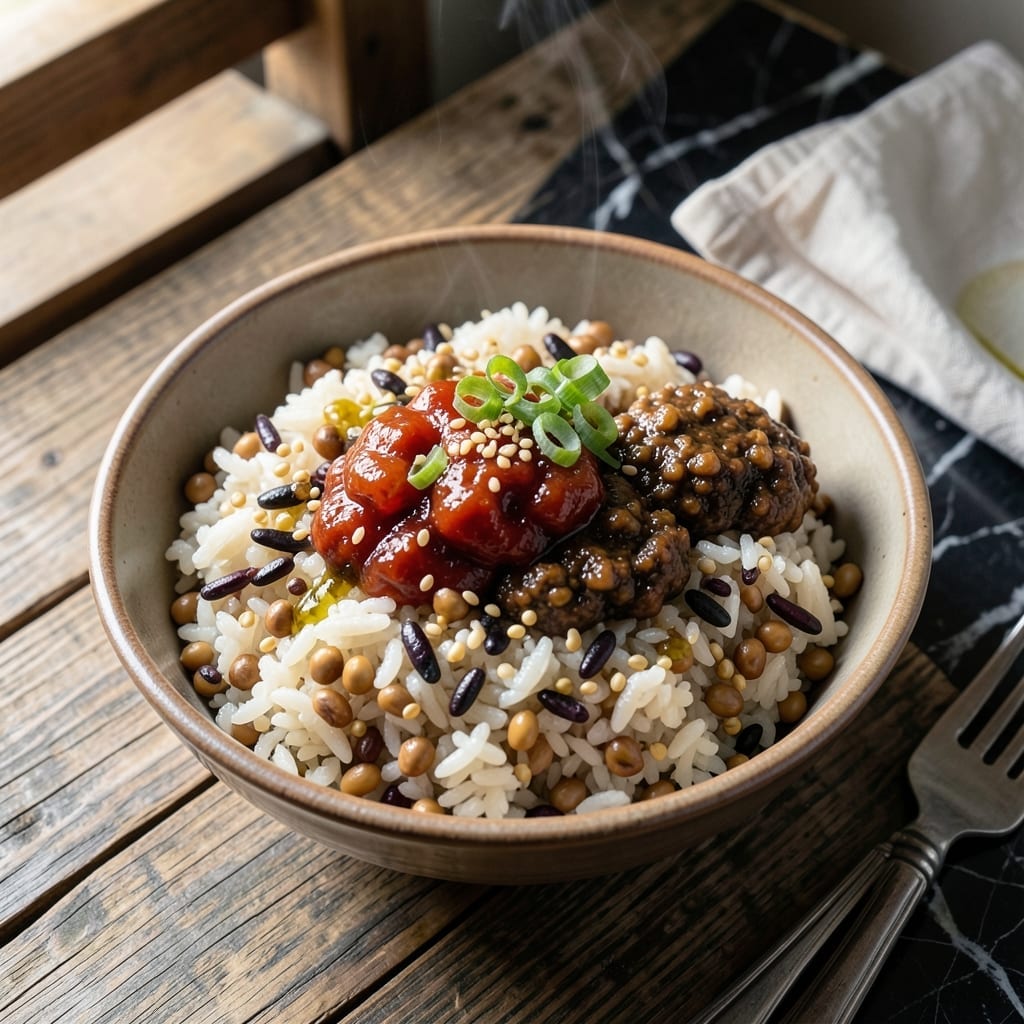
This mixed grain rice blends traditional Korean staples like barley, millet, and black rice into a dish with nutty depth and satisfying texture. The combination of grains creates a complex flavor profile that’s both hearty and aromatic.
I’ve perfected the ratios to ensure each grain cooks evenly, whether you use a rice cooker or stovetop. Soaking the grains beforehand is key—it softens them and reduces cooking time while preserving their natural flavors.
The result is a bowl of rice with chewy, fluffy, and slightly sticky textures in every bite. Fermented spice, like gochujang or doenjang, adds a subtle kick that complements the grains beautifully.
Serve it as a base for stews, grilled meats, or enjoy it plain with a drizzle of sesame oil. This dish is versatile, nourishing, and deeply rooted in Korean tradition.
Ingredients for Korean Mixed Grain Rice
Traditional Korean grains come together for a bowl with texture and depth beyond plain rice.
| Ingredient | Amount | Notes |
|---|---|---|
| Short-Grain White Rice 🍚 | 1 ½ cups | Rinsed until water runs clear |
| Barley 🌾 | ½ cup | Pearl or hull-less variety |
| Millet 🌾 | ½ cup | White or yellow preferred |
| Black Rice 🍚 | ¼ cup | Rinsed thoroughly to remove excess starch |
| Gochujang 🌶️ | 1 tbsp | Korean fermented chili paste |
| Doenjang 🟤 | ½ tbsp | Optional for deeper umami |
| Sesame Oil 🫒 | 1 tbsp | Toasted for serving drizzle |
| Vegetable Broth 🥕 | 3 ½ cups | Low-sodium preferred for balance |
| Garlic Cloves 🧄 | 3 cloves | Minced for aromatic base |
| Green Onions 🧅 | 4 whole | Thinly sliced for garnish |
| Sesame Seeds 🌰 | 1 tbsp | Toasted for nutty crunch |
| Sea Salt 🧂 | ½ tsp | Adjust to taste at end |
| Neutral Oil 🫒 | 1 tbsp | For sautéing aromatics |
The grains are the foundation here. H Mart or Korean grocery stores will have the best selection of short-grain rice, barley, and black rice. Look for barley labeled as ‘pearl’ or ‘hull-less’ for faster cooking. Black rice can be found in the specialty rice section (often called ‘forbidden rice’). Soaking all grains for at least 30 minutes ensures even cooking and better texture.
No gochujang? Miso paste plus a pinch of chili flakes works in a pinch. Doenjang can be skipped if you’re sensitive to soy (substitute with white miso for similar depth). For the grains, quinoa can replace millet at a 1:1 ratio, but the texture will be slightly different. Always rinse black rice until the water runs clear—it prevents a gummy result.
Cooked rice keeps well in the fridge for 4-5 days and freezes beautifully for up to 3 months. Store in airtight containers to maintain freshness. Reheat with a splash of water or broth to restore moisture. The fermented pastes (gochujang, doenjang) last 1 year in the fridge once opened.
Why You’ll Love This Recipe
- One Pot Meal: I just toss all the grains in my rice cooker with water and walk away—barley, millet, and black rice cook together like magic.
- Deep Umami Flavor: The gochujang adds a smoky-sweet kick that makes every bite of the chewy mixed grains irresistible.
- Meal Prep Hero: I make a big batch on Sunday and it reheats perfectly for lunches all week—no mushy texture, just hearty goodness.
- Budget Stretcher: A little goes a long way with these grains. Honestly, it’s cheaper than plain rice and way more satisfying.
Step-by-Step Instructions for Korean Mixed Grain Rice
This method ensures perfectly cooked grains with a nutty depth and subtle fermented spice.
Step 1: Rinse and Prepare the Grains
Place the 1.5 cups Short-Grain White Rice, 0.5 cup Barley, 0.5 cup Millet, and 0.25 cup Black Rice in a fine-mesh strainer. Rinse under cold running water, agitating with your hands, until the water runs completely clear. This removes excess starch, preventing a gummy texture.
I find that black rice releases the most starch, sorinse it separately if needed. Drain well and let the grains sit in the strainer for 5 minutes to remove any lingering moisture. Proper rinsing is non-negotiable—it’s the foundation for fluffy, distinct grains.
Step 2: Sauté the Aromatics
Heat the 1 tbsp Neutral Oil in a medium saucepan or rice cooker over medium heat. Add the minced 3 cloves Garlic Cloves and sauté for 30-45 seconds until fragrant but not browned. Garlic burns easily, so keep it moving—you want its aroma to infuse the oil without bitterness.
Stir in the 1 tbsp Gochujang and 0.5 tbsp Doenjang, cooking for another 1 minute to deepen their flavors. The doenjang will darken slightly, and the mixture should smell rich and slightly spicy. This step builds the umami backbone of your dish.
Step 3: Toast the Grains and Add Liquids
Add the rinsed and drained grains to the saucepan, stirring to coat them in the aromatic oil and paste mixture. Toast for 2-3 minutes until the grains appear slightly translucent at the edges and emit a nutty fragrance. This toasting step enhances the natural flavors of each grain.
Pour in the 3.5 cups Vegetable Broth and add the 0.5 tsp Sea Salt. Stir well to distribute the grains evenly and ensure none are clumped together. The liquid should cover the grains by about ½ inch.
Step 4: Cook Until Tender
Bring the mixture to a boil over high heat, then reduce to low heat, cover, and simmer for 40-45 minutes. Resist the urge to lift the lid—steam is crucial for even cooking. You’ll know it’s ready when the liquid is fully absorbed and the grains are tender with a slight chew.
If using a rice cooker, select the mixed grain or porridge setting and let it run its full cycle. The barley and millet will take longer to soften than the rice, so the extended cook time ensures everything finishes perfectly.
Step 5: Rest and Garnish
Remove from heat and let the rice rest, covered, for 10 minutes. This allows the grains to steam and absorb any remaining moisture, resulting in a more cohesive texture. Fluff gently with a fork to separate the grains without mashing them.
Drizzle with the 1 tbsp Sesame Oil and sprinkle with the thinly sliced 4 whole Green Onions and toasted 1 tbsp Sesame Seeds. The sesame oil adds a final layer of fragrance, while the green onions and seeds provide freshness and crunch.
Pro Tips For Making Korean Mixed Grain Rice
- Soak the Grains: I learned this the hard way—soak barley, millet, and black rice for at least 30 minutes before cooking. It cuts the cooking time and prevents that unpleasant crunch in your mixed grain rice.
- Rinse the Black Rice: Black rice bleeds a lot, so rinse it in cold water until the water runs clear. Otherwise, your final dish will look gray instead of that beautiful speckled purple.
- Use a Heavy Pot: After burning two batches, I finally figured out that a heavy-bottomed pot keeps the heat even and stops the grains from sticking. Thin pots just don’t cut it here.
- Add Gochujang Last: Sounds weird, but it works: stir in the gochujang after the rice is cooked instead of mixing it in at the start. This keeps the spicy depth without making the grains mushy.
Perfect Pairings for korean mixed grain rice
Protein Pairings
Grilled bulgogi beef is my top choice—the sweet-savory marinade pairs perfectly with the nutty grains. Thinly slice 1 lb ribeye and marinate for 4+ hours in soy, sugar, pear, and garlic. The beef’s caramelized edges complement the rice’s texture beautifully. 💛
Seafood Options
Try spicy grilled shrimp tossed with 1 tbsp gochujang and 1 tsp honey. The shrimp’s smoky char and the rice’s earthy notes create a balanced bite. For a lighter option, pan-seared salmon with a soy-glaze works wonderfully.
Vegetable Sides
Kongnamul muchim (seasoned soybean sprouts) adds a refreshing crunch. Toss 2 cups sprouts with 1 tsp sesame oil, ½ tsp salt, and 1 minced garlic clove. Roasted zucchini or eggplant also pair nicely.
Soup Complements
A steaming bowl of doenjang jjigae (soybean paste stew) alongside this rice makes a hearty meal. The stew’s deep umami flavors soak into the grains beautifully. For a lighter option, miso soup with tofu and scallions works well too. 🥗
Kimchi and Banchan
Serve with napa cabbage kimchi for a tangy contrast that cuts through the rice’s richness. Other banchan like spinach namul or pickled radish add color and variety. I always include at least 2-3 banchan for a complete meal.
Breakfast Twist
Top leftover rice with a fried egg, 1 tbsp gochujang, and a sprinkle of sesame seeds for a Korean-inspired breakfast. The runny yolk mixes into the grains, creating a creamy, spicy start to your day. Add furikake for extra umami.
Nutrition Facts
Frequently Asked Questions
How long should I soak the grains before cooking?
Soak for at least 30 minutes to soften the grains and ensure even cooking. For best texture, 1-2 hours works even better, especially for barley and black rice. Drain well before using.
Can I make this in a rice cooker?
Yes! Use the mixed grain or porridge setting. Add all ingredients as directed and let it run the full cycle. The extended cook time ensures barley and millet soften properly.
What if my rice turns out gummy?
This usually means the grains weren’t rinsed enough or the ratio of liquid was too high. Next time, rinse until water runs clear and reduce broth by ¼ cup. Fluff with a fork after cooking.
Can I substitute quinoa for millet?
Use a 1:1 ratio. Quinoa has a similar cook time to millet and adds a nice texture. Just rinse it well first to remove its natural bitterness.

- Mujadara Rice and Lentils Recipe: Earthy Spiced Lentils With Caramelized Onions - November 1, 2026
- Naija Fried Rice Recipe: Street-Style Spice With Veggie Crunch - November 1, 2026
- Mushy Rice Recipe: Fluffy Grains Transformed in Minutes - November 1, 2026