
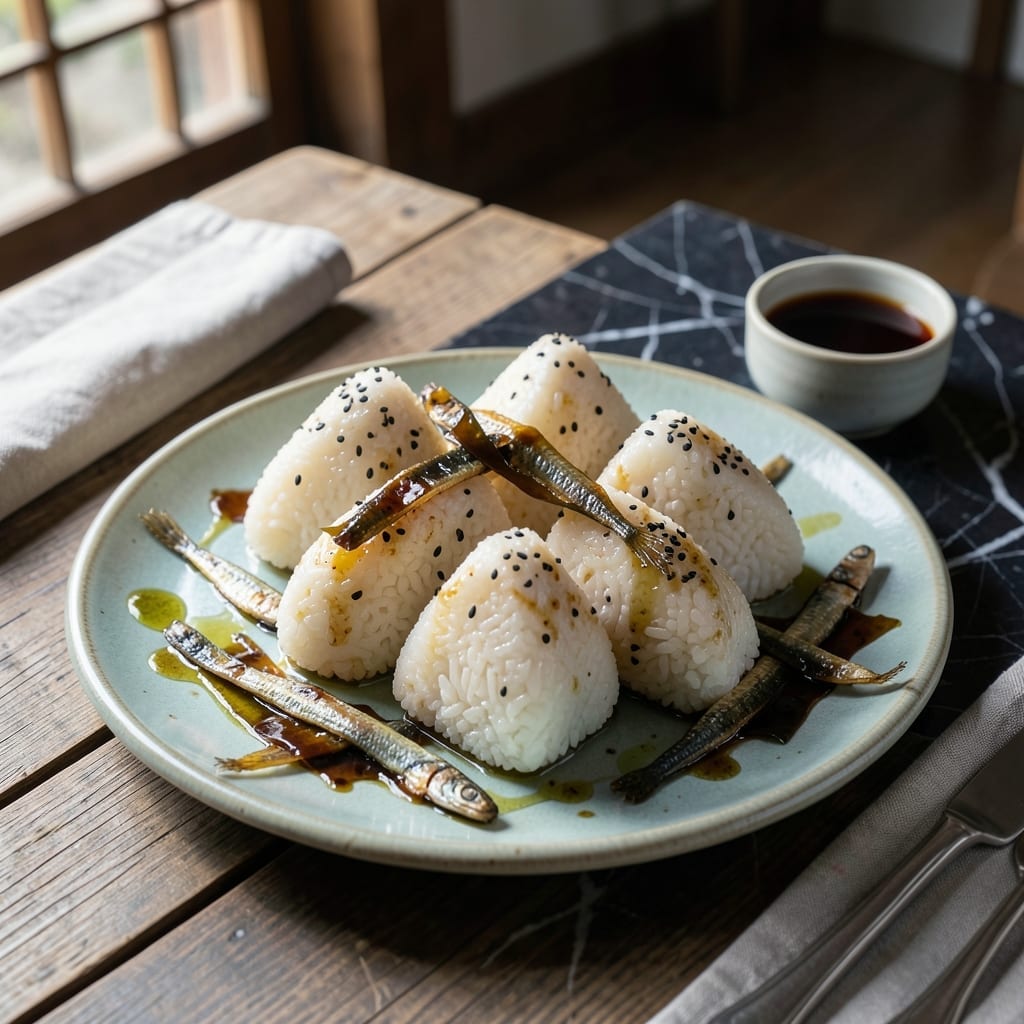
This recipe transforms humble ingredients into umami-packed bites that capture the essence of Korean home cooking. The secret lies in the anchovy broth, which infuses every grain of rice with deep, savory richness.
I’ve refined this method to ensure the rice balls hold their shape while delivering maximum flavor. The nutty depth comes from toasted sesame seeds and a touch of soy sauce, balancing the anchovy’s briny punch.
Each bite offers a perfect harmony of textures—soft rice with a slight chew, punctuated by the subtle crunch of sesame. The flavors are bold yet comforting, making these ideal as a side or light meal.
With simple pantry staples and minimal effort, you’ll create a dish that tastes like it came from a Seoul kitchen. Here’s how to make these addictive rice balls at home.
Ingredients for Korean Anchovy Rice Ball
Simple pantry staples create these Korean rice balls with rich, savory depth.
| Ingredient | Amount | Notes |
|---|---|---|
| Short-Grain White Rice 🍚 | 2 cups | Rinsed until water runs clear |
| Dried Anchovies 🐟 | 10 whole | Heads and guts removed |
| Kelp 🌿 | 1 piece | 4-inch square for broth |
| Soy Sauce 🫒 | 2 tbsp | Low-sodium preferred |
| Sesame Oil 🫒 | 1 tbsp | Toasted for nutty flavor |
| Sesame Seeds 🌰 | 2 tbsp | Toasted until golden |
| Green Onions 🧅 | 3 whole | Thinly sliced for garnish |
| Garlic Cloves 🧄 | 2 cloves | Minced finely |
| Salt 🧂 | ½ tsp | Adjust to taste |
| Black Pepper 🌶️ | ¼ tsp | Freshly ground preferred |
| Red Pepper Flakes 🌶️ | ½ tsp | Optional for heat |
| Water 💧 | 4 cups | For cooking rice and broth |
The anchovies are non-negotiable for authentic flavor. Look for dried Korean anchovies (myulchi) at H Mart or Asian grocery stores—they’re smaller and more flavorful than Mediterranean varieties. The kelp adds umami depth to the broth; any seaweed works but kombu is ideal. Short-grain rice is essential (jasmine won’t hold shape). Sushi rice or calrose are perfect, just rinse well to remove excess starch.
No anchovies? Dashi powder at half the amount works in a pinch, though the flavor profile shifts slightly. Vegetarian? Use shiitake mushroom stems for the broth instead. For the sesame, toasting your own seeds (30 seconds in a dry pan) beats pre-toasted every time. The soy sauce can be regular if you don’t have low-sodium—just reduce the added salt. Green onions can be swapped for chives if that’s what’s growing in your garden.
Rice balls are best eaten fresh but will keep in the fridge for 2 days in an airtight container. The broth components (anchovies, kelp) can be stored in a cool, dark place for up to 6 months. Reheat the rice balls gently in the microwave, covered, with a damp paper towel to retain moisture.
Why You’ll Love This Recipe
- One-Pot Wonder: I just toss the rice, anchovies, and kelp in the rice cooker—no extra pots to wash.
- Umami Bomb: The dried anchovies and kelp infuse the rice with that deep, savory Korean flavor I crave.
- Lunchbox Hero: These rice balls stay fresh for days, and my kids actually eat them cold from their lunchboxes.
- Pantry MVP: Between us, a bag of dried anchovies and kelp costs pennies but makes this taste like a restaurant meal.
Step-by-Step Instructions for Korean Anchovy Rice Balls
This method transforms simple ingredients into flavorful, portable bites with authentic Korean taste.
Step 1: Prepare the Anchovy-Kelp Broth
In a medium saucepan, combine the 4 cups water, 10 whole dried anchovies, and 1 piece kelp. I always remove the heads and guts from the anchovies first—this gives a cleaner, more refined broth. Bring to a gentle simmer over medium-high heat.
Simmer uncovered for 15-20 minutes until the broth develops a light golden color and rich umami aroma. You’ll notice the anchovies plump slightly as they release their flavor. Strain the broth through a fine-mesh sieve, discarding the solids. This clear, fragrant broth will infuse your rice with depth.
Step 2: Cook the Rice with Broth
Rinse the 2 cups short-grain white rice under cold water until the water runs completely clear. This removes excess starch and prevents gummy rice. Drain well in a fine-mesh strainer.
In a rice cooker or heavy pot, combine the rinsed rice, prepared anchovy broth, and 0.5 tsp salt. Cook according to standard rice cooker instructions or bring to a boil, then reduce to low heat, cover, and simmer for 15 minutes. Let it rest covered for 10 minutes after cooking—the steam finishes the process perfectly.
Step 3: Season the Rice Base
Transfer the warm rice to a large bowl. Add the 2 tbsp soy sauce, 1 tbsp sesame oil, 2 cloves minced garlic cloves, 0.25 tsp black pepper, and 0.5 tsp red pepper flakes. I mince the garlic finely so it distributes evenly throughout the rice.
Gently fold everything together with a rice paddle or silicone spatula until the rice is evenly coated and takes on a glossy appearance. The rice should be sticky enough to hold its shape when pressed. Taste and adjust seasoning if needed—the soy sauce should provide a noticeable but balanced saltiness.
Step 4: Form and Finish the Rice Balls
With slightly damp hands (to prevent sticking), take about ¼ cup of the seasoned rice and press it firmly into a triangular shape. I find that pressing with my thumb in the center creates the classic rice ball indentation. The rice should hold together easily but not be overly compact.
Roll each formed rice ball in the 2 tbsp sesame seeds to coat evenly. The seeds will stick best to the warm rice. Arrange on a serving platter and garnish with the 3 whole thinly sliced green onions scattered on top. Serve immediately while warm, or let cool to room temperature for packing in bento boxes.
Pro Tips For Making Korean Anchovy Rice Ball
- Rinse Rice Thoroughly: Wash the short-grain rice until the water runs clear—this removes excess starch so your rice balls hold their shape without turning gummy.
- Toast Anchovies First: Dry-toast the anchovies in a pan for 1-2 minutes before simmering with kelp to deepen their umami flavor, or you’ll end up with a flat broth.
- Cool Rice Completely: I learned this the hard way—shape the rice balls only after it’s fully cooled, or they’ll fall apart in your hands.
- Drizzle Sesame Last: Add the sesame oil just before serving, not during mixing, to keep its aroma bright and prevent it from soaking in too much.
Flavor Customization for These Flavors
Spicy Kick
For heat lovers, increase the red pepper flakes to 1 tsp or add 1 tbsp gochugaru (Korean chili flakes) to the rice mixture. This gives a vibrant red color and moderate spice that builds with each bite.
Extra Umami
Boost the savory depth by stirring in 1 tbsp fish sauce or 1 tsp anchovy paste along with the soy sauce. I also love adding 1 tsp toasted gim (dried seaweed) flakes for a briny, oceanic note.
Cheesy Twist
Kids adore this variation: press a small cube of mozzarella cheese into the center of each rice ball before shaping. The gooey surprise inside pairs wonderfully with the anchovy’s saltiness. Use low-moisture mozzarella for best results.
Herb Freshness
Swap the green onions for 2 tbsp chopped cilantro or 1 tbsp minced perilla leaves for a brighter, more aromatic finish. These herbs add a fresh contrast to the rich, savory rice. 🌱
Nutty Crunch
Replace half the sesame seeds with 2 tbsp crushed roasted peanuts or slivered almonds for extra texture. The nutty crunch complements the soft rice beautifully. Toast the nuts first for maximum flavor.
Citrus Zing
Add 1 tsp lime zest or 1 tbsp fresh lemon juice to the rice mixture for a subtle citrus brightness. This cuts through the richness and adds a refreshing note that wakes up all the flavors. 💫
Nutrition Facts
Frequently Asked Questions
Can I use fresh anchovies instead of dried?
Dried anchovies are essential for the authentic flavor and broth depth. Fresh anchovies have a different taste profile and texture that won’t work as well. Stick with dried Korean anchovies for the best results.
What if my rice balls fall apart when shaping?
Use slightly damp hands and press firmly but gently. If they still crumble, your rice might be too dry. Let it cool for 5 minutes after cooking to achieve the perfect sticky consistency.
How do I store leftovers?
Keep in an airtight container in the fridge for up to 2 days. Reheat gently in the microwave with a damp paper towel to maintain moisture. Avoid freezing as it alters the texture.

- Mujadara Rice and Lentils Recipe: Earthy Spiced Lentils With Caramelized Onions - November 1, 2026
- Naija Fried Rice Recipe: Street-Style Spice With Veggie Crunch - November 1, 2026
- Mushy Rice Recipe: Fluffy Grains Transformed in Minutes - November 1, 2026