
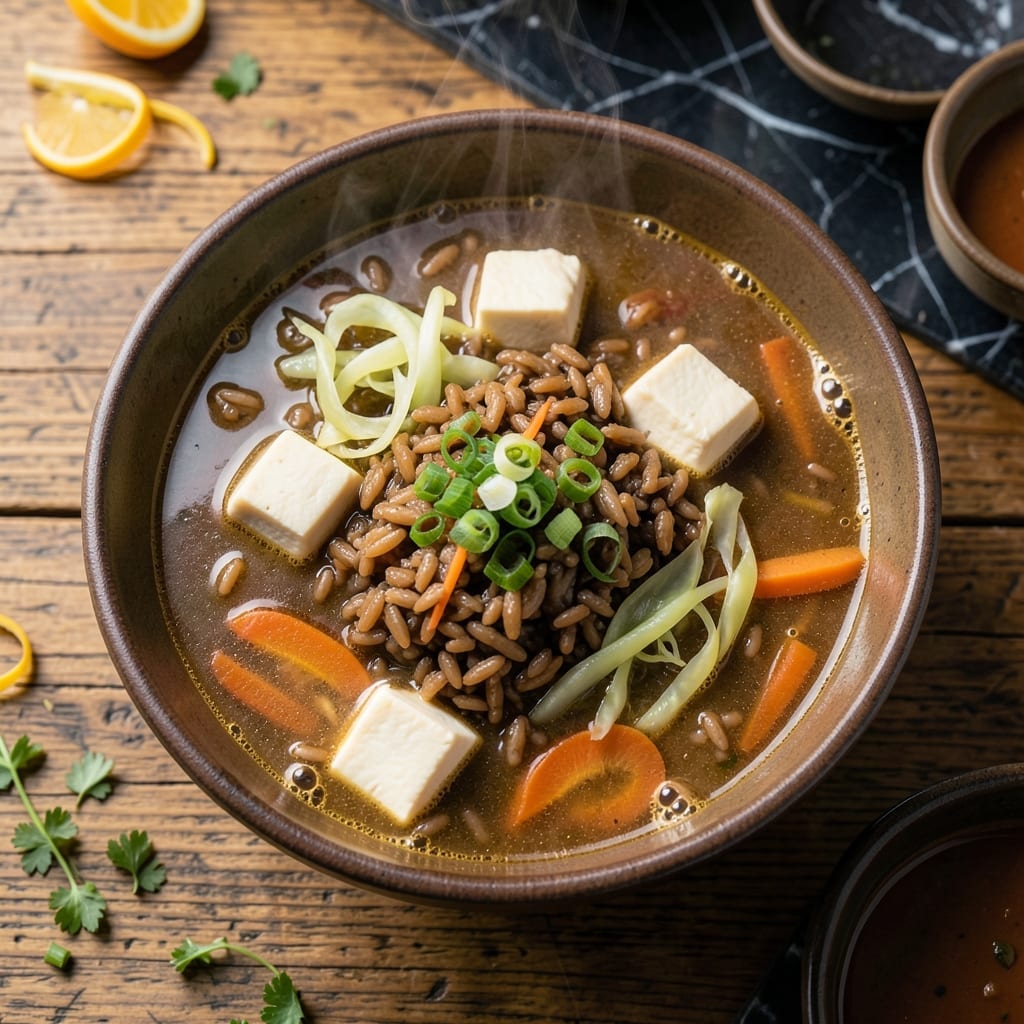
This traditional Japanese soup gets a wholesome twist with the addition of nutty brown rice. The key is using authentic miso paste and quality dashi to build layers of umami flavor. Each spoonful delivers comforting warmth with perfectly cooked grains.
The beauty of this recipe lies in its simplicity. Just a few ingredients come together to create a light yet satisfying dish that’s naturally vegan and packed with protein. The brown rice adds chewy texture that makes it heartier than classic versions.
Ingredients for Brown Rice Miso Soup
Authentic Japanese ingredients meet nutty brown rice for a comforting, umami-packed bowl with minimal effort.
| Ingredient | Amount | Notes |
|---|---|---|
| Brown Rice 🍚 | 1 cup | Short-grain preferred for texture |
| White Miso Paste 🥣 | ⅓ cup | Authentic fermented, unpasteurized |
| Dashi Stock 🍲 | 6 cups | Kombu-based for vegan version |
| Silken Tofu 🧈 | 14 oz | Firm or extra-firm, drained |
| Scallions 🧅 | 4 whole | Thinly sliced for garnish |
| Carrots 🥕 | 2 whole | Julienned or thinly sliced |
| Napa Cabbage 🥬 | 2 cups | Thinly sliced, packed |
| Fresh Ginger 🌿 | 1 tbsp | Peeled and finely grated |
| Garlic Cloves 🧄 | 3 cloves | Minced for depth of flavor |
| Soy Sauce 🫒 | 2 tbsp | Low-sodium for balance |
| Mirin 🍶 | 1 tbsp | Sweet rice wine for umami |
| Sesame Oil 🫒 | 1 tsp | Toasted, for finishing |
| Wakame Seaweed 🌊 | ¼ oz | Dried, rehydrated |
The miso paste is non-negotiable for authentic flavor—Miso Master or South River Miso are excellent brands. Dashi must be kombu-based (not bonito) for vegan authenticity; Kallo Organic is widely available. Brown rice adds chew, so short-grain varieties like Lundberg work best. Look for fresh tofu at Whole Foods or Asian markets, and avoid the shelf-stable kind for this application.
No mirin? Substitute 1 tsp sugar plus 1 tbsp rice vinegar. Fresh ginger is key—powdered lacks the brightness. For the seaweed, dried wakame at any Asian grocer rehydrates in minutes. If napa cabbage is unavailable, bok choy or regular cabbage work in a pinch. The soy sauce can be tamari for gluten-free needs, but adjust salt levels accordingly.
Miso paste keeps 1 year refrigerated in an airtight container. Dashi stock freezes beautifully for 3 months. Cooked rice and tofu are best used fresh, though leftovers hold 3-4 days refrigerated. Always add miso to warm (not boiling) liquid to preserve its probiotics.
Why You’ll Love This Recipe
- One Pot Wonder: Honestly, I just dump the brown rice, miso, and dashi in a pot—no fancy steps, no stress.
- Umami Bomb: That first sip with the silken tofu and scallions? Ridiculously good, like a warm hug in a bowl.
- Meal Prep Hero: I make a big batch Sunday and it’s my lunch all week—tastes even better the next day.
- Budget Friendly: A block of tofu, a handful of rice, and pantry staples feed us for days without breaking the bank.
Step-by-Step Instructions for Brown Rice Miso Soup
Master this traditional technique to create a deeply flavorful broth with perfectly cooked grains.
Step 1: Prepare the Vegetables and Tofu
Thinly slice the 2 whole carrots into matchsticks or half-moons for even cooking. Cut the 2 cups napa cabbage into thin ribbons, discarding any tough outer leaves. Drain the 14 oz silken tofu and cut it into ½-inch cubes—this size holds up well in the broth.
Peel and finely grate the 1 tbsp fresh ginger using a microplane, then mince the 3 cloves garlic cloves. Thinly slice the 4 whole scallions, separating the white and green parts. Rehydrate the 0.25 oz wakame seaweed in warm water for 5 minutes until softened.
Step 2: Cook the Brown Rice Separately
Rinse the 1 cup brown rice under cold water until the water runs clear to remove excess starch. Combine it with 2 cups water in a small pot and bring to a boil. Once boiling, reduce heat to low, cover, and simmer for 40-45 minutes until the grains are tender and the water is absorbed.
This separate cooking ensures the rice retains its nutty texture without turning mushy in the soup. Once done, fluff the rice with a fork and set aside. The rice will absorb additional liquid later, so don’t overcook it at this stage.
Step 3: Build the Broth Base
In a large pot, heat the 6 cups dashi stock over medium-high heat until it reaches a gentle simmer. Add the grated ginger and minced garlic, then simmer for 5 minutes to infuse the broth with aromatic depth. Stir in the sliced carrots and cook for 3-4 minutes until they begin to soften.
Add the napa cabbage and rehydrated wakame seaweed, then simmer for another 2 minutes. The vegetables should be tender but still vibrant. Avoid boiling vigorously, as this can make the broth cloudy and the tofu break apart.
Step 4: Incorporate the Miso and Finish
Reduce heat to low and add the 0.33 cup white miso paste to a ladle, then dip it into the broth to dissolve smoothly. Stir gently to avoid lumps. Add the 2 tbsp soy sauce and 1 tbsp mirin, then taste and adjust seasoning if needed.
Carefully fold in the cooked brown rice and silken tofu cubes, warming through for 1-2 minutes. The miso should never boil after adding, as this dulls its delicate flavor. Turn off the heat and stir in the 1 tsp sesame oil for a subtle nutty finish.
Step 5: Garnish and Serve
Ladle the soup into bowls and garnish with the sliced scallions. Serve immediately while hot, ensuring each portion includes a mix of rice, tofu, and vegetables. The soup should have a balanced umami richness with a slight sweetness from the mirin and a lingering ginger warmth.
The brown rice adds a hearty, chewy texture that contrasts beautifully with the silky tofu and tender vegetables. This dish rewards patience—every ingredient plays a distinct role in the final harmony.
Pro Tips For Making Brown Rice Miso Soup
- Precook the Rice: Brown rice takes forever to soften in soup. Cook it separately until just tender (about 30-40 minutes), then add it to the broth at the end to soak up flavor without turning mushy.
- Temper the Miso: I learned this the hard way—never boil miso or it loses its depth. Ladle some hot (but not boiling) dashi into a bowl, whisk in the miso paste first, then stir it back into the pot.
- Skip the Boiling Tofu: Silken tofu is delicate and falls apart if manhandled. Add it to the soup off the heat, then let it warm through gently for 2-3 minutes—no stirring, just let it be.
- Finish with Raw Scallions: Sounds weird, but it works: keep the scallions raw and add them right before serving. The crisp texture and sharp bite cut through the rich miso broth beautifully.
Health Benefits of brown rice miso soup
Digestive Health Boost
Brown rice brings 3.5g of fiber per ½ cup to this dish, supporting healthy digestion and gut microbiome. The fermented miso paste adds probiotics that work synergistically with the fiber to improve gut health. I notice better digestion when I eat this regularly. 💪
Plant-Based Protein Power
This bowl packs 12-15g of plant protein per serving from the combination of tofu, miso, and brown rice. The tofu alone contributes 10g per ½ cup, making this a complete protein source with all essential amino acids.
Rich in Antioxidants
Miso contains melanoidins, powerful antioxidants formed during fermentation. The ginger and garlic add additional antioxidant compounds that combat oxidative stress. These compounds are more bioavailable when consumed in liquid form, like in this soup.
Bone Health Support
Wakame seaweed provides 15% of daily calcium needs per ¼ oz, while tofu offers additional calcium if made with calcium sulfate. The miso paste also contains vitamin K2, which helps direct calcium to bones rather than arteries.
Low Calorie, High Nutrition
A serving contains approximately 250-300 calories while delivering a wide spectrum of nutrients. The brown rice provides complex carbohydrates that release energy slowly, preventing blood sugar spikes. This makes it an excellent choice for sustained energy. ✨
Heart Healthy Fats
The polyunsaturated fats in tofu and sesame oil support cardiovascular health. Miso contains linoleic acid, which helps lower LDL cholesterol. The combination of these fats with the fiber creates a heart-protective meal.
Nutrition Facts
Frequently Asked Questions
Can I use white rice instead of brown?
Yes, but brown rice adds a nutty flavor and chewy texture that white rice lacks. If substituting, reduce cooking time to 15-20 minutes since white rice cooks faster. The dish will be lighter but less hearty.
What if I don’t have dashi stock?
Use 6 cups vegetable broth plus 1 tsp soy sauce as a simple substitute. For more depth, add a 4-inch piece of kombu to simmer in the broth for 10 minutes before removing.
Can I make this soup ahead of time?
Cook the rice and prep ingredients up to 2 days in advance, but add miso paste just before serving to preserve its probiotics. Store components separately in the fridge.
Why does my miso soup look cloudy?
Boiling the broth after adding miso causes this. Always dissolve miso in warm (not boiling) liquid and keep heat at low to maintain clarity and flavor.

- Rice Pudding Recipe With Eggs and Milk: Old-Fashioned Custard-Style Comfort - September 30, 2026
- Rice Noodle Sauce Recipe: Bold Umami Depth for Authentic Stir-Fry - September 30, 2026
- Rice Pilaf Recipe: Fragrant Basmati With Toasted Vermicelli - September 30, 2026