
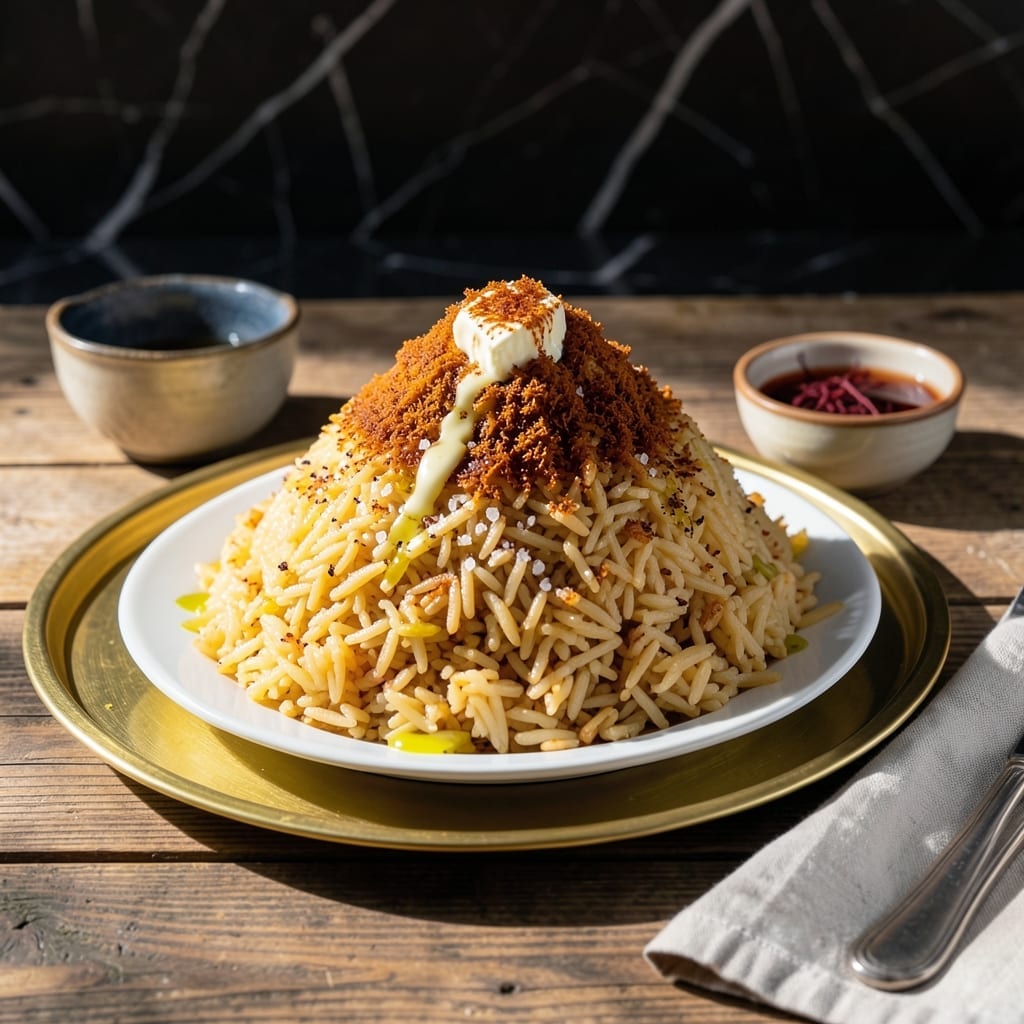
This traditional preparation transforms simple basmati into a fragrant centerpiece worthy of any Persian meal. The technique involves precise soaking, parboiling, and steaming to achieve the signature golden crust with fluffy, separate grains.
Saffron, the world’s most precious spice, infuses each bite with its distinctive aroma and golden hue. I’ve refined this method through years of practice to ensure consistent results every time.
The final dish presents a stunning contrast: crisp, caramelized tahdig at the bottom with perfectly cooked rice above. This balance of textures and flavors makes it a standout accompaniment to any main course.
Mastering this recipe brings the authentic taste of Iran to your kitchen. The process requires attention to detail but rewards with professional-quality results.
Ingredients for Iran Rice
Transform simple basmati into a fragrant Persian masterpiece with these essential ingredients.
| Ingredient | Amount | Notes |
|---|---|---|
| Basmati Rice 🌾 | 2 cups | Rinsed until water runs clear |
| Saffron Threads 🌼 | ¼ tsp | Crushed, steeped in hot water |
| Water 💧 | 4 cups | Divided for soaking and cooking |
| Kosher Salt 🧂 | 2 tsp | Diamond Crystal preferred |
| Unsalted Butter 🧈 | ½ cup | Melted, for tahdig layer |
| Vegetable Oil 🫒 | 2 tbsp | Or neutral oil for frying |
| Plain Yogurt 🥛 | ¼ cup | Full-fat for richness |
| Cardamom Pods 🌿 | 2 whole | Lightly crushed, optional |
| Ground Cinnamon 🌶️ | ¼ tsp | Optional for depth |
| Garlic Cloves 🧄 | 2 cloves | Minced for aroma |
| Rose Water 🌹 | 1 tsp | Food-grade, for floral note |
| Barberries 🍇 | ¼ cup | Dried, for garnish |
The saffron is non-negotiable for authentic flavor and color. Source from reputable spice merchants like Penzeys or Burlap & Barrel—avoid grocery store dust that’s been sitting for years. Basmati rice must be aged; Indian or Pakistani brands like Tilda or Daawat yield superior texture. The butter for tahdig should be high-fat (European-style if possible) to achieve that perfect crisp, golden crust.
No saffron? A pinch of turmeric adds color but lacks depth—consider it a last resort. Barberries can be swapped for dried cranberries or pomegranate seeds. If omitting yogurt, increase oil slightly but expect a less tender crust. Cardamom and cinnamon are traditional but optional; skip them if you prefer a purist approach. Always use full-fat dairy for the most authentic taste.
Store saffron in an airtight container away from light for up to 2 years. Basmati rice keeps indefinitely in a cool, dry place. The cooked rice with tahdig is best served immediately but reheats well—cover with foil and warm in a 300°F oven for 15 minutes.
Why You’ll Love This Recipe
- One Pot Wonder: Honestly, it’s just rice, saffron, and butter—no fancy steps, just simple layering and steaming.
- Golden Luxury: That saffron-soaked butter turns plain basmati into something rich and aromatic. I’ll be real: it smells like a fancy restaurant but costs pennies.
- Feeds a Crowd: Between us, this is my go-to for family dinners or potlucks—doubles easily and tastes even better the next day.
- Leftovers Win: The crispy bottom layer stays perfect overnight, so I pack it for lunch the next day with zero complaints.
Step-by-Step Instructions for Saffron-Infused Basmati Rice
Master the technique for achieving perfectly fluffy, aromatic rice with a golden tahdig crust.
Step 1: Prepare the Rice and Saffron Infusion
Rinse the 2 cups Basmati Rice in cold water until the water runs completely clear. This removes excess starch and prevents the grains from sticking together during cooking. Drain thoroughly and set aside.
Crush the 0.25 tsp Saffron Threads between your fingers and steep them in ¼ cup of hot water from the 4 cups Water for 10 minutes. This releases the saffron’s vibrant color and floral aroma, which will infuse the rice with its signature golden hue and delicate flavor.
Step 2: Parboil the Rice
In a large pot, bring the remaining 3¾ cups Water to a boil. Add the 2 tsp Kosher Salt and the drained rice. Cook over medium-high heat for 5-6 minutes until the rice is partially cooked but still firm to the bite—it should feel like al dente pasta when tested.
Drain the rice immediately in a fine-mesh strainer. The grains should appear slightly opaque with a firm center. This parboiling step ensures that the rice will finish cooking evenly with steam while developing the coveted tahdig crust.
Step 3: Create the Tahdig Layer
In a heavy-bottomed pot, combine the 0.5 cup Unsalted Butter and 2 tbsp Vegetable Oil over medium heat. Add the 0.25 cup Plain Yogurt, 2 cloves Garlic Cloves (minced), 2 whole Cardamom Pods (lightly crushed), and 0.25 tsp Ground Cinnamon. Stir for 1-2 minutes until fragrant and the yogurt begins to sizzle.
Spoon a thin, even layer of this mixture into the bottom of the pot. This creates the crispy, caramelized tahdig crust that is the hallmark of Persian rice. The yogurt and butter combination ensures a golden, crispy base that will release beautifully when inverted.
Step 4: Layer and Steam the Rice
Add half of the parboiled rice to the pot, spreading it evenly over the tahdig layer. Drizzle the steeped saffron liquid evenly over the rice. Top with the remaining rice, shaping it into a pyramid to allow steam to circulate effectively.
Cover the pot with a clean kitchen towel and place the lid on top to absorb excess moisture. Cook over low heat for 30-35 minutes. The rice is done when the tahdig is golden brown and crispy, and the rice grains are tender and fluffy.
Step 5: Finish and Serve
Remove the pot from heat and let it rest for 5 minutes. Carefully invert the pot onto a serving platter to reveal the tahdig crust. Drizzle with the 1 tsp Rose Water for a subtle floral note, and garnish with the 0.25 cup Barberries for a touch of tartness and color.
Serve immediately while the tahdig is still crisp. Each serving should feature a portion of the golden crust, fluffy saffron-infused rice, and the vibrant barberries for a balance of textures and flavors.
Pro Tips For Making Iran Rice
- Soak the Basmati: Cover the rice in warm water for at least 30 minutes—this keeps the grains long and fluffy instead of stubby and gummy. I learned this the hard way after serving crunchy rice to guests.
- Bloom the Saffron: Steep the threads in 2 tablespoons of hot (not boiling) water for 10 minutes before adding. Sounds weird, but it works: the color and flavor distribute evenly instead of clumping.
- Watch the Butter: Brown it just until it smells nutty—about 2 minutes on medium—then pull it off. After burning three batches, I finally figured out that burnt butter makes the rice bitter.
- Use a Towel: Line the pot lid with a clean kitchen towel before covering to absorb excess steam. My grandmother swore by this, and she was right: it prevents soggy rice every time.
Essential Equipment for This Dish
Non-Negotiable Pot
A heavy-bottomed 5-6 quart pot is essential for even heat distribution. I use my Le Creuset Dutch oven—its enamel coating prevents sticking while building the perfect tahdig crust. Thin pots will burn the bottom before the rice cooks through. 🔥
Fine-Mesh Strainer
For rinsing the 2 cups basmati, a fine-mesh strainer catches every grain while allowing starch to wash away completely. I prefer the OXO Good Grips model with its comfortable handles and sturdy construction.
Quality Saffron Tools
Crushing 0.25 tsp saffron threads between your fingers works, but a small mortar and pestle gives more control. Steep in a heatproof glass measuring cup—I use Pyrex for precise ¼ cup water measurements.
Tahdig Inversion Setup
Inverting the pot requires confidence and the right tools. I place my serving platter on a damp towel for grip, then use silicone oven mitts for a secure hold. The first flip is always the most nerve-wracking!
Steam Management
A clean kitchen towel between pot and lid absorbs excess steam. I keep 2-3 dedicated towels just for rice making—they get stained with turmeric and saffron over time. Replace when they lose absorbency.
Serving Essentials
Use a wide, flat platter to showcase the tahdig crust. I love my 14-inch ceramic serving dish from a Persian market—it’s both beautiful and practical. A thin, flexible spatula helps serve portions without breaking the crust. ✨
Nutrition Facts
Frequently Asked Questions
Why do I need to rinse the rice so thoroughly?
Rinsing removes excess starch that would make grains gummy. Continue until water runs completely clear for the fluffiest texture. This step takes 3-5 minutes but prevents clumping.
How do I prevent the tahdig from sticking?
Use a heavy pot and sufficient fat (0.5 cup butter + 2 tbsp oil). Let it heat until sizzling before adding rice. The yogurt in the mixture creates a natural non-stick barrier.
Can I make this without saffron?
A pinch of turmeric adds color but lacks authentic flavor. For best results, use 1/8 tsp saffron as a minimum. The spice is expensive but essential for traditional taste.
What if my tahdig doesn’t turn golden?
Increase heat slightly or cook 5 minutes longer. The butter-yogurt mixture should sizzle when rice is added. If using electric stove, preheat pot 2 minutes extra.

- Indian Jasmine Rice Recipe: Fragrant Basmati-Free Elegance - October 19, 2026
- KFC Rizo Rice Recipe: Copycat Side Dish With Savory Spice Blend - October 19, 2026
- Jeerakasala Rice Recipe: Fragrant Cumin-Infused Kerala Delight - October 19, 2026