
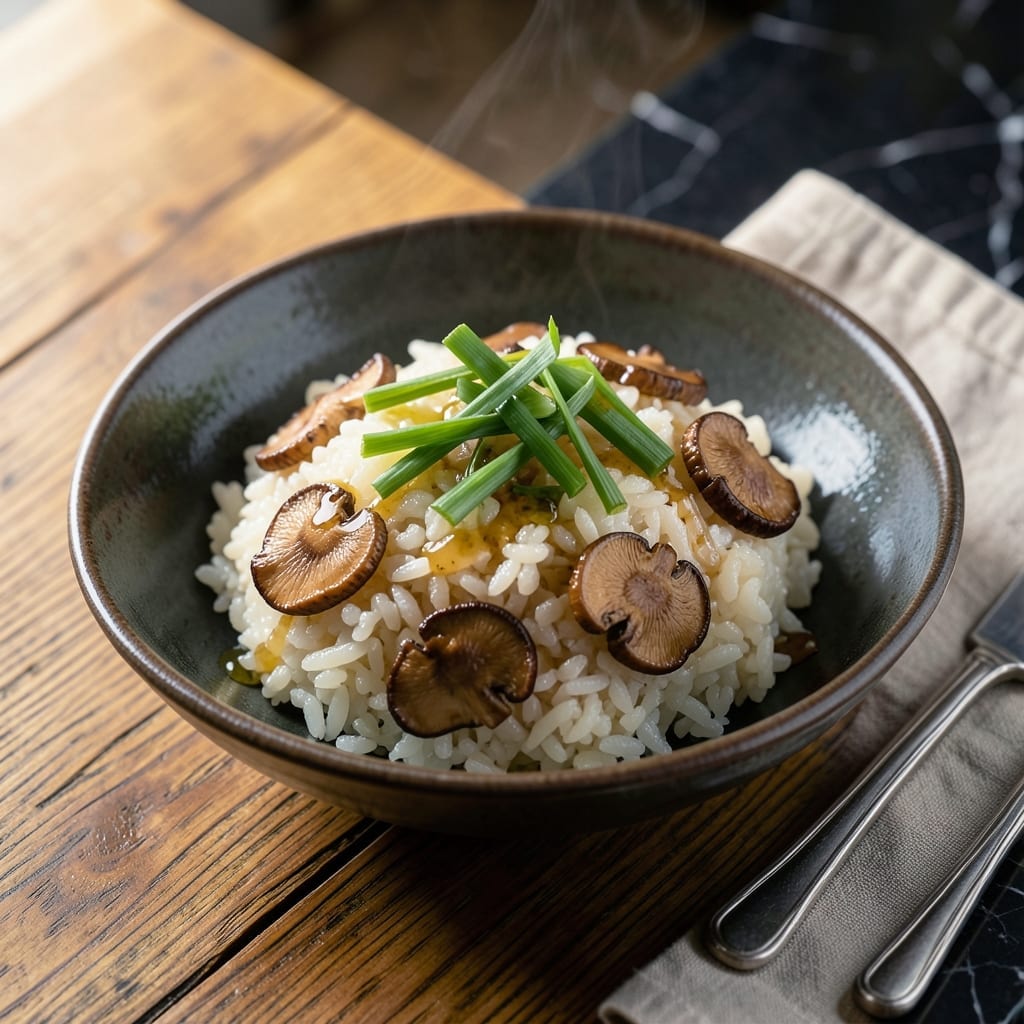
This Japanese mushroom rice delivers umami-rich flavor with every bite, using simple ingredients and traditional techniques.
Earthy mushrooms pair perfectly with tender rice, creating a dish that’s both comforting and deeply satisfying. The process is straightforward, with precise steps that ensure perfectly cooked results every time.
Ingredients for Japanese Mushroom Rice
Simple yet sophisticated ingredients create deeply flavorful Japanese mushroom rice with authentic umami depth.
| Ingredient | Amount | Notes |
|---|---|---|
| Japanese Short-Grain Rice 🍚 | 2 cups | Rinsed until water runs clear |
| Shiitake Mushrooms 🍄 | 8 oz | Fresh, stems removed, sliced |
| Dashi Stock 🍲 | 2 ½ cups | Traditional Japanese stock preferred |
| Soy Sauce 🫒 | 3 tbsp | Low-sodium for balance |
| Mirin 🍶 | 2 tbsp | Sweet rice wine for depth |
| Sake 🍶 | 2 tbsp | Dry Japanese rice wine |
| Neutral Oil 🛢️ | 1 tbsp | For sautéing mushrooms |
| Garlic Cloves 🧄 | 3 cloves | Minced for aromatic base |
| Fresh Ginger 🌿 | 1 tbsp | Grated for zesty kick |
| Green Onions 🧅 | 4 whole | Thinly sliced for garnish |
| Sesame Seeds 🌰 | 1 tsp | Toasted for nutty finish |
| Nori Seaweed Sheet 🌊 | 1 sheet | Thinly sliced for umami boost |
| Sugar 🍚 | 1 tsp | Balances savory flavors |
The mushrooms are everything here. Shiitake deliver the deepest umami, but cremini or oyster work too. For dashi, Kikkoman brand is widely available and reliable. Authentic Japanese markets like Mitsuwa or Nijiya carry superior nori sheets and fresh mirin. Always rinse the rice thoroughly—this removes excess starch for the perfect sticky-yet-separate texture.
No shiitake? Cremini or portobello at equal weight work well (avoid white button—they lack depth). For a quick dashi substitute, 1 tsp dashi powder plus 2.5 cups hot water works. Mirin can be replaced with 1 tbsp sugar plus 1 tbsp rice vinegar. The sake is optional but adds complexity—dry white wine in a pinch. Vegetable stock can replace dashi for a fully vegetarian version.
Cooked rice holds well for 2-3 days refrigerated in an airtight container. Reheat with a splash of water to restore moisture. The mushrooms can be prepped a day ahead. For best flavor, use within 48 hours of cooking. Freezing isn’t recommended as it affects the rice texture.
Why You’ll Love This Recipe
- One Pot Wonder: I love that everything cooks together—rice, shiitakes, and dashi—so I’m not stuck washing a sink full of dishes.
- Umami Bomb: The shiitakes soak up the soy and mirin, giving every bite this deep, savory richness that’s honestly addictive.
- Weeknight Hero: Between us, it’s my Tuesday night lifesaver when I need something hearty but hands-off.
- Leftovers Win: Tastes even better the next day, and the rice stays sticky and moist—my lunchbox secret.
Step-by-Step Instructions for Japanese Mushroom Rice
This method ensures perfectly cooked rice infused with deep umami flavors and aromatic complexity.
Step 1: Prepare and Sauté the Aromatics
Heat the 1 tablespoon neutral oil in a medium pot over medium heat. Add the sliced 8 oz shiitake mushrooms, minced 3 cloves garlic cloves, and grated 1 tablespoon fresh ginger. Sauté for 5-6 minutes until the mushrooms release their moisture and develop a light golden color.
This step builds the foundational umami base for your dish. The mushrooms should soften significantly and the garlic should become fragrant but not brown. Stir occasionally to prevent sticking and ensure even cooking.
Step 2: Bloom the Seasonings and Add Rice
Pour in the 3 tablespoons soy sauce, 2 tablespoons mirin, 2 tablespoons sake, and 1 teaspoon sugar to the pot. Stir to coat the mushroom mixture evenly and cook for an additional 2 minutes to allow the flavors to meld.
Add the rinsed 2 cups Japanese short-grain rice and stir to thoroughly combine. The rice grains should appear slightly translucent at the edges as they absorb the liquid. This toasting step enhances the nutty flavor of the rice.
Step 3: Add Dashi and Simmer
Pour in the 2.5 cups dashi stock and stir once to distribute the rice evenly. Bring to a gentle boil over medium-high heat, then immediately reduce to low heat, cover with a tight-fitting lid, and simmer for 15 minutes.
Resist the urge to lift the lid during cooking—steam is crucial for proper rice texture. After 15 minutes, the liquid should be fully absorbed and small steam vents will appear on the surface of the rice.
Step 4: Rest and Finish
Remove from heat and let the rice rest, covered, for 10 minutes. This allows the grains to steam and become tender. Gently fluff the rice with a fork to separate the grains without breaking them.
Thinly slice the 4 whole green onions and 1 sheet nori seaweed sheet. Sprinkle these along with the 1 teaspoon sesame seeds over the rice. The nori adds a final umami boost while the green onions provide fresh contrast.
Pro Tips For Making Japanese Mushroom Rice
- Soak the rice: Rinse your short-grain rice until the water runs clear, then let it soak for 20-30 minutes—this prevents that gummy texture I used to get when I skipped this step.
- Bloom the shiitakes: Slice the shiitakes thin and sauté them first in a dry pan for 2 minutes before adding oil; it pulls out their umami like you wouldn’t believe.
- Skip the rinse: Don’t wash the rice after soaking—you’ll lose the starch that makes the grains cling together just right for this dish.
- Use fresh dashi: Instant dashi works in a pinch, but fresh (or at least refrigerated) dashi stock makes the flavor deeper—after years of shortcuts, I finally noticed the difference.
Health Benefits of This japanese mushroom rice
Immune Support
This dish is packed with shiitake mushrooms, which contain beta-glucans that help strengthen your immune system. A single serving provides compounds that support your body’s natural defenses. I always feel more energized after enjoying this meal. 💪
Gut Health Benefits
The fiber-rich rice and mushrooms work together to promote healthy digestion. Japanese short-grain rice provides resistant starch that acts as a prebiotic, feeding your gut’s good bacteria. This combination keeps your digestive system running smoothly.
Low-Calorie Nutrition
At about 250 calories per serving, this dish offers satisfying flavor without excess calories. The umami-rich ingredients make it feel indulgent while staying light. It’s perfect for those watching their calorie intake without sacrificing taste.
Heart-Healthy Profile
With virtually no saturated fat and minimal cholesterol, this meal supports cardiovascular health. The dashi stock and soy sauce provide flavor without adding harmful fats. I love how it nourishes my body while tasting incredible. ✨
Rich in Antioxidants
The nori seaweed and sesame seeds add a boost of antioxidants that combat oxidative stress. These ingredients help protect your cells while adding authentic Japanese flavor to every bite.
Balanced Macros
You’ll get a good mix of complex carbohydrates from the rice, plant-based protein from the mushrooms, and healthy fats from the neutral oil. This balance keeps you full and energized throughout the day.
Nutrition Facts
Frequently Asked Questions
Can I use other mushroom types?
While shiitake are traditional, cremini or portobello work well too. Avoid white button mushrooms as they lack depth. Each variety brings its own earthy notes to the dish.
How do I store leftovers?
Keep in an airtight container in the fridge for 2-3 days. Reheat with a splash of water to restore moisture. The flavors actually deepen overnight!
What can I use instead of dashi?
Veggie stock works perfectly for a vegetarian version. Or mix 1 tsp dashi powder with 2.5 cups hot water. This keeps the umami profile intact.
Can I make this in a rice cooker?
Yes! Sauté the mushrooms first, then add all ingredients to the cooker. Use the standard white rice setting. The result will be just as flavorful.

- Indian Jasmine Rice Recipe: Fragrant Basmati-Free Elegance - October 19, 2026
- KFC Rizo Rice Recipe: Copycat Side Dish With Savory Spice Blend - October 19, 2026
- Jeerakasala Rice Recipe: Fragrant Cumin-Infused Kerala Delight - October 19, 2026